Hi, I 've used LLR with properties you've suggested.
Right now I have a trouble.
A trouble:
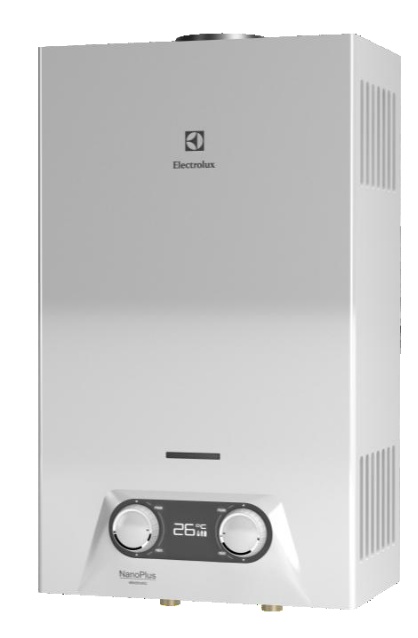
Water heat device (
http://www.vasko.ru/upload/iblock/58a/58ac7efe640a551f00bec156601e9035.jpg)
is recommedned for iPhone. And it has one of the highest score.
good things:
iPhone cases (
https://www.apple.com/euro/iphone/c/generic/accessories/images/accessories_iphone_5s_case_colors.jpg)
are recommedned for iPhone, It's good
Other smartphones are recommended to iPhone, it's good
Other iPhones are recommedned to iPhone. It's good. 16GB recommended to
32GB, e.t.c.
What could be a reason for recommending "Water heat device " to iPhone?
iPhone is one of the most popular item. There should be a lot of people
viewing iPhone with "Water heat device "?


2014-08-18 20:15 GMT+04:00 Pat Ferrel <[email protected]>:

> Oh, and as to using different algorithms, this is an “ensemble” method. In
> the paper they are talking about using widely differing algorithms like ALS
> + Cooccurrence + … This technique was used to win the Netflix prize but in
> practice the improvements may be to small to warrant running multiple
> pipelines. In any case it isn’t the first improvement you may want to try.
> For instance your UI will have a drastic effect on how well you recs do,
> and there are other much easier techniques that we can talk about once you
> get the basics working.
>
>
> On Aug 18, 2014, at 9:04 AM, Pat Ferrel <[email protected]> wrote:
>
> When beginning to use a recommender from Mahout I always suggest you start
> from the defaults. These often give the best results—then tune afterwards
> to improve.
>
> Your intuition is correct that multiple actions can be used to improve
> results but get the basics working first. The easiest way to use multiple
> actions is to use spark-itemsimilarity so since you are using mapreduce for
> now, just use one action.
>
> I would not try to combine the results from two similarity measures there
> is no benefit since LLR is better than any of them, at least I’ve never
> seen it loose. Below is my experience with trying many of the similarity
> metrics on exactly the same data. I did cross-validation with precision
> (MAP, mean average precision). LLR wins in other cases I’ve tried too. So
> LLR is the only method presently used in the Spark version of
> itemsimilarity.
>
> <map-comparison.xlsx 2014-08-18 08-50-44 2014-08-18 08-51-53.jpeg>
>
> If you still get weird results double check your ID mapping. Run a small
> bit of data through and spot check the mapping by hand.
>
> At some point you will want to create a cross-validation test. This is
> good as a sort of integration sanity check when making changes to the
> recommender. You run cross-validation using standard test data to see if
> the score changes drastically between releases. Big changes may indicate a
> bug. At the beginning it will help you tune as in the case above where it
> helped decide on LLR.
>
>
>
> On Aug 18, 2014, at 1:43 AM, Serega Sheypak <[email protected]>
> wrote:
>
> Thank you very much. I'll do what you are sayning in bullets 1...5 and try
> again.
>
> I also tried:
> 1. calc data using COUSINE_SIMILARITY
> 2. calc the same data using COOCCURENCE_SIMILARTY
> 3. join #1 and #2 where COOCURENCE >= $threshold
>
> Where threshold is some emperical integer value. I've used  "2" The idea is
> to filter out item pairs which never-ever met together...
> Please see this link:
>
> http://blog.godatadriven.com/merge-mahout-recommendations-results-from-different-algorithms.html
>
> If I replace COUSINE_SIMILARITY with LLR and booleanData=true, does this
> approach still make sense, or it's useless waste of time?
>
> "What do you mean the similar items are terrible? How are you measuring
> that? " I have eye testing only,
> I did automate preparation->calculation->hbase upload-> web-app serving, I
> didn't automate testing.
>
>
>
>
> 2014-08-18 5:16 GMT+04:00 Pat Ferrel <[email protected]>:
>
> > the things that stand out:
> >
> > 1) remove your maxSimilaritiesPerItem option! 50000
> maxSimilaritiesPerItem
> > will _kill_ performance and give no gain, leave this setting at the
> default
> > of 500
> > 2) use only one action. What do you want the user to do? Do you want them
> > to read a page? Then train on item page views. If those pages lead to a
> > purchase then you want to recommend purchases so train on user purchases.
> > 3) remove your minPrefsPerUser option, this should never be 0 or it will
> > leave users in the training data that have no data and may contribute to
> > longer runs with no gain.
> > 4) this is a pretty small Hadoop cluster for the size of your data but I
> > bet changing #1 will noticeably reduce the runtime
> > 5) change —similarityClassname to SIMILARITY_LOGLIKELIHOOD
> > 6) remove your —booleanData option since LLR ignores weights.
> >
> > Remember that this is not the same as personalized recommendations. This
> > method alone will show the same “similar items” for all users.
> >
> > Sorry but both your “recommendation” types sound like the same thing.
> > Using both item page view  _and_ clicks on recommended items will both
> lead
> > to an item page view so you have two actions that lead to the same thing,
> > right? Just train on an item page view (unless you really want the user
> to
> > make a purchase)
> >
> > What do you mean the similar items are terrible? How are you measuring
> > that? Are you doing cross-validation measuring precision or A/B testing?
> > What looks bad to you may be good, the eyeball test is not always
> reliable.
> > If they are coming up completely crazy or random then you may have a bug
> in
> > your ID translation logic.
> >
> > It sounds like you have enough data to produce good results.
> >
> > On Aug 17, 2014, at 11:14 AM, Serega Sheypak <[email protected]>
> > wrote:
> >
> > 1. 7 nodes 4 CPU per node, 48 GB ram, 2 HDD for MR and HDFS. Not too much
> > but enough for the start..
> > 2. I run it as oozie action.
> > <action name="run-mahout-primary-similarity-ItemSimilarityJob">
> >       <java>
> >           <job-tracker>${jobTracker}</job-tracker>
> >           <name-node>${nameNode}</name-node>
> >           <prepare>
> >               <delete path="${mahoutOutputDir}/primary" />
> >               <delete
> > path="${tempDir}/run-mahout-ItemSimilarityJob/primary" />
> >           </prepare>
> >           <configuration>
> >               <property>
> >                   <name>mapred.queue.name</name>
> >                   <value>default</value>
> >               </property>
> >
> >           </configuration>
> >
> >
> >
> <main-class>org.apache.mahout.cf.taste.hadoop.similarity.item.ItemSimilarityJob</main-class>
> >           <arg>--input</arg>
> >           <arg>${tempDir}/to-mahout-id/projPrefs</arg><!-- dense user_id,
> > item_id, pref [can be 3 or 5, 3 is VIEW item, 5 is CLICK on
> recommendation,
> > a kind of try to increase quality of recommender...]-->
> >
> >           <arg>--output</arg>
> >           <arg>${mahoutOutputDir}/primary</arg>
> >
> >           <arg>--similarityClassname</arg>
> >           <arg>SIMILARITY_COSINE</arg>
> >
> >           <arg>--maxSimilaritiesPerItem</arg>
> >           <arg>50000</arg>
> >
> >           <arg>--minPrefsPerUser</arg>
> >           <arg>0</arg>
> >
> >           <arg>--booleanData</arg>
> >           <arg>false</arg>
> >
> >           <arg>--tempDir</arg>
> >           <arg>${tempDir}/run-mahout-ItemSimilarityJob/primary</arg>
> >
> >       </java>
> >       <ok to="to-narrow-table"/>
> >       <error to="kill"/>
> >   </action>
> >
> > 3) RANK does it, here is a script:
> >
> > --user, item, pref previously prepared by hive
> > user_item_pref = LOAD '$user_item_pref' using PigStorage(',') as
> > (user_id:chararray, item_id:long, pref:double);
> >
> > --get distinct user from the whole input
> > distUserId = distinct(FOREACH user_item_pref GENERATE user_id);
> >
> > --get distinct item from the whole input
> > distItemId = distinct(FOREACH user_item_pref GENERATE item_id);
> >
> > --rank user 1....N
> > rankUsers_ = RANK distUserId;
> > rankUsers = FOREACH rankUsers_ GENERATE $0 as rank_id, user_id;
> >
> > --rank items 1....M
> > rankItems_ = RANK distItemId;
> > rankItems = FOREACH rankItems_ GENERATE $0 as rank_id, item_id;
> >
> > --join and remap natural user_id, item_id, to RANKS: 1.N, 1..M
> > joinedUsers = join user_item_pref by user_id, rankUsers by user_id USING
> > 'skewed';
> > joinedItems = join joinedUsers by user_item_pref::item_id, rankItems by
> > item_id using 'replicated';
> >
> > projPrefs = FOREACH joinedItems GENERATE joinedUsers::rankUsers::rank_id
> > as user_id,
> >                                        rankItems::rank_id
> > as item_id,
> >                                        joinedUsers::user_item_pref::pref
> > as pref;
> >
> > --store mapping for later remapping from RANK back to natural values
> > STORE (FOREACH rankUsers GENERATE rank_id, user_id) into '$rankUsers'
> using
> > PigStorage('\t');
> > STORE (FOREACH rankItems GENERATE rank_id, item_id) into '$rankItems'
> using
> > PigStorage('\t');
> > STORE (FOREACH projPrefs GENERATE user_id, item_id, pref) into
> '$projPrefs'
> > using PigStorage('\t');
> >
> > 4) I've seen this idea in different discussion, that different weight for
> > different actions are not good. Sorry, I don't understand what you do
> > suggest.
> > I have two kind of actions: user viewed item, user clicked on recommended
> > item (recommended item produced by my item similarity system).
> > I want to produce two kinds of recommendations:
> > 1. current item + recommend other items which other users visit in
> > conjuction with current item
> > 2. similar item: recommend items similar to current viewed item.
> > What can I try?
> > LLR=http://en.wikipedia.org/wiki/Log-likelihood_ratio= LOG_LIKEHOOD?
> >
> > Right now I do get awful recommendations and I can't understand what can
> I
> > try next :((((((((((((
> >
> >
> > 2014-08-17 19:02 GMT+04:00 Pat Ferrel <[email protected]>:
> >
> >> 1) how many cores in the cluster? The whole idea behind mapreduce is you
> >> buy more cpus you get nearly linear decrease in runtime.
> >> 2) what is your mahout command line with options, or how are you
> invoking
> >> mahout. I have seen the Mahout mapreduce recommender take this long so
> we
> >> should check what you are doing with downsampling.
> >> 3) do you really need to RANK your ids, that’s a full sort? When using
> > pig
> >> I usually get DISTINCT ones and assign an incrementing integer as the
> >> Mahout ID corresponding
> >> 4) your #2 assigning different weights to different actions usually does
> >> not work. I’ve done this before and compared offline metrics and seen
> >> precision go down. I’d get this working using only your primary actions
> >> first. What are you trying to get the user to do? View something, buy
> >> something? Use that action as the primary preference and start out with
> a
> >> weight of 1 using LLR. With LLR the weights are not used anyway so your
> >> data may not produce good results with mixed actions.
> >>
> >> A plug for the (admittedly pre-alpha) spark-itemsimilairty:
> >> 1) output from 2 can be directly ingested and will create output.
> >> 2) multiple actions can be used with cross-cooccurrence, not by guessing
> >> at weights.
> >> 3) output has your application specific IDs preserved.
> >> 4) its about 10x faster than mapreduce and will do aways with your ID
> >> translation steps
> >>
> >> One caveat is that your cluster machines will need lots of memory. I
> have
> >> 8-16g on mine.
> >>
> >> On Aug 17, 2014, at 1:26 AM, Serega Sheypak <[email protected]>
> >> wrote:
> >>
> >> 1. I do collect preferences for items using 60days sliding window. today
> > -
> >> 60 days.
> >> 2. I do prepare triples user_id, item_id, descrete_pref_value (3 for
> item
> >> view, 5 for clicking recommndation block. The idea is to give more value
> >> for recommendations which attact visitor attention). I get ~ 20.000.000
> > of
> >> lines with ~1.000.000 distinct items and ~2.000.000 distinct users
> >> 3. I do use apache pig RANK function to rank all distinct user_id
> >> 4. I do the same for item_id
> >> 5. I do join input dataset with ranked datasets and provide input to
> > mahout
> >> with dense interger user_id, item_id
> >> 6. I do get mahout output and join integer item_id back to get natural
> > key
> >> value.
> >>
> >> step #1-2 takes ~ 40min
> >> step #3-5 takes ~1 hour
> >> mahout calc takes ~3hours
> >>
> >>
> >>
> >> 2014-08-17 10:45 GMT+04:00 Ted Dunning <[email protected]>:
> >>
> >>> This really doesn't sound right.  It should be possible to process
> >> almost a
> >>> thousand times that much data every night without that much problem.
> >>>
> >>> How are you preparing the input data?
> >>>
> >>> How are you converting to Mahout id's?
> >>>
> >>> Even using python, you should be able to do the conversion in just a
> few
> >>> minutes without any parallelism whatsoever.
> >>>
> >>>
> >>>
> >>>
> >>> On Sat, Aug 16, 2014 at 5:10 AM, Serega Sheypak <
> >> [email protected]>
> >>> wrote:
> >>>
> >>>> Hi, We are trying calculate ItemSimilarity.
> >>>> Right now we have 2*10^7 input lines. I do provide input data as raw
> >> text
> >>>> each day to recalculate item similarities. We do get +100..1000 new
> >> items
> >>>> each day.
> >>>> 1. It takes too much time to prepare input data.
> >>>> 2. It takes too much time to convert user_id, item_id to mahout ids
> >>>>
> >>>> Is there any poissibility to provide data to mahout mapreduce
> >>>> ItemSimilarity using some binary format with compression?
> >>>>
> >>>
> >>
> >>
> >
> >
>
>
>