I have updated the pdf a bit according to various feedbacks. Graphs stay same.
On Fri, Mar 3, 2017 at 4:32 PM, Sepherosa Ziehau <[email protected]> wrote:
> Some profiling seems not well generated, here is the raw pictures:
>
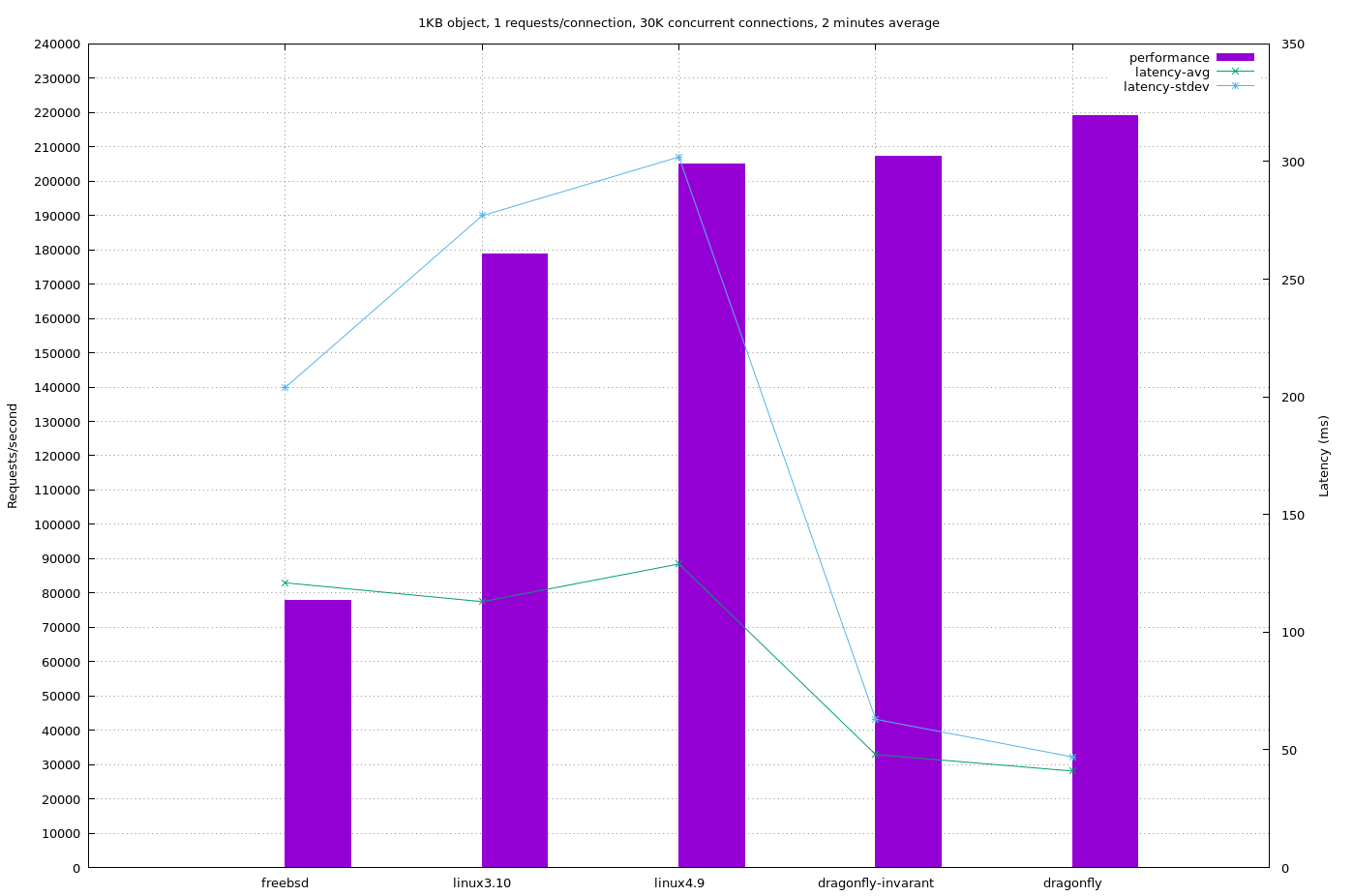
> https://leaf.dragonflybsd.org/~sephe/perfcomp/1K.png
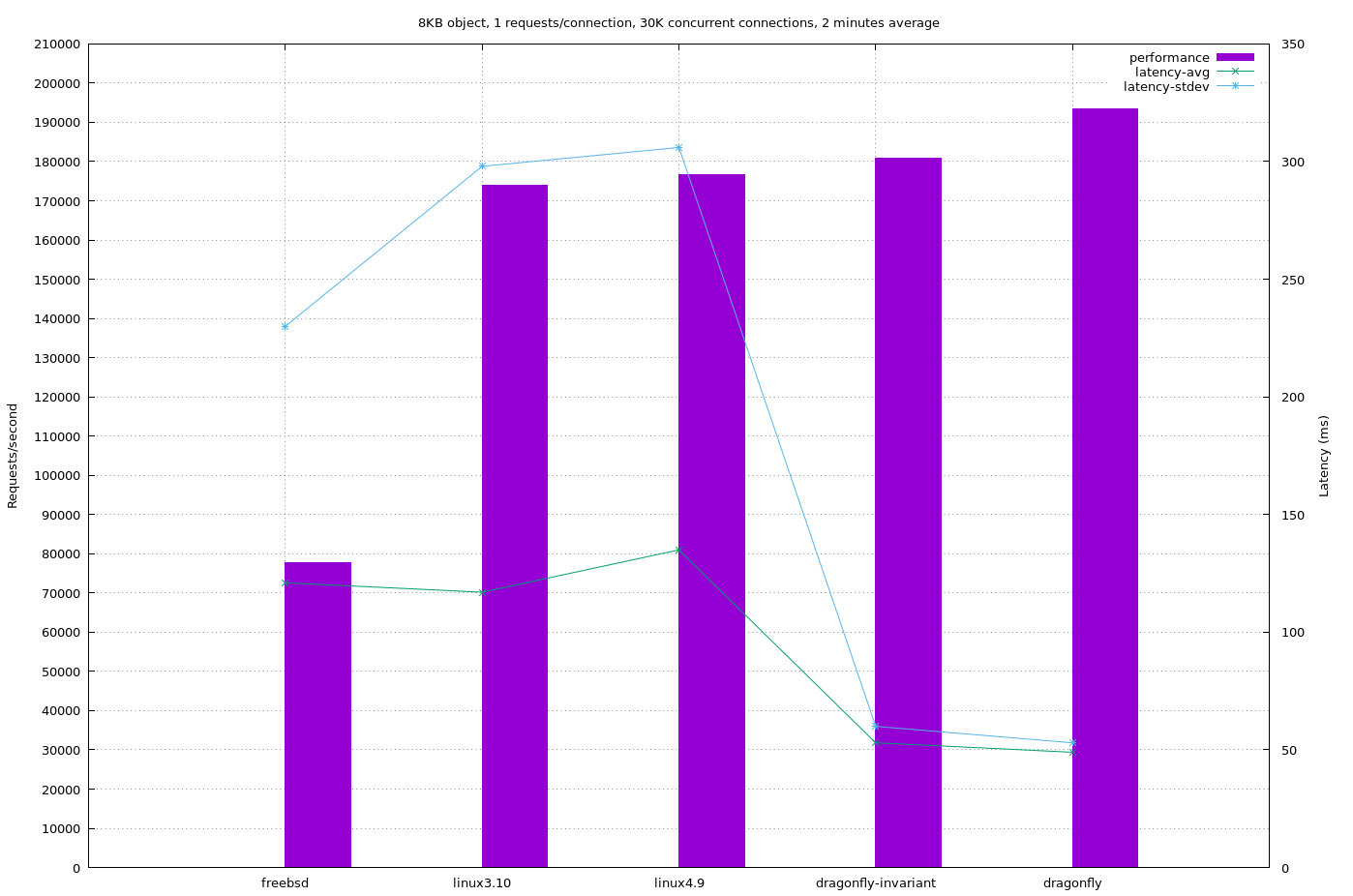
> https://leaf.dragonflybsd.org/~sephe/perfcomp/8K.png
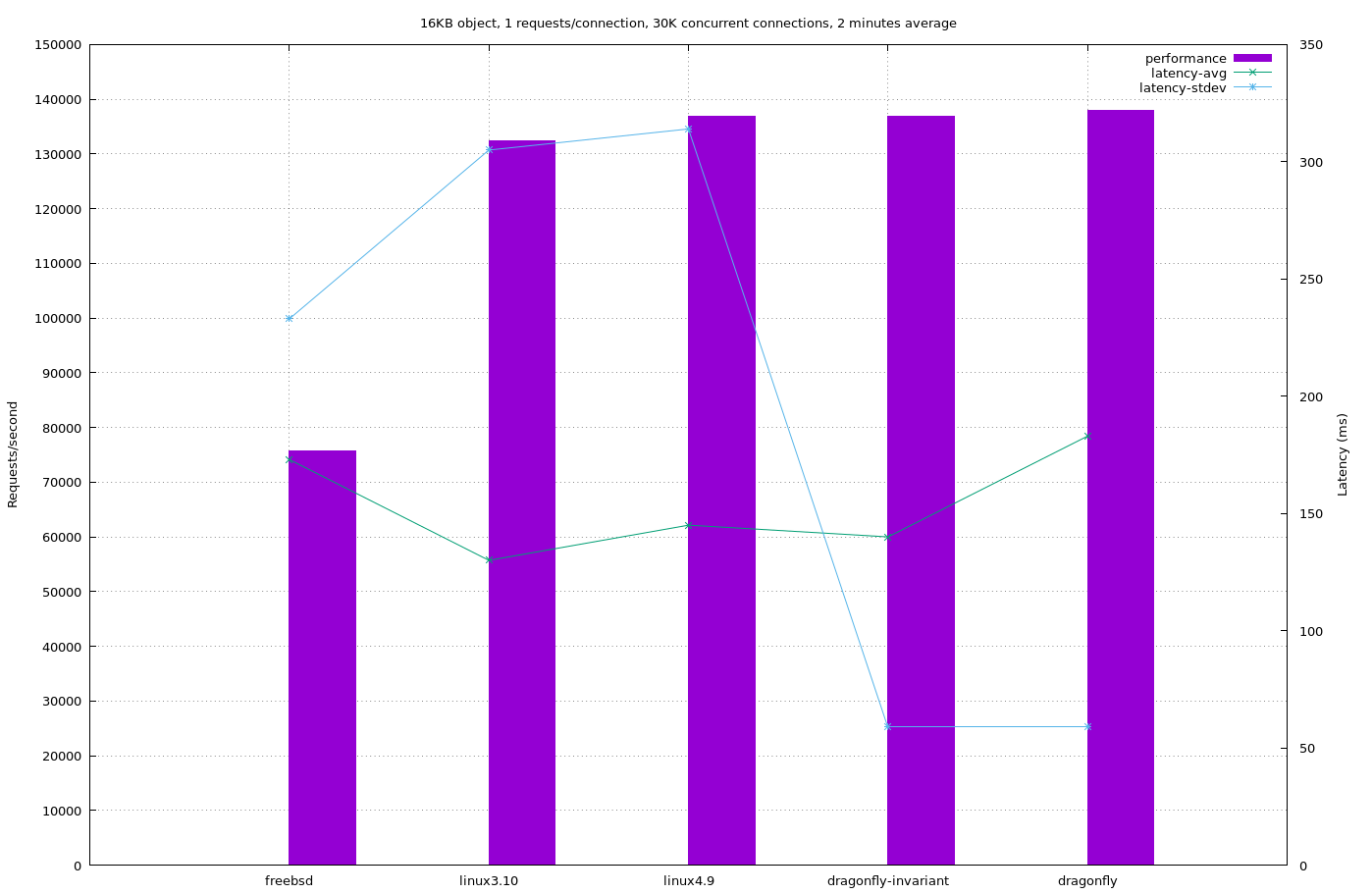
> https://leaf.dragonflybsd.org/~sephe/perfcomp/16K.png
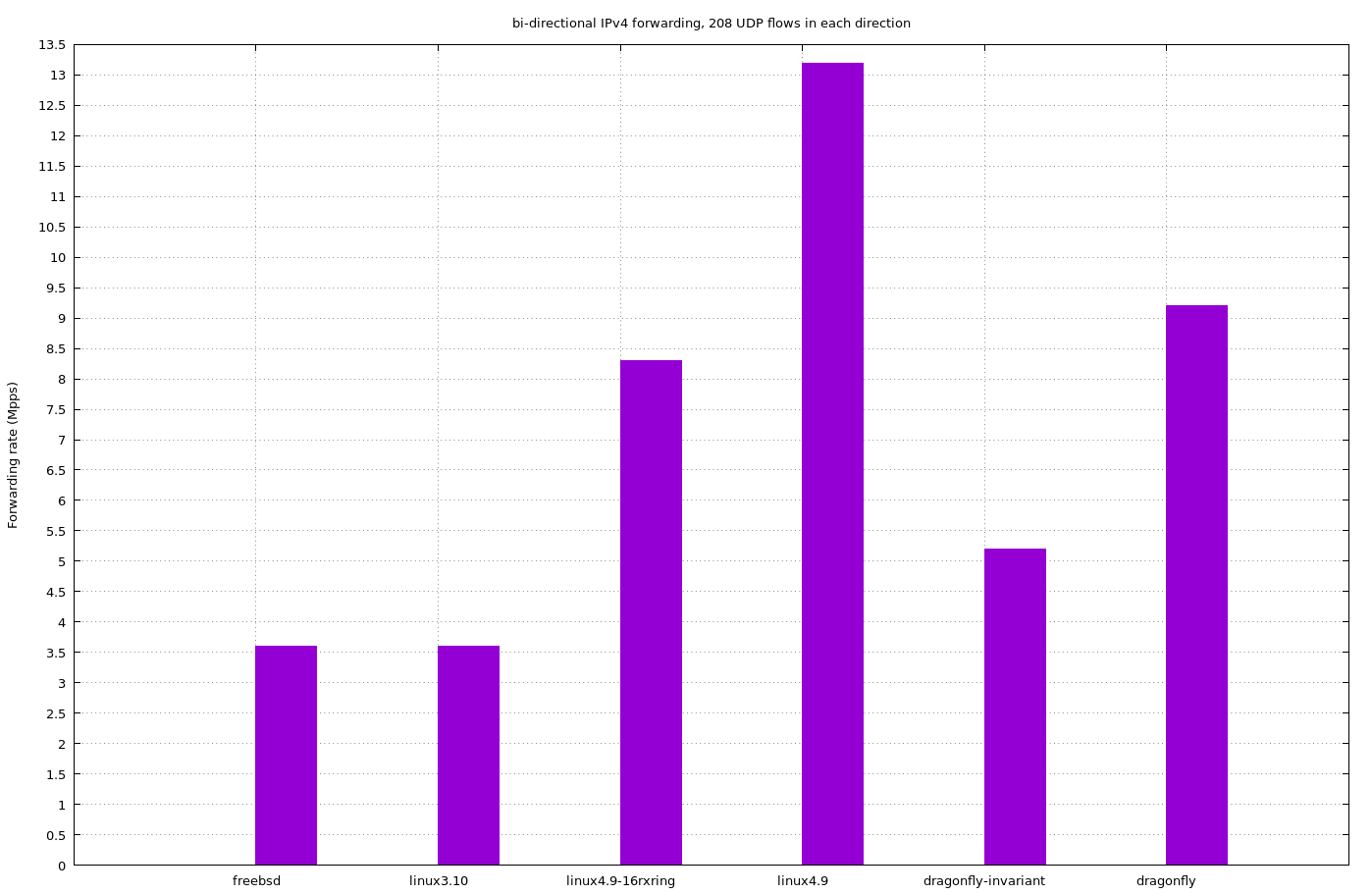
> https://leaf.dragonflybsd.org/~sephe/perfcomp/ipfwd-bi.png
>
> On Fri, Mar 3, 2017 at 3:44 PM, Sepherosa Ziehau <[email protected]> wrote:
>> Hi all,
>>
>> Since so many folks are interested in the performance comparison, I
>> just did one network related comparison here:
>> https://leaf.dragonflybsd.org/~sephe/perf_cmp.pdf
>>
>> The intention is _not_ to troll, but to identify gaps, and what we can
>> do to keep improving DragonFlyBSD.
>>
>> According to the comparison, we _do_ find one area DragonFlyBSD's
>> network stack can be improved:
>> Utilize all available CPUs for network protocol processing.
>>
>> Currently we only use power-of-2 CPUs to handle network protocol
>> processing, e.g. on 24 CPUs system, only 16 CPUs will be used to
>> handle network protocol processing.  It is fine for workload involving
>> userland applications, e.g. the HTTP server workload.  But it seems
>> forwarding can enjoy all available CPUs.  I will work on this.
>>
>> Thanks,
>> sephe
>>
>> --
>> Tomorrow Will Never Die
>
>
>
> --
> Tomorrow Will Never Die


--
Tomorrow Will Never Die