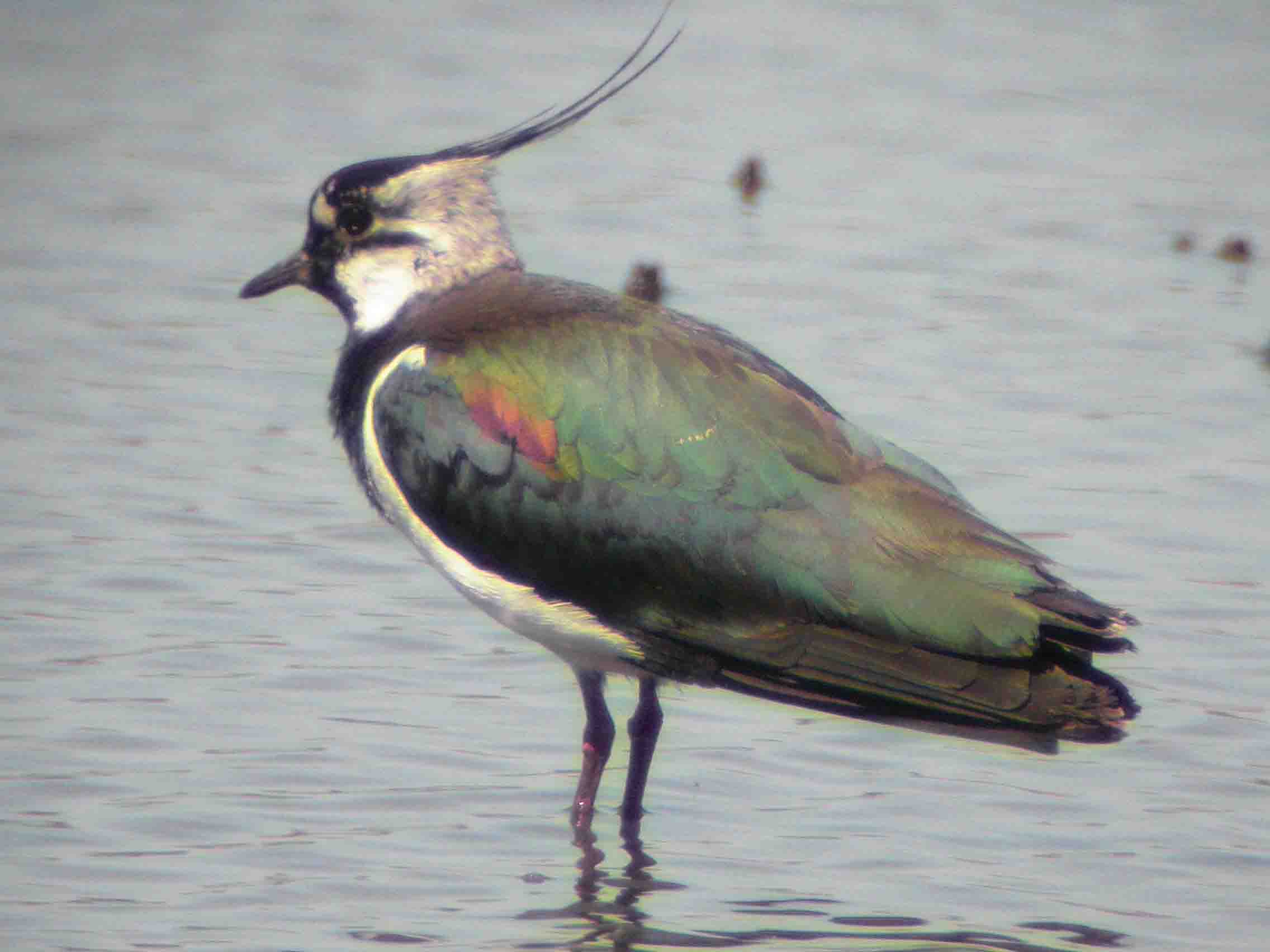
>From FAOL: Landrail: Plover type bird of Europe. Once used for fly tying material and probably still is to some extent. Due to rarity of this bird, Lapwing feathers are most often substituted in dressings listing Landrail. See Lapwing. Lapwing: Crested Plover, common in Europe. Wing and body feathers used in fly tying. Used as a substitute for Landrail. See - Landrail. Link to picture of landrail: http://www.heatons-of-tisbury.co.uk/images/birds3/landrail.jpg Also called a corncrake. Link to picture of corncrake: http://www.fotografia-przyrodnicza.art.pl/galeria/zdjecia/276.jpg Link to picture of lapwing: http://www.fssbirding.org.uk/Images/Lapwing%2008b.jpg Apparently, it is rare not only because of its feathers. This is taken from an old cookbook: THE LANDRAIL, OR CORN-CRAKE.This bird is migratory in its habits, yet from its formation, it seems ill adapted for long aërial passages, its wings being short, and placed so forward out of the centre of gravity, that it flies in an extremely heavy and embarrassed manner, and with its legs hanging down. When it alights, it can hardly be sprung a second time, as it runs very fast, and seems to depend for its safety more on the swiftness of its feet than the celerity of its wings. It makes its appearance in England about the same time as the quail, that is, in the months of April and May, and frequents the same places. Its singular cry is first heard when the grass becomes long enough to shelter it, and it continues to be heard until the grass is cut. The bird, however, is seldom seen, for it constantly skulks among the thickest portions of the herbage, and runs so nimbly through it, doubling and winding in every direction, that it is difficult to get near it. It leaves this island before the winter, and repairs to other countries in search of its food, which principally consists of slugs, large numbers of which it destroys. It is very common in Ireland, and, whilst migrating to this country, is seen in great numbers in the island of Anglesea. On its first arrival in England, it is so lean as scarcely to weigh above five or six ounces; before its departure, however, it has been known to exceed eight ounces, and is then most delicious eating. To me, these two birds dont look anything alike so Im not sure about the sub. Hope this helps, Jim Collins ------------ Fishing is not a matter of life or death. It's much more important than that!