They're reinventing the whelel again. I have a full set of data on the
orbital beam power technology designs built with luna material. These
are 1969-79 designs. The program was designed 35+ years ago by * Gerard
K. O'Neill* and the L5 society. The best place to place the solar cells
is L5 not the moon. L5 has no night. http://www.ssi.org/high-frontier.html
Check out the following web sites.

http://www.islandone.org/
http://www.l5news.org/index.html

http://www.nss.org/
Nasa is in the rear as we enter the straight.
http://spacesolarpower.nasa.gov/
L5 socitety designs from the 1970's.
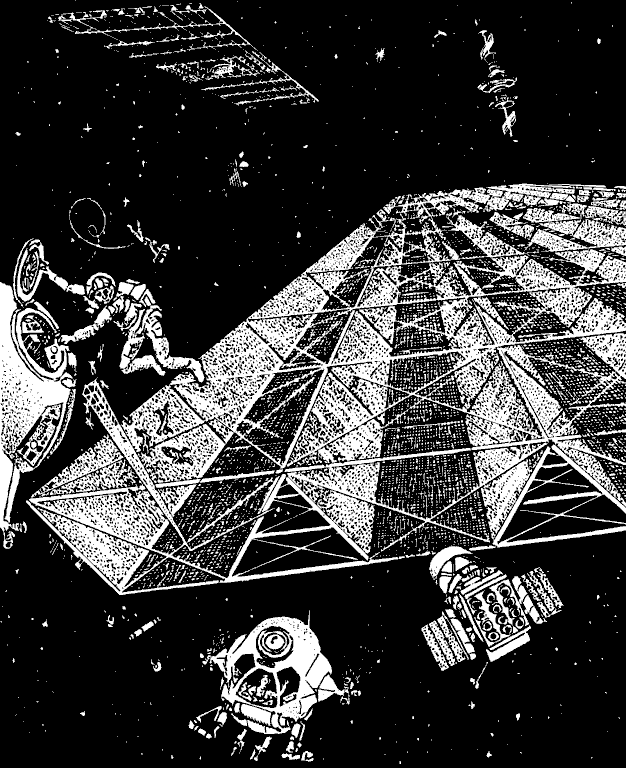
Early image of a power sat.
http://lifesci3.arc.nasa.gov/SpaceSettlement/spaceres/images/pic2.JPG
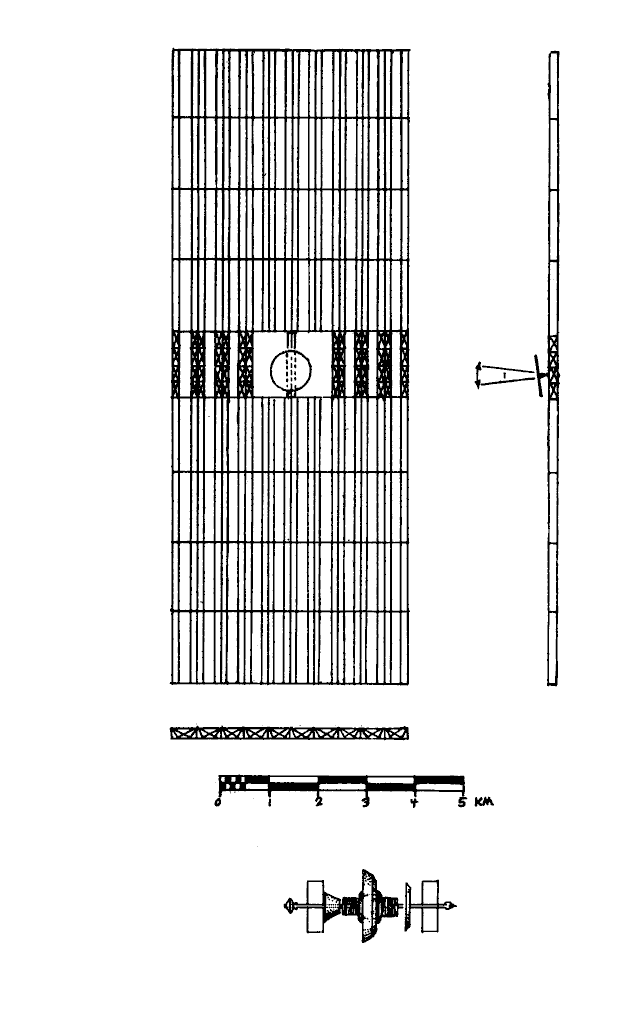
The best power sat image. From Don Davis
http://www.ssi.org/assets/images/Ch09p185.gif
The space station at the bottom is 1 km long. A buildable with 1970's
design.
Coolest image of the design. http://www.ssi.org/assets/images/Ch09p180.gif
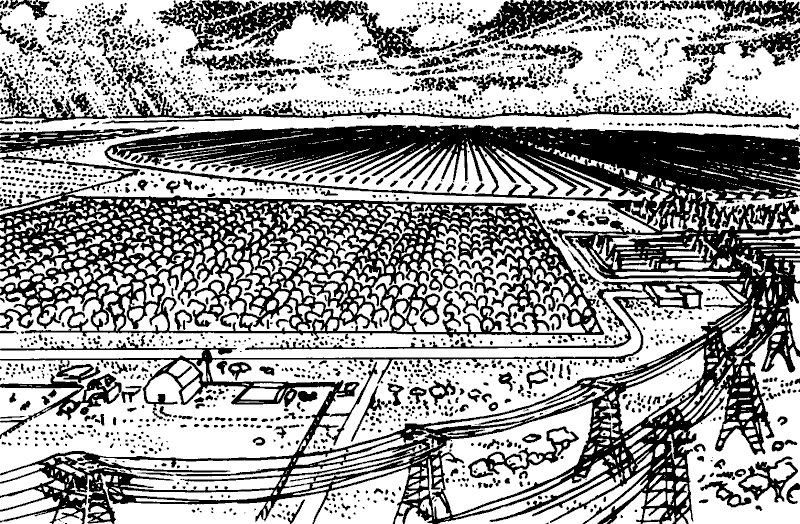
The ground reciever array. Several miles across.
http://www.ssi.org/assets/images/Ch09p172.gif
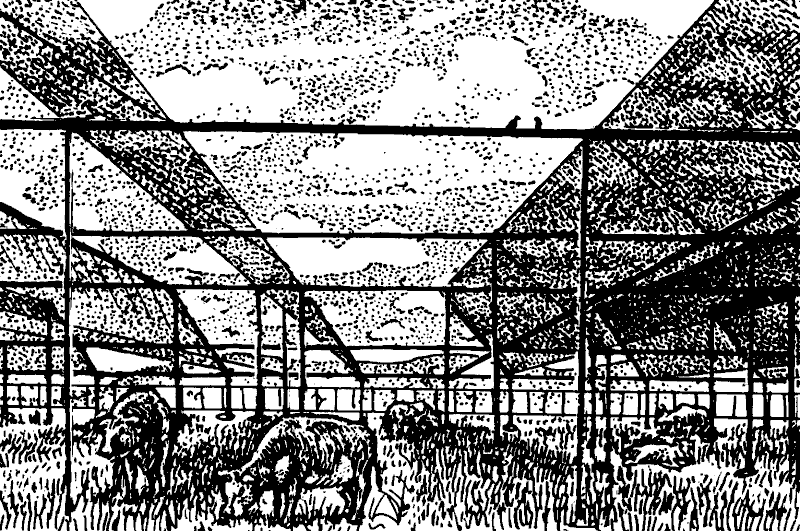
Cows grazing under the reciever.
http://www.ssi.org/assets/images/Ch09p175.gif
See Don Davis' whole site for an overview.
My new web site. http://www.geocities.com/vacoyecology/space.html has
them linked.
If we had not gone down the shuttle dead end we would have been building
these technologies by now.
We are not nutty! We're space cadets! I have a life membership in the
National Space Society, and I have a design for a one g habatat on the
moon and mars.
I guess that makes me a ranking space cadet.
Jed Rothwell wrote:
Here is a nutty idea. Inspired, but nutty. See:
http://www.wired.com/news/technology/wireless_special/0,2914,69038-2,00.html?tw=wn_story_page_next1
QUOTES:
Criswell's concept is massive in scale: It would involve building
20,000 to 30,000 reception stations on Earth to accept the power beams
and convert them into electricity that could be distributed to the
population (The solar panels would be constructed on the moon with raw
materials in the soil in "basically a glass-making process," he said).
. . .
Criswell predicts that the LSP system could produce a steady
20-terawatt stream that he predicts the estimated 10 billion people
living on Earth by 2050 will need. "It actually provides you with such
clean, sustainable energy that we can correct our past errors," he
said. . . .
- Jed