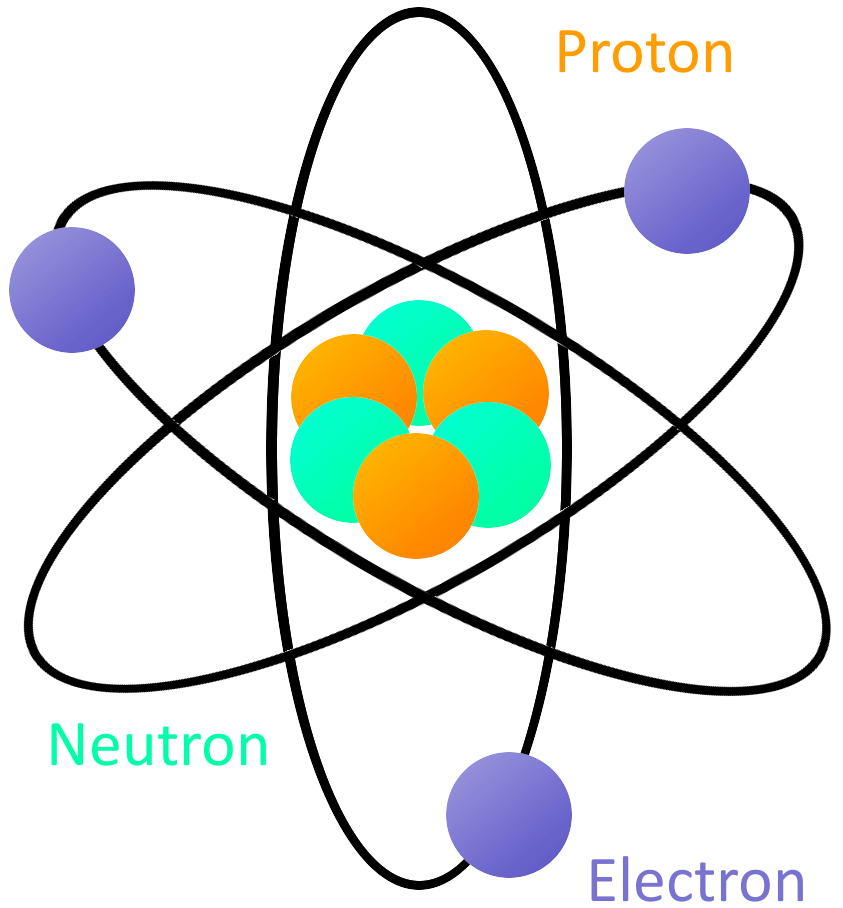
The spacing of the nucleons is 1.36 fermi meters.  That's twice the radii.  The
reciprocal of this spacing is the nuclear wave number.
The wave number and the elastic constant give a sonic velocity of 1,094,000
meters per second in the structure.
Frank Znidarsic -----Original Message----- From: Bob Cook <[email protected]> To: vortex-l <[email protected]> Sent: Fri, Mar 27, 2015 12:27 pm Subject: Re: [Vo]:A picture is worth a thousand words, or maybe 10k Jones-- The Li-6 loves neutrons and will readily change to Li-7, if one is nearby. It may be that the Li-6 acts as a catalyst to combine the charge of a proton and an electron to form a neutron and He-5, which in turn gives up another neutron and gets to He-4. The neutrons can then combine with most anything to form an isotope up to Ni-62 with loss of mass along the way. It will be interesting to see what the isotopic analysis of Parkhomov's ash is. It is being evaluated currently. We may see some Si-28 coming from Al-27 transmutation via the short-lived Al-28 isotope. Also, in thinking about the geometrical stability of the Li-7 and the lack of the stability of Li-6. I assume you envision a concentrated point charge associated with the protons with respect to the geometry. I for one do not think there is a segregation of charge within the nucleus, but that the charge is spread throughout the nucleus so as to eliminate discontinuities at a 0 distance. Thus, variation in charge density within a nucleus is nil. However the charge density shape can be modified by the approach of other charges or electric or magnetic fields. That is what happens when Li-6 is hit with a gamma which causes it to breakup or activate to a higher energy state--an isomer with an unstable charge density configuration. Bob ----- Original Message ----- From: Jones Beene To: [email protected] Sent: Friday, March 27, 2015 8:07 AM Subject: [Vo]:A picture is worth a thousand words, or maybe 10k The following is overly simplistic, but also surprisingly intuitive for a particular hypothesis, so it is worth the effort to try to get down an explanation for the Rossi/Parkhomov effect one containing less than a thousand words, by using a few images Here is an image of the Li-7 nucleus. Keep in mind the single tenet that like-charges repel. In a small nucleus, and ignoring QM for a moment in favor of macro geometrical restraints this means that nesting of nucleons becomes complicated since in the case of 3 protons, they must be kept apart by neutrons. http://www.lnhatom.com/Lithium%207.jpg To oversimplify the point which will be made below: the red balls are the 3 protons, and they do not touch each other because the 4 neutrons form a tetrahedron which effectively separates them, and a tetrahedron is an especially stable geometry. Therefore, this isotope should be more stable than one where like charges have the possibility of fleeting contact. In fact, almost 93% of natural lithium is this particular isotope: Li7 despite this isotope being a drip line anomaly in itself. That stable tetrahedral nesting arrangement at the core of Li7 is not the case with lithium-6 however; and this nucleus becomes unstable, particularly when stressed by incursion of positive charge (such as by the approach of a proton). That is because the only stable geometry which we can visualize for Li6 is to have a near-planar hexagonal arrangement of alternating neutrons and protons, arranged somewhat like a benzene ring, which is not spherical and not stable wrt the strong force: https://dlnmh9ip6v2uc.cloudfront.net/assets/0/4/e/8/2/519fa09dce395f8b08000000.png Therefore, a planar structure like the one above, when it is located inside orbiting electrons is itself unstable, and the natural charge-equalizing tendency is for the hexagonal plane to revert to something more compact, like a sphere. Therefore on occasion, and as several papers are now suggesting, the lithium-6 nucleus temporarily takes the form of 3 deuterons, arranged in the X,Y & Z axes where the neutrons of each deuteron are in contact. This is where Efimov state comes into play. Now the visual image of greatest impact is to imagine the 3 deuterons expressing the Efimov Halo Effect, which is state of oscillating balance and "Russian nesting dolls" geometry as predicted by Efimov. This state should function like a pump, among other possibilities. But a pump for what? For those who suspect that the Dirac sea, as expressed in Don Hotsons many papers, is accessible as a point source, then one suggestion is that the Li6 nucleus can act like a pump for something which is intrinsic to the Dirac sea and since epos are ruled out by the lack of observed radiation, then that something is most likely spin, or a subset like angular momentum, or a quantum of spin: a Dirac spinor, or something along those lines. Thus the Li6 nucleus would be the a gateway for spin energy coupling especially at a temperature where the 3-deuteron geometry is favored. This temperature seems to be in the range of 1400K in the dogbone. This hypothesis suggests that the key to the excess heat in dogbone-type devices is lithium-6. The thermal anomaly will be maximized by enrichment in the isotope, and should go away with all Li7. Thus, this hypothesis, despite being complicated in detail - is easily falsifiable, unlike most of the other explanations floating around, which generally fail due to the lack of observable high energy radiation.