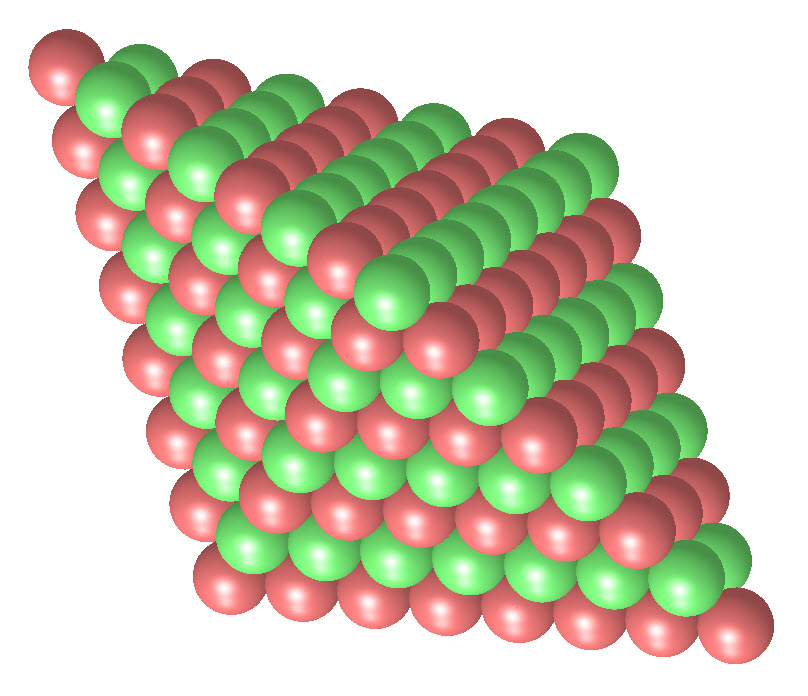
I agree, this is going to be a trial and error thing. I've done a lot of
stress/strain and thermal finite element modeling (I'm a mechanical
engineer)  but never electrostatic.    The main thing is just to see what
happens and keep on trying different assumptions.  First thing is to try
all the cheap options.  The main goal is to number the red protons in order
from highest to lowest potential. The ultimate goal is to confirm the well
known standard orbit filling order: 1s, 2s, 2p, 3s, 3p, 4s, 3d, 4p, 5s, 4d,
5p, 6s, 4f, 5d, 6p, 7s, 5f, 6d, 7p, 8s
Bob, I will send you a powerpoint presentation off-line.  Is there anyone
else that can help me? I can pay a medium token amount - say $200 for a
some simplified runs? I really think that my hypothesis (which I borrowed
from someone else, who I will give full credit to later, after I can
confirm as much as possible)  is worth some effort investigating.

Jeff


On Tue, Jan 26, 2016 at 5:07 PM, Bob Higgins <[email protected]>
wrote:

> Jeff,
>
> I think you will have trouble with finite element analysis of that
> structure, and the results will likely depend a lot on some of the
> assumptions.  The first problem is how you are going to model the charge of
> the proton.  For example, will you presume the charge is concentrated at
> the center of the proton?  Will you presume a charge density inside the
> proton as a sphere instead?  If you presume that the proton is modeled as a
> uniform spherical charge density, you will have some charge density too
> close to the charge density in the adjacent proton - this will cause
> numerical convergence failure of the analysis.  If you let the charge
> density inside the proton to re-distribute based on the  force from the
> adjacent protons (as is typically done for electron charge density on
> conductors), then you need to have a model for the force that holds the
> charges into a uniform distribution in the first place - AND - the result
> may not be a spherical proton anymore.
>
> All in all, this becomes a fields analysis research project, probably
> requiring custom coding of the simulator, with little means of determining
> whether the initial assumptions about charge behavior in the proton were
> correct or not.  I have coded such simulators for determining electron
> charge distribution in conductors before, but the electronic charge
> distribution had a direct impact on the computed capacitance of the
> structure, so there was a reasonable test one could make to determine if
> the formulation was correct.  Not so easy in the case of nuclear field
> distribution.  How do you think the results would be tested for validity?
>
>
> On Tue, Jan 26, 2016 at 2:21 PM, Jeff Driscoll <[email protected]> wrote:
>
>> Does anyone have access to electrostatics software package and have time
>> to do a finite element analysis on a 3-D part to determine the
>> electrostatic field potential? Specifically the JPEG in the link below
>> shows a grouping of protons and neutrons. I mainly need to figure out which
>> protons have the highest electrostatic field near them so that the protons
>> can be numbered and ordered from highest to lowest voltage potential. There
>> might be two ways to do it, one where they are all electrically conductive
>>  and the second where they are isolated charged spheres.  I can supply a
>> CAD model in different formats from a Solidworks model.
>>
>> I can pay someone if they can do it.
>>
>> this is the picture of 100 protons and 104 neutrons
>>
>> http://zhydrogen.com/wp-content/uploads/2011/04/protons-neutrons.jpg
>>
>> I have a CAD model of it also. It is made from 100 protons and 104
>> neutrons (fermium-204 which does not exist, but fermium-257 has a half life
>> of 100 days). Each red proton in the image would be about .8 fm (.8 x
>> 10^-15 m) in diameter and the same for the green neutrons. The electrons
>> would be orbiting this nucleus further out at some fraction (such as
>> 1/100th) of the bohr radius where the bohr radius = 5.29 x 10^-11 m. But I
>> only need the finite element analysis done on the proton/neutrons shown in
>> the image (no electrons). I need the order of decreasing electrostatic
>> voltage potential.  The goal is to confirm the well known standard orbit
>> filling order: 1s, 2s, 2p, 3s, 3p, 4s, 3d, 4p, 5s, 4d, 5p, 6s, 4f, 5d, 6p,
>> 7s, 5f, 6d, 7p, 8s
>>
>> Jeff
>>
>
>


--
Jeff Driscoll
617-290-1998