> From: "MarkI-ZeroPoint" <[email protected]>
> Sent: Friday, June 28, 2013 12:32:34 PM
> DaveR and AlanF, and any others doing thermal modeling…
>
>
>
> If you are using at least reasonable physical models, with the
> appropriate thickness of layers, and thermal conductivity and heat
> capacity of each cylinder, then it seems that one could easily
> distinguish between the source of heat being reactor core (stainless
> steel cylinder) or the electrical heaters which are much closer to
> the out surface. A pulse of heat from the reactor core will take
> much longer to make it to the outer surface, so the lag-times should
> be longer…
>
> Have either of you done some simulations with the source entirely in
> the core vs entirely the resistance heaters to determine the
> difference in lag-time?
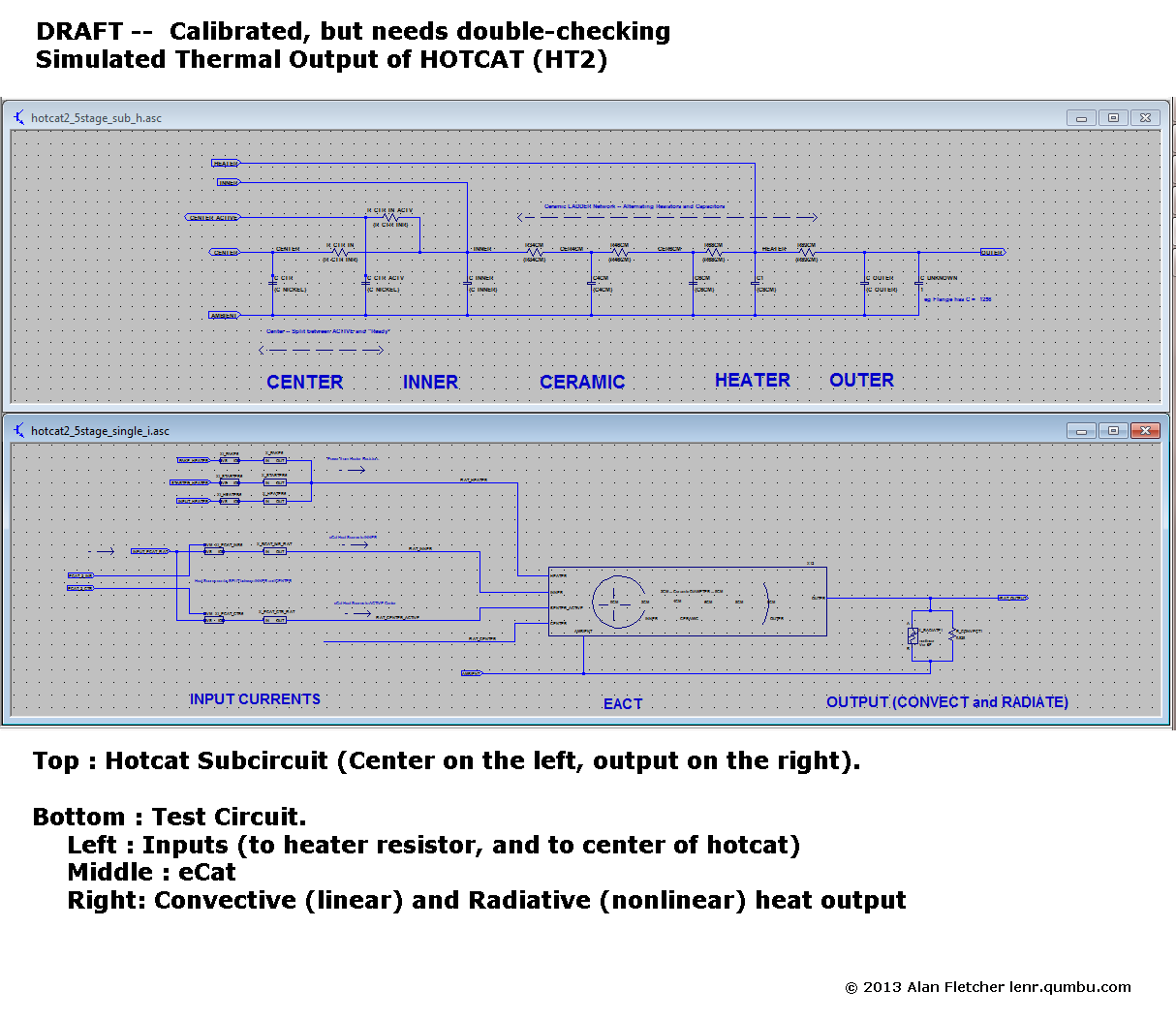
Funny you asked .....  here's my current spice model :

http://lenr.qumbu.com/web_hotcat_spice/130625_spice_18.png

Here's the Levi curve :
http://lenr.qumbu.com/web_hotcat_pics/130601_levi_12A.png

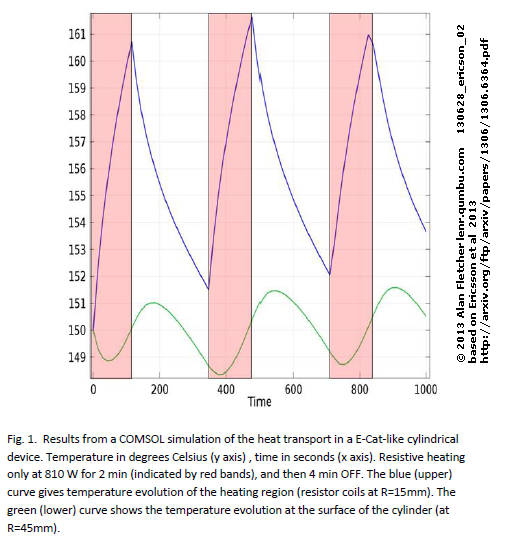
Here's the Ericsson curve :
http://lenr.qumbu.com/web_hotcat_spice/130628_ericson_02.png

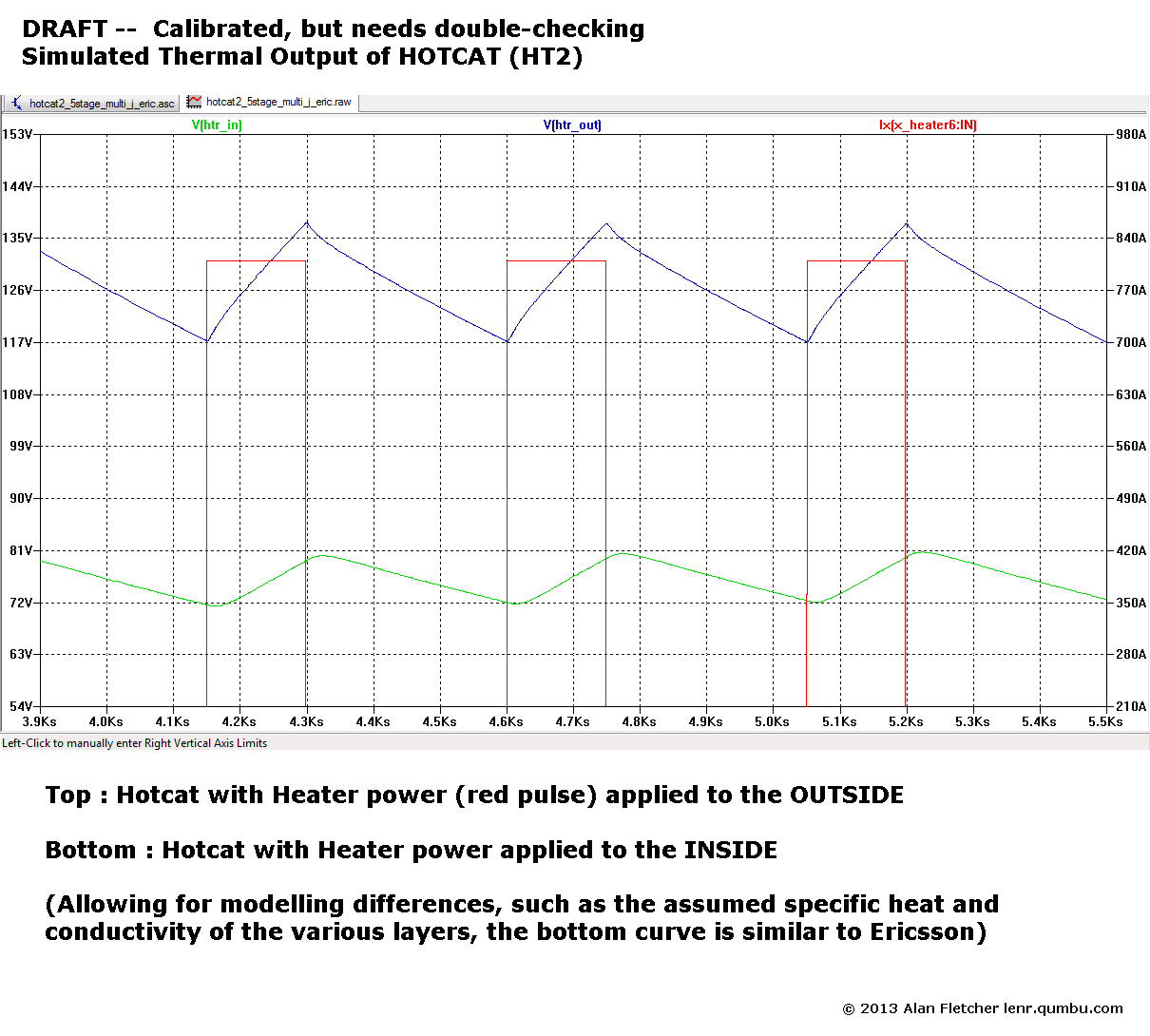
Here's my simulation with HEATER power only, applied to the OUTSIDE (top) and
INSIDE (bottom)
http://lenr.qumbu.com/web_hotcat_spice/130625_spice_20.png

Their model isn't calibrated -- mine is. Allowing for the different voltages,
the SHAPE of the Ericson curve clearly shows that the "sine-like" wave only
occurs if excess pulsed power comes from the INSIDE, not the OUTSIDE.