I am really happy with how web2py development is going. As long as the
project keeps growing, the code will keep getting better. You guys are
doing a great job!
On May 23, 11:34 am, Iceberg <[email protected]> wrote:
> > On May 22, 1:56 pm, b00m_chef <[email protected]> wrote:
> > > Learn from the best on how to manage a release
> > > cycle:http://www.youtube.com/watch?v=i7pkyDUX5uM
>
> On May23, 9:17pm, mdipierro <[email protected]> wrote:
>
>
>
>
>
> > Let me explain what we do now because it has some similarities with
> > what described in the video below (above).
>
> > There is a single web2py. I do not branch a release and fix bugs in
> > the brunched release. A release in web2py is just a snapshot in time
> > of the official web2py branch. This means we do not need to have a
> > testing team and a development team. We do not have problems with
> > people working on different branches. I always run the latest (trunk)
> > version and I hope other developers are doing the same.
>
> > Because web2py has to keep API backward compatibility we do not the
> > concept of "locking" the API because they are always locked.
>
> > When I receive patches they belong to one of the following categories:
> > 1) a bug fix. Usually they are in response of a clear problem and
> > problem and self contained.
> > 2) a new feature. In this case I look at the code and make sure it is
> > backward compatibility. I may or may not test the new feature. I
> > usually ask users to do so. The person who proposed the new feature
> > usually tests and maintains the new feature.
> > 3) a rewrite. This happened rarely but has been the cause of some
> > problem. Once in a while we feel that some piece of code (complex,
> > designed and optimized over years) needs to be rewritten (this may be
> > necessary because users feel the code could be more readable, faster
> > or simply in order to a new "major" feature).
>
> > We never had problems with 1 and 2. The problems we have had were
> > always due to 3, code rewrite. Whether it was a single function or an
> > entire module. The problem with code rewrite is that there is some
> > collective knowledge about the code to be rewritten and no individual
> > has the same knowledge about all the details. For example a certain
> > line of code may be written in certain way to make sure that it works
> > on python 2.4 or to provide a certain obscure feature that is not
> > documented (not even designed) but users have unknowingly started to
> > rely on it. When code is rewritten people make sure that the new code
> > behaves exactly like the old code in regard to documented features but
> > that is not enough. New code should behave exactly as old code even
> > (before new features are added) in all cases. That is very hard to
> > test.
>
> > How do I handle this? If there is a minor code rewrite I test it
> > myself and assign somebody to look at it. If the code rewrite is
> > major, I keep it in a separate file (dal.py intead of sql.py and
> > template2.py instead of template.py) and ask people to run web2py with
> > the new module instead of the old module. We do not branch web2py
> > because small (and safe) features and bug fixes are being added to
> > web2py that do not interfere with the rewrite.
>
> > What can we do? 1) we should have more unittests; 2) we should lock a
> > release for one week before releasing and allow people testing it; 3)
> > we should keep track of how many people are using the release
> > candidate.
>
> > Some people think that unittests fix all problems. That is not true.
> > Consider the case of the rewrite of the template module. The new
> > module worked almost identical to the original one (except for the new
> > features) with one caveat: It changed the way application bugs were
> > going to reported in the ticket. How do you write unittests for
> > application bugs? It is possible but very time consuming. Even if the
> > code has been in the nightly built for two weeks and even if emailed
> > other developers for checking it, some of the issues did not come up
> > because web2py developers tend not to introduce bugs in their
> > application code and therefore they did not notice the differences in
> > how errors were reported. Only once released to the general public the
> > problem showed up. The problem was identified and fixed in 24 hours.
> > Unfortunately some of the new features introduced in the rewrite had
> > to be reverted and their release postponed pending more testing (now
> > that we know what to test).
>
> > Massimo
>
> I used to work for a big company for a big product, therefore kind of
> knew how difficult to maintain a product with many branches, in the
> traditional way, a.k.a. new features are only added into trunk, and
> each release is tagged and forked as a bugfix-only branch.
>
> Now I would like to say, web2py uses a completely different approach,
> that is "no need to branch", therefore do not have problems when
> people would work on different branches. Thanks to web2py's stable API
> from the beginning (awesome job, Massimo), and the promise of backward
> compatibility.
>
> Unittest surely can not prevent all problem, but I think we are now
> doing less than enough, rather than overcooked. Most features are
> testable but still without test cases. I admit sometimes it can feel
> boring and time consuming to write test cases, but it is still worthy
> if you believe test cases should be considered a valuable part of
> source code and it pays off when doing TDD or recursive test after
> refactoring. Ok, ok, enough preachment here. :)
>
> Locking a release (candidate) for one week before releasing and allow
> people testing it, is the way python doing. It should work as long as,
> enough people, even those who would not update his work copy
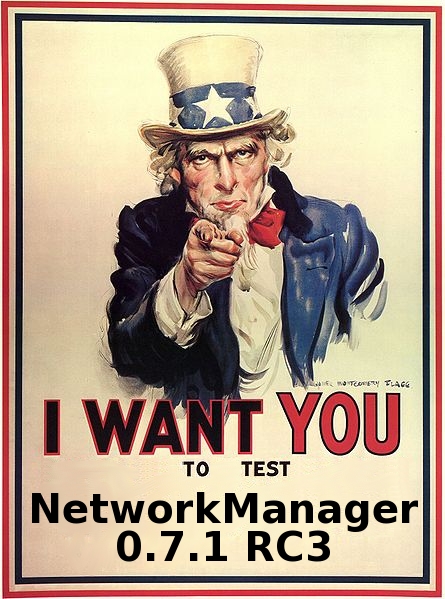
> frequently, are willing to response to the call of "Uncle M" saying "I
> want you to test web2py RC-1.x"
> :-)http://blogs.gnome.org/dcbw/files/2009/03/unclesam.jpg
>
> Let's keep making web2py better!
>
> Regards,
> Iceberg