I don¹t know about libraries, but there are some technical solutions to
problems like these.
One approach to reducing bandwidth may be bandwidth throttling in the
router settings for the router the library uses.  This limits the
download/upload rates for a client or clients and may limit high
resolution video viewing because the connection then could be set to
throttle at a speed too slow to view some or all high-resolution streaming
versions of videos in real time. This may also make it so that one user
isn¹t hogging and saturating the internet connection and slowing the
network for all other users.  I've seen this kind of throttling in hotels
that supply a free low speed connection that is good enough for checking
email and browsing the web, but not fast enough for streaming video (they
then may allow it if you pay an extra fee).

There may also be ways to set daily bandwidth quotas for each client in
the router settings for some routers.

Many consumer routers do not have these settings, but more expensive
professional-level routers or alternative firmwares for consumer routers
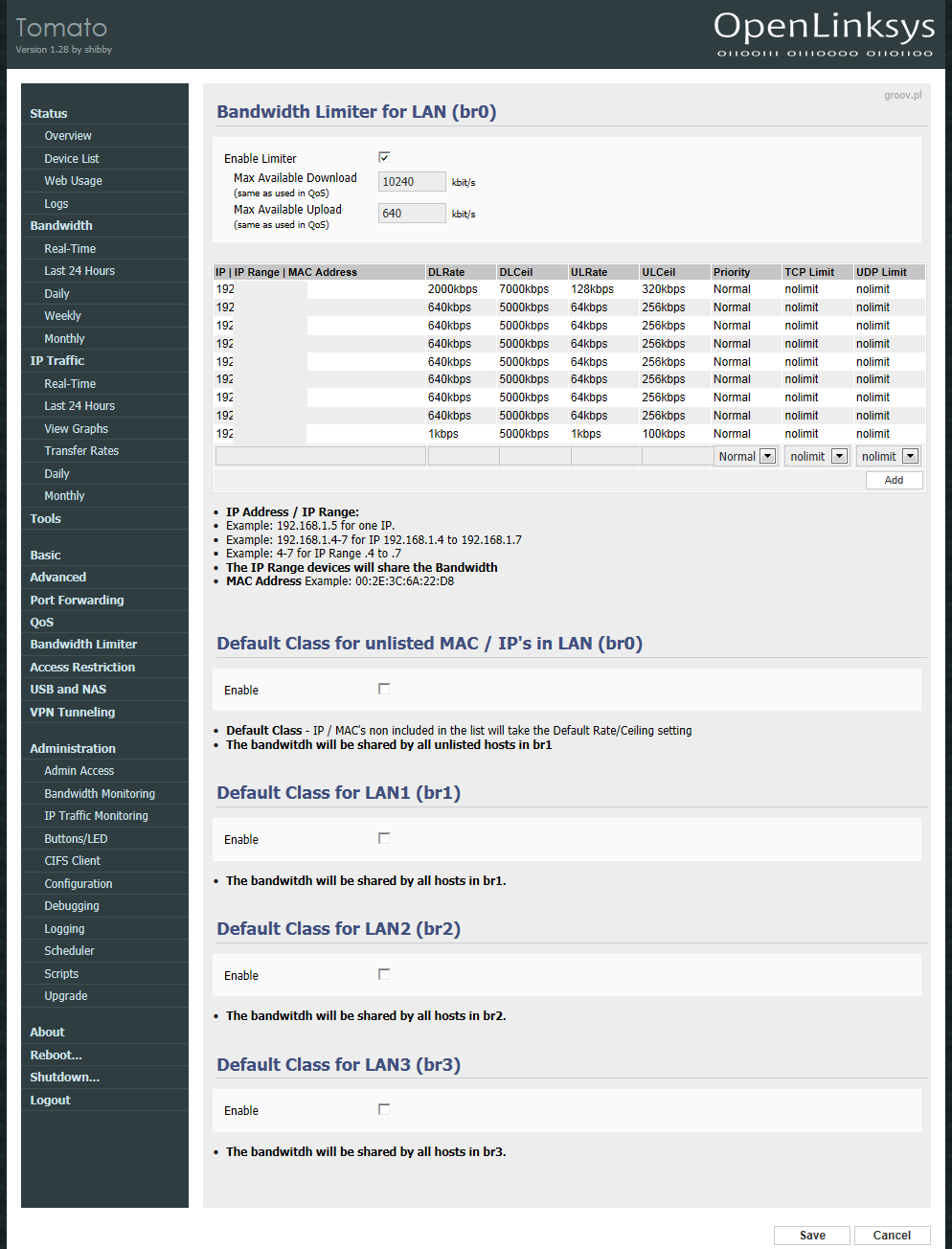
might have the settings.  For example, DD-WRT or Tomato are custom
firmwares for some routers that may allow you to configure settings like
this if someone has released something for your specific brand/model of
router.  For example a Tomato firmware by shibby has settings like this
http://tomato.groov.pl/wp-content/gallery/screenshots/bwlimiter.png .

I don¹t know if that helps or is what you¹re looking for.


On 8/4/14, 7:20 AM, "Carol Bean" <[email protected]> wrote:

>A quick and dirty search of the list archives turned up this topic from 5
>years ago.  I am wondering what libraries (especially those with limited
>resources) are doing today to control or moderate bandwidth, e.g., where
>viewing video sites uses up excessive amounts of bandwidth?
>
>Thanks for any help,
>Carol
>
>Carol Bean
>[email protected]