There are 14 messages in this issue.

Topics in this digest:
1.1. Re: Typical lexicon size in natlangs
From: Gary Shannon
1.2. Re: Typical lexicon size in natlangs
From: Nicole Valicia Thompson-Andrews
1.3. Re: Typical lexicon size in natlangs
From: Nicole Valicia Thompson-Andrews
1.4. Re: Typical lexicon size in natlangs
From: Padraic Brown
1.5. Re: Typical lexicon size in natlangs
From: Nicole Valicia Thompson-Andrews
1.6. Re: Typical lexicon size in natlangs
From: Garth Wallace
1.7. Re: Typical lexicon size in natlangs
From: Nicole Valicia Thompson-Andrews
1.8. Re: Typical lexicon size in natlangs
From: Jim Henry
1.9. Re: Typical lexicon size in natlangs
From: Nicole Valicia Thompson-Andrews
1.10. Re: Typical lexicon size in natlangs
From: Padraic Brown
2a. Re: natlang precedent?? vcc > v:c
From: Matthew Boutilier
3a. FW: Typical lexicon size in natlangs
From: Nicole Valicia Thompson-Andrews
3b. Re: FW: Typical lexicon size in natlangs
From: Jim Henry
4. SSM3 (was Re: Yet Another Simple Self-Segregating Morphology)
From: neo gu
Messages
________________________________________________________________________
1.1. Re: Typical lexicon size in natlangs
Posted by: "Gary Shannon" [email protected]
Date: Sun May 12, 2013 3:19 pm ((PDT))
On Sun, May 12, 2013 at 1:32 PM, Herman Miller <[email protected]> wrote:
> On 5/12/2013 2:04 PM, Gary Shannon wrote:
>>
>> NSM is fascinating, theoretically, but who wants a dictionary that
>> takes 3 pages to define "mouse"?
---
>
> Defining animals like "mouse" is tricky. There's hundreds of small rodents
> in the world; which ones are mice and which ones are rats? Which ones are
> different enough to get their own names, like "gerbil"? It might be more
> relevant to see how many pages it takes for NSM to define words like
> "guitar".
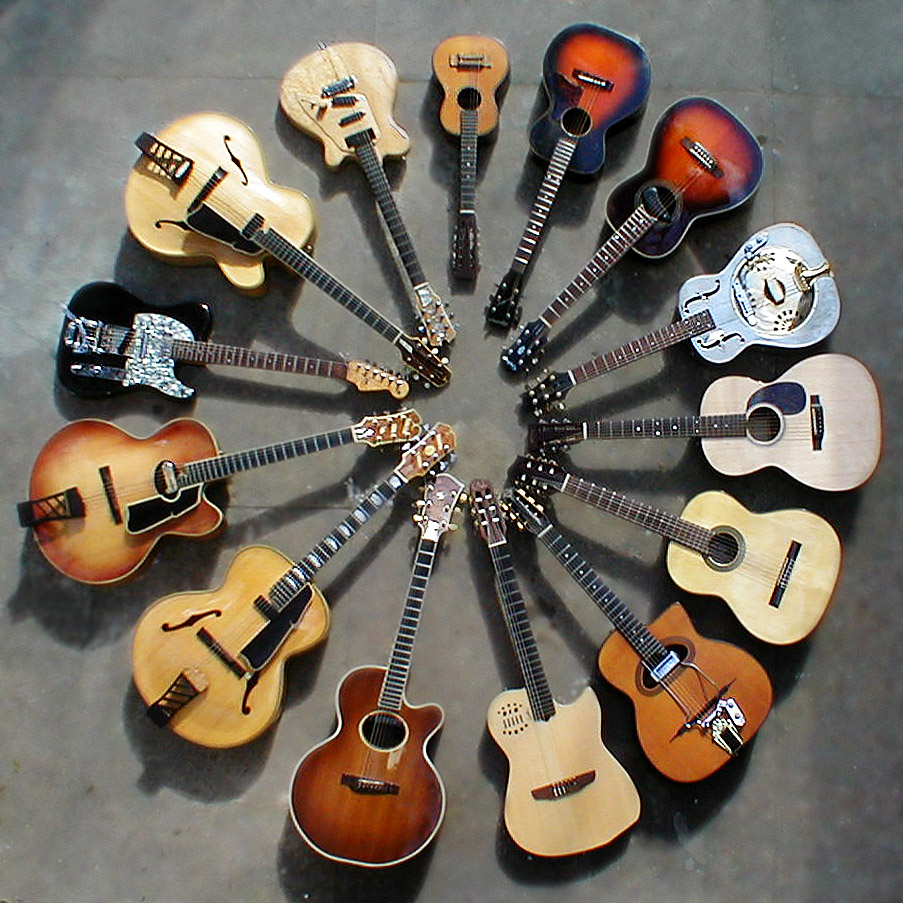
I think that as a practical matter I would probably define "guitar" as
"A plucked, stringed musical instrument like these: [insert image here
showing a few representative styles of guitar]" (like
http://www.stephencassidyguitartuition.co.uk/guitar.jpg )
--gary
Messages in this topic (38)
________________________________________________________________________
1.2. Re: Typical lexicon size in natlangs
Posted by: "Nicole Valicia Thompson-Andrews" [email protected]
Date: Sun May 12, 2013 3:50 pm ((PDT))
I wish they had a .zip file of these downloads.
Semantics isn't listed in my guide, but I plan to read it, as I'm thinking to
use the guide. Praagmatics is also a part of that chapter. How would I use
semantics in my conlang, just for creating the definitions, and city and
village dialects?
Mellissa Green
@GreenNovelist
-----Original Message-----
From: Constructed Languages List [mailto:[email protected]] On Behalf
Of MorphemeAddict
Sent: Sunday, May 12, 2013 2:52 PM
To: [email protected]
Subject: Re: Typical lexicon size in natlangs
This is why I'd like to see a dictionary with three levels:
1) Pure, basic NSM semantic primes - the (~63) 'semantic atoms';
2) An intermediate much larger group (500-2000?) of 'semantic molecules'
defined in terms of level one;
3) Everything else defined in terms of levels 1 and 2.
This way the explications would be shorter, and also easier to understand
than if all explications were given in level one, since they'd be on a
richer, more natural semantic field.
Wierzbicka herself talks about this in Mental Lexicon and The Common
Language of All People, both free downloads at
http://www.griffith.edu.au/humanities-languages/school-languages-linguistics/research/natural-semantic-metalanguage-homepage/downloads
stevo
On Sun, May 12, 2013 at 2:04 PM, Gary Shannon <[email protected]> wrote:
> NSM is fascinating, theoretically, but who wants a dictionary that
> takes 3 pages to define "mouse"? I think Wierzbicka's semantic
> primitives make up far too lean a set to be of practical use for
> day-to-day users. I think that a practical number might lie somewhere
> between NSM's 100 or so primes and Longman's 2,000. Maybe something in
> the neighborhood of Ogden's 800 "Basic English" words, although his
> list, as it stands, would not be suitable because of all the fudging
> he does with meanings.
>
> Still, something like 800 or 1000 defining words might be an usable
> conlang target to shoot for.
>
> --gary
>
> On Sun, May 12, 2013 at 10:47 AM, Alex Fink <[email protected]> wrote:
> > On Sun, 12 May 2013 13:02:37 -0400, Rich Harrison <[email protected]>
> wrote:
> >
> >>This has been a very interesting discussion with a lot of fresh thoughts.
> >>
> >>Gary wrote:
> >>
> >>> So I would phrase the conlanger's version of the question thusly: For
> >>> my conlang X how many (and which) words do I need in order to be able
> >>> to compile a dictionary entirely in conlang X? I'm going to call that
> >>> the "Critical Mass Lexicon", because at that point, the lexicon can
> >>> support its own growth without using an L1 crutch.
> >>
> >>I wonder if skilled users of aUI and Toki Pona could write dictionaries
> entirely in their conlangs? If so, the minimal size of a Critical Mass
> Lexicon might be a lot smaller than many people assume.
> >
> > Hm, this could be a use for Wierzbicka's Natural Semantic Metalanguage.
> I continue to be unconvinced it has anything at all to do with human
> cognition, or more than a one-sided relationship to semantic simplicity --
> but the various NSM definitions of words that have been presented would
> seem to show that it's capable enough as a (longwinded) critical mass
> lexicon.
> >
> > Alex
>
Messages in this topic (38)
________________________________________________________________________
1.3. Re: Typical lexicon size in natlangs
Posted by: "Nicole Valicia Thompson-Andrews" [email protected]
Date: Sun May 12, 2013 3:53 pm ((PDT))
Wait a minute. I'm confused.
Wouldn't a word in one dialect mean the same in another? For example, soda
and pop are the same thing. A carbonated beverage.
Mellissa Green
@GreenNovelist
-----Original Message-----
From: Constructed Languages List [mailto:[email protected]] On
Behalf Of Gary Shannon
Sent: Sunday, May 12, 2013 3:19 PM
To: [email protected]
Subject: Re: Typical lexicon size in natlangs
On Sun, May 12, 2013 at 1:32 PM, Herman Miller <[email protected]> wrote:
> On 5/12/2013 2:04 PM, Gary Shannon wrote:
>>
>> NSM is fascinating, theoretically, but who wants a dictionary that
>> takes 3 pages to define "mouse"?
---
>
> Defining animals like "mouse" is tricky. There's hundreds of small rodents
> in the world; which ones are mice and which ones are rats? Which ones are
> different enough to get their own names, like "gerbil"? It might be more
> relevant to see how many pages it takes for NSM to define words like
> "guitar".
I think that as a practical matter I would probably define "guitar" as
"A plucked, stringed musical instrument like these: [insert image here
showing a few representative styles of guitar]" (like
http://www.stephencassidyguitartuition.co.uk/guitar.jpg )
--gary
Messages in this topic (38)
________________________________________________________________________
1.4. Re: Typical lexicon size in natlangs
Posted by: "Padraic Brown" [email protected]
Date: Sun May 12, 2013 5:45 pm ((PDT))
--- On Sat, 5/11/13, Nicole Valicia Thompson-Andrews <[email protected]>
wrote:
> Thanks. Yes, local dialects. I put city because the spellings are
> dependent on the city or village you come from.
One interesting thing you could do, rather than create similar dialects
for each city (and therefore give yourself way too much work to do!) is
to create a rather shorter listing of the more unusual, interesting,
archaic and peculiar words used in various dialects that are not to be
found in the main dialect, or that have radically different meanings
from what is usual for a word. Less duplication of work this way, plus,
if you have a character from some distant city in one of your stories,
you can always show off his foreignness through his odd sounding words
and misunderstood meanings.
Padraic
>
> Mellissa Green
>
>
> @GreenNovelist
>
> -----Original Message-----
> From: Constructed Languages List [mailto:[email protected]]
> On
> Behalf Of Jim Henry
> Sent: Friday, May 10, 2013 7:32 PM
> To: [email protected]
> Subject: Re: Typical lexicon size in natlangs
>
> On Sat, May 11, 2013 at 12:35 AM, Nicole Valicia
> Thompson-Andrews
> <[email protected]>
> wrote:
> > question along those lines is what do I do when I get
> to an English word
> > that has no Yardish word. For example, Yemorans don't
> have apples, so do I
> > just leave those words out, with a note explain any
> word not on this list
> > has no Yardish equivalent?
>
> You don't necessarily need to say that; it should go without
> saying
> given the context of your language. Your Yardish
> dictionary should
> list words for the native plants and animals of their world,
> but
> unless they're in contact with humans and have words for
> plants and
> animals from Earth, they don't need to have words for those
> things,
> and you shouldn't need to spell that out in every case.
>
> > Also, do I put city spellings for words like noydle,
> which is also noidle?
>
> Do you mean local dialect variations?
>
> > In other words, do I create two lexicons, one with the
> regular spellings,
> > and one with the spellings by city? I'm thinking if so,
> I'd just do a cut
> > and past and change the spellings.
> > I'm thinking the definitions wouldn't change per city.
>
> I'd suggest that you (perhaps arbitrarily) pick some dialect
> that will
> be represented as "primary" in your lexicon, and write your
> main
> definitions under headwords in the form they have in that
> dialect.
> Then, for variant forms, just have a cross-reference saying
> "dialect
> variant of <other word>", e.g.,
>
> tsalim - n., barrel or crate
>
> tsaalem - Terepsan dialect for "tsalim" (q.v.)
>
> Of course, some dialect words will be semantically distinct
> from words
> in the prestige dialect, so you'd give those their own
> independent
> definitions. For instance, the Sulitsan dialect might
> use "tsalhima"
> for most barrels and crates, but a local word "ipsanu" which
> occurs
> nowhere else just for barrels of beer.
>
> --
> Jim Henry
> http://www.pobox.com/~jimhenry/
> http://www.jimhenrymedicaltrust.org
>
Messages in this topic (38)
________________________________________________________________________
1.5. Re: Typical lexicon size in natlangs
Posted by: "Nicole Valicia Thompson-Andrews" [email protected]
Date: Sun May 12, 2013 6:27 pm ((PDT))
Oh, cool. Love the idea! Thanks. I'm guessing that's where the semantics and
pragmatics would comein?
Mellissa Green
@GreenNovelist
-----Original Message-----
From: Constructed Languages List [mailto:[email protected]] On
Behalf Of Padraic Brown
Sent: Sunday, May 12, 2013 5:46 PM
To: [email protected]
Subject: Re: Typical lexicon size in natlangs
--- On Sat, 5/11/13, Nicole Valicia Thompson-Andrews <[email protected]>
wrote:
> Thanks. Yes, local dialects. I put city because the spellings are
> dependent on the city or village you come from.
One interesting thing you could do, rather than create similar dialects
for each city (and therefore give yourself way too much work to do!) is
to create a rather shorter listing of the more unusual, interesting,
archaic and peculiar words used in various dialects that are not to be
found in the main dialect, or that have radically different meanings
from what is usual for a word. Less duplication of work this way, plus,
if you have a character from some distant city in one of your stories,
you can always show off his foreignness through his odd sounding words
and misunderstood meanings.
Padraic
>
> Mellissa Green
>
>
> @GreenNovelist
>
> -----Original Message-----
> From: Constructed Languages List [mailto:[email protected]]
> On
> Behalf Of Jim Henry
> Sent: Friday, May 10, 2013 7:32 PM
> To: [email protected]
> Subject: Re: Typical lexicon size in natlangs
>
> On Sat, May 11, 2013 at 12:35 AM, Nicole Valicia
> Thompson-Andrews
> <[email protected]>
> wrote:
> > question along those lines is what do I do when I get
> to an English word
> > that has no Yardish word. For example, Yemorans don't
> have apples, so do I
> > just leave those words out, with a note explain any
> word not on this list
> > has no Yardish equivalent?
>
> You don't necessarily need to say that; it should go without
> saying
> given the context of your language. Your Yardish
> dictionary should
> list words for the native plants and animals of their world,
> but
> unless they're in contact with humans and have words for
> plants and
> animals from Earth, they don't need to have words for those
> things,
> and you shouldn't need to spell that out in every case.
>
> > Also, do I put city spellings for words like noydle,
> which is also noidle?
>
> Do you mean local dialect variations?
>
> > In other words, do I create two lexicons, one with the
> regular spellings,
> > and one with the spellings by city? I'm thinking if so,
> I'd just do a cut
> > and past and change the spellings.
> > I'm thinking the definitions wouldn't change per city.
>
> I'd suggest that you (perhaps arbitrarily) pick some dialect
> that will
> be represented as "primary" in your lexicon, and write your
> main
> definitions under headwords in the form they have in that
> dialect.
> Then, for variant forms, just have a cross-reference saying
> "dialect
> variant of <other word>", e.g.,
>
> tsalim - n., barrel or crate
>
> tsaalem - Terepsan dialect for "tsalim" (q.v.)
>
> Of course, some dialect words will be semantically distinct
> from words
> in the prestige dialect, so you'd give those their own
> independent
> definitions. For instance, the Sulitsan dialect might
> use "tsalhima"
> for most barrels and crates, but a local word "ipsanu" which
> occurs
> nowhere else just for barrels of beer.
>
> --
> Jim Henry
> http://www.pobox.com/~jimhenry/
> http://www.jimhenrymedicaltrust.org
>
Messages in this topic (38)
________________________________________________________________________
1.6. Re: Typical lexicon size in natlangs
Posted by: "Garth Wallace" [email protected]
Date: Sun May 12, 2013 6:33 pm ((PDT))
On Sun, May 12, 2013 at 6:49 PM, Nicole Valicia Thompson-Andrews
<[email protected]> wrote:
> I wish they had a .zip file of these downloads.
>
> Semantics isn't listed in my guide, but I plan to read it, as I'm thinking to
> use the guide. Praagmatics is also a part of that chapter. How would I use
> semantics in my conlang, just for creating the definitions, and city and
> village dialects?
You can't not use semantics. Attaching meanings to words IS semantics.
Messages in this topic (38)
________________________________________________________________________
1.7. Re: Typical lexicon size in natlangs
Posted by: "Nicole Valicia Thompson-Andrews" [email protected]
Date: Sun May 12, 2013 6:36 pm ((PDT))
If that question didn't make sense, I meant, I'm guessing that creating a
shorter list of dialectical words is part of the semantics and pragmatics?
The odd sounding phrases would certainly work in the stories.
Mellissa Green
@GreenNovelist
Messages in this topic (38)
________________________________________________________________________
1.8. Re: Typical lexicon size in natlangs
Posted by: "Jim Henry" [email protected]
Date: Sun May 12, 2013 9:42 pm ((PDT))
On Sun, May 12, 2013 at 9:33 PM, Garth Wallace <[email protected]> wrote:
> On Sun, May 12, 2013 at 6:49 PM, Nicole Valicia Thompson-Andrews
> <[email protected]> wrote:
>> I wish they had a .zip file of these downloads.
>>
>> Semantics isn't listed in my guide, but I plan to read it, as I'm thinking
>> to use the guide. Praagmatics is also a part of that chapter. How would I
>> use semantics in my conlang, just for creating the definitions, and city and
>> village dialects?
>
> You can't not use semantics. Attaching meanings to words IS semantics.
In fact, you *can* not use semantics, although you can't get very far
without it. We've seen lots of phonology sketches that are just that
and nothing else. And I've used such phonology sketches as naming
languages for stories, including some where there are some recurring
"morphemes" that have no particular meaning (at least when I start
out), but are just there to give a consistent feel to the proper
names.
To answer "how would I use semantics" in more depth, I'd suggest
looking at how the meanings of words in diverse languages fail to map
perfectly to one another -- how different languages divide up the
world of meaning into particular words in different ways -- and
keeping that in mind as you assign meanings to the words in your
conlang; few or none of them should be exact synonyms of any English
word, they should be narrower or broader in meaning than the closest
English equivalent.
--
Jim Henry
http://www.pobox.com/~jimhenry/
http://www.jimhenrymedicaltrust.org
Messages in this topic (38)
________________________________________________________________________
1.9. Re: Typical lexicon size in natlangs
Posted by: "Nicole Valicia Thompson-Andrews" [email protected]
Date: Sun May 12, 2013 10:08 pm ((PDT))
What's an example?
Mellissa Green
@GreenNovelist
-----Original Message-----
From: Constructed Languages List [mailto:[email protected]] On
Behalf Of Jim Henry
Sent: Sunday, May 12, 2013 9:43 PM
To: [email protected]
Subject: Re: Typical lexicon size in natlangs
On Sun, May 12, 2013 at 9:33 PM, Garth Wallace <[email protected]> wrote:
> On Sun, May 12, 2013 at 6:49 PM, Nicole Valicia Thompson-Andrews
> <[email protected]> wrote:
>> I wish they had a .zip file of these downloads.
>>
>> Semantics isn't listed in my guide, but I plan to read it, as I'm
thinking to use the guide. Praagmatics is also a part of that chapter. How
would I use semantics in my conlang, just for creating the definitions, and
city and village dialects?
>
> You can't not use semantics. Attaching meanings to words IS semantics.
In fact, you *can* not use semantics, although you can't get very far
without it. We've seen lots of phonology sketches that are just that
and nothing else. And I've used such phonology sketches as naming
languages for stories, including some where there are some recurring
"morphemes" that have no particular meaning (at least when I start
out), but are just there to give a consistent feel to the proper
names.
To answer "how would I use semantics" in more depth, I'd suggest
looking at how the meanings of words in diverse languages fail to map
perfectly to one another -- how different languages divide up the
world of meaning into particular words in different ways -- and
keeping that in mind as you assign meanings to the words in your
conlang; few or none of them should be exact synonyms of any English
word, they should be narrower or broader in meaning than the closest
English equivalent.
--
Jim Henry
http://www.pobox.com/~jimhenry/
http://www.jimhenrymedicaltrust.org
Messages in this topic (38)
________________________________________________________________________
1.10. Re: Typical lexicon size in natlangs
Posted by: "Padraic Brown" [email protected]
Date: Mon May 13, 2013 5:40 am ((PDT))
--- On Mon, 5/13/13, Nicole Valicia Thompson-Andrews <[email protected]>
wrote:
> Oh, cool. Love the idea! Thanks. I'm guessing that's where the semantics
> and pragmatics would comein?
No, just plain old practicality. Why create fifteen different conlangs
that in reality are just close dialects of one another? You're just
reinventing the wheel each time. Just create one language, call it the
standard dialect and then devise some weird divergences to stand in for
all the other dialects.
If you're creating languages as background material for a novel (you are
a budding novelist, after all!), then don't waste too much time or effort
on making the languages. You have a lot going on and very little being
done it seems to me.
Padraic
> Mellissa Green
Messages in this topic (38)
________________________________________________________________________
________________________________________________________________________
2a. Re: natlang precedent?? vcc > v:c
Posted by: "Matthew Boutilier" [email protected]
Date: Sun May 12, 2013 5:24 pm ((PDT))
yah, that's what i'm talking about!!!! thank you, Alex.
thanks for tuning into this week's episode of "sound changes i devised for
a conlang aren't actually totally insane." (come back next time to see how
*q becomes /kÊ/ before long non-back vowels.)
matt
On Sat, May 11, 2013 at 10:28 PM, Alex Fink <[email protected]> wrote:
> On Fri, 3 May 2013 14:37:09 -0500, Matthew Boutilier <
> [email protected]> wrote:
>
> >i was wondering if anyone knew, off the top of their head, of an instance
> >where a short vowel preceding a geminate consonant lengthens when the
> >language as a whole loses phonemically distinctive consonant gemination.
>
> Oh hey, what do I find in John V's documentation of Livonian sound changes
> but a case of this change applying to all sonorants. (Also only when the
> following vowel is /a/, but apparently /a @/ was the entire unstressed
> vowel inventory at this point so its relevance is probably only prosodic?)
> http://www.frathwiki.com/Finnish#Proto-Finnic_to_Livonian s.v. "Length
> II / degemination"
>
> Alex
>
Messages in this topic (9)
________________________________________________________________________
________________________________________________________________________
3a. FW: Typical lexicon size in natlangs
Posted by: "Nicole Valicia Thompson-Andrews" [email protected]
Date: Sun May 12, 2013 9:08 pm ((PDT))
Mellissa Green
@GreenNovelist
-----Original Message-----
From: Nicole Valicia Thompson-Andrews [mailto:[email protected]]
Sent: Sunday, May 12, 2013 10:13 PM
To: 'Constructed Languages List'
Subject: RE: Typical lexicon size in natlangs
I thought so. So it's strange it's not there. She didn't cover it.
She said she doesn't plan to do a revise the guide unless she can find one
of her student graduates to turn it into a stand alone resource. I like that
my textbook covers semantics and pragmatics in the same chapter. It makes
sense than to have it in two separate chapters, which if I recall, one text
I wanted to use was set like that.
So, how would I create the semantics and pragmatics section? Any ideas? The
chapter does talk about the "nyms" among other things.
Mellissa Green
@GreenNovelist
-----Original Message-----
From: Constructed Languages List [mailto:[email protected]] On
Behalf Of Garth Wallace
Sent: Sunday, May 12, 2013 6:33 PM
To: [email protected]
Subject: Re: Typical lexicon size in natlangs
On Sun, May 12, 2013 at 6:49 PM, Nicole Valicia Thompson-Andrews
<[email protected]> wrote:
> I wish they had a .zip file of these downloads.
>
> Semantics isn't listed in my guide, but I plan to read it, as I'm thinking
to use the guide. Praagmatics is also a part of that chapter. How would I
use semantics in my conlang, just for creating the definitions, and city and
village dialects?
You can't not use semantics. Attaching meanings to words IS semantics.
Messages in this topic (2)
________________________________________________________________________
3b. Re: FW: Typical lexicon size in natlangs
Posted by: "Jim Henry" [email protected]
Date: Mon May 13, 2013 4:14 am ((PDT))
On Mon, May 13, 2013 at 3:08 AM, Nicole Valicia Thompson-Andrews
<[email protected]> wrote:
> So, how would I create the semantics and pragmatics section? Any ideas? The
> chapter does talk about the "nyms" among other things.
Here is the semantics section of my gjâ-zym-byn documentation:
http://jimhenry.conlang.org/gzb/semantic.htm
It leaves something to be desired -- it really needs a good overview
section talking about the broad principles guiding how gzb tends to
lexicalize some concepts and use nonce compounds or phrases for
others, and so forth. But basically I go over a series of semantic
fields -- areas of meaning -- and talk about the various basic gzb
words for concepts in that field, and how their meanings interrelate
and how they differ from the nearest English equivalents.
Jim Henry wrote:
> To answer "how would I use semantics" in more depth, I'd suggest
> looking at how the meanings of words in diverse languages fail to map
> perfectly to one another -- how different languages divide up the
> world of meaning into particular words in different ways -- and
> keeping that in mind as you assign meanings to the words in your
On Mon, May 13, 2013 at 4:07 AM, Nicole Valicia Thompson-Andrews
<[email protected]> wrote:
> What's an example?
For instance, English has four distinct words "man", "woman",
"husband", "wife". French has three distinct words for those four
senses -- "homme" and "mari" for man and husband are distinct words,
but "femme" means both woman and wife. Greek, on the other hand, uses
just two words -- "aner" means both man and husband, "gyne" both woman
and wife.
English has a couple of fairly broad words "love" and "like", while
Greek has several more specific ones "agape", "philia", "eros",
"storge" for that domain.
English has distinct words for "wearing" clothes and "carrying" a
briefcase, for instance, whereas French uses the same word "porter"
for both. gjâ-zym-byn uses {šâ-zô} to mean both "carry" and (witih
inceptive aspect) "pick up", but doesn't have a separate word for
"wear" clothes -- it talks about getting inside of clothes, or being
inside of clothes, with ordinary spatial postpositions and motion or
locative verbs. And of course both "wear" and "carry" and "porter"
all have a cloud of extended and metaphorical senses too -- we talk
about old things "wearing out" or an exhausting job "wearing you
down", or a pregnant woman "carrying a baby", or being a "carrier" of
a genetic disease, and so forth. The metaphorical extension of
{šâ-zô} means to keep stuff near you, to take stuff along with you
when you're travelling.
English has a bunch of root words for groupings of different kinds of
animals. You generally say "herd" for herbivorous mammals, "pack" for
carnivorous mammals, and "flock" for birds. Then there are more
specific collective names like "pride of lions". A lot of other
languages are less specific in their collective names, or are specific
in different ways. For instance, you might have one word for
groupings of domestic animals, whether mammals or birds (if those
taxonomic distinctions even make sense in your conworld), and another
for wild animals people hunt, and another for other wild animals.
If you look at almost any bilingual dictionary, you can see many
examples of this. Look up a common English word in the English-German
side, for example, and then look up the German words you see there in
the German-English side, and so on. Doug Ball recently recommended
using Wiktionary for this.
--
Jim Henry
http://www.pobox.com/~jimhenry/
http://www.jimhenrymedicaltrust.org
Messages in this topic (2)
________________________________________________________________________
________________________________________________________________________
4. SSM3 (was Re: Yet Another Simple Self-Segregating Morphology)
Posted by: "neo gu" [email protected]
Date: Mon May 13, 2013 6:47 am ((PDT))
On Sun, 12 May 2013 16:47:18 -0400, neo gu <[email protected]> wrote:
>
> Every word begins with a V- prefix, probably for syntactical function.
> There may be medial CV- inflectional prefixes (C is a single consonant).
> Content words end with 1 or more CC(VC)*V roots, e.g. sti, pkalo, mbelitu.
> Function words have at least one medial but no roots.
Let's try this out.
apodmaidockoetegbeaniktabu.
Nom-Agt-woman Obl-Dat-boy Vrb-Ret-give Nom-Ind-book
"The woman gave the boy a book."
a- Nom- nominalizer
e- Vrb- verbalizer
i- Obl- oblique
po- Agt- agentive (or ergative?)
do- Dat- dative (= genitive when used on modifiers)
te- Ret- relative indefinite past or retrospective
ni- Ind- indefinite
Messages in this topic (1)
------------------------------------------------------------------------
Yahoo! Groups Links
<*> To visit your group on the web, go to:
http://groups.yahoo.com/group/conlang/
<*> Your email settings:
Digest Email | Traditional
<*> To change settings online go to:
http://groups.yahoo.com/group/conlang/join
(Yahoo! ID required)
<*> To change settings via email:
[email protected]
[email protected]
<*> To unsubscribe from this group, send an email to:
[email protected]
<*> Your use of Yahoo! Groups is subject to:
http://docs.yahoo.com/info/terms/
------------------------------------------------------------------------