EV Digest 4618

Topics covered in this issue include:
  1) Re: e-meter type gadget wish list wanted.
        by [EMAIL PROTECTED]
  2) Re: Russco vs Zivan vs PFC
        by Ryan Stotts <[EMAIL PROTECTED]>
  3) Power Steering
        by Cwarman <[EMAIL PROTECTED]>
  4) Re: Who's Using Marathon NiCads?
        by Ryan Stotts <[EMAIL PROTECTED]>
  5) Battery Monitor
        by "John G. Lussmyer" <[EMAIL PROTECTED]>
  6) Re: EV Pickups
        by Ryan Stotts <[EMAIL PROTECTED]>
  7) Re: Power Steering
        by Nick Austin <[EMAIL PROTECTED]>
  8) Re: Power Steering
        by Bob Bath <[EMAIL PROTECTED]>
  9) RE: EV Pickups
        by Tim Humphrey <[EMAIL PROTECTED]>
 10) RE: Power Steering
        by "Don Cameron" <[EMAIL PROTECTED]>
 11) Re: E-9 PG&E rates in California
        by elaine chiu <[EMAIL PROTECTED]>
 12) Re: Life at Manzanita
        by "Rich Rudman" <[EMAIL PROTECTED]>
 13) Re: Confusing arising
        by Ryan Stotts <[EMAIL PROTECTED]>
 14) Re: Another conversion...
        by Seth Allen <[EMAIL PROTECTED]>
 15) Re: Power Steering
        by Cwarman <[EMAIL PROTECTED]>
 16) Re: Life at Manzanita
        by Ryan Stotts <[EMAIL PROTECTED]>
 17) RE: Netgain Warp Dimensions
        by "Don Cameron" <[EMAIL PROTECTED]>
 18) PFC Ground and Pack Negative  (was RE: Russco vs Zivan vs PF)
        by "Don Cameron" <[EMAIL PROTECTED]>
 19) Cost of Building a Product (was: RE: e-meter type gadget wish list wanted.)
        by "Don Cameron" <[EMAIL PROTECTED]>
 20) Re: PFC Ground and Pack Negative  (was RE: Russco vs Zivan vs PF)
        by "Rich Rudman" <[EMAIL PROTECTED]>
--- Begin Message ---
John,

I agree very cool. Is there any more info other than what's on your web site?
How is it powered?

Steve

-----Original Message-----
From: Paul G. <[EMAIL PROTECTED]>
To: [email protected]
Sent: Tue, 23 Aug 2005 14:19:51 -0700
Subject: Re: e-meter type gadget wish list wanted.


On Aug 23, 2005, at 11:53 AM, John G. Lussmyer wrote:

> Well, there is this little item that I've put together....
> http://www.casadelgato.com/CasaDelGatoSystems/index_files/Page451.htm
> I'm currently starting to test these.
>

Very cool. How this programmed?
Paul "neon" G.
--- End Message ---
--- Begin Message ---
Evan Tuer wrote:

> something like the Magnacharger, where the whole car is electrically
> isolated from the grid.

And how does it do that?  Or how is it wired differently?  What's
different about it compared to other chargers?
--- End Message ---
--- Begin Message ---
I dont see much mention of power steering pump when doing a conversion.
I have a 1997 Chevy S10 im tonight pulling the engine out and i left
that portion on for now because wasnt sure if thats something ill need
or not. Im under the impression that a vehicle made for powersteering
but is unistalled or off turns WAY harder than a truck that is made
without powersteering, is this true ? Any suggestions ?
CWarman
--- End Message ---
--- Begin Message ---
Bill Dennis wrote:

> Thanks, I'll try to thread a few tonight.

I'd highly recommend using a thread chaser instead of a tap.  The tap
actually cuts new threads even if just threading it into existing
ones.  The chaser will thread in there much nicer and just clean it
out and not modify the threads.  If you've ever threaded in a tap into
a bolt hole that wasn't messed up, just dirty, you know how it didn't
thread in all that nicely and felt like it was too big even though it
was supposed to be the same size..

If you can find one of the right size somewhere that is..

http://www.arp-bolts.com/pages/products/pages/tools/links/to_thread.html
--- End Message ---
--- Begin Message ---
At 02:19 PM 8/23/2005, Paul G. wrote:
On Aug 23, 2005, at 11:53 AM, John G. Lussmyer wrote:
Well, there is this little item that I've put together....
http://www.casadelgato.com/CasaDelGatoSystems/index_files/Page451.htm
I'm currently starting to test these.
Very cool. How this programmed?
Depends on what you mean by "programmed". There is almost NO
end-user settings to change.
The only 2 things that can be changed are:
1) The specific Voltages for Low battery and for Reset Low indicator.
2) If any inputs should be ignored (due to not having 10 batteries to monitor).
Both of these can be set by connecting input lines appropriately, and
doing a 3 button reset.
It needs 6 to 18v power.
For 1.2V NiCad cells, I just hook the monitor board up to the cells
being monitored.
For a 12v Battery, you either power the monitor board from the lowest
battery being monitored, OR you provide a 12v isolated supply. (12v
isolated DC-DC is around $10 I think. I should probably keep a
couple around here.)
Powering from one battery does draw something like 13ma from it. For
a Daily driver that is insignificant. For occasional use or long
storage, it needs to be shut off.
--
John G. Lussmyer      mailto:[EMAIL PROTECTED]
Dragons soar and Tigers prowl while I dream....
http://www.CasaDelGato.com
--- End Message ---
--- Begin Message ---
Mark Hastings wrote:

> The pickup I bought has the batteries right behind the cab in the bed so it
> not only has no carrying power but no carrying room and a high center of
> gravity.
> I understand it isn't a sports car but the high center of gravity really
> makes commuting in texas a challenge to not hold up traffic when turning.

Make it a low rider! ;)

http://memimage.cardomain.net/member_images/3/web/699000-699999/699581_25_full.jpg

http://img381.imageshack.us/img381/1079/av158704ii.jpg

http://img.s10forum.com/album751/aaw.sized.jpg

http://img.s10forum.com/album751/aau.sized.jpg

http://img.s10forum.com/album751/aax.sized.jpg

http://img.s10forum.com/album751/aaz.sized.jpg
--- End Message ---
--- Begin Message ---
On Tue, Aug 23, 2005 at 06:13:51PM -0400, Cwarman wrote:
> I dont see much mention of power steering pump when doing a conversion.
> I have a 1997 Chevy S10 im tonight pulling the engine out and i left
> that portion on for now because wasnt sure if thats something ill need
> or not. Im under the impression that a vehicle made for powersteering
> but is unistalled or off turns WAY harder than a truck that is made
> without powersteering, is this true ?  Any suggestions ?
>
> CWarman
>

One option to consider is electric power steering, this fits in well with an EV
:)

http://www.nsxprime.com/FAQ/Technical/eps.htm
--- End Message ---
--- Begin Message ---
Some people use the tailshaft of the motor to drive a
power steering pump.  Needless to say, no tailshaft=
no power steering.
   Stress on the steering wheel is related to tire
pressure, and we ride at 40-45 psi, so it's reduced.
It's related to weight of the vehicle, so my Civic
probably functions much more nicely than your S10, for
that reason.  Next is speed the vehicle is traveling.
When I installed a manual rack (common in the 3 dr.
hatch, but never the sedan) I expected a major
difference.  But the difference was only from 0-2 mph!
 (parallel parking).  My wife will easily agree.  Next
is width of the tire, etc. etc. etc.
So the easy answer is, "It depends".
(;-p
peace,

--- Cwarman <[EMAIL PROTECTED]> wrote:

> I dont see much mention of power steering pump when
> doing a conversion.
> I have a 1997 Chevy S10 im tonight pulling the
> engine out and i left
> that portion on for now because wasnt sure if thats
> something ill need
> or not. Im under the impression that a vehicle made
> for powersteering
> but is unistalled or off turns WAY harder than a
> truck that is made
> without powersteering, is this true ?  Any
> suggestions ?
>
> CWarman
>
> >
> >
>
>


'92 Honda Civic sedan, 144V
                                   ____
                     __/__|__\ __
           =D-------/   -  -     \
                     'O'-----'O'-'
Would you still drive your car if the tailpipe came out of the steering wheel?
Are you saving any gas for your kids?

__________________________________________________
Do You Yahoo!?
Tired of spam?  Yahoo! Mail has the best spam protection around
http://mail.yahoo.com
--- End Message ---
--- Begin Message ---
Looks like serious traction problems to me.


-----Original Message-----
From: [EMAIL PROTECTED]
To: [email protected]
Sent: 8/23/2005 6:21 PM
Subject: Re: EV Pickups

Mark Hastings wrote:

> The pickup I bought has the batteries right behind the cab in the bed
so it not only has no carrying power but no carrying room and a high
center of gravity.
> I understand it isn't a sports car but the high center of gravity
really makes commuting in texas a challenge to not hold up traffic when
turning.

Make it a low rider! ;)

http://memimage.cardomain.net/member_images/3/web/699000-699999/699581_2
5_full.jpg

http://img381.imageshack.us/img381/1079/av158704ii.jpg

http://img.s10forum.com/album751/aaw.sized.jpg

http://img.s10forum.com/album751/aau.sized.jpg

http://img.s10forum.com/album751/aax.sized.jpg

http://img.s10forum.com/album751/aaz.sized.jpg
--- End Message ---
--- Begin Message ---
Few options:

1.  go without and use skinnier tires, more inflation and a bigger steering
wheel.

2.  use the tailshaft (if exists) of the drive motor to power a pump,  this
does not help when at a stoplight though, as the drive motor is stopped.
Somewhat common.

3. use an automatic transmission, and then the drive motor will always run.
Use the drive motor to drive the pump.  Randy at CanEV did this for a
customer who wanted an automatic transmission.

4. use a separate motor to power a hydraulic pump.   Somewhat common.

5. use an electric power steering rack.  These can be from scrapped cars
(NSX) or ordered from Europe.  May require extensive modification.  Very
rare (if at all?)

6. use a electro-hydraulic power steering pump from a Toyota MR2.  A number
of the AC systems use this option. This is what I use on the New Beetle and
works just great.

Don


Victoria, BC, Canada

See the New Beetle EV Conversion Web Site at
www.cameronsoftware.com/ev/

-----Original Message-----
From: [EMAIL PROTECTED] [mailto:[EMAIL PROTECTED] On
Behalf Of Cwarman
Sent: August 23, 2005 3:14 PM
To: [email protected]
Subject: Power Steering

I dont see much mention of power steering pump when doing a conversion.
I have a 1997 Chevy S10 im tonight pulling the engine out and i left that
portion on for now because wasnt sure if thats something ill need or not. Im
under the impression that a vehicle made for powersteering but is unistalled
or off turns WAY harder than a truck that is made without powersteering, is
this true ?  Any suggestions ?

CWarman

>
>
--- End Message ---
--- Begin Message ---
I have a time of use meter to take advantage of the E-9 rates myself.
It works out well if you have PV production, as you "sell" at 25
cents/kWhr and buy, at night, at 8 cents an hour.
since going to a TOU meter, I have a negative electric bill (except the
$5 / month admin. fee). I will see how it averages out over the year.
If I end up with excess electricity (which PGE will not credit after
one year), I might actually look at electric water heating or clothes
drying!
elaine chiu
berkeley, CA

76 citicar
86 converted dodge pickup
--- End Message ---
--- Begin Message ---
> > Last I heard, Rich was working on an isolated model(haven't heard
> > anything about it, or the water cooled model, or the 75kw model in a
> > while though.  I imagine he's really been busy as of late though..)


Yes Lawerence Things are a bit crazy here right now.  It might have
something to do with $3 a gallon gas...


Status on the Water cooled PFC40L. It's now in Rick Woodbury's hands for
Tango support.  It's a Beta unit... makes PFC30 level power...not 40 yet but
liquid cooled.
This is the not the first Wet charger, but it's the first 30 in years.  The
market target is $2500 for a 10Kw machine that is 1/2 the volume of the
PFC50. I can Book orders should folks want them.
The machine is just a PFC30 turned up once again. It's a pretty solid
design. No real risk, just a lot more machining and fussing around to make
it. The Tango has some rather special needs, and limited R&D funds....So I
find the hard stuff a challenge... But I can't just make it happen, so the
slow one step at a time is the only way Rick is going to get a really
tightly integrated charger, Plus he has quite a bit of on board computer
support. So I can pay attention to making watts in a very small spot, and he
can control the result.... What he wants is a 10Kw liquid cooled charger
that fits in a 5 by 7 by 16 inch slot under the front seat of the Tango.  We
think we can do this....but it's  alota Grands worth of morphing the current
charger. Making the power reliably is the first step and that is the PFC40L.
    The PFC40L spent time in the Gone Postal Van from EVparts, Some of you
saw this at the Greenlake Hot Rod show.

The 75K is a brutal charger, we mad first watts last Wednesday night... took
it to 2000 watts, took notes... Will try for 12Kw this week IF I get most of
the production orders shipped.
This charger has a first time target of 400 amp of 185 volts, and this has
to be a continuous design point. This is more charge power than any Curtis
controller that I know of. We will be using
480 3 phase and have a 560 lbs 60 hz isolation transformer on board.. This
charger will weigh in at about 800 lbs.

    This brings up the newest EV in the Manzanita fleet. the Yale Fork
truck. It's running... after some real efforts and setbacks. First off the
Power Steering pump motor was serviced By Jim at High Torque Motors in Bend
Oregon. Damn fine job Jim... Looks better than new. This should last another
life time in this fork truck. I got the Battery swapped out yesterday with
the surplus 1956 lbs Hawker that Wayland save from the salvagers. Never
under estimate what 2700 lbs of Dead leaking flooded battery can do to
chains and other fork trucks. We did break anything but the 3/8 safety
chains that are Goldies  tow hitch.....don't come apart without a wrench
now... we stretched the links enough to damage the threads in the nut links.
Wow! It took us about 45 minutes of hacking and resetting the chains to get
a proper lift and twist to drop in the new battery. Thing have to be Darmn
square and aligned to just drop in..
    After getting the battery in , wired up, and the 1/2 pack tap bolted up
for the low power hydro feature.. it ran beautifully even without the power
steering.. Hey after 2 months of swearing at this 7000 hulk in my
shop...it's starting to look like a useful tool. Ok for the new shinny black
Hydro pump install, Got pump in... it took hours to get it out. I wired it
along with a newly rebuilt contactor from Wayland... Ok top pin on the
contactor is positive right??? of course it is.... that would be logical
.....right????  Ummm not so... Power it up, contactor fires... nothing
happens, I have the motor grounded to chassis... nothing.... then that
smell....Oh that smell ....only us power electronics guys know that smell so
well..... Sh--! Rapid power down... Oh I just fried a diode...right.......
NO Sweat I have those in 5000 lot spools now days... But...the smell
lingers... diodes don't have that much smoke in them..... Uhhh Oh...  I
wired up the contactor and checked with manually, Still no pump motor.
    This now required a call to Wayland... motor has to have a return, that
is fused, and fork trucks NEVER use chassis ground...OK....What gives... Oh
that wire... that's it, I feel rather foolish, The right return wire and the
pump fires and all goes well with the steering hydros. OK... but the control
harness still can't fire the contactor... and Oh Crap.... I now seam to have
two speeds of forward, and No reverse. That's a problem. BIG problem.
Wayland can't believe I broke it.... I am rather Pissed... then I separated
my shoulder trying to push the NON backingup truck out into the lot so I
could repark it. By now it's really dark and I am just about Stove up.  I
had to have some help from the brewery to push the truck....The night is
getting worse.... not better.
    I track the smell to the PCB card that sits over the steering rams...
the $500 cards that are one of a kind... We all know about those don't we?
With the cover off I can already see Zorch and Gnar, reminisant of certain
controllers that I have made in the past... This is NOT good.......the smoke
got to boards inches away.  Windex cotton swabs and dogged determination
.....read fear and dread, and I get most of the soot off, and get down to a
dead TO-220 something and a diode BZX???? plasma etched and eroded. And yes
this is the steering pump contactor drive FET. FET??? yup Fet... IrF610. OK
now we have something.... got IRF720 s in stock...somewhere in the old AC
drive inventory stuff, BZX.... Zeners of some sort.... Across the Gate to
Emitter... that means it's a Snubber or some kind of Gate transient
suppressor... gates are good to +-20 volts.... chargers use a P6KE18Ca...
and that's about as good as you can get for fast spike eaters. So...kludge
that on jumper the fried traces, and stuff it back in... We have life... it
moved Forward and reverse.  Night finishes on a strong note. All systems at
nominal. Finally!!!


I have to have this Fork truck for the 560 pound transformer and the 300 lbs
case that the 75K will be installed in and on. So... this is not just a
toy.. It does have a racing number on it and Flames...
I am not kidding here!!

Iso... the PFC15i, sits gathering dust as I work on the 75k and the other
production requirements... I have orders and POs  for them... But... with 3
PFC50Bs and 5 or 6 20s and 30s to ship this week, the Iso is not getting
anywhere. I do have the new tape wound transformers and the some mounts
ideas. But I really need to get this piles of parts into a case for Beta
testing. We are going to do 10 units then commit to case and sheet metal.
So... a few of these will be around. The specs are 1800 watts from 110 and
3600 from 240, Same don't care input power PFC front end. But the Iso
transformer will run at 100Khz and give us voltage classes that we can't
deal with well right now. So the first is the Lv  for low voltage it will
charge from 12 to 72 volts with a peak output voltage of 90 volts. And get
this a current peak of 50 amps. So you could get 50 amps of 36 volts from
120 Vac, and 50a mps of 72 volts from 240.  So this is the NEV low voltage
EV charger of choice. It would also make a nifty 50 amps 12 volts single
battery charger.   I am not taking orders for this yet, but I am committed
to having something in about 60 days.

So yea I have been rather busy. Oh and Racing..... that needs to be kept in
line with real business.... Fun later, gotta make some cash and keep trying
to change the world 5 Kilowatts at a time.

Rich Rudman
Manzanita Micro
--- End Message ---
--- Begin Message ---
Pascal wrote:

> I am a bit confused. First I read Chris his message
> that I could use 'direct drive' but later I read in
> the message send by Bruce that I could use a VW Bug
> transaxle.

Do you want a transmission and to be able to shift gears, or have the
motor directly connected to your rear axle?


> In my thinking 'direct drive' means that the Electric
> motor is directly connected to the rear-axle,

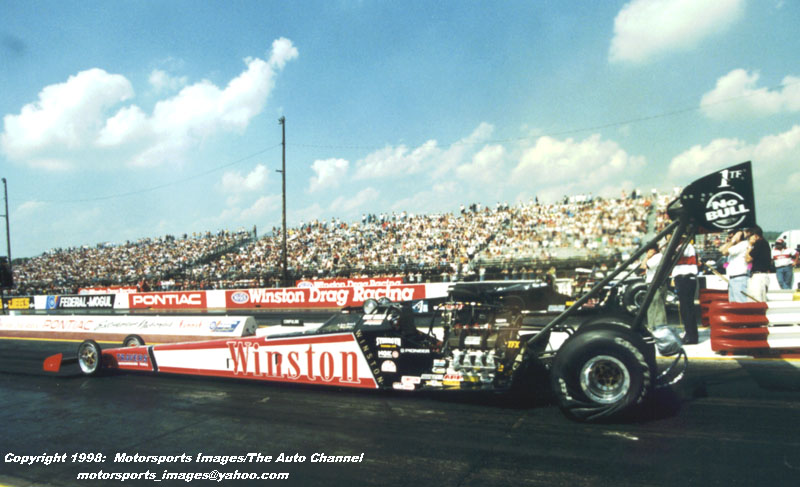
These use direct drive(no drive shaft).  They also have no suspension...

http://www.theautochannel.com/callahan/drags/photos/scelzi01.jpg

This car is also direct drive(no transmission) and it uses a drive
shaft because of the rear suspension:

http://www.austinev.org/evalbum/035.html


> What is the best way to handle this, Looking at the
> plans of the UrbaCar,


You can have a transmission or not, it's up to you.

Looking at this picture:

http://www.rqriley.com/imagespln/ucar4.jpg

You could put in either a conventional, solid rear axle, or
independent rear suspension like the Corvette uses, or stick a trans
axle back there.

http://img2.uploadimages.net/686823DSC_1840.jpg (conventional)

http://img2.uploadimages.net/956488irs.jpg (IRS)


Or... You could potentially put a motor back there and depending on if
it has only a shaft on one end or both, drive one or both back
tires...

http://img2.uploadimages.net/199797tangomotors.jpg

All three of those are potentially various direct drive setups.  The
trans axle option if you want a transmission:

http://www.classicmotorsports.net/projects/manxpix/manxrearend.jpg

http://www.bugtrans.com/imageVTV.JPG


I wouldn't bother with chains or belts...
--- End Message ---
--- Begin Message ---
Whose 300kW AC induction bus drive (coming from someone who used to
build these...)?
Seth


On Aug 23, 2005, at 12:32 PM, Reverend Gadget wrote:
I have a 1 ton ford crew cab diesel pick up that I
will be converting. I will be recieving the motor and
controller this week. It's a 300kw system from a 30
foot bus. The motor will reside under the bed . I have
all the room from the from the hood to the back of the
cab for batteries. since this is an AC conversion, I'm
thinking that GC batteries are the way to go. any
thoughts?
It won't be a daily driver but something that I will
use for the occasional delivery or pickup. I will be
doing things to shave weight and help aero like an
aluminum bed and closing the grill. What I really want
to do with this thing is take it out and completely
blow a Hummer off the road by a mile......

                         Gadget

visit my website at www.reverendgadget.com
--- End Message ---
--- Begin Message ---
Hey Don,
How much was the Toyota MR2 power steering pump ? Or did you find one
at a junk yard ? And this Mr2 pump completely replaced everything from
your original pump setup. Ive started to tear down the S10 today and i
wasnt sure about the powersteering pump so i didnt disconnect entirely
and left it under the hood.
Thanks
Cwarman

Don Cameron wrote:
Few options:

1.  go without and use skinnier tires, more inflation and a bigger steering
wheel.
2.  use the tailshaft (if exists) of the drive motor to power a pump,  this
does not help when at a stoplight though, as the drive motor is stopped.
Somewhat common.

3. use an automatic transmission, and then the drive motor will always run.
Use the drive motor to drive the pump.  Randy at CanEV did this for a
customer who wanted an automatic transmission.

4. use a separate motor to power a hydraulic pump.   Somewhat common.

5. use an electric power steering rack.  These can be from scrapped cars
(NSX) or ordered from Europe.  May require extensive modification.  Very
rare (if at all?)

6. use a electro-hydraulic power steering pump from a Toyota MR2.  A number
of the AC systems use this option. This is what I use on the New Beetle and
works just great.

Don


Victoria, BC, Canada

See the New Beetle EV Conversion Web Site at
www.cameronsoftware.com/ev/

-----Original Message-----
From: [EMAIL PROTECTED] [mailto:[EMAIL PROTECTED] On
Behalf Of Cwarman
Sent: August 23, 2005 3:14 PM
To: [email protected]
Subject: Power Steering
I dont see much mention of power steering pump when doing a conversion.
I have a 1997 Chevy S10 im tonight pulling the engine out and i left that
portion on for now because wasnt sure if thats something ill need or not. Im
under the impression that a vehicle made for powersteering but is unistalled
or off turns WAY harder than a truck that is made without powersteering, is
this true ?  Any suggestions ?

CWarman
.
--- End Message ---
--- Begin Message ---
Rich Rudman wrote:

> 480 3 phase and have a 560 lbs 60 hz isolation transformer on board.. This
> charger will weigh in at about 800 lbs.

You've got to get some pics of this thing before you ship it off!
Where's it going anyways and what will it be used for?  If you made
these for sale, what's a price point that it wouldn't sell for any
less then; just to give me an idea of this thing...?


> somewhere in the old AC drive inventory stuff

Is this project on hold and might potentially see the light of day?
What were it's target specs?  Target price point? (just for future
reference and planning.)

What AC motors did you have in mind for it to drive?
--- End Message ---
--- Begin Message ---
Roland, fantasic!  thanks for the detailed information.

Don


Victoria, BC, Canada

See the New Beetle EV Conversion Web Site at
www.cameronsoftware.com/ev/

-----Original Message-----
From: [EMAIL PROTECTED] [mailto:[EMAIL PROTECTED] On
Behalf Of Roland Wiench
Sent: August 22, 2005 2:37 PM
To: [email protected]
Subject: Re: Netgain Warp Dimensions

Hello Don,

I have the dimensions on a Warp 9 double shaft 192 volt motor has listed
out.  No blue prints, just rough sketches and notes.

It is best to draw out the dimensions as you read the following statements.


The overall length from end of output shaft to pilot shaft is 20 inches.

The diameter of motor housing is 9.375 inches

The overall diameter of motor is 9.875 (1/4 inch height for field bolts that
are on the surface)

The length of the motor body is 15.875 inches long.

The centering ring or the rise portion around the output shaft is 0.50 inch
high and 3.9375 inch diameter.

The centering ring or the rise portion around the pilot shaft is 0.25 inch
high and is 2.875 inch diameter.

The total length of motor from the surface of the centering rings is 15.875
+ 0.50 + 0.25 = 16.625

The output shaft is 1.125 inch diameter with 0.25 inch keyway that protrudes
out 1.5 inch from the centering ring and 2 inches from the face of the
motor.

The pilot shaft is 0.75 inch diameter with 0.1875 inch keyway that protrudes
out 1.875 from the centering ring and 2.125 inches from the face of the
motor.

The Armature and Field connections are 3/8 inch brass bolts that protrude
1.1875 up from the surface of the motor.

The Armature connections are forward on the motor.

The Field connections are rear on the motor.

The normal orientation of the motor would be that one set of connections are
on top of motor and the other sets are on the side.  They are place about 90
degrees apart. Make sure you have clearance above the motor.  The motor will
be forward from the firewall.

The two top connections, Armature and Field are jumper together for a
clockwise rotation looking at the pilot shaft of the motor.

The two sides connections, Armature and Field go to you controller where DC
positive connects to the Armature and DC negative connects to the Field.

The mounting holes location on the rear of motor are tapped for four 5/8
inch standard bolt thread and are place on a 6.375 inch circle center to
center.

The mounting holes location on the front of motor are tapped for four 5/16
inch standard bolt thread and are place on a 5.75 inch circle center to
center.

I did not weigh the motor.  The shipping weight of the motor in a double
wall cardboard box that is fill with solid foam for packing is 184 lbs, so
something between 176 to 178 lbs.

If you used a clamp on mounting ring on this motor, it will have to be at
least 9-7/8 inch inside diameter to go over the field bolts.  I plan to make
one from a 10 inch diameter 10 gage pipe tubing which normally reads 10
inches OD and have it cut 5 inches wide, so it will cover over two field
mounting bolts that are space 2-3/8 inch apart.

In cutting this pipe to form two C-clamp sections, it will spring open a
bit, so it will fit the motor.

The spacing between the field bolts will allow a narrow mounting strap of
1-1/2 inches wide.  It would be best to used two of these to go between two
sets of field bolts and than weld the mounting straps together for a larger
mounting area.

The adapter unit that is used to bolt to a bell housing of a transmission is
2.74 inches thick.  So when you add the length of the motor, this adapter ,
the bell housing and transmission, this will give you a good ideal where the
front of the motor and/or front of the pilot shaft will end up on.

When installing a motor, make sure your motor is place as close as possible
in parallel to the axis of the rear axle U joint.  After mounting the motor,
you can adjust the motor with shims under the transmission rubber rear
mounts.  Some transmission mounts come with additional spacers for
adjustments.

Even though your motor is in the parallel axis of the rear axle U joint,
there is a offset distance between these two parallel lines.  When I jack up
my EV, my offset for a GM with a 6-foot driveline distance is 4 inches.
When the car is down on the ground this offset is about 1 to 2 inches which
is 1 to 1.5 percent.

Roland


  ----- Original Message -----
  From: Don Cameron<mailto:[EMAIL PROTECTED]>
  To: [email protected]<mailto:[email protected]>
  Sent: Monday, August 22, 2005 9:57 AM
  Subject: Netgain Warp Dimensions


  I am unable to find on the web any dimensional data for the Warp 9" and
11"
  motors.  Does anyone have a PDF or can fax me a copy?  I am looking for
the
  length, diameter, mounting hole locations (front and  rear), centering
ring
  dimensions, output shaft dimensions, weight.

  thanks
  Don

  Victoria, BC, Canada

  See the New Beetle EV Conversion Web Site at
  www.cameronsoftware.com/ev/<http://www.cameronsoftware.com/ev/>
--- End Message ---
--- Begin Message ---
Here is what is happening with my PFC:

1.  the PFC case is connected to the the car chassis as per the instructions

2.  only when the switch is turned on, the case and the car chassis becomes
pack negative

If the green wire ground is connected to the car chassis, therefore the pack
negative is connected to ground.


I was on the phone to Rich about this a few months back.  He indicated that
this is normal behaviour.  Are you telling me there is something wrong here?
If so,  please clarify how I should test and correct.

Don


Victoria, BC, Canada

See the New Beetle EV Conversion Web Site at
www.cameronsoftware.com/ev/

-----Original Message-----
From: [EMAIL PROTECTED] [mailto:[EMAIL PROTECTED] On
Behalf Of Joe Smalley
Sent: August 22, 2005 10:51 PM
To: [email protected]
Subject: Re: Russco vs Zivan vs PFC

The incoming AC line goes to a full wave bridge rectifier. The negative side
of the bridge is connected to Pack Negative.

When the 120 VAC line swings negative, pack negative goes down to -170 volts
DC for a few milliseconds in a half sine waveform.

When the 120 VAC line swings positive, pack negative sits at -1 Volts DC for
8 milliseconds.

The green wire in the AC cord and the DC cord are both connected to chassis
ground in the charger.

Neither AC line nor DC line are connected to green wire ground.

The green wire ground is there to safely ground the chassis and blow the
feed breaker in case there is an isolation breach in the battery pack,
controller, motor, or charger.

Joe Smalley
Rural Kitsap County WA
Fiesta 48 volts
NEDRA 48 volt street conversion record holder [EMAIL PROTECTED]

----- Original Message -----
From: "Don Cameron" <[EMAIL PROTECTED]>
To: <[email protected]>
Sent: Monday, August 22, 2005 7:40 PM
Subject: RE: Russco vs Zivan vs PFC


> This does not sound correct. If the battery pack is isolated from the car
> (which is a good thing). When a PFC charger is turned on, the negative
side
> of the pack is grounded to the case of the charger and connected to the AC
> input ground.  If the case of the charger is attached to the chassis/body
of
> the car, then the chassis/body becomes attached to the negative side of
the
> pack.
>
> When the charger is turned off, the pack is not attached to the ground of
> the car.
>
> I have confirmed with Rich that this is the non-isolated behaviour of the
> PFC chargers.
>
> Don
>
>
>
>
>
>
>
>
> Victoria, BC, Canada
>
> See the New Beetle EV Conversion Web Site at
> www.cameronsoftware.com/ev/
>
> -----Original Message-----
> From: [EMAIL PROTECTED] [mailto:[EMAIL PROTECTED] On
> Behalf Of John G. Lussmyer
> Sent: August 22, 2005 6:26 PM
> To: [email protected]
> Subject: Re: Russco vs Zivan vs PFC
>
> At 06:00 PM 8/22/2005, Ryan Stotts wrote:
> >I have the wall and the car and the charger is installed in the car.
> >I plug the charger into the wall and now the car is connected to the
> >power grid.  What would the difference be between an isolated charger
> >and a non isolated charger?  Because in my mind right now, I don't see
> >how either would be any different.
>
> Well, if your Pack is tied to the Car Body, you have a problem.
> But since sane people do NOT do that, it's not nearly as severed.  A
PFC-20
> mounted in the car (to the body) will have the AC Ground line connected to
> the body.
> There IS a connection from a HOT AC line to one end of the pack, but since
> your pack isn't connected to the body, it's relatively safe.
> It's a nice idea to use a GFCI outlet, which will trigger to show you when
> you are getting too much leakage current from your pack....
>
> --
> John G. Lussmyer      mailto:[EMAIL PROTECTED]
> Dragons soar and Tigers prowl while I dream....
> http://www.CasaDelGato.com
>
--- End Message ---
--- Begin Message ---
Rush wrote:

> Someone on this list said that the components only cost about $50, and the
rest was gravy to Xantrex.
> So that leaves a lot of room for new components if you don't make a
> 500% markup. <g>

The parts are only a small portion of the cost for a product. When a company
takes a risk to create a product, they invest lots of money in design,
testing, manufacturing set-up, actual manufacturing, documentation, employee
training and marketing. If they are successful, they then have to continue
with manufacturing, marketing and warranty support. Often products fail and
these costs go down the tubes.

So although some may see a lot of "gravy" for the company, it is really a
repayment of an "investment loan" and then investment dividends (profit).
Without the prospect of making a profit companies would never take the risk.
This is the "american way?" no? Often the higher the risk, the higher the
profit payback.

Nothing is ever equal. Some companies make huge profits, and others do not.

It is important to realize that Victor's new meter will probably cost him a
lot of investment capital and time up front to design, test and manufacture.
He will also want to make a profit as well. It may end up only having $50
worth of parts, but that is only a very small portion of the costs invested.

Some interesting examples to look at would be Rich's chargers or Otmar's
controllers. I wonder how much their parts cost, how much investment (time
and money) they have put into their products and **really** how much gravy
they are making. Are they making a comfortable living off of the profits?

Don


Victoria, BC, Canada

See the New Beetle EV Conversion Web Site at www.cameronsoftware.com/ev/
<outbind://19/www.cameronsoftware.com/ev/>

-----Original Message-----

From: [EMAIL PROTECTED] [mailto:[EMAIL PROTECTED]
<mailto:[EMAIL PROTECTED]> ] On Behalf Of Rush

Sent: August 23, 2005 12:38 AM

To: [email protected]

Subject: Re: e-meter type gadget wish list wanted.

Victor,

I think this is a GREAT idea.

Someone on this list said that the components only cost about $50, and the
rest was gravy to Xantrex. So that leaves a lot of room for new components
if you don't make a 500% markup. <g>

Also don't limit your thinking to EVers as the only market. The orig emeter
was, as you know, for PV users. I use a Link 1000 here in my 5th wheel that
monitors my PV batteries. It does basically the same thing as a Emeter and
talks to a 12 vdc charger/inverter and is rectangular in format. Check out
Homepower Magazine at www.homepower.com <outbind://19/www.homepower.com>  ,
the number one source for PV information. I'm sure Richard Perez, the owner,
would love to have a new meter to review and hype.

You might want to contact www.outbackpower.com
<outbind://19/www.outbackpower.com> , they are a very forward looking PV
inverter company. They might have some good input also.

If you give your new meter a wider base, maybe it could actually come down
in price because it would appeal to other electrical systems that use meters
to monitor the in and out of electrons.

Rush

Tucson AZ

www.ironandwood.org <outbind://19/www.ironandwood.org>
--- End Message ---
--- Begin Message ---
Don...
If the pack Neg and the Car chassis ARE connected...  with a solid
connection...ie a SHORT the charger would blow up instantly.

So this is not happening... You have a leak or some kind of induced voltage
coupling into your chassis.
OR no real earth ground back to your outlet.

What I want in a leaky enviroment is the charger case insulated from the Car
chassis, But VERY  solidly  plug bonded to AC ground and earth, using the
Green wire in the AC Cord feed.
This gives a short circuit path from the charger case to the breaker box and
GFI. This gives you safety should the charger have a issue. This is basicly
required by common sense if not the law.

The DC side should be isolated from the AC side. the two should not touch.
IF they do... you loose the charger.

That said, the DC negative is seprated from the AC by only the rectifiers in
the charger. Like all the other non isolated chargers.  Manzanita, Russco,
K&W and all the third world and variac chargers and home builts.

The Positive is the line that gets controlled, throttled, and bucked or
boosted. It is current regulated and voltage controlled. It's the line we
actually do something with. This is protected from shorting by the current
control loops and feedbacks inherent in the design of the charger.

If your pack is properley isolated from chassis, you have no issues, if your
pack is shorted to chassis or you have controller and motor path leaks to
chassis, you will get leakage currents to chassis.
If you charger's case or AC ground is bonded to the chassis of your car...
it will go hot to the touch. If you have a solid ground path, it will not go
hot, but as the leakage gets worse and becomes a hard fault the current
flowing through the leak will become great enough to cause damage sooner or
later.

So keep the pack isolated from the chassis. If's good practice and you need
it anyways.

To limit the current that could flow you need to connect the car chassis to
earth ground in a way that does not pass enough current to cause equipment
damage, but still pass off a few milliamps of leakage current.  This gets
really tough when moving 100s of amps of current since transformer actions
can couple a few milliamps  to chassis just by having the feed cables get
close to a loop of conductor of some sort. With 3 or so Kw of 120 Hz
ripple....this is getting tough to do with the little chargers also.
    What works to give a bleed off path and current limit and indication of
a fault is to have the car chassis connect to the Earth ground by the greed
grounding wire on the DC connector.  route this wire through a incandesent
light builb. It will drain the annoyance currents and light up if you have a
hard fault.

Again if your pack and drive is correctly isolated bolting the charger to
the chassis is a safe measure. Adding a negative side contactor to open
negative side of the controller while charging is in progress is the easiest
way to drop the drive system out of the potential leakage loop.

Most DC evs have carbon dust in the motor case, and one lead is hot to
battery even if the drive is unpowered. Key off opens the positve rail, and
if  the negative rail also opens it's pretty easy to get zero leakage with
clean batteries.

Rich Rudman
Manzanita Micro


----- Original Message -----
From: "Don Cameron" <[EMAIL PROTECTED]>
To: <[email protected]>
Sent: Tuesday, August 23, 2005 2:43 PM
Subject: PFC Ground and Pack Negative (was RE: Russco vs Zivan vs PF)


> Here is what is happening with my PFC:
>
> 1. the PFC case is connected to the the car chassis as per the
instructions
>
> 2. only when the switch is turned on, the case and the car chassis becomes
> pack negative
>
> If the green wire ground is connected to the car chassis, therefore the
pack
> negative is connected to ground.
>
>
>
> I was on the phone to Rich about this a few months back. He indicated that
> this is normal behaviour. Are you telling me there is something wrong
here?
> If so, please clarify how I should test and correct.
>
> Don
>
>
>
>
>
>
>
>
>
>
>
> Victoria, BC, Canada
>
> See the New Beetle EV Conversion Web Site at www.cameronsoftware.com/ev/
> <outbind://18/www.cameronsoftware.com/ev/>
>
> -----Original Message-----
>
> From: [EMAIL PROTECTED] [mailto:[EMAIL PROTECTED]
> <mailto:[EMAIL PROTECTED]> ] On Behalf Of Joe Smalley
>
> Sent: August 22, 2005 10:51 PM
>
> To: [email protected]
>
> Subject: Re: Russco vs Zivan vs PFC
>
> The incoming AC line goes to a full wave bridge rectifier. The negative
side
> of the bridge is connected to Pack Negative.
>
> When the 120 VAC line swings negative, pack negative goes down to -170
volts
> DC for a few milliseconds in a half sine waveform.
>
> When the 120 VAC line swings positive, pack negative sits at -1 Volts DC
for
>
> 8 milliseconds.
>
> The green wire in the AC cord and the DC cord are both connected to
chassis
> ground in the charger.
>
> Neither AC line nor DC line are connected to green wire ground.
>
> The green wire ground is there to safely ground the chassis and blow the
> feed breaker in case there is an isolation breach in the battery pack,
> controller, motor, or charger.
>
> Joe Smalley
>
> Rural Kitsap County WA
>
> Fiesta 48 volts
>
> NEDRA 48 volt street conversion record holder [EMAIL PROTECTED]
>
> ----- Original Message -----
>
> From: "Don Cameron" <[EMAIL PROTECTED]>
>
> To: <[email protected]>
>
> Sent: Monday, August 22, 2005 7:40 PM
>
> Subject: RE: Russco vs Zivan vs PFC
>
>
>
> > This does not sound correct. If the battery pack is isolated from the
>
> > car (which is a good thing). When a PFC charger is turned on, the
>
> > negative
>
> side
>
> > of the pack is grounded to the case of the charger and connected to
>
> > the AC input ground. If the case of the charger is attached to the
>
> > chassis/body
>
> of
>
> > the car, then the chassis/body becomes attached to the negative side
>
> > of
>
> the
>
> > pack.
>
> >
>
> > When the charger is turned off, the pack is not attached to the ground
>
> > of the car.
>
> >
>
> > I have confirmed with Rich that this is the non-isolated behaviour of
>
> > the PFC chargers.
>
> >
>
> > Don
>
> >
>
> >
>
> >
>
> >
>
> >
>
> >
>
> >
>
> >
>
> > Victoria, BC, Canada
>
> >
>
> > See the New Beetle EV Conversion Web Site at
>
> > www.cameronsoftware.com/ev/ <outbind://18/www.cameronsoftware.com/ev/>
>
> >
>
> > -----Original Message-----
>
> > From: [EMAIL PROTECTED] [mailto:[EMAIL PROTECTED]
> <mailto:[EMAIL PROTECTED]> ]
>
> > On Behalf Of John G. Lussmyer
>
> > Sent: August 22, 2005 6:26 PM
>
> > To: [email protected]
>
> > Subject: Re: Russco vs Zivan vs PFC
>
> >
>
> > At 06:00 PM 8/22/2005, Ryan Stotts wrote:
>
> > >I have the wall and the car and the charger is installed in the car.
>
> > >I plug the charger into the wall and now the car is connected to the
>
> > >power grid. What would the difference be between an isolated charger
>
> > >and a non isolated charger? Because in my mind right now, I don't
>
> > >see how either would be any different.
>
> >
>
> > Well, if your Pack is tied to the Car Body, you have a problem.
>
> > But since sane people do NOT do that, it's not nearly as severed. A
>
> PFC-20
>
> > mounted in the car (to the body) will have the AC Ground line
>
> > connected to the body.
>
> > There IS a connection from a HOT AC line to one end of the pack, but
>
> > since your pack isn't connected to the body, it's relatively safe.
>
> > It's a nice idea to use a GFCI outlet, which will trigger to show you
>
> > when you are getting too much leakage current from your pack....
>
> >
>
> > --
>
> > John G. Lussmyer mailto:[EMAIL PROTECTED]
> <mailto:[EMAIL PROTECTED]>
>
> > Dragons soar and Tigers prowl while I dream....
>
> > http://www.CasaDelGato.com <http://www.casadelgato.com/>
>
> >
>
--- End Message ---