EV Digest 5185

Topics covered in this issue include:
  1) Re: Braking energy to heat cabin?
        by Mark Farver <[EMAIL PROTECTED]>
  2) RE: Braking energy to heat cabin?
        by Cor van de Water <[EMAIL PROTECTED]>
  3) Re: Driving 45 mph on the freeway?
        by "Lawrence Rhodes" <[EMAIL PROTECTED]>
  4) Re: Lithiums in Parallel (was: RE: Jesse James & Monster Garage Go
Lithium!!!)
        by "Lawrence Rhodes" <[EMAIL PROTECTED]>
  5) Free snowblower
        by "Christopher Tromley" <[EMAIL PROTECTED]>
  6) Re: Braking energy to heat cabin?
        by Ralph Merwin <[EMAIL PROTECTED]>
  7) RE: Why not more AC conversions vs DC conversions...
        by "Roger Stockton" <[EMAIL PROTECTED]>
  8) RE: Why not more AC conversions vs DC conversions...
        by "Roger Stockton" <[EMAIL PROTECTED]>
  9) Re: Volumetric energy density of Lithium battery
        by =?ISO-8859-1?Q?Jukka_J=E4rvinen?= <[EMAIL PROTECTED]>
 10) RE: Festiva
        by "Roger Stockton" <[EMAIL PROTECTED]>
 11) Re: Braking energy to heat cabin?
        by Mike Ellis <[EMAIL PROTECTED]>
 12) EVs on Display at Portland Rod & Custom Show
        by John Wayland <[EMAIL PROTECTED]>
 13) Re: Why not more AC conversions vs DC conversions...
        by Christopher Zach <[EMAIL PROTECTED]>
 14) Fwd: Braking energy to heat cabin?
        by Dave Cover <[EMAIL PROTECTED]>
 15) Re: was Jesse James/ now fuse's
        by "STEVE CLUNN" <[EMAIL PROTECTED]>
 16) Re: Fwd: Braking energy to heat cabin?
        by "Andre' Blanchard" <[EMAIL PROTECTED]>
 17) Re: Tire smoke.
        by Doug Weathers <[EMAIL PROTECTED]>
 18) Dragtimes Vote
        by Bruce Weisenberger <[EMAIL PROTECTED]>
 19) EVCort support?
        by Steve Gaarder <[EMAIL PROTECTED]>
 20) Iota at 96v
        by "Lawrence Rhodes" <[EMAIL PROTECTED]>
 21) Re: Fwd: Braking energy to heat cabin?
        by Neon John <[EMAIL PROTECTED]>
 22) Re: Hawker AeroBattery: Anyone have pricing / availability?
        by Eric Poulsen <[EMAIL PROTECTED]>
 23) Urba Trike follow-up
        by "Brad Sagowitz" <[EMAIL PROTECTED]>
 24) Re: Why not more AC conversions vs DC conversions...
        by "Ryan Stotts" <[EMAIL PROTECTED]>
 25) Re: Iota at 96v
        by "David Roden" <[EMAIL PROTECTED]>
 26) Re: Why not more AC conversions vs DC conversions...
        by Jeff Shanab <[EMAIL PROTECTED]>
--- Begin Message ---
Mike Ellis wrote:
My understanding is that regen is limited to AC or very high end DC
systems. But I was thinking about how much a waste it is, all that
energy going to heat the brake pads.

What if instead of using the generated power to recharge the pack, you
used it to help heat the cabin.
Not a bad idea... somewhat along the lines of a discussion a few months
ago where the AC compressor was only clutched in during deacceleration.
The reason regen is not used much on DC systems is that series DC motors
are tricky to use as generators. The current wants to ramp up
exponentially making it tough to control and provide smooth even braking.
You could make a milder regen system (like the AC above) using Rev
Gadget's system: an independent generator coupled to the wheels or
driveshaft. The power from that generator could be shunted to heat
elements, or back into the battery. You would have a lower peak "regen"
braking this way, but especially on long hills or coasting to a stop it
might work well. You will have to decide if the complexity is worth it.
Of course, you can take your idea quite literally.. the main brakes are
already an existing mechanical system for converting momentum to heat.
All you would need would be some way to capture that heat and route it
to the passengers. Water cooled brake pads and roters would be a
challenge to engineer out on the wheels. How about moving the brakes
inboard into enclosed boxes, the heated air inside could be shunted
directly into the cabin (yuck, brake dust) or thru an air to air heat
exchanger. Or instead of changing the existing brakes add an enclosed
rotor/ brake to the motor tailshaft.
The only other issue I see is that you be making heat after the car is
moving, and only when slowing down... no instant heat.
So it is possible, but it may not be all that useful to do so...

Mark
Thoughts?

-Mike


!DSPAM:43f5f13897893451112436!
--- End Message ---
--- Begin Message ---
So if I have the luck of taking off and not hitting any traffic
lights going red until I get on the freeway and a clear carpool
lane all the way to work, then I will have no heat until I park
the car in the parking lot?
Or are you suggesting I should circle around the block to catch
a few more lights until the cabin heats up?
My impression is that the waste heat from the brakes is
designed to be dispersed to the environment not only through
air, but certainly also through the hub and rim of the wheel
so it will be hard to have any efficiency at all.

There is nothing so convenient as the right solution at the
right moment in the right place.
I recommend checking installation of a ceramic heater core
if you are considering re-engineering the brakes or adding
a second motor/generator....

Success,

Cor van de Water
Systems Architect
Email: [EMAIL PROTECTED]   Private: http://www.cvandewater.com
Skype: cor_van_de_water    IM: [EMAIL PROTECTED]
Tel:   +1 408 542 5225     VoIP: +31 20 3987567 FWD# 25925
Fax:   +1 408 731 3675     eFAX: +31-87-784-1130
Proxim Wireless Networks   eFAX: +1-610-423-5743
Take your network further  http://www.proxim.com


-----Original Message-----
From: [EMAIL PROTECTED] [mailto:[EMAIL PROTECTED]
Behalf Of Mark Farver
Sent: Friday, February 17, 2006 10:55 AM
To: [email protected]
Subject: Re: Braking energy to heat cabin?


Mike Ellis wrote:

>My understanding is that regen is limited to AC or very high end DC
>systems. But I was thinking about how much a waste it is, all that
>energy going to heat the brake pads.
>
>What if instead of using the generated power to recharge the pack, you
>used it to help heat the cabin.
>
>
>
Not a bad idea... somewhat along the lines of a discussion a few months
ago where the AC compressor was only clutched in during deacceleration.
The reason regen is not used much on DC systems is that series DC motors
are tricky to use as generators.  The current wants to ramp up
exponentially making it tough to control and provide smooth even braking.

You could make a milder regen system (like the AC above) using Rev
Gadget's system: an independent generator coupled to the wheels or
driveshaft.  The power from that generator could be shunted to heat
elements, or back into the battery.  You would have a lower peak "regen"
braking this way, but especially on long hills or coasting to a stop it
might work well.  You will have to decide if the complexity is worth it.

Of course, you can take your idea quite literally.. the main brakes are
already an existing mechanical system for converting momentum to heat.
All you would need would be some way to capture that heat and route it
to the passengers.  Water cooled brake pads and roters would be a
challenge to engineer out on the wheels.  How about moving the brakes
inboard into enclosed boxes, the heated air inside could be shunted
directly into the cabin (yuck, brake dust) or thru an air to air heat
exchanger.  Or instead of changing the existing brakes add an enclosed
rotor/ brake to the motor tailshaft.

The only other issue I see is that you be making heat after the car is
moving, and only when slowing down... no instant heat.

So it is possible, but it may not be all that useful to do so...

Mark


>Thoughts?
>
>-Mike
>
>
>!DSPAM:43f5f13897893451112436!
>
>
>
--- End Message ---
--- Begin Message ---
LOL. The guys on the Porsche list. I'd like to get the opinion of the guys
on the Highway patrol list.
In Germany if you are going too slow in the fast lane of the Autobaun and
get hit it's your fault. They also don't publish accounts of traffic
accidents in Germany. They are too horrible. This ain't Germany. I don't
drink and drive, my car is in good shape and I'm not quite a gisser yet. I
am alert (and of course we need more lerts) and follow the traffic laws.
It's 45 here in California. I haven't been rear ended on the freeway yet.
I don't plan to be but that's why I have insurance. Lawrence Rhodes.......
----- Original Message -----
From: "David Dymaxion" <[EMAIL PROTECTED]>
To: <[email protected]>
Sent: Friday, February 17, 2006 8:56 AM
Subject: Re: Driving 45 mph on the freeway?
The guys on the Porsche list claim that drivers going under the speed
limit are 600% (six times) more likely to be in an accident than
people going up to 15 mph over. Makes sense when you consider a good
chunk of that group are drunk drivers, very old drivers, overloaded
vehicles, or old and poorly maintained vehicles.

Even if you are a very safe and aware driver, if you are going well
under traffic speed you are introducing new hazards. Right or wrong,
people will be making lane changes they wouldn't have and tailgating.


__________________________________________________
Do You Yahoo!?
Tired of spam?  Yahoo! Mail has the best spam protection around
http://mail.yahoo.com
--- End Message ---
--- Begin Message ---
Lee Hart wrote:
But why would you want to ride a scooter for 30 miles? Sounds painful!
Well it's not hard to use the ah in hilly San Francisco. After climbing
hills your 30 mile range can easily become 20. Sometimes a big loop of the
city is needed to complete all errands. I do need 24v to run the scooters I
build. Can those batteries be configured to 24v? If so what are the amp
hours at that voltage? BTW how do you charge those puppies? Lawrence
Rhodes......
----- Original Message -----
From: "Lee Hart" <[EMAIL PROTECTED]>
To: <[email protected]>
Sent: Friday, February 17, 2006 12:35 PM
Subject: Re: Lithiums in Parallel (was: RE: Jesse James & Monster Garage Go
Lithium!!!)
Lawrence Rhodes wrote:
3 18650's with a BMS protection chip & charger... 50 bucks each...
96 cells plus 32 bms plus the 10 chargers. About 68 amp hours...
This doesn't seem so bad especially since you could have a 30 mile
range scooter.
It could be done, but I think you're doing it the hard way. For a
scooter, I'd rather use a few big Li-Ion cells. The four crappy TS-90LP
Thunderskys I have only cost around $400, and deliver 14.4v 70ah at 25a.
Use an Etek or Lemco motor and small PWM controller and you're in
business.

But why would you want to ride a scooter for 30 miles? Sounds painful!
--
Ring the bells that still can ring
Forget the perfect offering
There is a crack in everything
That's how the light gets in    --    Leonard Cohen
--
Lee A. Hart, 814 8th Ave N, Sartell MN 56377, leeahart_at_earthlink.net
--- End Message ---
--- Begin Message ---
Hi All,

My boss just bestowed on me a Toro CCR-3650 walk-behind snow blower.
See http://www.toro.com/home/snowthrowers/gassinglestage/ccr3650.html .
It's only a couple seasons old.  He got confused with the oil mixture,
bogged it down and then tried "cleaning it out" with carburetor cleaner.
Ran real fine for a few seconds(!).  Then it seized solid.

The last thing I need is another project, and I don't even have space to
store it until later.  This thing is free to whoever wants it.  The only
condition is that stinking, polluting 2-stroke engine gets dumped and it
gets converted to electric power.  I figure the world is better off with
the whole thing chucked in a landfill rather than revive a 2-stroke.

It's at my employer in Montgomeryville PA.  If you can't pick it up here
I can schlep it home (Narberth PA) for pickup on the weekend.  Please
email me off-list.

Chris
--- End Message ---
--- Begin Message ---
Mike Ellis writes:
>
> My understanding is that regen is limited to AC or very high end DC
> systems. But I was thinking about how much a waste it is, all that
> energy going to heat the brake pads.
>
> What if instead of using the generated power to recharge the pack, you
> used it to help heat the cabin.
>
> Thoughts?

For reference, when my Prizm had a Zapi controller with regen, I could get
about 2AH back into the pack when coasting down a long hill on the freeway
coming into town.  The ceramic heater in this car drew 15 amps from the
pack to keep the interior mildy warm, and my typical commute lasted about
30 minutes, so figure about 7-8AH for heating.  Regen from the hill would
give me about 1/4 of the power required to heat the interior.  I doubt that
braking during the rest of the trip would have provided the rest.

Ralph
--- End Message ---
--- Begin Message ---
Christopher Zach [mailto:[EMAIL PROTECTED] wrote:

> The Prizm is an AC powered car with a peak power that seems
> to equal a zilla+9 inch motor. So far it seems to match the
> power usage rating of another member's Toyota Corolla 4 door
> same model car with a DC motor.

Minor correction: both yours and Ralph's cars are conversions of Geo
Prizms.  The fact that the Prizm may be based on the Toyota Corolla does
not make Ralph's car a Toyota instead of a Geo.

Cheers,

Roger.
--- End Message ---
--- Begin Message ---
> Electro Automotive wrote:

> What do you call .174 - .288 kWh for AC vs. about .3-.5 for DC?

Atypically poor efficiency from your DC sample?

300-500Wh/mi is the sort of figure more often quoted for DC *pickup*
conversions, not compact sedans.  200-300Wh/mi is a more typical value
for a DC compact sedan, and is 5-15% poorer efficiency than the AC
numbers you quote, which is just about what one would expect.

Cheers,

Roger.
--- End Message ---
--- Begin Message ---
I made 100 kWh pack. 139 cells in string with BMS. 200 Ah Li-Co (LCP)
cells. Kicks nicely 1 MW for 5 minutes. :)
weight 800 kg. 1000 x 1600 x 1600 mm size. Fits nícely in the back of
Van if necessary.
-Jukka


Peter VanDerWal kirjoitti:
Thanks Victor that is interesting and I'll update my notes.

However, getting back to the original idea....
Any ideas on how big (weight AND volume) TS Li-Ions would be that could
dish out 100 kw for at least 10 minutes?

I'll have to look into the Li-Pol (Kokam?) unless you have that data
available also.

Thanks.
Peter, this gets interesting.

When I said that Li has more volumetric energy density
than lead battery did not take into account discharge rate.

Technically, if I store 20 kWh in 1m^3 volume and you store
only 15 kWh in the same volume, my battery has higher
volumetric energy density period, even if I can discharge
mine only at 1/5 of the rate you can discharge yours.

I may not need (or can't take advantage of) higher discharge
rates, so this is not specified.

Siemens inverter in ACRX is limited to 282A battery current,
this gives 100 kW power at highest voltage. Practically
very rarely see anything above 180A.

My 90Ah TS cells need to dish out 2C to provide that.
4 of them together are about the voltage of Optima under
the same load (OCV more, but sag is more too),
and are "about" the same volume as one Optima.
Say, I drive at 90A at all times (actually it is
[EMAIL PROTECTED] and [EMAIL PROTECTED]). Optima at that rate will have
about 30Ah available (my guess); good TS cells still have 90Ah.
So TS cells have 3 times volumetric energy density than
Optima. Who cares that Optima can give 500A or 1,500A
out if I can only possibly consume 280A out of a battery?
So power capability is of no relevance *to me*.
If you care, compare then to LiP with higher power
output, but volumentic energy density advantage over lead
will be about the same as for less powerful LiIons.

Since we're not comparing power, we're comparing energy
stored per volume *provided* the battery
is usable for the application. I wouldn't need an
amazing (energy density wise) 100kWh battery size of a
cell phone if I can discharge it only at 1uA rate.

So, my TS cells are *usable* because can provide
more power than drive system can take. How much
more beyond that is of no concern then.

Now, LiPo are more powerful ones (10C-20C are common)
but not more energy dense than LiIons by volume.
So racers could benefit from it but not long rangers.

I'd say in general, today Lithium batteries have 3x
volumetric energy density of a lead battery *at usable
discharge rates* (though not as high rates as for lead,
which may or may not be relevant, see above).

Victor

--
'91 ACRX - something different


Peter VanDerWal wrote:
Victor,

My statement was based on my memory of research I did several years ago,
it's quite possible that I'm wrong, especially when you consider that I
wasn't thinking about 5C-10C discharges when I was looking into it.

Obviously you are in a better position to comment on this.  How many wh
does you pack store when drained at the 5C rate, we can compare this to
YTs/Orbitals.

Thanks.
Peter VanDerWal wrote:
...
FWIW though the Li-Ions/Li-Poly weigh less than Lead-Acid, they take up
almost the same amount of physical space.
Peter,

If you mean space per Wh, stored (volumetric energy density),
I find this statement somewhat inaccurate. Do you have numbers
by chance? I can compare with what I had physically in ACRX.

Victor
--
Jukka Järvinen
R&D Director
Oy Finnish Electric Vehicle Technologies Ltd
Sepänkatu 3
11710 RIHIMÄKI
FINLAND
VAT ID: FI18534078

jukka.jarvinen(a_t)fevt.com
mobile. +358-440-735705
fax. +358-19-735705
--- End Message ---
--- Begin Message ---
[EMAIL PROTECTED] wrote:

> I believe that with the metro, you do not need to add a
> secondary mount for the motor.  I believe you can bolt
> it right to the trans and the trans has enough support
> to hold it in place.

No, you *do* need to support the motor in a Metro conversion.

With later model ('89 and newer?) donors, you can use the motor mount
bracket on the passenger side inner fender to support the motor using
the strap/clamshell around the DC motor.  On my older ('87) body style
Suzuki Forsa/Chevy Sprint this stock bracket is located such that it
cannot be reused and so I had to fabricate a crossmember that spanned
the front/rear motor mounts and attached to the strat/clamshell around
the DC motor.  Even so, this crossmember was a simple affair; less than
24" of pipe bent into a sort of arch with about a 2" square bit of flat
plate welded to each end for bolting up to the stock motor mounts.

If you have a Festiva already and know the motor will fit, I'd stick
with it.

Cheers,

Roger.
--- End Message ---
--- Begin Message ---
I was not considering that this would be the ONLY way to heat the
cabin, where I live that would be insane. Just that maybe this could
help.

-Mike

On 2/17/06, Cor van de Water <[EMAIL PROTECTED]> wrote:
> So if I have the luck of taking off and not hitting any traffic
> lights going red until I get on the freeway and a clear carpool
> lane all the way to work, then I will have no heat until I park
> the car in the parking lot?
> Or are you suggesting I should circle around the block to catch
> a few more lights until the cabin heats up?
> My impression is that the waste heat from the brakes is
> designed to be dispersed to the environment not only through
> air, but certainly also through the hub and rim of the wheel
> so it will be hard to have any efficiency at all.
>
> There is nothing so convenient as the right solution at the
> right moment in the right place.
> I recommend checking installation of a ceramic heater core
> if you are considering re-engineering the brakes or adding
> a second motor/generator....
>
> Success,
>
> Cor van de Water
> Systems Architect
> Email: [EMAIL PROTECTED]   Private: http://www.cvandewater.com
> Skype: cor_van_de_water    IM: [EMAIL PROTECTED]
> Tel:   +1 408 542 5225     VoIP: +31 20 3987567 FWD# 25925
> Fax:   +1 408 731 3675     eFAX: +31-87-784-1130
> Proxim Wireless Networks   eFAX: +1-610-423-5743
> Take your network further  http://www.proxim.com
>
>
> -----Original Message-----
> From: [EMAIL PROTECTED] [mailto:[EMAIL PROTECTED]
> Behalf Of Mark Farver
> Sent: Friday, February 17, 2006 10:55 AM
> To: [email protected]
> Subject: Re: Braking energy to heat cabin?
>
>
> Mike Ellis wrote:
>
> >My understanding is that regen is limited to AC or very high end DC
> >systems. But I was thinking about how much a waste it is, all that
> >energy going to heat the brake pads.
> >
> >What if instead of using the generated power to recharge the pack, you
> >used it to help heat the cabin.
> >
> >
> >
> Not a bad idea... somewhat along the lines of a discussion a few months
> ago where the AC compressor was only clutched in during deacceleration.
> The reason regen is not used much on DC systems is that series DC motors
> are tricky to use as generators.  The current wants to ramp up
> exponentially making it tough to control and provide smooth even braking.
>
> You could make a milder regen system (like the AC above) using Rev
> Gadget's system: an independent generator coupled to the wheels or
> driveshaft.  The power from that generator could be shunted to heat
> elements, or back into the battery.  You would have a lower peak "regen"
> braking this way, but especially on long hills or coasting to a stop it
> might work well.  You will have to decide if the complexity is worth it.
>
> Of course, you can take your idea quite literally.. the main brakes are
> already an existing mechanical system for converting momentum to heat.
> All you would need would be some way to capture that heat and route it
> to the passengers.  Water cooled brake pads and roters would be a
> challenge to engineer out on the wheels.  How about moving the brakes
> inboard into enclosed boxes, the heated air inside could be shunted
> directly into the cabin (yuck, brake dust) or thru an air to air heat
> exchanger.  Or instead of changing the existing brakes add an enclosed
> rotor/ brake to the motor tailshaft.
>
> The only other issue I see is that you be making heat after the car is
> moving, and only when slowing down... no instant heat.
>
> So it is possible, but it may not be all that useful to do so...
>
> Mark
>
>
>
>
> >Thoughts?
> >
> >-Mike
> >
> >
> >!DSPAM:43f5f13897893451112436!
> >
> >
> >
>
>
--- End Message ---
--- Begin Message ---
Hello to All,
Just a quick reminder to let everyone know Father Time and I have our
drag racing electrics on display at the Portland Rod & Custom Show
today, through Sunday at the Portland Expo Center on Marine Drive. The
show just opened at 12:00 and already, our fast EVs are creating quite a
buzz. The guy next to our booth has some very expensive, very high end
classic car and motorcycles on display, and he'll be playing White
Zombie drag videos on his DVD trunk-mounted flat screen through the
car's hi fi sound system....cool!
One of this show's big sponsors, as it turns out, is Hawker Odyssey.
There's a wheel standing electric golf car running on Hawker batteries
at this show. I told Scott, the Odyssey rep., that I had a 12 second
street car running on the AeroBattery version of the PC925 batteries he
reps. I then told him we pull 1100 amps for 12 seconds, and his eyebrows
shot up! Father Time let him know about Frankendragon, his electric
motorcycle running on Hawkers, too. We're supposed to meet him at our
booth later tonight to give him a tour of the car.
Should be a fun weekend!

See Ya......John Wayland
--- End Message ---
--- Begin Message ---
There is / was no such animal. Solectria Forces were all conversions of Geo
Metros.
Right however the 95-96 Forces are of similar size and shape to a 94
Prizm. Sorta; they are still smaller cars. The 91 Forces are little Geo
Metro 2 doors and are not in the same class.
Part of the problem is that a "Geo" can be a bunch of different base
cars depending on the year. It's not fair to compare a little two door
Metro class car with a 4 door space for five and a big trunk type of car.
A real interesting test for Electro-Auto would be to compare a
203-06-4001 powered Porsche 914 to a AC24 powered 914. Same bodies, same
batteries, same basic car, looks to be close in terms of average and
peak HP.
Chris
--- End Message ---
--- Begin Message ---
--- Mike Ellis <[EMAIL PROTECTED]> wrote:
>
> What if instead of using the generated power to recharge the pack, you
> used it to help heat the cabin.
>

What if you used plug braking system. If I understand it correctly, you use a
large resistor to
provide the braking. If the resistor was some appropriately sized nichrome
wire, that could be
your heat source. Then you house the "heater" in some ducting that provide a
stream of air across
the wire and into the cabin. Finally, you control the air flow with a flap that
responds to the
negative g's of braking. When you start slowing down, the flap opens and allows
air to move across
the wire. The air is heated by the wire/resistor which is now hot because it is
providing braking
force. When you aren't braking, the flap closes and no air flows. Automatic and
fairly safe. With
only one moving part, the flap, it could be built fairly reliably.

Just an idea.

Dave Cover
--- End Message ---
--- Begin Message ---
----- Original Message -----
From: "Lee Hart"
Hi Lee , the point I was trying to make is that even a 600 amp fuse with a
2,000 amp controller and 264 volts of orbitals still in not blowing in a
real world conduction ( 1/4 mile drag race auto cross ) . Should I put a
bigger fuse in ? :-) as this one in not rated at the amps I should be
seeing . Now that could have as many sides as the clutch no clutch debate.
If it doesn't blow why bigger , . I probable will put a bigger one in as
things seem to be working OK :-) , I did the small fuse as I had one handy
and also thinking if anything went wrong the smaller fuse would blow quicker
, . This really might not be a bad idea when hooking up a controller the
first time , to put a much lower fuse in , drive it around easy , then put
the one you think is the right size when everthing is working right. Maybe
with a small enough fuse you could hook up a controller wrong and it live .
I use the light bulb in series still on the fist power up . I really just
don't think I could ever wire up a controller and just turn on the key,
engaging the contactor / controller without something in series other that
the fuse.
STEVE CLUNN wrote:
I put a 600 amp fuse in my drag race truck for testing...
It depends on how serious a "thing" you are trying to protect against.

A 600amp fuse with golf cart batteries is a bit too big.
you though I was talking about the work truck . :-) Lee do you ever dream
of Big Amps , I'll love to hear you where going to make a go fast EV , I've
been having allot of fun with my 2k . I think some of us who lived in the
days of Citrus or before have a little speed demon locked up inside , I know
you drove the tango , is there something that wants to get out? . .
this is why I said
I would say a fuse is a good thing to have but don't count on it
blowing if something goes wrong. I don't think a blown full on
Curtis with golf cart batts will blow even a 300 amp fuse with
low batteries.
but what would be the right size , I think a 300 amp fuse will blow with
a lot of golfers all swing together , maybe . . that's why I say good to
have but don't count on it working . Funny how that goes , here it a part
that's job it is to protect in case of short , but "probable" won't work if
there is a short and the batteries are low , if it dose work it probably
won't save anything on the drive line, most of time controller is the fuse ,
it probably won't stop a fire from start from arcing wires . Yet people who
know little about EV's will feel safer with one on there car . I put them on
mostly for this reason and if somthing dose go wrong it was there, but I
never count on them to work. as far as that goes I don't think I have ever
had one work on the traction pack of an ev , BUT I'm glad there was one in
my PFC 50 - did you send that yet Rich? .
I did managed to blow a 300 amp fuse in it by driving home
with a flat tire (I don't carry a spare and the tire was wrecked anyway
:-)
O ya I for got to add that not only will they not work most of the time when
they should but they will blow at the most inconvenent time and for no
reason other than to show you they can , was it raining ? or going up a
long hill ,
My present EV has a 300 amp fuse. With its Curtis 1231C controller and
12v Concorde AGM batteries, it can hit just over 400 amps for a couple
seconds -- too short a time to blow the fuse.
ya , but never under estamate the power of the fuse , who everday stops many
machineas who where working just fine.
Sizing the fuse small limits the damage when something goes wrong. It
blows before the controller or wiring is totally destroyed. A huge fuse
won't blow until the wiring is on fire and the controller is a smoking,
unrepairable ruin.
EV traction pack fuses ,
Even though they probably won't work I'm for them . They are a cracked bell
winner for sure .How far from perfect can you get , just ask a fuse.
steve clunn
--
Ring the bells that still can ring
Forget the perfect offering
There is a crack in everything
That's how the light gets in    --    Leonard Cohen
--
Lee A. Hart, 814 8th Ave N, Sartell MN 56377, leeahart_at_earthlink.net
--- End Message ---
--- Begin Message ---
At 02:40 PM 2/17/2006, you wrote:
--- Mike Ellis <[EMAIL PROTECTED]> wrote:
>
> What if instead of using the generated power to recharge the pack, you
> used it to help heat the cabin.
>
What if you used plug braking system. If I understand it correctly, you
use a large resistor to
provide the braking. If the resistor was some appropriately sized nichrome
wire, that could be
your heat source. Then you house the "heater" in some ducting that provide
a stream of air across
the wire and into the cabin. Finally, you control the air flow with a flap
that responds to the
negative g's of braking. When you start slowing down, the flap opens and
allows air to move across
the wire. The air is heated by the wire/resistor which is now hot because
it is providing braking
force. When you aren't braking, the flap closes and no air flows.
Automatic and fairly safe. With
only one moving part, the flap, it could be built fairly reliably.

Just an idea.

Dave Cover
I believe that technically if you use a resistor it is dynamic braking, and
plug braking is just a direct short on the motor and all the energy is
dissipated in the motor.
But other then that, you may want to give the resistor some mass so that it
can store up some heat and spread out its release to the cabin, rather then
a short high temp pulse.
__________
Andre' B. Clear Lake, Wi.
--- End Message ---
--- Begin Message ---
On Feb 17, 2006, at 7:11 AM, Rush wrote:
Neat!
Looks like your right tire is smoking more than the left, traction?
Looks that way to me, too. Could be a reaction from the torque of the
driveline. The left tire is pressed down harder into the road surface
and the right tire is lifted a bit, allowing it to spin.
Rush
Tucson AZ
www.ironandwood.org
--
Doug Weathers
Bend, OR, USA
<http://learn-something.blogsite.org/>
--- End Message ---
--- Begin Message ---
Noticed the talk on Dragtimes voting has died off- Also noted some Audi came
out of nowhere and slaped the Mazda and the Nissan back to 2nd and 3rd place
and that Corvette that was third is still trying to move up. Its in fourth
place now but still climbing. Killacycle has moved into 12th place. Gotta keep
up that voting if we are going to place electrics in the first 3 months of the
year.


http://www.dragtimes.com/Dragster-Motorcycle-Timeslip-7621.html
http://www.dragtimes.com/Mazda-RX-7-Timeslip-7519.html
http://www.dragtimes.com/Nissan-240SX-Timeslip-7382.html
http://www.dragtimes.com/Datsun-1200-Timeslip-7484.html


---------------------------------

 What are the most popular cars? Find out at Yahoo! Autos
--- End Message ---
--- Begin Message ---
I'm thinking of buying an EVcort, and I'm wondering what documentation
(schematics?) and support is available now that Soleq is not around any
more.

Also, I read that the controller is "2 phase, 2x200A."  Does anyone know
what that means?  Also, is that current rating continuous, or does the
controller get too hot after a while?

thanks,

Steve Gaarder
--- End Message ---
--- Begin Message ---
I'm happy with the performance of the stock 55amp Iota at up to 180vdc.
What about 96vdc. We're redoing a postal van and it will be running at
96v. The Iota bosts a brown out at 90vdc. Seems it should work fine.
Anybody using an Iota at low voltages? Thanks all.
Lawrence Rhodes
Bassoon/Contrabassoon
Reedmaker
Book 4/5 doubler
Electric Vehicle & Solar Power Advocate
Vegetable Oil Car.
415-821-3519
[EMAIL PROTECTED]
--- End Message ---
--- Begin Message ---
Plug braking as implemented by Curtis and Alltrax controllers
dissipates the energy as heat in the motor.  Regen energy for a stop
is tiny compared to what it takes to heat a car.  Do a little math (or
give me the parameters (mainly weight) of your car and I'll do it) and
see.  Not worth the effort.  A mathless intuitive example is that
after a stop, the brake rotors which weigh maybe 5-10 pounds typically
remain cool enough to touch.  Very little energy imparted to the
brakes.

John

On Fri, 17 Feb 2006 12:40:11 -0800 (PST), Dave Cover
<[EMAIL PROTECTED]> wrote:

>--- Mike Ellis <[EMAIL PROTECTED]> wrote:
>>
>> What if instead of using the generated power to recharge the pack, you
>> used it to help heat the cabin.
>>
>
>What if you used plug braking system. If I understand it correctly, you use a
>large resistor to
>provide the braking. If the resistor was some appropriately sized nichrome
>wire, that could be
>your heat source. Then you house the "heater" in some ducting that provide a
>stream of air across
>the wire and into the cabin. Finally, you control the air flow with a flap
>that responds to the
>negative g's of braking. When you start slowing down, the flap opens and
>allows air to move across
>the wire. The air is heated by the wire/resistor which is now hot because it
>is providing braking
>force. When you aren't braking, the flap closes and no air flows. Automatic
>and fairly safe. With
>only one moving part, the flap, it could be built fairly reliably.
>
>Just an idea.
>
>Dave Cover
>
---
John De Armond
See my website for my current email address
http://www.johngsbbq.com
Cleveland, Occupied TN
A foolish consistency is the hobgoblin of little minds.-Ralph Waldo Emerson
--- End Message ---
--- Begin Message ---
Did anyone ever answer this? I went through the recent list posts, and
didn't really find an answer. Does anyone have ballpark pricing?
Ryan Bohm wrote:
Hi John and all,
Hey, guess what? I'm off of digest mode! I couldn't take the wait
anymore.
Anyway, I thought I'd better clear a few things up on the high
quality, tough-as-nails Hawkers I'm using in White Zombie.
Where does one purchase these Aerobatteries? It appears the
Aerobattery website is under renovation, so none of the links seem to
work.
-Ryan
--- End Message ---
--- Begin Message ---
Well after purchasing the plans I've decided to basically not use them at
all.

so I guess it was $65 dollars worth of what I don't want to do. hehe


I was looking into Motors and following caught my eye... very similar to the
6.7" ADC
http://www.cloudelectric.com/item.jhtml?UCIDs=866086%7C1320716
<http://www.cloudelectric.com/item.jhtml?UCIDs=866086%7C1320716&PRID=793431>
&PRID=793431

is this an ok motor?  looks good from here.

And as far as batteries go. How are these for a 120-144v pack?
tysonic ty-12-100 AGM
http://www.cloudelectric.com/item.jhtml?UCIDs=866086%7C1252924
<http://www.cloudelectric.com/item.jhtml?UCIDs=866086%7C1252924&PRID=1385049
> &PRID=1385049

any reason not to use them?  I'd want to use regulators on them right? (i.e.
mk2/3's)

Thanks for the input.
--- End Message ---
--- Begin Message ---
Andre' Blanchard wrote:

> The other question, is it really needed.  What is the difference between a
> system with a 0 - 12,000 RPM motor with a torque curve T driving a car with
> a gear reduction of R, and a system with a 0 - 6000 RPM motor

Think about the typical car.  Think about when you wrap out the motor
and shift it through the gears.

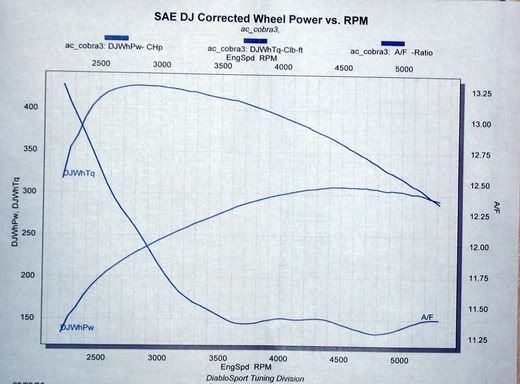
Take a look at this dyno graph(John, when are you going to put the
Zombie on the dyno?!)

http://i26.photobucket.com/albums/c105/DanBabb/2006-02%20DynoTuning/DynoSheet2006-02.jpg

Now think about 1 liter sport bikes(GSXR1000 and the 1000 Ninja).
Think about Top Fuel dragsters.  Think about how wickedly fast they
are.

They red line at 10,000 - 12,000 rpm +

Every gear wraps out for twice as long as normal car.

Also, think about when something is spinning.  The forward motion that
results.  If my car is in any gear at 6,000 rpm it moves forward with
X amount of acceleration.  Now think about if I was singing it up to
~12,000 rpm.  How fast are my gears turning?  Are my rear axles and
drive shaft and transmission gears really turning and burning like
something fierce?  Sure beats topping out at a mild 6,000 rpm..

Hopefully some day someone will build a wicked AC car...

Ultimately, I'd like for my car to be faster then Suzuki Hayabusa's
and what not.  I'll need to be running in the 8's to take those wicked
400+hp bikes...  9's for the stock bikes.

http://img152.imageshack.us/img152/8179/hayashop2large5ir.jpg

http://www.mrturbo.com/

It will be interesting to see how fast the Zombie will ultimately go
and how fast any other fast DC cars gets to be.

That big motor tube truck someone is building should be interesting...
 Not to mention that full frame truck with a big motor..
--- End Message ---
--- Begin Message ---
On 17 Feb 2006 at 15:52, Lawrence Rhodes wrote:

> What about 96vdc.

Aren't these pretty much just clones of the old Todd chargers?  I tried
using a Todd 20LV on a 96v car once, and it didn't work too well.  It
dropped out under acceleration.


David Roden - Akron, Ohio, USA
EV List Assistant Administrator

= = = = = = = = = = = = = = = = = = = = = = = = = = = = = = = = =
Want to unsubscribe, stop the EV list mail while you're on vacation,
or switch to digest mode?  See how: http://www.evdl.org/help/
= = = = = = = = = = = = = = = = = = = = = = = = = = = = = = = = =
Note: mail sent to "evpost" or "etpost" addresses will not reach me.
To send a private message, please use evadm at drmm period net.
= = = = = = = = = = = = = = = = = = = = = = = = = = = = = = = = =
--- End Message ---
--- Begin Message ---
Actually John (de Armond) you are kinda makeing my point for me, only
better.


By practical, I meant for us EV'ers, using traction motors, 1000Amp
motor loop current. You have pointed out some rather specialty
areas.(high dollar)

30,000 rpm spindle at multiple HP? Most steel cutting machine centers I
am familiar with consider 10K fast, But I can see wood cutting as 30K.

Yes generators have bigger bars and a lot less of them. starting at zero
rpm is not an issue with them.

But the point is well taken, Drop the amps, drop the number of bars and
kick up the rpm and stick a gearbox on it. Dc could be run like AC and
likewise AC could be run like DC, they just arn't  avil  :-(

On the brush issue, You are correct in that they exist, but nothing is free
  to quote helwig

"Graphite grades are used in special applications requiring low friction
characteristics. When brushes must operate at very low current densities
or very high peripheral speeds, a graphite grade should be used."


I was going by this article, which I like, Do you agree with they're info?
http://www.reliance.com/prodserv/motgen/c7090/


        "E. Commutator Surface Speed

The coefficient of friction between the brush and commutator increases
approximately as the speed. Brush wear is proportional to the
coefficient of friction. At higher speeds, above 5,000 or 6,000 fpm,
greater brush pressure may be required, resulting in decreased brush
life. At high field weakened speeds, commutation deteriorates, that is
sparking increases. At higher speeds the film can be stripped from the
commutators faster than it is being formed. If the motor runs at high
speeds for only short periods of time, film can still be maintained.

For a given motor rpm, the smaller the commutator diameter, the lower
the surface speed and the greater the brush life. In general, the
commutator surface speed of industrial motors limited to 8,000 fpm.

Commutator Surface Speed, fpm = Commutator Diameter, in divided by 12 x
3.1416 x Motor Speed, rpm"

This is interesting, I wonder what the numbers tell us


8000 = dia / 12  * PI * 30,000 );   dia/12 = .084 ; dia = 1"      too
small, maybe that was a 1:2 on that machine?
8000 = dia / 12  * PI * 15,000 );   dia/12 = .169 ; dia = 2"      better
8000 = dia / 12  * PI * 10,000 );   dia/12 = .254 ; dia = 3"      now we
are getting close, I can imagine making a streatch 9 to get a long comm.

makes me curious, what about the 9" we use that have a 4" comm.

8000 = 4 / 12  * PI *  x );   x = 8000/(1/3 PI)  =  7640 RPM


Hundred percent in agreement with the overpriced, plastic comms forced
on us nowadays. I do have quotes for steel segmented comms, if we ever
got togather as a group and bought 10 or 20 of them we could have jim
whip us up a batch of super duty motors.!
--- End Message ---