EV Digest 6319

Topics covered in this issue include:
  1) Re: EEstor
        by "Roderick Wilde" <[EMAIL PROTECTED]>
  2) 2f1r updates of JD's efforts
        by "peekay" <[EMAIL PROTECTED]>
  3) Re: compound motors and regnerative braking
        by "Joe Smalley" <[EMAIL PROTECTED]>
  4) Re: Link-10 with RS-232 Discontinued
        by "Brian M. Sutin" <[EMAIL PROTECTED]>
  5) Re: where to start
        by "peekay" <[EMAIL PROTECTED]>
  6) Re: Xantrex Link-10 with RS-232 Discontinued
        by "Brian M. Sutin" <[EMAIL PROTECTED]>
  7) Re: where to start .. optimum speed for wind resistance
        by "peekay" <[EMAIL PROTECTED]>
  8) Re: EEstor
        by "Peter VanDerWal" <[EMAIL PROTECTED]>
  9) Re: EEstor
        by "Peter VanDerWal" <[EMAIL PROTECTED]>
 10) RE: where to start
        by "Myles Twete" <[EMAIL PROTECTED]>
 11) Hello, I'm new
        by Anthony Nguyen <[EMAIL PROTECTED]>
 12) Re: where to start .. optimum speed for wind resistance
        by Anthony Nguyen <[EMAIL PROTECTED]>
 13) Re: EEstor
        by Robert Lemke <[EMAIL PROTECTED]>
 14) Re: EEstor
        by Lock Hughes <[EMAIL PROTECTED]>
 15) Re: where to start .. optimum speed for wind resistance
        by Lock Hughes <[EMAIL PROTECTED]>
 16) Re: where to start .. optimum speed for wind resistance
        by Anthony Nguyen <[EMAIL PROTECTED]>
 17) RE: EEstor
        by Cor van de Water <[EMAIL PROTECTED]>
 18) Re: where to start .. optimum speed for wind resistance
        by [EMAIL PROTECTED]
 19) Potentiometer swap questions
        by "Darin - MetroMPG.com" <[EMAIL PROTECTED]>
 20) Re: EEstor Freedom's an' Sunrises.
        by "Bob Rice" <[EMAIL PROTECTED]>
 21) A sub in every garage!  WAS Re: EEstor
        by "Bob Rice" <[EMAIL PROTECTED]>
--- Begin Message ---
I apologize for randomly picking that one comment. I was hoping people would
go do their own research. I was very wrong. It was not my position to start
a debate on the merits of one comment but to get people to think for
themselves and not believe every over hyped press release to come along. I
apologize to the List for starting what has turned into a ludicrous thread
and totally non productive to EVs.
Roderick Wilde
----- Original Message -----
From: "Cor van de Water" <[EMAIL PROTECTED]>
To: <[email protected]>
Sent: Thursday, January 18, 2007 8:20 PM
Subject: RE: EEstor
Hi Rod and others,

Funny that everyone is so concerned about 3,500 V being lethal
while nobody has a problem switching on their TV set with more
than 25,000 V on the picture tube or walking into the backyard,
under the 12,500 V power lines, while these can drop down any
second and probably do more often than cars explode into fireballs.

Mr Pham is not very knowledged in Electronics or he pretends that
he does not know how to convert the 3500V into useful motor
voltage and current. His suggestion to charge the EEstor to 500V
because most motor controllers can't handle any higher is like
saying that because record players were not able to handle more
than 78 RPM, no CD should ever be used at more than 1x speed.
I hope that a new motor controller will be developed for this
new storage medium....
Sure - a 3500V motor controller is different than a 300V motor
controller, but not much more than a 300V motor controller
differs from a 48V motor controller.
Just a matter of selecting the right parts and engineering it well.

Bomb-proof capacitor storage? Why?
If your controller blows in your EV, your batteries will not
cook away, would they? Why? One word: fuse.
I wrote before that since the EEstor consists of so many
parallel capacitors, their protection mechanism may be as simple
as a HV fuse for each unit. That, or a high voltage FET switch.
If you lose one module - too bad. Just keep driving.

Cor van de Water
Systems Architect
Proxim Wireless Corporation   http://www.proxim.com
Email: [EMAIL PROTECTED]      Private: http://www.cvandewater.com
Skype: cor_van_de_water       IM: [EMAIL PROTECTED]
Tel:   +1 408 542 5225        VoIP: +31 20 3987567 FWD# 25925
Fax:   +1 408 731 3675        eFAX: +31-87-784-1130
Second Life: www.secondlife.com/?u=3b42cb3f4ae249319edb487991c30acb


-----Original Message-----
From: [EMAIL PROTECTED] [mailto:[EMAIL PROTECTED]
Behalf Of Roderick Wilde
Sent: Thursday, January 18, 2007 10:04 AM
To: [email protected]
Subject: Re: EEstor


Greg, when I first hear of an exciting new product that sounds too good to
be true I first go to Google and read up on the product which many times
is
just various articles based on press releases from the company. The second
thing I do is then go to Google and type in the name of the product again
and add the word scam behind it. Not that I think it is a scam, just so I
can read opposing viewpoints. If there are an incredible amount of
opposing
viewpoints I start to wonder. I read many of these posts to help me form
an
opinion. I suggest that others use this same process when trying to
discern
the truth on new products. Here is just one post of many you may find of
interest. It was posted on The Green Car Congress web site on 1/17/07 by
Roger Pham.

Roderick Wilde

By Roger Pham

"Ceramic capacitors are not known for their high energy storage capacity.
Barium titanate has been used to make ceramic capacitors for quite
sometimes, and has nowhere near the energy capacity as claimed by EEStor
company.
The claimed 52kwh capacity of the EEstor device having 31 farads is due to
the 3,500 V maximum voltage rating. However, automotive power inverters
and
power transformers are typically designed to handle battery voltages from
250-500 volts. Since Energy Stored = 1/2 Capacitance x Voltage Squared,
reducing the 3,500V down to a more reasonable 500V will reduce the storage
capacity of the EEstor from 52kwh down to 1kwh.

Otherwise, working with 3,500V in a personal vehicle is very lethal,
especially in the event of an accident. High-voltage capacitors can
explode
violently upon aging of the dielectric material or other stresses that can
lower the dielectric property of the material. In a chain reaction, the
entire energy of this supercapacitor can be released as fast as a bomb
explosion. If you wanna build a thick, thick bomb-proof casing to contain
this 52kwh worth (~140lbs of TNT-equivalent) of energy that can be
released
in a flash, you will need a lot of carbon fiber layers that will be very
heavy and costly. You might have better luck making a Compressed Hydrogen
tank out of carbon-fiber reinforcement. H2 by itself without O2 cannot
combust. Structural weakness in the carbon fiber tank may allow the H2 to
leak out at a fast rate, but it will not explode."

Good luck, EEStor. Y'all will need every bit of it!
----- Original Message -----
From: "Greg Watson" <[EMAIL PROTECTED]>
To: <[email protected]>
Sent: Thursday, January 18, 2007 1:20 AM
Subject: EEstor
http://www.marketwire.com/mw/release_html_b1?release_id=204515

The first commercial application of the EESU is intended to be used in
electric vehicles under a technology agreement with ZENN Motors Company.
EEStor, Inc. remains on track to begin shipping production 15
kilowatt-hour Electrical Energy Storage Units (EESU) to ZENN Motor
Company
in 2007 for use in their electric vehicles. The production EESU for ZENN
Motor Company will function to specification in operating environments as
sever as negative 20 to plus 65 degrees Celsius, will weigh less than 100
pounds, and will have ability to be recharged in a matter of minutes.

Zap, Kapow Batman our offline energy storage problems are over,
Greg


--
No virus found in this incoming message.
Checked by AVG Free Edition.
Version: 7.1.410 / Virus Database: 268.16.13/632 - Release Date:
1/16/2007
--
No virus found in this outgoing message.
Checked by AVG Free Edition.
Version: 7.1.410 / Virus Database: 268.16.14/637 - Release Date: 1/18/2007


--
No virus found in this incoming message.
Checked by AVG Free Edition.
Version: 7.1.410 / Virus Database: 268.16.14/637 - Release Date: 1/18/2007
--
No virus found in this outgoing message.
Checked by AVG Free Edition.
Version: 7.1.410 / Virus Database: 268.16.14/637 - Release Date: 1/18/2007
--- End Message ---
--- Begin Message ---
i guess just emulating the designs of very experienced
ev'ers is much better than doing the original research
all over again ..

what's the website/webpage where the latest updates
are put up for your 2f1r ?

..peekay

----- Original Message -----
From: "jerryd" <[EMAIL PROTECTED]>
...
>        There are several good groups for 3wh cabin EV's that
> would fit your needs like vortex3wheeler list and 2f1rEV
> list for building your own. I'm building a 2front wheel 3wh
> EV Sportwagon now that would do what you want.  Doing it
> yourself, could be done under $5k, 500-1000 hrs. They get
> great range cheaply by reducing weight, air drag at a
> reasonable price. While it takes time, it's not that hard if
> you are handy.
...

>                                   Jerry Dycus


___________________________________________________________
All new Yahoo! Mail "The new Interface is stunning in its simplicity and ease
of use." - PC Magazine
http://uk.docs.yahoo.com/nowyoucan.html
--- End Message ---
--- Begin Message ---
Been there.
Done that.
Yes, it substantially reduces the wear on the brakes.
Yes, it reduced the net energy requirement from 3% to 8% on my commute.
Yes, I have the car for sale for $1500.
Yes, I can install the regen controller if you want it re-installed.
Yes, I used a compound wound motor.
No, the regen current through the series winding is not a serious problem.
Yes, the series field makes the regen 'softer' and less violent.
Yes, that is an advantage if you accidentally get too aggressive on the
regen knob.

Joe Smalley
Rural Kitsap County WA
Fiesta 48 volts
NEDRA 48 volt street conversion record holder
[EMAIL PROTECTED]

----- Original Message -----
From: <[EMAIL PROTECTED]>
To: <[email protected]>
Sent: Thursday, January 18, 2007 9:33 AM
Subject: compound motors and regnerative braking


> As I was thinking of motors, I was interested in the compound motor.  I
understand that it combines the advantages of both the series and shunt
motors.  Does it regenerative braking like a shunt?  If so, can you make use
of it, if you are only using the standard series motor controllers?  Or do
you need a special controller to have this ability?  I am interested in
having regenerative braking in my ev, but know it is hard with series
motors.  I am not so interested in the ability of it in the aspect of
increase in range.  I am more interested in not making the brakes work to
hard, and not wasting energy in the form of heat.  I appreciate comments.
>
> Thanks,
> Brian
> ---- Msg sent via USU WebMail - http://webmail.usu.edu/
>
--- End Message ---
--- Begin Message ---
> may be but it only reads to 500A- the "choice" model reads up to 1kA

I bet that is another simple change that the user can make.
I will ask them as soon as I have a Link-10 to destroy.

Brian
Alfa Romeo Electric Conversion
http://www.skewray.com/alfa

--
Brian M. Sutin, Ph.D.     Space System Engineering and Optical Design
Skewray Research/316 W Green St/Claremont CA 91711 USA/(909) 621-3122
--- End Message ---
--- Begin Message ---
with so much concern about battery charging hours maybe
it will make sense to standardize batterpacks and design
battery bays such that they can be easily unclipped and
wheeled out of the car .. and replaced with charged packs
without any delay ..
this could be easily done on one's gas station .. who could
own the packs .. and make money on the charging services
.. since they are already in convenient places all over the
country .. charging at home is a chore that i would avoid ..
for the gas station, it would be 'business' with profits
coming in .. maybe they won't oppose conversion then ;-)
i believe the Z-Z had such a release and remove mechanism
for its battery pack .. as do many e-assisted cycles ..
..peekay
----- Original Message -----
From: <[EMAIL PROTECTED]>
> I drive up to 50 miles one way but I must charge when I get there for 3
> hours to get back. Electric cars can work for most people if most your
driving
> one way is under 50 miles and you have enough time to charge.
___________________________________________________________
Try the all-new Yahoo! Mail. "The New Version is radically easier to use" The
Wall Street Journal
http://uk.docs.yahoo.com/nowyoucan.html
--- End Message ---
--- Begin Message ---
> The connector is there for the alarm signal and manual specifically says
> that it is not a field upgradeable option to add the alarm. Is it just
> there and working, or does a jumper need to be soldered in somewhere for
> it to work?
> Garret Maki

The engineer just said "connect it to pin 7."  I have no idea what pin 7
is, except that it isn't pin 7 of the DB-9.  When I've got one of these
in hand, I will call them back and walk through all of the modifications,
then post it.

Brian
Alfa Romeo Elevtric Conversion
http://www.skewray.com/alfa

--
Brian M. Sutin, Ph.D.     Space System Engineering and Optical Design
Skewray Research/316 W Green St/Claremont CA 91711 USA/(909) 621-3122
--- End Message ---
--- Begin Message ---
assuming that air is still .. how does wind resistance
relate to ev speed ?

does it become double at double speed and triple at triple speed ?
or does it go up much more than that ?

brings up the obvious question .. what is the optimum speed
which will give the best mileage out of a full charge ?
(slow speeds may work out okay for many if it gives a much
longer range .. for speed buffs, range may not matter .. extreme
accelerations give the thrill !)

..peekay

----- Original Message -----
From: <[EMAIL PROTECTED]>

> At speeds over 30 miles an hour wind resistance becomes a big factor. You
> would be doing well to go 30 or 40 miles at freeway speeds.


___________________________________________________________
The all-new Yahoo! Mail goes wherever you go - free your email address from
your Internet provider. http://uk.docs.yahoo.com/nowyoucan.html
--- End Message ---
--- Begin Message ---
> When I worked in offshore oil exploration we used ROV's that had a 10,000
> foot tether. The 100hp motor was very small and compact for two reason.
> Natural heat sink of the ocean and the only way to get that kind of power
> thru 10,000 feet of wire is to run at 5000 volts. Here is one of many
> sites dealing with motors like this

How much of that 5,000 volts is left for the motor after it goes through a
10,000 foot long resistor?

--
If you send email to me, or the EVDL, that has > 4 lines of legalistic
junk at the end; then you are specifically authorizing me to do whatever I
wish with the message.  By posting the message you agree that your long
legalistic signature is void.
--- End Message ---
--- Begin Message ---
<Yawn>

Hmm, would someone wake me up when these actually become available for
purchase?

--
If you send email to me, or the EVDL, that has > 4 lines of legalistic
junk at the end; then you are specifically authorizing me to do whatever I
wish with the message.  By posting the message you agree that your long
legalistic signature is void.
--- End Message ---
--- Begin Message ---
Peekay suggested:

> with so much concern about battery charging hours maybe
> it will make sense to standardize batterpacks and design
> battery bays such that they can be easily unclipped and
> wheeled out of the car .. and replaced with charged packs
> without any delay ..

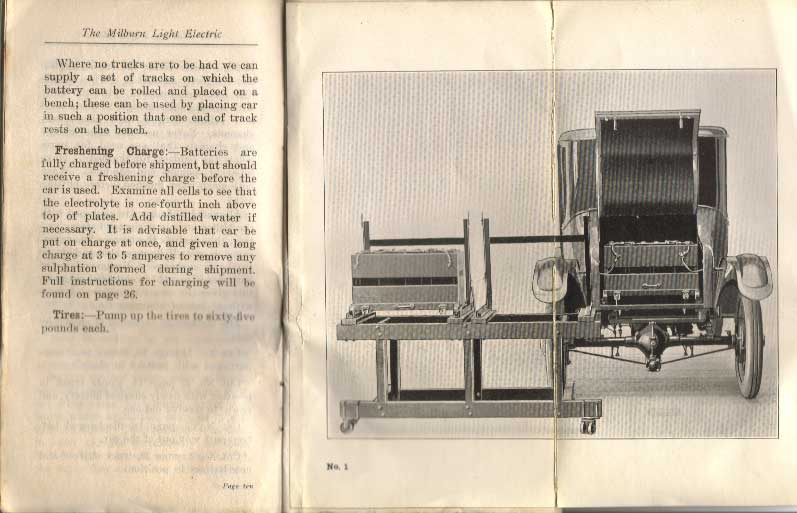
Yeah, like they did 80 years ago with the Milburn Light Electric:
  Milburn's rollout battery cart: http://www.milburn.us/docs/27_instr-08.jpg
  Recent pic of a pair Milburn battery boxes:
http://home.comcast.net/~matwete/ev/ron_milburn_1918_02b_batteryboxes_orig.j
pg

-MT
--- End Message ---
--- Begin Message ---
Hello everyone,
I just joined to ev-listserv, in hopes of learning a few things before
attempting to build my own vehicle.
So I'll be lurking around, and might even post something if I feel the
need.
Just out of curiousity, why don't we have a more traditional internet forum?
-Anthony
--- End Message ---
--- Begin Message ---
peekay wrote:
It's my understanding that the resistive force of the air increases with
the square of your speed ... so as speed increases, wind resistance
increases a lot more. So really, the optimal speed is zero ;)
-Anthony
assuming that air is still .. how does wind resistance
relate to ev speed ?

does it become double at double speed and triple at triple speed ?
or does it go up much more than that ?

brings up the obvious question .. what is the optimum speed
which will give the best mileage out of a full charge ?
(slow speeds may work out okay for many if it gives a much
longer range .. for speed buffs, range may not matter .. extreme
accelerations give the thrill !)

..peekay

----- Original Message -----
From: <[EMAIL PROTECTED]>
At speeds over 30 miles an hour wind resistance becomes a big factor. You
would be doing well to go 30 or 40 miles at freeway speeds.
___________________________________________________________
The all-new Yahoo! Mail goes wherever you go - free your email address from your Internet provider. http://uk.docs.yahoo.com/nowyoucan.html
--- End Message ---
--- Begin Message ---
Well, if memory serves me we were using AWG 2 for a round trip of 20,000 feet.
At full 100 hp load at 5000 volts with a motor eff of around 90 %, the amp draw
would be 17 amps. AWG 2 is .1594 ohms per 1000' so total resistance would be
3.19 ohms. So voltage drop would only be 54.2 volts. 4946 volts at the motor.

  Bob

Peter VanDerWal <[EMAIL PROTECTED]> wrote:

> When I worked in offshore oil exploration we used ROV's that had a 10,000
> foot tether. The 100hp motor was very small and compact for two reason.
> Natural heat sink of the ocean and the only way to get that kind of power
> thru 10,000 feet of wire is to run at 5000 volts. Here is one of many
> sites dealing with motors like this

How much of that 5,000 volts is left for the motor after it goes through a
10,000 foot long resistor?

--
If you send email to me, or the EVDL, that has > 4 lines of legalistic
junk at the end; then you are specifically authorizing me to do whatever I
wish with the message. By posting the message you agree that your long
legalistic signature is void.
--- End Message ---
--- Begin Message ---
sweet
tks for this Bob
L
T
h-e
--- Robert Lemke <[EMAIL PROTECTED]> wrote:
> Well, if memory serves me we were using AWG 2 for a round trip of
> 20,000 feet. At full 100 hp load at 5000 volts with a motor eff of
> around 90 %, the amp draw would be 17 amps. AWG 2 is .1594 ohms per
> 1000' so total resistance would be 3.19 ohms. So voltage drop would
> only be 54.2 volts. 4946 volts at the motor.
>
>   Bob
>
> Peter VanDerWal <[EMAIL PROTECTED]> wrote:
>
> > When I worked in offshore oil exploration we used ROV's that had a
> 10,000
> > foot tether. The 100hp motor was very small and compact for two
> reason.
> > Natural heat sink of the ocean and the only way to get that kind of
> power
> > thru 10,000 feet of wire is to run at 5000 volts. Here is one of
> many
> > sites dealing with motors like this
>
> How much of that 5,000 volts is left for the motor after it goes
> through a
> 10,000 foot long resistor?


__________________________________________________
Do You Yahoo!?
Tired of spam?  Yahoo! Mail has the best spam protection around
http://mail.yahoo.com
--- End Message ---
--- Begin Message ---
I understood cubed, but love to be corrected
tks
L
--- Anthony Nguyen <[EMAIL PROTECTED]> wrote:
> peekay wrote:
> It's my understanding that the resistive force of the air increases
> with
> the square of your speed ... so as speed increases, wind resistance
> increases a lot more.  So really, the optimal speed is zero ;)
> -Anthony
> > assuming that air is still .. how does wind resistance
> > relate to ev speed ?
> > does it become double at double speed and triple at triple speed ?
> > or does it go up much more than that ?
> > brings up the obvious question .. what is the optimum speed
> > which will give the best mileage out of a full charge ?
> > (slow speeds may work out okay for many if it gives a much
> > longer range .. for speed buffs, range may not matter .. extreme
> > accelerations give the thrill !)
> > ..peekay
> > ----- Original Message -----
> > From: <[EMAIL PROTECTED]>
> >> At speeds over 30 miles an hour wind resistance becomes a big
> factor. You
> >> would be doing well to go 30 or 40 miles at freeway speeds.

__________________________________________________
Do You Yahoo!?
Tired of spam?  Yahoo! Mail has the best spam protection around
http://mail.yahoo.com
--- End Message ---
--- Begin Message ---
I just checked wikipedia, and the FORCE of air resistance increases with
velocity squared, while the POWER your motor must output to overcome
that force is related to velocity cubed.
Lock Hughes wrote:
I understood cubed, but love to be corrected
tks
L
--- Anthony Nguyen <[EMAIL PROTECTED]> wrote:
peekay wrote:
It's my understanding that the resistive force of the air increases
with
the square of your speed ... so as speed increases, wind resistance
increases a lot more. So really, the optimal speed is zero ;)
-Anthony
assuming that air is still .. how does wind resistance
relate to ev speed ?
does it become double at double speed and triple at triple speed ?
or does it go up much more than that ?
brings up the obvious question .. what is the optimum speed
which will give the best mileage out of a full charge ?
(slow speeds may work out okay for many if it gives a much
longer range .. for speed buffs, range may not matter .. extreme
accelerations give the thrill !)
..peekay
----- Original Message -----
From: <[EMAIL PROTECTED]>
At speeds over 30 miles an hour wind resistance becomes a big
factor. You
would be doing well to go 30 or 40 miles at freeway speeds.
__________________________________________________
Do You Yahoo!?
Tired of spam? Yahoo! Mail has the best spam protection around
http://mail.yahoo.com
--- End Message ---
--- Begin Message ---
Hi Roderick,

Sorry for jumping on the one example that you selected,
you are absolutely right in teaching others "how to fish"
instead of keeping them awaiting a donated fish each day.

Since I never visited EEstor and never saw the device or
even talked to someone who saw it, there still is the
real possibility that it is a cleverly designed scam, although
the chance for that is extremely small, because scammers use
tactics which are opposite to what EEstor has done.

In addition to that, they provided detailed technical insight
in their invention (via the patent) and although I am not a
materials expert, I have reviewed enough patents to see that
the described process and device bears on reality.
This also removes the veil of secrecy that surrounds all
scammers - EEstor made it quite simple for someone in the
trade to reproduce their part, so any ill intend is easily
discovered.
>From a math and science point of view - the calculations of
their device concerning energy storage and thickness of
layers and surfaces work out to be correct.
In fact, I think that the theoretical max voltage on their
capacitor is slightly above 6 kV which more than doubles the
energy stored, but there may be effects that I did not take
into account, for example not perfect homogenous layer
thickness or small defects in the dielectricum, which all
call for some de-rating - even a possible shrinking of the
layer when it is put on the substrate and processed, so it
gets thinner than the 1 um that I calculated with.
3500 Volts seems like a very good compromise between max
energy storage and some safety margin.
Although there sure will be sufficient obstacles to overcome,
I have no doubt that in several years (yes, that is how long it
takes go to mass-production with a new technology and make
it cost effective, look at the Prius) we will see this type
of technology rise as the most important energy storage,
which will remove the inefficiencies we suffer from with
the electrical <=> chemical energy conversion in batteries.

I hope by 2010 we will see production ramp up to millions, so
we can start with making a small dent in the default position
of the ICE in vehicles.

That FGC gets a 1/3 sized unit (100 lbs, 15kWh) with the
energy claimed at slightly under 1/3 of the patent description
indicates that they have a good feel for how much is appropriate
for their market and sized the number of modules accordingly.

The type of people involved with EEstor, the particular VC firm
and the practical application of their capacitor storage in an
EV from an existing company indicates that they must be for
real, otherwise these knowledged people would have long ago
turned their backs, as they have to get into the details to
make it work, so EEstor had to reveal the ins and outs of
their technology and no doubt the questions that come up here
have come up in the labs of FGC and EEstor and probably in
the board room of the investors. Contrary to this list, EEstor
had to find answers in those cases, so we will see when they
reveal their other patents, what they cooked up as solutions.

I am not holding my breath, but I expect that my next EV has
ten times the pack voltage of my current EV.

Regards,

Cor van de Water
Systems Architect
Proxim Wireless Corporation   http://www.proxim.com
Email: [EMAIL PROTECTED]      Private: http://www.cvandewater.com
Skype: cor_van_de_water       IM: [EMAIL PROTECTED]
Tel:   +1 408 542 5225        VoIP: +31 20 3987567 FWD# 25925
Fax:   +1 408 731 3675        eFAX: +31-87-784-1130
Second Life: www.secondlife.com/?u=3b42cb3f4ae249319edb487991c30acb


-----Original Message-----
From: [EMAIL PROTECTED] [mailto:[EMAIL PROTECTED]
Behalf Of Roderick Wilde
Sent: Thursday, January 18, 2007 8:53 PM
To: [email protected]
Subject: Re: EEstor


I apologize for randomly picking that one comment. I was hoping people would

go do their own research. I was very wrong. It was not my position to start
a debate on the merits of one comment but to get people to think for
themselves and not believe every over hyped press release to come along. I
apologize to the List for starting what has turned into a ludicrous thread
and totally non productive to EVs.

Roderick Wilde


----- Original Message -----
From: "Cor van de Water" <[EMAIL PROTECTED]>
To: <[email protected]>
Sent: Thursday, January 18, 2007 8:20 PM
Subject: RE: EEstor


> Hi Rod and others,
>
> Funny that everyone is so concerned about 3,500 V being lethal
> while nobody has a problem switching on their TV set with more
> than 25,000 V on the picture tube or walking into the backyard,
> under the 12,500 V power lines, while these can drop down any
> second and probably do more often than cars explode into fireballs.
>
> Mr Pham is not very knowledged in Electronics or he pretends that
> he does not know how to convert the 3500V into useful motor
> voltage and current. His suggestion to charge the EEstor to 500V
> because most motor controllers can't handle any higher is like
> saying that because record players were not able to handle more
> than 78 RPM, no CD should ever be used at more than 1x speed.
> I hope that a new motor controller will be developed for this
> new storage medium....
> Sure - a 3500V motor controller is different than a 300V motor
> controller, but not much more than a 300V motor controller
> differs from a 48V motor controller.
> Just a matter of selecting the right parts and engineering it well.
>
> Bomb-proof capacitor storage? Why?
> If your controller blows in your EV, your batteries will not
> cook away, would they? Why? One word: fuse.
> I wrote before that since the EEstor consists of so many
> parallel capacitors, their protection mechanism may be as simple
> as a HV fuse for each unit. That, or a high voltage FET switch.
> If you lose one module - too bad. Just keep driving.
>
> Cor van de Water
> Systems Architect
> Proxim Wireless Corporation   http://www.proxim.com
> Email: [EMAIL PROTECTED]      Private: http://www.cvandewater.com
> Skype: cor_van_de_water       IM: [EMAIL PROTECTED]
> Tel:   +1 408 542 5225        VoIP: +31 20 3987567 FWD# 25925
> Fax:   +1 408 731 3675        eFAX: +31-87-784-1130
> Second Life: www.secondlife.com/?u=3b42cb3f4ae249319edb487991c30acb
>
>
> -----Original Message-----
> From: [EMAIL PROTECTED] [mailto:[EMAIL PROTECTED]
> Behalf Of Roderick Wilde
> Sent: Thursday, January 18, 2007 10:04 AM
> To: [email protected]
> Subject: Re: EEstor
>
>
> Greg, when I first hear of an exciting new product that sounds too good to
> be true I first go to Google and read up on the product which many times
> is
> just various articles based on press releases from the company. The second
> thing I do is then go to Google and type in the name of the product again
> and add the word scam behind it. Not that I think it is a scam, just so I
> can read opposing viewpoints. If there are an incredible amount of
> opposing
> viewpoints I start to wonder. I read many of these posts to help me form
> an
> opinion. I suggest that others use this same process when trying to
> discern
> the truth on new products. Here is just one post of many you may find of
> interest. It was posted on The Green Car Congress web site on 1/17/07 by
> Roger Pham.
>
> Roderick Wilde
>
> By Roger Pham
>
> "Ceramic capacitors are not known for their high energy storage capacity.
> Barium titanate has been used to make ceramic capacitors for quite
> sometimes, and has nowhere near the energy capacity as claimed by EEStor
> company.
> The claimed 52kwh capacity of the EEstor device having 31 farads is due to
> the 3,500 V maximum voltage rating. However, automotive power inverters
> and
> power transformers are typically designed to handle battery voltages from
> 250-500 volts. Since Energy Stored = 1/2 Capacitance x Voltage Squared,
> reducing the 3,500V down to a more reasonable 500V will reduce the storage
> capacity of the EEstor from 52kwh down to 1kwh.
>
> Otherwise, working with 3,500V in a personal vehicle is very lethal,
> especially in the event of an accident. High-voltage capacitors can
> explode
> violently upon aging of the dielectric material or other stresses that can
> lower the dielectric property of the material. In a chain reaction, the
> entire energy of this supercapacitor can be released as fast as a bomb
> explosion. If you wanna build a thick, thick bomb-proof casing to contain
> this 52kwh worth (~140lbs of TNT-equivalent) of energy that can be
> released
> in a flash, you will need a lot of carbon fiber layers that will be very
> heavy and costly. You might have better luck making a Compressed Hydrogen
> tank out of carbon-fiber reinforcement. H2 by itself without O2 cannot
> combust. Structural weakness in the carbon fiber tank may allow the H2 to
> leak out at a fast rate, but it will not explode."
>
> Good luck, EEStor. Y'all will need every bit of it!
>
> ----- Original Message -----
> From: "Greg Watson" <[EMAIL PROTECTED]>
> To: <[email protected]>
> Sent: Thursday, January 18, 2007 1:20 AM
> Subject: EEstor
>
>
>> http://www.marketwire.com/mw/release_html_b1?release_id=204515
>>
>> The first commercial application of the EESU is intended to be used in
>> electric vehicles under a technology agreement with ZENN Motors Company.
>> EEStor, Inc. remains on track to begin shipping production 15
>> kilowatt-hour Electrical Energy Storage Units (EESU) to ZENN Motor
>> Company
>
>> in 2007 for use in their electric vehicles. The production EESU for ZENN
>> Motor Company will function to specification in operating environments as
>> sever as negative 20 to plus 65 degrees Celsius, will weigh less than 100
>> pounds, and will have ability to be recharged in a matter of minutes.
>>
>> Zap, Kapow Batman our offline energy storage problems are over,
>> Greg
>>
>>
>>
>> --
>> No virus found in this incoming message.
>> Checked by AVG Free Edition.
>> Version: 7.1.410 / Virus Database: 268.16.13/632 - Release Date:
>> 1/16/2007
>>
>>
>
>
>
> --
> No virus found in this outgoing message.
> Checked by AVG Free Edition.
> Version: 7.1.410 / Virus Database: 268.16.14/637 - Release Date: 1/18/2007
>
>
>
>
> --
> No virus found in this incoming message.
> Checked by AVG Free Edition.
> Version: 7.1.410 / Virus Database: 268.16.14/637 - Release Date: 1/18/2007
>
>


--
No virus found in this outgoing message.
Checked by AVG Free Edition.
Version: 7.1.410 / Virus Database: 268.16.14/637 - Release Date: 1/18/2007
--- End Message ---
--- Begin Message ---
At speeds of 30 miles an hour and less the wind resistance is not much  of a
factor. I have found 25 to 30 miles per hour really increases  your range.
More energy from the batteries and less wind resistance.

Every once in a while I would have to do this to get home with an old
battery pack. It is not a lot of fun but it surprising how far you can go.

Don

In a message dated 1/18/2007 10:04:08 PM Pacific Standard Time,
[EMAIL PROTECTED] writes:

peekay  wrote:

It's my understanding that the resistive force of the air  increases with
the square of your speed ... so as speed increases, wind  resistance
increases a lot more.  So really, the optimal speed is  zero ;)

-Anthony
> assuming that air is still .. how does wind  resistance
> relate to ev speed ?
>
> does it become double  at double speed and triple at triple speed ?
> or does it go up much  more than that ?
>
> brings up the obvious question .. what is the  optimum speed
> which will give the best mileage out of a full charge  ?
> (slow speeds may work out okay for many if it gives a much
>  longer range .. for speed buffs, range may not matter .. extreme
>  accelerations give the thrill !)
>
> ..peekay
>
>  ----- Original Message -----
> From:  <[EMAIL PROTECTED]>
>
>
>> At speeds  over 30 miles an hour wind resistance becomes a big factor. You
>>  would be doing well to go 30 or 40 miles at freeway speeds.
>>
>
>
>
>  ___________________________________________________________
> The  all-new Yahoo! Mail goes wherever you go - free your email address
from your  Internet provider.  http://uk.docs.yahoo.com/nowyoucan.html
>
>
>
>
--- End Message ---
--- Begin Message ---
The challenge du jour for Project ForkenSwift (AKA Joe Sixpack Geo
Metro) relates to the potentiometer.
I had been hoping to reuse the potbox assembly removed from the donor
forklift. It's basically an industrial grade self-contained Curtis PB-6
unit, except it's got both high & low pedal microswitches.
The challenge is: the oddball golf cart Curtis motor controller I want
to play with requires a 3-wire 5-0k pot, and the pot in the forklift
potbox doesn't meet that description.
I was thinking of replacing just the pot from the forklift box. But I'd
specifically need one that matches its physical size and has a 45-50
degree total rotation (ie. I can't use a 20-0k pot and only use the last
1/4 of rotation). Is such a specification available out there? Are pot
sizes (physical) fairly standardized? (Suggestions where to look for
one would be appreciated.)
thanks,
Darin
--- End Message ---
--- Begin Message ---
----- Original Message -----
From: "Cor van de Water" <[EMAIL PROTECTED]>
To: <[email protected]>
Sent: Thursday, January 18, 2007 11:49 PM
Subject: RE: EEstor


> Exactly.
> As long as EEstor concentrates on what they do best
> (the capacitive energy storage and its issues)
> while others tackle the issues surrounding the
> application (High Voltage controller, HV charger, etc)
> then we can see interesting results soonest.
>
> Imagine a Sunrise with a 300 lb 50 kWh energy pack.
> 500 miles range easily.
> What was the problem with EVs again?

      Hi EVerybody;

   Imagine a Sunrise...... Period! We're working on it. The body we had at
Jerry's has been transported by Lee Hart an' I to St. Cloud MN to a Auto Fab
shop, where it will morph into a mould so we can grow more. Brainstorming
engineering on it sorta lead us to a RW drive, 9" motor, about 5 to one
gearbox, top speed , maybe 70-80 That's fast enough! I'm sure I can feel
John Wayland cringe, when I said that, but go ahead stuff a Trans-Warp motor
in it to blow off the Zombie?Front, of last thoughts, would be a engineered
bolt on thing sorta like you can just BUY from a speed shop. Mustang, style
or have a speed shop make us one?Breaking free of the weight bond of
conversions, we may not have a lead sled!? And, of course the new crop of
batteries, as above. But we are thinking of Led Acids, to get you started.
With Sunrise's EV-1  like CD It SHOULD do nicely with garden verity golf
cart badd-eries.Following in the success of the designed to be an EV-
Freedom, we should be able to start mass marketing??

  So, come to BBB and see the Freedom roll out? Jerry? Got yur ears on?
How's it look?

   Back to Sunrise, Lee has the concept that folks that build kit planes, ya
buy the bits and pieces, as you can afford, and assemble it. Maybe a
tuitorial factory visit toi be shown how easy it is to put together. I think
WE will be putting a hell of a lot of them together,at the factory, so you
can plug an' play,no, Play an' Plug<g>!right off the auto transporter. Not
EVerybody wants to build his own.

    As that Other Guy(MLK) said a few years ago; "I have a Dream" Me
too.Streets filled with the happy hum of traction motors. But we'll need
help. But when we have more to show, I'll be on here, hat in hand.

    Seeya at BBB?

    Bob
--- End Message ---
--- Begin Message ---
----- Original Message -----
From: "Roderick Wilde" <[EMAIL PROTECTED]>
To: <[email protected]>
Sent: Thursday, January 18, 2007 5:09 PM
Subject: Re: EEstor


> Maybe you would care to elaborate on the price of their least expensive
> motor and on the price and availability of a 3000 volt controller to
control
> motor speed so we can all start gearing up for the future when these
> batteries come on the market very soon. Please also include information on
> their high voltage disconnects. We could use some of them right now for EV
> racing. A few hundred volts DC rating would be fine for the time being.
>
> Roderick Wilde
>
>
> ----- Original Message -----
> From: "Robert Lemke" <[EMAIL PROTECTED]>
> To: <[email protected]>
> Sent: Thursday, January 18, 2007 1:28 PM
> Subject: Re: EEstor
>
>
> > When I worked in offshore oil exploration we used ROV's that had a
10,000
> > foot tether. The 100hp motor was very small and compact for two reason.
> > Natural heat sink of the ocean and the only way to get that kind of
power
> > thru 10,000 feet of wire is to run at 5000 volts. Here is one of many
> > sites dealing with motors like this
> >
> >  http://www.submarines-rovs.com/submersible_rov_motors.htm
> >
> >  So they are out there, just need to know where to look.
> >  Yeah! Check it out! A U-Boat of your own! Funny I couldn't find any
torpedoes for it, though?! A RV Submarine? Lottsa fun. Don't imagine there
is much call for them, though. No prices? Ya hafta CALL them? Or a leese?
They can reel you in, like an EV-1 lease, when it's due? Better than a
lifeboat.

   Sorry couldn't resist!

   Bob
> >
> >  Bob
> >
> > Roderick Wilde <[EMAIL PROTECTED]> wrote:
> >  The really funny thing to me is that their target market and their
> > exclusive
> > marketing agreement is for a 72 volt NEV by Feel Good Cars. Something in
> > this picture does not jive in my head. Please go read all the articles
you
> > can find. The one I posted is one of many as I did say in my post. You
may
> > want to also research the availability of 3500 volt EV motors or for a
> > start
> > try finding 1000 volt ones. Concerning high voltage, you are correct
that
> > higher voltage uses smaller gauge wire to achieve the same watts. That
is
> > why Europe uses half the copper in their homes as the US does which most
> > likely amounts to a waste of resources in the amount of millions if not
> > billions of tons of copper. I wonder who thought up that brilliant idea.
> > Most likely a copper lobby.
> >
> > Roderick Wilde
> >
> >
> > ----- Original Message -----
> > From: "Danny Miller"
> > To:
> > Sent: Thursday, January 18, 2007 10:50 AM
> > Subject: Re: EEstor
> >
> >
> >>I have been curious about the safety of 52KW HV cap. Man, the explosive
> >>potential could be impressive. Or it may just burn, it's hard to say.
> >>
> >> The guy is whining about the high voltage. It's a big concern, that's
for
> >> sure, but not insurmountable. What people aren't realizing is EVs
really
> >> do become more practical at higher voltages and lower current levels.
The
> >> cable needs extra-special insulation but doesn't need to be thick or
have
> >> ultra-low resistance terminals. At 3500V vs 120V the wire only needs to
> >> carry 1/29th the current. 8ga is more than enough. Other things would
of
> >> course need to change, the motor would be wound differently and brush
> >> motors may be impossible due to the arcing potential of high voltage.
> >>
> >> So they're actually putting out a cap, but 15KW instead of 52KW? Well
> >> that's the sort of degradation from the initial bold proposal I would
> >> expect and they might release a bigger version later (or you just put
> >> several together). It says "under 100lbs" which is less than half the
> >> weight of the proposed 52KW so the energy density isn't all that far
off-
> >> they apparently just want to start small.
> >>
> >> Danny
> >>
> >> Roderick Wilde wrote:
> >>
> >>> Greg, when I first hear of an exciting new product that sounds too
good
> >>> to be true I first go to Google and read up on the product which many
> >>> times is just various articles based on press releases from the
company.
> >>> The second thing I do is then go to Google and type in the name of the
> >>> product again and add the word scam behind it. Not that I think it is
a
> >>> scam, just so I can read opposing viewpoints. If there are an
incredible
> >>> amount of opposing viewpoints I start to wonder. I read many of these
> >>> posts to help me form an opinion. I suggest that others use this same
> >>> process when trying to discern the truth on new products. Here is just
> >>> one post of many you may find of interest. It was posted on The Green
> >>> Car
> >>> Congress web site on 1/17/07 by Roger Pham.
> >>>
> >>> Roderick Wilde
> >>>
> >>> By Roger Pham
> >>>
> >>> "Ceramic capacitors are not known for their high energy storage
> >>> capacity.
> >>> Barium titanate has been used to make ceramic capacitors for quite
> >>> sometimes, and has nowhere near the energy capacity as claimed by
EEStor
> >>> company.
> >>> The claimed 52kwh capacity of the EEstor device having 31 farads is
due
> >>> to the 3,500 V maximum voltage rating. However, automotive power
> >>> inverters and power transformers are typically designed to handle
> >>> battery
> >>> voltages from 250-500 volts. Since Energy Stored = 1/2 Capacitance x
> >>> Voltage Squared, reducing the 3,500V down to a more reasonable 500V
will
> >>> reduce the storage capacity of the EEstor from 52kwh down to 1kwh.
> >>>
> >>> Otherwise, working with 3,500V in a personal vehicle is very lethal,
> >>> especially in the event of an accident. High-voltage capacitors can
> >>> explode violently upon aging of the dielectric material or other
> >>> stresses
> >>> that can lower the dielectric property of the material. In a chain
> >>> reaction, the entire energy of this supercapacitor can be released as
> >>> fast as a bomb explosion. If you wanna build a thick, thick bomb-proof
> >>> casing to contain this 52kwh worth (~140lbs of TNT-equivalent) of
energy
> >>> that can be released in a flash, you will need a lot of carbon fiber
> >>> layers that will be very heavy and costly. You might have better luck
> >>> making a Compressed Hydrogen tank out of carbon-fiber reinforcement.
H2
> >>> by itself without O2 cannot combust. Structural weakness in the carbon
> >>> fiber tank may allow the H2 to leak out at a fast rate, but it will
not
> >>> explode."
> >>>
> >>> Good luck, EEStor. Y'all will need every bit of it!
> >>>
> >>> ----- Original Message ----- From: "Greg Watson"
> >>>
> >>> To:
> >>> Sent: Thursday, January 18, 2007 1:20 AM
> >>> Subject: EEstor
> >>>
> >>>
> >>>> http://www.marketwire.com/mw/release_html_b1?release_id=204515
> >>>>
> >>>> The first commercial application of the EESU is intended to be used
in
> >>>> electric vehicles under a technology agreement with ZENN Motors
> >>>> Company.
> >>>> EEStor, Inc. remains on track to begin shipping production 15
> >>>> kilowatt-hour Electrical Energy Storage Units (EESU) to ZENN Motor
> >>>> Company in 2007 for use in their electric vehicles. The production
EESU
> >>>> for ZENN Motor Company will function to specification in operating
> >>>> environments as sever as negative 20 to plus 65 degrees Celsius, will
> >>>> weigh less than 100 pounds, and will have ability to be recharged in
a
> >>>> matter of minutes.
> >>>>
> >>>> Zap, Kapow Batman our offline energy storage problems are over,
> >>>> Greg
> >>>>
> >>>>
> >>>>
> >>>> --
> >>>> No virus found in this incoming message.
> >>>> Checked by AVG Free Edition.
> >>>> Version: 7.1.410 / Virus Database: 268.16.13/632 - Release Date:
> >>>> 1/16/2007
> >>>>
> >>>>
> >>>
> >>>
> >>>
> >>
> >>
> >>
> >>
> >> --
> >> No virus found in this incoming message.
> >> Checked by AVG Free Edition.
> >> Version: 7.1.410 / Virus Database: 268.16.14/637 - Release Date:
> >> 1/18/2007
> >>
> >>
> >
> >
> >
> > --
> > No virus found in this outgoing message.
> > Checked by AVG Free Edition.
> > Version: 7.1.410 / Virus Database: 268.16.14/637 - Release Date:
1/18/2007
> >
> >
> >
> >
> > --
> > No virus found in this incoming message.
> > Checked by AVG Free Edition.
> > Version: 7.1.410 / Virus Database: 268.16.14/637 - Release Date:
1/18/2007
> >
> >
>
>
>
> --
> No virus found in this outgoing message.
> Checked by AVG Free Edition.
> Version: 7.1.410 / Virus Database: 268.16.14/637 - Release Date: 1/18/2007
>
>
>
> --
> No virus found in this incoming message.
> Checked by AVG Free Edition.
> Version: 7.1.410 / Virus Database: 268.16.14/637 - Release Date: 1/18/07
>
>
--- End Message ---