http://www.autocar.co.uk/car-review/volkswagen/golf/first-drives/volkswagen-e-golf-first-drive-review
Volkswagen e-Golf first drive review
by Greg Kable  8 November 2013
[image
http://images.cdn.autocar.co.uk/sites/autocar.co.uk/files/volkswagen-e-golf-1_0.jpg
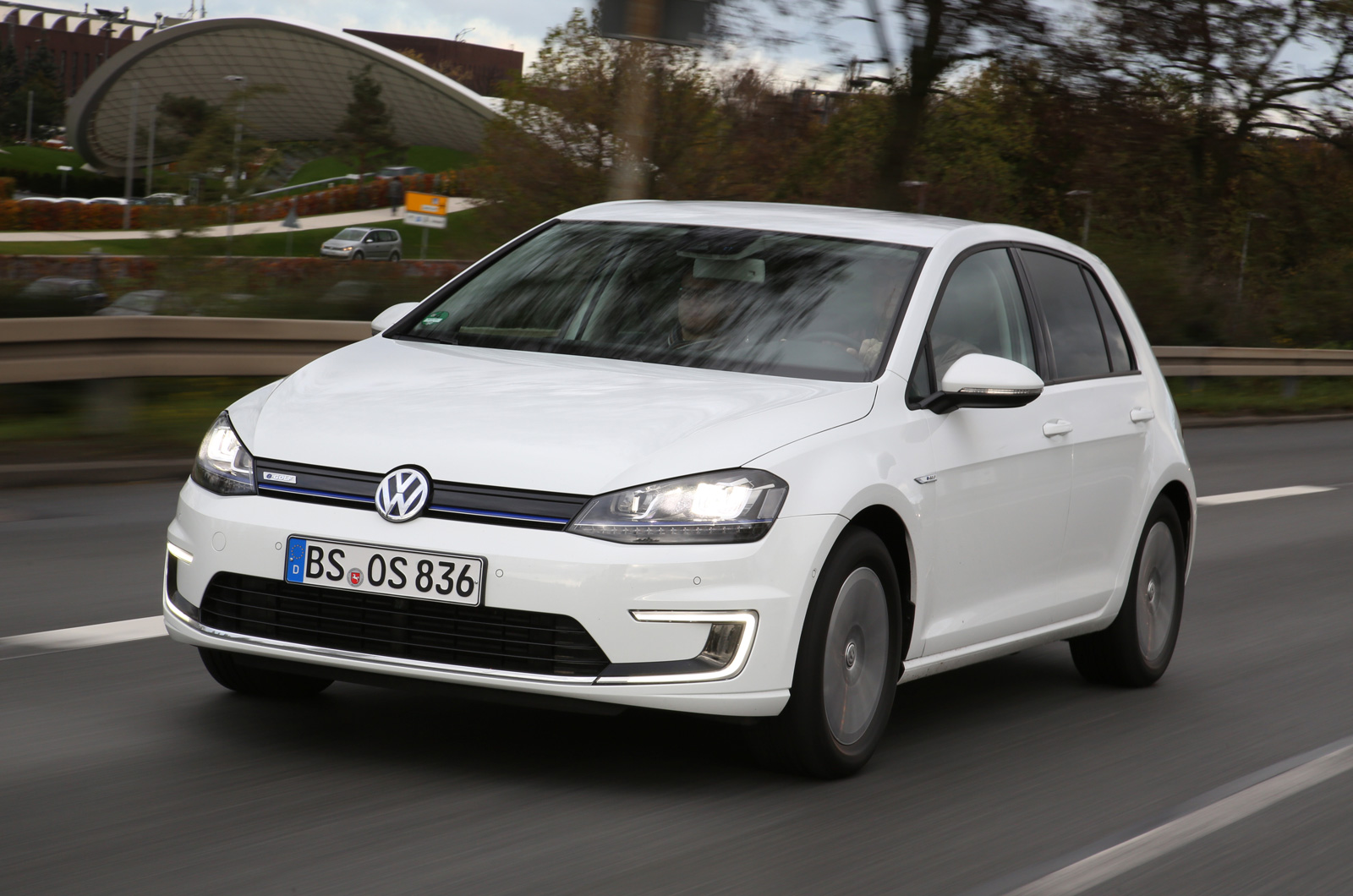
The e-Golf offers a claimed 118-mile range; that's well over twice the
global average commute, according to VW

http://images.cdn.autocar.co.uk/sites/autocar.co.uk/files/volkswagen-e-golf-2_0.jpg

http://images.cdn.autocar.co.uk/sites/autocar.co.uk/files/volkswagen-e-golf-4_0.jpg

http://images.cdn.autocar.co.uk/sites/autocar.co.uk/files/volkswagen-e-golf-6_0.jpg
]

New e-Golf offers the same familiar looks and quality - but it's fun to
drive, efficient and fast enough to challenge the best of the electric car
brigade

What is it?

Volkswagen’s second series-production electric car – the Volkswagen e-Golf.

Following hot on the heels of the e-Up, the new zero-emission version of
Europe’s perennial best seller is planned to go on sale in the UK next
spring at a price, Volkswagen’s head of R&D Hans-Jakob Neusser suggests,
will see it undercut the recently introduced BMW i3.

Volkswagen has taken its time developing the e-Golf, resisting the urge to
launch it until its advanced driveline was sufficiently mature — both in
terms of performance and range — to fully meet customer expectations.

Now, with increasing political pressure at home to get zero-emission cars on
the road and a rising public awareness of the ability of the latest
generation of electric cars, the German car maker appears confident of its
potential to finally place the e-Golf on sale.

Unlike BMW with the carbonfibre-intensive i3 – and Nissan with the Leaf as
well as Renault with the Zoe for that matter, Volkswagen has decided to base
its new electric car around an existing model, the seventh-generation Golf;
the reasoning being that a number of internal studies carried out in recent
years have revealed potential electric car buyers are more interested in
overall everyday practicality and ease of use than fancy styling and a sense
of standing out from the crowd.

It is a typically conservative approach, but one that Volkswagen is
confident will prove the right one over the longer term. Apart from a blue
strip adorning its grille, a pair of e-Golf badges front and rear and full
LED headlamps, there initially appears to be little else to differentiate
the new e-Golf. However, a closer inspection reveals it boasts a number of
detailed aerodynamic refinements that help it to slip through the air with
greater efficiency than its more conventional combustion-engine touting
siblings.

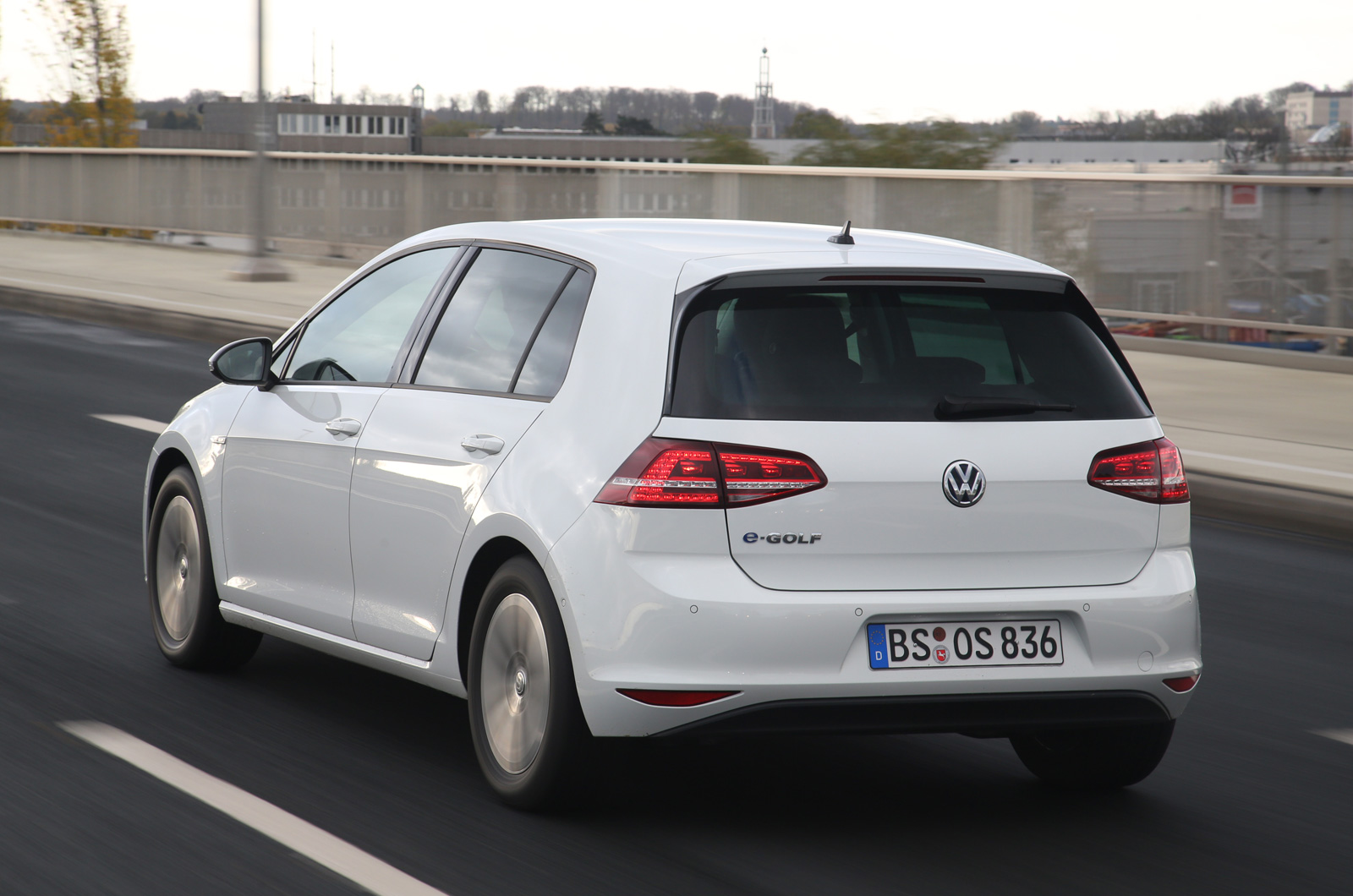
Included is a new front bumper with integrated LED daytime running lamps
that mimic the shape of those of the e-Up, a closed-off grille to block the
entry of air to the engine bay, additional underbody panelling for smoother
air flow at speed, a rear spoiler atop the tailgate, so-called air guides
within the C-pillars and a new rear bumper. The wheels have also been
optimised with an aerodynamic design that is claimed to reduce turbulence
within the wheel houses. The result is a claimed 10 per cent improvement in
drag coefficient over the standard Golf at a claimed Cd of 0.28.

To help streamline assembly at its Wolfsburg-based manufacturing base and
keep production costs in check, the e-Golf uses the same MQB platform
structure and high strength steel body structure as other seventh-generation
Golfs. One body style, a five door hatchback, is planned to underpin sales,
although VW doesn’t rule out adding a three-door hatchback at a later stage,
should demand warrant it.

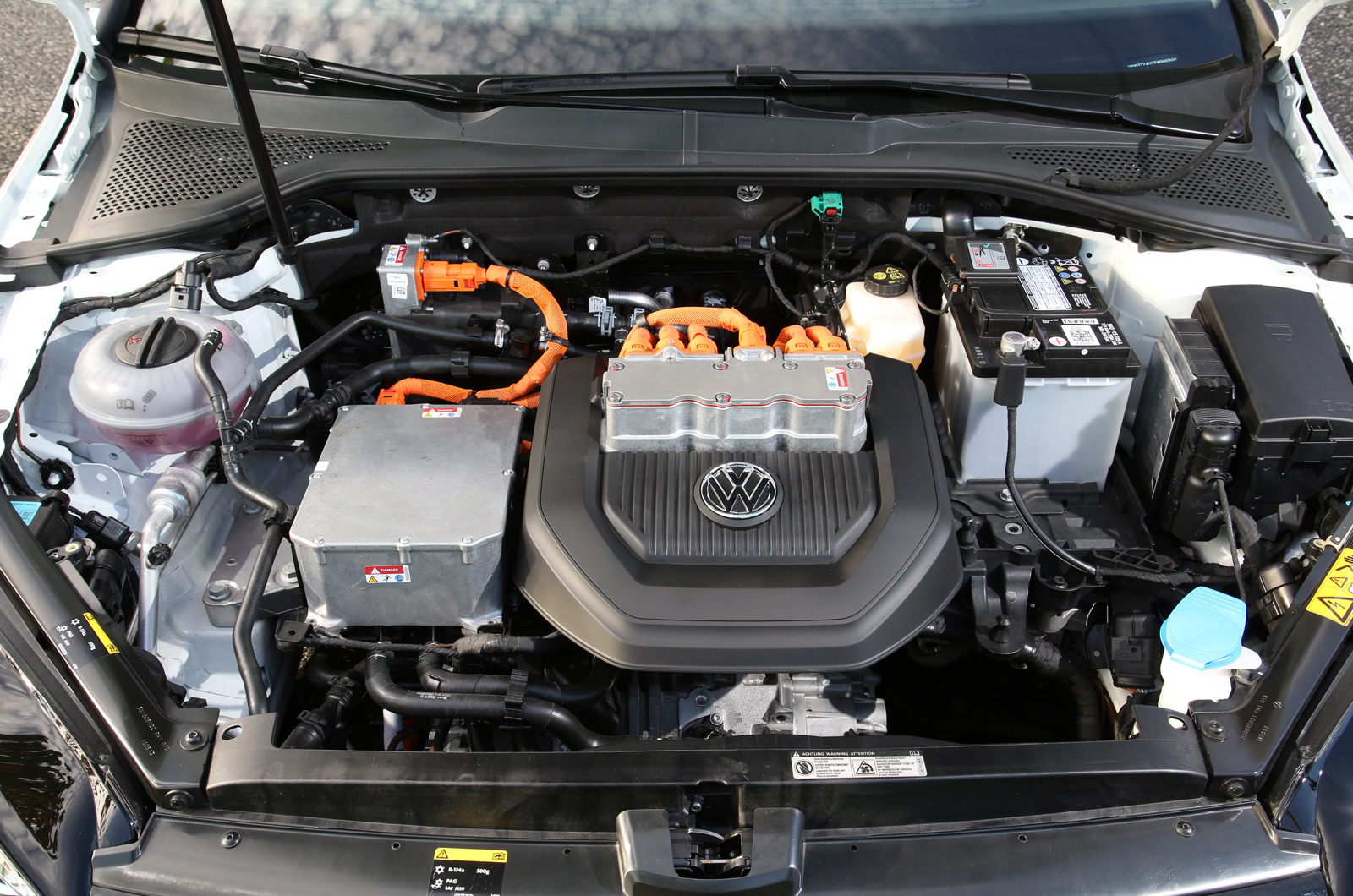
Mounted transversely up front in the space usually occupied by the Golf’s
wide variety of petrol and diesel powerplants is an in-house developed,
engineered and produced synchronous electric motor. Tuned to operate at a
maximum 12,000rpm, it develops 114bhp and 200lb ft of torque in the most
liberal of three driving modes. Drive is channelled to the front wheels
through an in-house produced single-speed gearbox, known as the EQ270.

Energy for the electric motor is provided by a 24.2kWh lithium ion battery
that weighs 318kg and is mounted underneath the boot at the rear. Consisting
of 264 individual cells sourced from Panasonic, it generates a nominal 232
volts. Charging time is put at a lengthy 13 hours on a 240 volt household
socket at a charging power of 2.3 kW. However, this can be cut to just four
hours with an optional combined charging system that allows the e-Golf to
plug in at a charging station boasting power levels of up to 40kW.

There are no compromises in interior space or overall accommodation,
although the boot loses its double-floor feature, meaning there is slightly
less luggage space than with other seventh-generation Golfs.

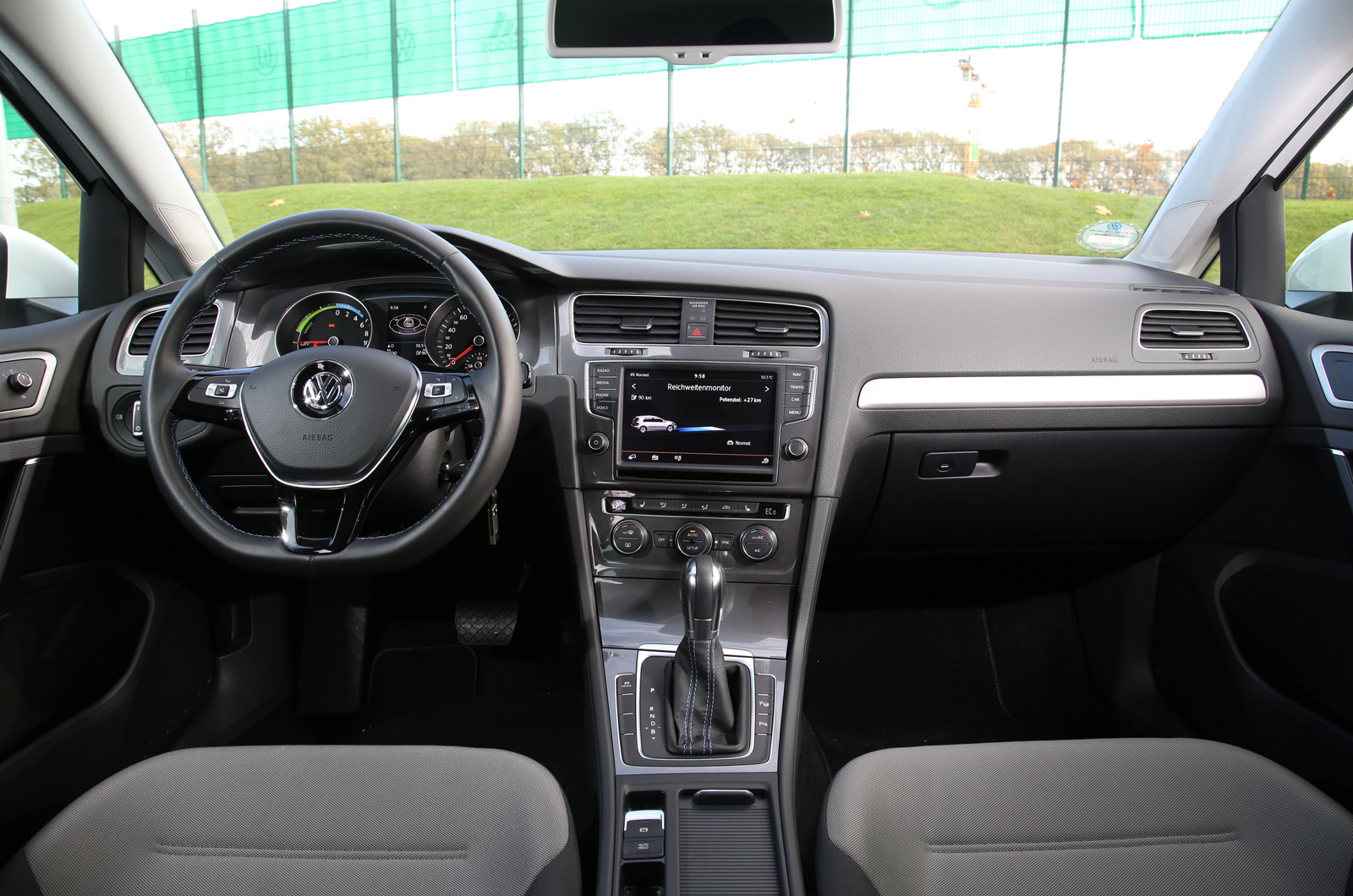
As with the exterior, the interior boasts a familiar look apart from the
instrumentation, which has been altered to in line with the driveline. The
e-Golf also receives an eight-inch touchscreen colour monitor as standard,
providing the basis for a range of unique on-board functions, including a
so-called range monitor, energy flow indicator and charge manager.

What is it like?

Much of the e-Golf’s appeal lies in its familiarity, which is something
Volkswagen is clearly banking on in its quest to become a force in the
electric car ranks.  As with the e-Up, it is entirely conventional to drive.
This ease of use should make it an attractive proposition, not only for
private buyers but also fleet operators and rental car agencies.

The e-Golf starts with a simple crank of a key in the ignition, at which its
instruments spring to life to indicate the electric motor is primed. You
then press a button to disengage the electronic handbrake and select d (for
drive) via the gear lever – just as you do in conventional Golf models
fitted with an optional dual-shift gearbox.  The weighting of the throttle
is heavier than usual, but it is easy to modulate on the run.

Save for some roar from the tyres, progress is silent at city speeds. There
is sufficient power on tap and nimbleness within the chassis to make the
e-Golf fun in an urban environment. The steering is also pleasantly direct,
albeit largely devoid of any meaningful feedback.

While it has focused on making the e-Golf easy to operate, Volkswagen has
not shied away from providing it with variety of standard energy boosting
functions that help the driver to extend its range.

By sliding the gear lever in to B (for brake energy recuperation), you can
alter the amount of kinetic energy collected during braking and subsequently
stowed in the battery for latter use – and with that comes an altering in
the rate of deceleration on a lifted throttle.

There are four defined steps of energy recuperation – D1, D2, D3, D4 -
engaged either via the gearlever or steering wheel-mounted paddles; the
least severe of which sees the e-Golf gently slow as you back off the
throttle and the most severe of which is equivalent to a prolonged nudge of
the brake pedal.

There are also three different driving modes – Normal, Eco and Eco Plus -
engaged via the touch-screen monitor. They progressively reduce the amount
of power produced by the electric motor, allowing the driver to choose
between the maximum 114bhp, 94bhp or 74bhp.

Performance wise, there’s little to complain about. With 199lb ft of torque
available the moment you nudge the throttle in normal mode, the e-Golf
bursts off the line with a strong and seamless surge of acceleration,
hitting 37mph in 4.2sec – a time Volkswagen suggests is quicker than the
Golf GTI to provide it with a likeable, spritely nature in an urban driving
environment.

The 0-62mph time is a little less notable at 10.4sec, owing in part to the
fixed gearing and effect of its 1510kg kerb weight, which makes it 230kg
heavier than the Golf 2.0 TDI. However, the all-electric Golf is anything
but slow, possessing plenty of urge on the run. Top speed varies depending
on the driving mode, limited to 87mph in normal, 71mph in Eco and 56 mph in
Eco Plus.

The inherent qualities of the electric driveline make for quiet and relaxed
progress.  However, the added weight and 205/55 R16 profile low-rolling
resistance with stiff side-wall structures have taken the edge off the ride,
which is noticeably firmer than other Golf models.

The e-Golf’s claimed average consumption of 12.7kWh/100km is quite
impressive, providing it with an official range of 118 miles. With variances
in route profile and driving style taken into account, Volkswagen suggests
the real world range is between 81 and 118 miles

Should I buy one?

The answer to this depends largely on your motoring needs. You can’t buy the
Volkswagen e-Golf just yet, but for those who require a car exclusively for
journeys under the claimed 118-mile maximum range — and have easy access to
high power 40kW electric charging — it appears to be a genuine alternative
to the current crop of petrol, diesel and even hybrid-powered hatchbacks.

For everyone else, though, the e-Golf is likely to make little sense.
Volkswagen’s second dedicated electric car feels terrifically well
engineered, imparts the same premium feel as other seventh-generation Golf
models and boasts the sort of everyday practicality that is expected from a
modern-day hatchback.

The clincher, however, is its ease of operation. Despite boasting a vast
array of drive modes, it is very straightforward to drive. With its gutsy
low-end acceleration, it is also fun in the nip and tuck of city driving.

While we’re yet to verify Volkswagen's claims on range, the official figures
place the German car maker’s second dedicated electric car at the top of its
market segment in terms of overall efficiency.

A final assessment will have to wait until UK pricing is announced but with
Volkswagen already hinting it will be below that of the £25,860 BMW i3
(including a £5000 government rebate), signs are the e-Golf could be the car
to get the long-predicted electric car revolution rolling.

Volkswagen e-Golf

Price tba; 0-62mph 10.4sec; Top speed 87mph; Economy 12kWh/100km; CO2 0g/km
(local); Kerb weight 1510kg; Engine Synchonous electric motor; Installation
Front, transverse, FWD; Power 114bhp; Torque 199lb ft; Gearbox single speed
automatic, variable energy regeneration; Battery capacity 24.2kWh
[© autocar.co.uk]


For all EVLN posts use:
http://electric-vehicle-discussion-list.413529.n4.nabble.com/template/NamlServlet.jtp?macro=search_page&node=413529&query=evln&sort=date

Here are today's archive-only EV posts:

EVLN: Racy electric cars come to Oslo
EVLN: Smart Cities Plan for Plugins
EVLN: Quebec.ca Joins California & Oregon As EV Pioneers
EVLN: PM Shinzo Abe Rides in Autonomous Leaf EV
EVLN: Letter From The Owner Of The Tesla-S That Caught Fire In TN
+
EVLN: How EVs Can Make Gas Stations Rich


{brucedp.150m.com}


--
View this message in context:
http://electric-vehicle-discussion-list.413529.n4.nabble.com/EVLN-VW-e-Golf-first-drive-review-tp4666235.html
Sent from the Electric Vehicle Discussion List mailing list archive at
Nabble.com.
_______________________________________________
UNSUBSCRIBE: http://www.evdl.org/help/index.html#usub
http://lists.evdl.org/listinfo.cgi/ev-evdl.org
For EV drag racing discussion, please use NEDRA
(http://groups.yahoo.com/group/NEDRA)