http://3dprint.com/65209/faraday-electric-skateboard/
Smartphone Controlled Electric Skateboard 3D Printed at Autodesk’s Pier 9
by Scott J Grunewald · May 14, 2015
[images
http://3dprint.com/wp-content/uploads/2015/05/3dp_faraday_machine_front.jpg

http://3dprint.com/wp-content/uploads/2015/05/850.png

http://3dprint.com/wp-content/uploads/2015/05/3dp_faradaymotion_app.png
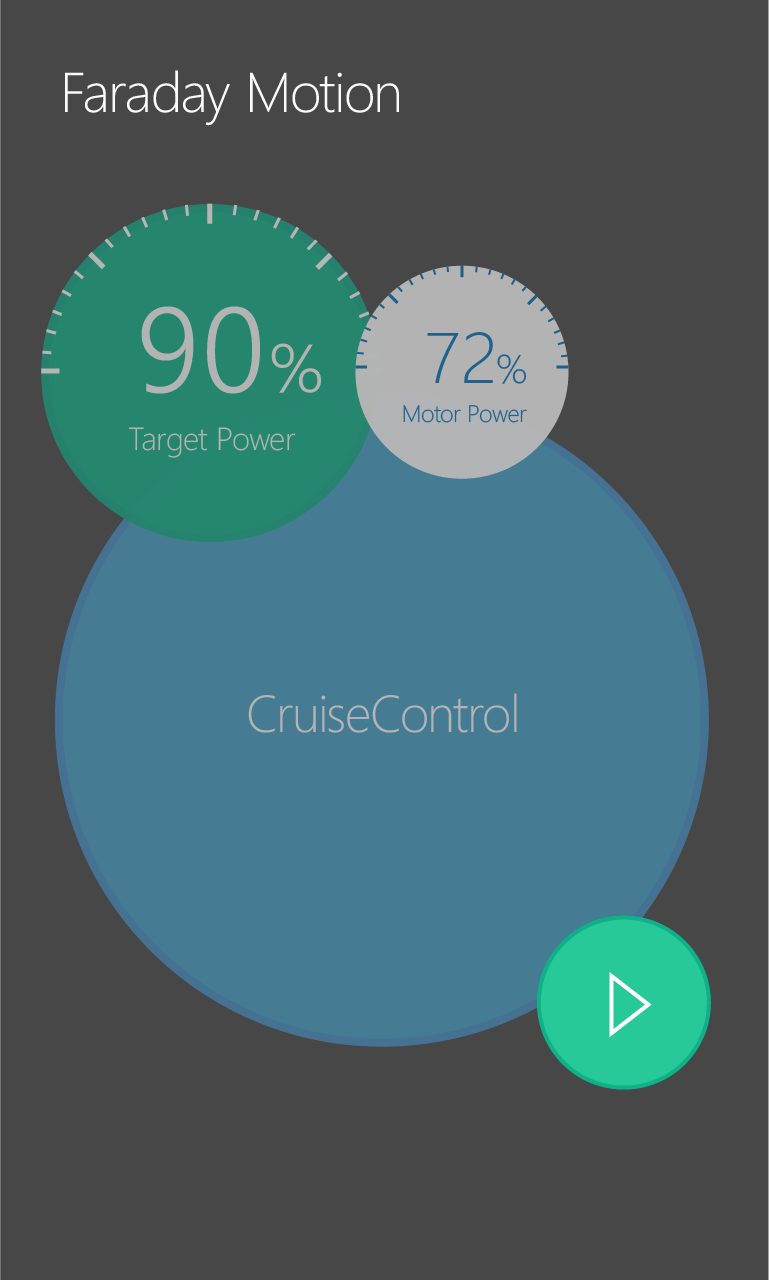
The app used to control the skateboard


video  flash
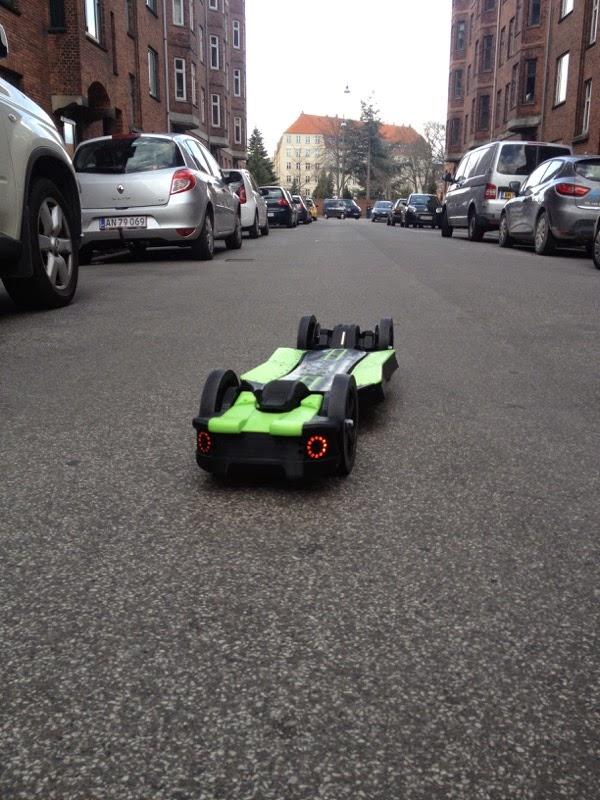
(Faraday Motion’s latest 3D printed prototype being tested in front of
Autodesk’s Pier 9 location in San Francisco)
]

Skateboards have long been the transportation choice of many a car-less
teenager, but now that an entire generation of skaters have grown into
adulthood many of them have brought their boards along with them. For
millions of pedestrians, a skateboard is a fun and logical option to
traverse long distances quickly and avoid the frustrations of gridlocked
traffic or overcrowded and inefficient public transportation. So it was only
a matter of time before there were attempts to improve or enhance the
skateboard riding experience, and some of those enhancements could possibly
lead to some rather incredible advances for people dependent on mobility
assistance devices.

Electric skateboards aren’t a new product–they have been around for
years–however, they can sometimes be difficult to control. Often they are
made for sportsmen and professional riders and consist of little more than a
board with a small motor attached to it. That can be dangerous for someone
who is new or only moderately skilled at riding a board, and in fact many
municipalities have even banned the devices on city streets and sidewalks.

Faraday Motion is a collection of engineers, makers, and researchers from
Denmark, Poland, Sweden, and the US who want innovate the personal mobility
device. They are currently developing an open platform, modular personal
electric vehicle that can be moved via a motion control smartphone app. The
prototype is based on a standard skateboard, but they have completely
stripped most of it away and loaded it with small motors and an entire array
of new, 3D printed parts and components. A simple smartphone application
controls the device’s speed and direction and based on the rider’s hand
movements, and the maximum speed can be preset before the board is used.

In 2013, the head of Faraday Motion’s business strategy and software team,
Sune Pedersen, was dealing with an old knee injury and continuing pain and
mobility issues, so he decided to see if he could create a new type of urban
transportation. He based his prototype on components designed in Tinkercad
and used an Onda Motion Core skateboard for its oversized wheels and durable
composite plastic body. While a skateboard may not be the ideal mobility
assistance device, the technology being developed can be implemented in a
variety of assistance devices.

“I do not think that an electric skateboard is the perfect way of
transportation for everyone. But the technology we are using; compact
batteries, high power motors and advanced computers with intelligent
software interacting with a range of sensors and user inputs, can be applied
to a range of totally different personal transportation devices not yet seen
before. 3d printing combined with our technology will make it easy to
quickly invent totally new vehicle types, you could i.e. use our technology
to make grandmothers walker electric or even design something innovative
from scratch that would look way cooler than anything out there,” explained
Pedersen.

Because Pedersen’s prototype was created using custom designed, modular 3D
printed parts his first prototype is still in use, though he has
significantly modified it 15 times or so. While he has at this point finally
created a second, more advanced prototype, the first remains in use today
for developing new features and testing. You can see some video of his
prototype and the control application in action here:

One of Pedersen’s biggest hurdles wasn’t actually the development of his
prototype–it was his ability to access the type of equipment that he would
traditionally use in the process. Because he lives in a large metropolitan
city in Denmark where space is at a premium, he didn’t have the space or
access to use standard tooling and fabrication machinery, so he turned to 3D
printing to fill in the gaps. Almost every part on his prototype was
designed in 123D Design and 3D printed on his Ultimaker 2. All of his custom
electronic components were designed using 123D Circuits, an Autodesk program
that allows users to design and simulate their electronics projects
virtually. This allowed him to complete his prototype almost entirely in his
living room.

Here is a video of Faraday Motion’s latest 3D printed prototype being tested
in front of Autodesk’s Pier 9 location in San Francisco:

Pedersen and the rest of the Faraday Motion team are expected to be showing
off their latest electric skateboard this month at the Autodesk booth at the
Bay Area Maker Faire on May 16th and 17th. What do you think of the
possibilities of a customizable, 3D printable mobility device? Let us know
on our Faraday Motion Electric Skateboard Prototype forum thread at 3DPB.com
[© 3dprint.com]


For EVLN posts use:
http://evdl.org/evln/


{brucedp.150m.com}


--
View this message in context:
http://electric-vehicle-discussion-list.413529.n4.nabble.com/3D-Printed-Smartphone-Controlled-e-Skateboard-tested-Pier9-SF-CA-v-tp4675727.html
Sent from the Electric Vehicle Discussion List mailing list archive at
Nabble.com.
_______________________________________________
UNSUBSCRIBE: http://www.evdl.org/help/index.html#usub
http://lists.evdl.org/listinfo.cgi/ev-evdl.org
For EV drag racing discussion, please use NEDRA
(http://groups.yahoo.com/group/NEDRA)