% Leno bait %
'Audi CEO sez hybrids only a "bridging technology" to EVs'

http://www.ibtimes.co.uk/worlds-first-hybrid-car-1896-expected-reach-190000-auction-1548230
World's first hybrid car from 1896 expected to reach £190,000 at auction
March 8, 2016  Alistair Charlton

[images   / Bonhams
https://d.ibtimes.co.uk/en/full/1496952/armstrong-phaeton-first-hybrid-car.jpg
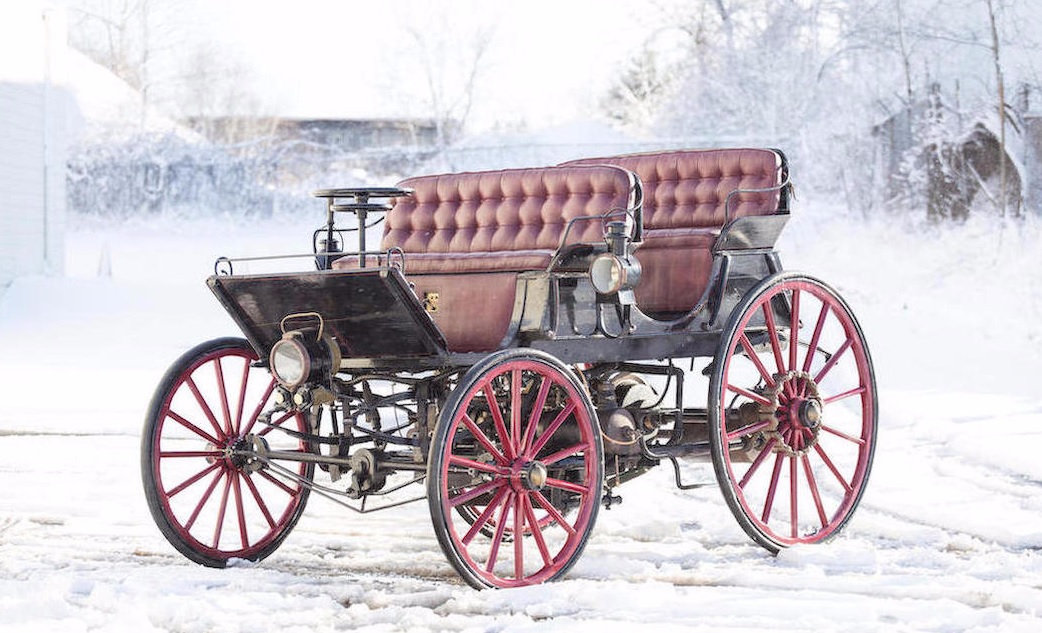
Armstrong Phaeton first hybrid car  Built in 1896, the Armstrong Phaeton is
the world's first hybrid car to use a petrol engine and electric motor

https://d.ibtimes.co.uk/en/full/1496954/armstrong-phaeton-first-hybrid-car.jpg
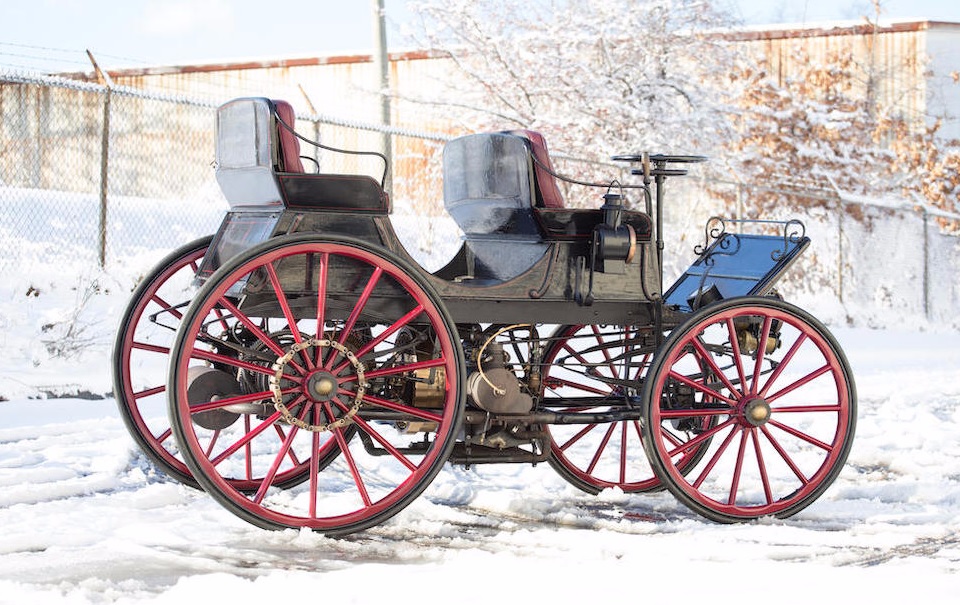
Armstrong Phaeton first hybrid car  The Phaeton is expected to reach between
£120,000 and £190,000 at auction on 10 March
]

You would be forgiven for thinking that hybrid cars are a relatively new
invention. The Toyota Prius arrived in 1997 and now cars like the BMW i8 and
McLaren P1 are the hybrid flagbearers. But the very first hybrid car, the
Armstrong Phaeton, was built back in 1896 and is about to go up for auction.

The Phaeton uses a 6.5-litre, two-cylinder petrol engine, an onboard battery
and a dynamo flywheel to not only start itself using electricity (16 years
before Cadillac invented the starter motor), but it could be driven for
short distances as a fully electric car. It is claimed the car's electric
drivetrain produced so much torque that it split its wooden carriage wheels.

It even uses regenerative braking to slow the back wheels, a technology not
dissimilar to how today's Formula One cars recharge their hybrid power
systems. Regenerative braking also features in Tesla's electric cars as a
way of topping up the battery pack and increasing range.

Electricity generated by the engine was also used to power the rest of the
car's electrics, including the lamps and engine ignition system. As well as
a hybrid system a century ahead of its time, the Phaeton also features a
magnetic clutch and semi-automatic three-speed gearbox, removing the need
for a clutch pedal.

The car will go under the hammer at Fernandina Beach Golf Club, Florida on
10 March and is expected to make between £120,000 and £190,000 (plus a 10%
buyer's premium). Fully functional, the car is eligible for entry in the
famous London to Brighton vintage car rally, should its new owner want to
ship it to the UK.
[© 2016 IBTimes]


http://www.rmsothebys.com/hf14/hershey/lots/1896-armstrong-phaeton/1070547
Lot 152  1896 Armstrong Phaeton  Chassis no. LX1  $550,000 - $700,000
[images
http://www.rmsothebys.com/images/lots/medium/HF14/HF14_r248_002.jpg

http://www.rmsothebys.com/images/lots/medium/HF14/HF14_r248_004.jpg
]
367 cu. in. air-cooled horizontally opposed two-cylinder engine, three-speed
transmission with variable-speed magnetic drive, full-elliptic leaf-spring
front and rear suspension, and a rear differential brake. Wheelbase: 74 in.
Fascinating known history from new
Equipped with charming, advanced features
Dated by the Veteran Car Club of Great Britain
Eminently eligible for the London to Brighton Veteran Car Run

“From Out A Dark Corner Came These Industrial Ghosts”
So read the headline published in The Hartford Courant on September 22,
1963, when the Capewell Manufacturing Company made some unexpected
discoveries during a cleaning of their old horseshoe nail plant in Hartford.
Aside from about 20 circa-1880s bicycles, commonly referred to as
“penny-farthings,” there was a four-wheeled horseless carriage that was
built by one of Capewell’s predecessors, the Armstrong Manufacturing
Company, of Bridgeport, Connecticut.

It is believed that the Armstrong was built over a period spanning
1894–1845; thus, it existed a year before England would repeal its infamous
Red Flag Act. After its completion in Bridgeport, the car was one of six
entrants in a race hosted by Cosmopolitan magazine, which ran from the
Manhattan Post Office in New York City to the Cosmopolitan offices in
Irvington, New York. As was quoted in an extensive piece written about the
car by noted English automotive author and historian Michael
Worthington-Williams, “The race came off like a Barnum and Bailey circus,
with competitors rattling and careening over treacherous cobblestone
pavements in a desperate effort to avoid collisions with horse-drawn
carriages, cable cars, and (war) veterans dispersing after a parade.”

Shortly thereafter, the car was placed on the market by The American
Carriage Motor Company, of New York, likely as a litmus test to help the
principals of Armstrong determine the commercial viability of their
prototype. After receiving a lukewarm response, it was returned to
Armstrong’s Bridgeport factory, where it remained until around 1950, when
the firm was purchased by Capewell. The contents of the factory, including
the penny-farthings and the Armstrong, were moved to Hartford.

The Armstrong would lay dormant for another 13 years, until newly minted
Capewell Vice President Henry C. White would discover the Armstrong during
the cleaning he initiated during the slow summer months of 1963. From there,
the car was moved into a Capewell employee’s garage in Harwinton,
Connecticut, which would be its home until 1995. The existence of the
Armstrong was then brought to the attention of the Magee brothers by Dennis
David, a local automotive historian. The car spent several years in their
collection before being exported to England by Robin Loder, an enthusiastic
member of the Veteran Car Club of Great Britain. Loder entrusted the car to
restorer Robert Steer, one of the foremost restorers of Veteran cars, who
set about restoring the cosmetics of the car, as well as preserving a
majority of the bodywork. Steer would also sort all of the intricate
electromechanical workings that were devised by the estimated half-dozen
Armstrong employees involved in its manufacture.

The Armstrong is a display of Yankee ingenuity throughout, and it bristles
with features that would not be seen on other production vehicles for many
years to come. These included a tubular chassis frame, electric lights, and
electromagnetically controlled inlet valves. The car also features an early
form of automatic spark control, which was managed by a flyweight governor
mounted on the end of the crankshaft. In addition, the Armstrong features a
silent electromagnetic starter within the flywheel; Armstrong called it a
“commencer,” and it was also found much later on the Mercer Model 22-70 and
the Owen Magnetic. The transmission is a three-speed unit with additional
variable magnetic drive, which is yet another wonder that preceded the
similarly engineered unit found on the Owen Magnetic some 20 years later.

Within the last several years, the car was imported back to the United
States, where it was treated to a fresh round of sorting by well-known
Brass- and Veteran-era specialist Stewart Laidlaw. This included work on the
original electric starter, which is a critical element, as there is no means
for hand-cranking, as well as an adjustment of the electrically controlled
inlet valves. Most importantly, the Armstrong has been dated by the Veteran
Car Club of Great Britain as being manufactured in 1896. This is typical of
the conservatism of the VCC, given that contemporary sources indicate the
date of completion to be 1895 or perhaps 1894. In any case, the dating
certificate is extremely important for its eligibility for entry into
Veteran car events around the world, including the revered London to
Brighton Veteran Car Run.

Having survived almost a dozen decades and now restored and made functional
once again, the Armstrong remains a symbol of the manufacturing ingenuity
and forethought in the New World. From a period when there was no “right”
way to build a car, many who attempted this feat lost heart or ran out of
money long before completion. Many manufactures managed to make crude copies
of existing vehicles, and some even made them work…for a few yards.

Even fewer enthusiasts started with a blank sheet of paper, proceeded with
their own original design, finished the project, and then had their vehicle
running on the highways. The Armstrong was one of these original few.

Please note that this lot will be sold on a Bill of Sale.
[© rmsothebys.com]
...
https://www.bonhams.com/auctions/23133/lot/152/
Bonhams  Lot 152
1896 ARMSTRONG PHAETON GASOLINE ELECTRIC HYBRID
US$ 175,000 - 275,000  £120,000 - 190,000
AUCTION 23133: THE AMELIA ISLAND AUCTION  10:30 EST
[©  Bonhams 2016]
...
http://sharrit.net/120-year-old-car-still-runs/
120-year-old car still runs
MARCH 7, 2016
...
[videos
https://www.youtube.com/watch?v=0rJuAskI-Ao

https://www.youtube.com/watch?v=0IsDqhcj3tE
]


http://insideevs.com/audi-ceo-hybrids-are-only-a-bridging-technology-to-pure-electric-cars/
Audi CEO: Hybrids Are Only A “Bridging Technology” To Pure Electric Cars
[20160308]  Audi CEO Rupert Stadler is slowly but surely starting to
discover what some automakers have already realized…electric cars are the
future. According to Stadler ...
...
http://www.autocar.co.uk/car-news/industry/audi-hybrids-only-bridging-technology-evs-says-ceo
Audi hybrids only a "bridging technology" before EVs, says CEO
3 March 2016


For EVLN EV-newswire posts use:
http://evdl.org/evln/


{brucedp.150m.com}

--
View this message in context:
http://electric-vehicle-discussion-list.413529.n4.nabble.com/EVLN-190k-1896-hev-auction-so-much-torque-it-split-its-wooden-wheels-tp4680939.html
Sent from the Electric Vehicle Discussion List mailing list archive at
Nabble.com.
_______________________________________________
UNSUBSCRIBE: http://www.evdl.org/help/index.html#usub
http://lists.evdl.org/listinfo.cgi/ev-evdl.org
Read EVAngel's EV News at http://evdl.org/evln/
Please discuss EV drag racing at NEDRA (http://groups.yahoo.com/group/NEDRA)