Amazing how far they go to try an exonerate Chevrolet with no actual facts to
back it up. If only they were this benevolent with Tesla.
    On Friday, September 27, 2019, 7:28:20 AM CDT, brucedp5 via EV
<[email protected]> wrote:


 (Shipped Bolt EV.us modified to charge off 50Hz power.ua @higher fire risk)
https://www.torquenews.com/8861/chevy-bolt-ev-caught-fire-possible-causes
A Chevy Bolt EV Caught on Fire: Possible Causes
Sep 24 2019  Eric Way

[images
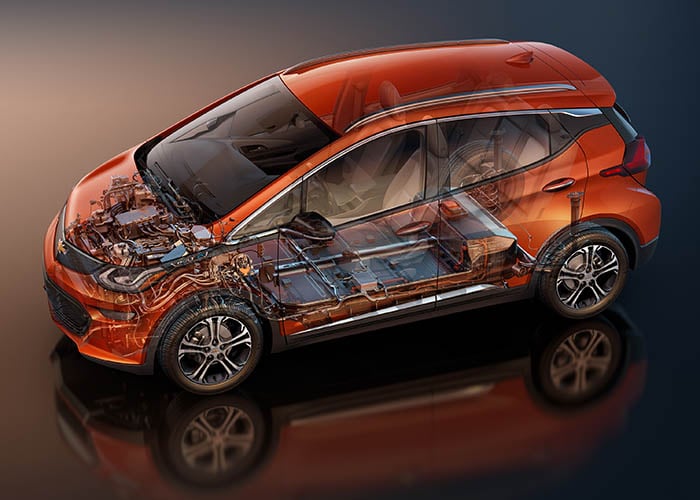
https://www.torquenews.com/sites/default/files/2017-chevrolet-boltev.jpg
2017 Chevrolet Bolt EV

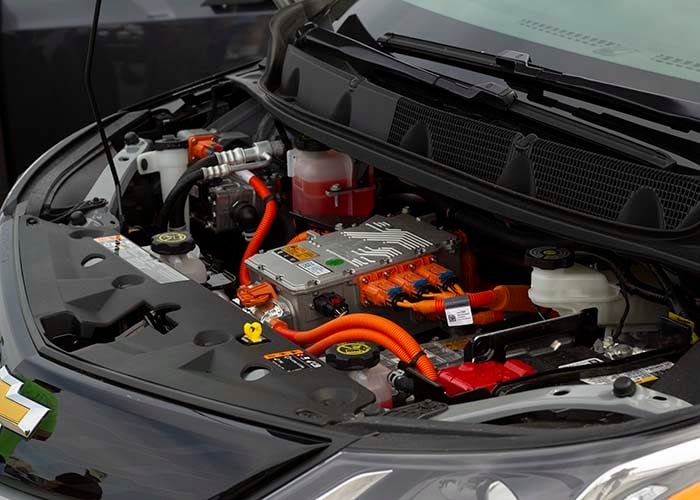
https://www.torquenews.com/sites/default/files/electronics.jpg
Chevy Bolt EV Electronics under the hood

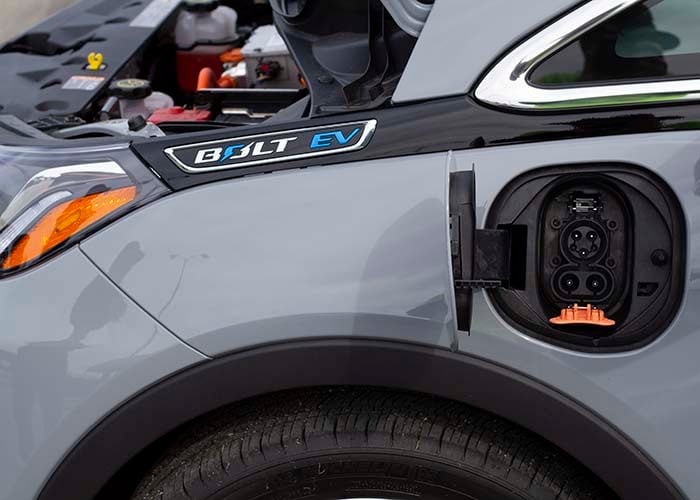
https://www.torquenews.com/sites/default/files/charger.jpg
]

The first ever Chevy Bolt EV fire was reported. I look at why it might have
happened and explain why Bolt EV owners have nothing to worry about.

In a recent story (translated to English by Google) out of Kiev, Ukraine, a
Chevy Bolt EV suddenly burst into flames on the street, prompting a response
from the fire department. The car burned to the ground, but the nearby
buildings were saved with only minor damage. Despite numerous accidents
involving Bolt EVs, this is appears to be the first ever report of a Bolt EV
catching on fire.

EV Fires Are Not Common
Much like any rare event, electric vehicle fires tend to be over-reported
relative to their actual frequency. It will probably take less than a week
before this news story spreads to many major media sites, who will in turn
question the safety of electric vehicles. So far, Tesla seems to be the most
impacted by this fascination with electric vehicle fires, both in terms of
the number of Tesla vehicles that have caught on fire as well as the amount
of press those fires have received. However, Tesla is not alone in this.

A couple of Chevrolet Volt [pih] have caught fire over the years, with
causes ranging from damage due to crash safety testing to a faulty 12 V
battery. Recently, a new Hyundai Kona Electric [EV] caught fire in Montreal,
Québec in Canada, and it blew up the garage in spectacular fashion. The
actual cause of that fire appears to still be under investigation.

What Makes Electric Cars Burn?
When it comes to gasoline powered cars [ice], it’s easy to understand why
they catch fire so easily and burn so intensely. Most of us understand that
gasoline is highly flammable and that oil burns very hot. However, in the
case of electric vehicles, it might not be so obvious.

The truth is, just about anything in a car (ranging from cloth and plastic
interior materials to some of the metals used for body panels and structure)
will burn, and the batteries themselves are massive energy storage devices
that can burn just as intensely as a tank of gasoline. While it’s true that
some battery chemistries are more volatile than others (for instance,
Tesla’s nickel-cobalt-aluminum batteries), all lithium batteries will burn.

So just like gas-powered cars, EVs can also catch fire and burn, but the
fires in electric vehicles tend to be electrical in nature: Faulty wiring,
shorts, corroded contacts, etc. Also, much like a ruptured [ice] gas tank,
accidents or physical damage that breaches the battery case can lead to a
fire inside the battery case that will eventually consume the entire car.

Yes, people like to point out that the electrical and battery fires in EVs
can be more difficult to put out than fires in gasoline powered cars;
however, that has more to do with equipment and firefighting strategies. Gas
powered cars [ice] simply catch fire far more often than electric vehicles
[EVs], so fire fighters are more familiar and better equipped to deal with
those [ice] incidents.

In this case, witnesses claim to have seen the fire start under the left
rear wheel well, and the story references that that is the location of the
battery. While it is true that a portion of the battery is located near the
left rear wheel, it’s worth considering that that is also the location for
both the battery’s BMS (battery management system – the control module that
manages the battery’s charging, balances cells, monitors temperatures, etc.)
as well as the main battery Service Disconnect lever.

Chevy Bolt EV in Ukraine
There are still a number of questions surrounding how a Bolt EV caught fire
on a street in Kiev, and the first question is how [the Bolt EV] even got
there. A quick glance at the smoky, low-resolution photo makes the car
appear to be an Opel Ampera-E (a car someone could have actually driven to
Ukraine from its original point of sale in Europe); however, the car was
actually a Chevy Bolt EV. That means this car had to be privately imported
to Ukraine, and GM did not design or build the car to use the power grid and
infrastructure available in that region.

So, in order for this Bolt EV to get to Kiev, it had to be purchased from
another market (most likely the United States), shipped, and modified to use
the local power grid. Any one of those things could have eventually resulted
in the car’s catching fire.

A number of U.S. Bolt EVs have been involved in accidents ranging from
fender benders to serious collisions that resulted in structural damage and
salvaged titles. It’s difficult enough for American car buyers to verify
that the vehicle they are purchasing has never been in an accident, so
purchasing a vehicle from abroad could open foreign buyers to an even higher
potential for fraud and other risks.

Even if a Ukrainian buyer was able to purchase a legitimate, clean title
Bolt EV from the United States, the buyer then needs to have it shipped,
most likely by sea. Third party shipping by sea could also result in
physical damage to the vehicle or some of its more sensitive components. For
instance, a forklift could easily rupture the battery case, leaving it
susceptible to corrosion and eventually catching on fire.

Finally, if the buyer was able to buy and ship a completely pristine Bolt EV
to Ukraine, the car’s electrical system would then need to be modified to
accept local power. While electricity is universal, power grids around the
world vary. If this was a U.S. Bolt EV, it was designed from [the U.S.]
factory to function on a 60 Hz power feed. The Ukraine power grid runs on 50
Hz. If anything was damaged or incorrectly installed while modifying this
Bolt EV to recharge off 50 Hz power, it could result in a fire.

Should Chevy Bolt EV Owners Worry?
While we might never know what truly caused this Bolt EV fire in Kiev,
Ukraine (the story even referenced the possibility of arson), I think it’s
safe to say that this was an exceptional circumstance. A U.S. Bolt EV
shipped to Ukraine and modified to work on local power would be at far
higher risk of fire than a Bolt EV (or any electric vehicle) operating in
the region where it was sold.
[© torquenews.com]


+ (Naked NottinghamU 197mph e-motorcycle @Isle of Man race)
https://www.topgear.com.ph/news/racing-news/madmax-e-bike-record-tguk-a2604-20190926
An electric motorcycle has hit a record 317kph
Meet the fasted naked electric motorbike in the world. This is the bike
Nottingham University has developed for the Isle of Man TT's Zero race, but
as a tribute to ...
https://images.summitmedia-digital.com/topgear/images/2019/09/25/nottingham-university-197mph-electric-bike-01-1569389108.jpg


For EVLN EV-newswire posts use:
 http://evdl.org/


{brucedp.neocities.org}

--
Sent from: http://electric-vehicle-discussion-list.413529.n4.nabble.com/
_______________________________________________
UNSUBSCRIBE: http://www.evdl.org/help/index.html#usub
ARCHIVE: http://www.evdl.org/archive/index.html
INFO: http://lists.evdl.org/listinfo.cgi/ev-evdl.org
Please discuss EV drag racing at NEDRA (http://groups.yahoo.com/group/NEDRA)


-------------- next part --------------
An HTML attachment was scrubbed...
URL:
<http://lists.evdl.org/private.cgi/ev-evdl.org/attachments/20190927/230b2f9b/attachment.html>
_______________________________________________
UNSUBSCRIBE: http://www.evdl.org/help/index.html#usub
ARCHIVE: http://www.evdl.org/archive/index.html
INFO: http://lists.evdl.org/listinfo.cgi/ev-evdl.org
Please discuss EV drag racing at NEDRA (http://groups.yahoo.com/group/NEDRA)