Vivian Meazza wrote:
> Peter Stickney
>
>
>>On Friday 15 July 2005 06:45, Vivian Meazza wrote:
>>
>>>Josh Babcock
>>>
>>>
>>>>Vivian Meazza wrote:
>>>>
>>>>
>>>>>Josh Babcock ought to be asking for the turbo charger for the
>>
>>B29 now,
>>
>>>>but
>>>>
>>>>>hasn't yet (perhaps he's now using JSBSim?). I've been unable to
>>
>>find
>>
>>>>much
>>>>
>>>>>available on the web for the Wright R-3350. I'm doing some work
>>
>>on the
>>
>>>>>aircraft carrier right now, but I've done some preparation for
>>
>>the turbo
>>
>>>>>simulation.
>>>>
>>>>Nope, I've just been busy with animations and other non-fgfs
>>
>>stuff. I
>>
>>>>don't have much data on the R-3350-23, but I do have the pilot's
>>
>>manual
>>
>>>>and a lot of web sites. If someone is offering to help with the
>>
>>engines
>>
>>>>I would love it. I am available to give all the info I have. I
>>
>>don't
>>
>>>>really feel I know enough about engines to do this properly
>>
>>myself.
>>
>>>If by 'someone' you mean me, then I guess I should help here. I need
>>
>>some
>>
>>>thing to test my putative modifications to YASim on anyway.
>>>
>>>I need a few hard numbers, which perhaps you could give me or point
>>
>>me at a
>>
>>>suitable web site/s:
>>
>>From a variety of sources, including the FAA Type Certificate Data
>>Sheet E-218 (Wright Double Cyclone C18BA series) and the 1950 edition
>>of "Model Designations of USAF Aircraft Engines".
>>
>>
>>>1. propeller gearing.
>>
>>0.35:1
>>
>>
>>>2. max manifold pressure.
>>
>>Now - that will depend on the specific rating.  Exceeding the
>>allowable boost for an RPM/Mixture combination is Very, Very Bad. (As
>>in, as the P2V Manual puts it, "Trouble is indicated by internal
>>engine parts exiting teh exhaust stacks."
>>
>>
>>>3. full throttle altitude which may also be described as the
>>
>>critical
>>
>>>altitude.
>>
>>Military Power - 2200 HP/2800 RPM/ 44" Hg / SL-25,000'  15 Minute
>>limit
>>For the engine and turbosupercharger combination.
>>Without the turbo - (Mechanical blower only), the ratings were:
>>2200 HP/2800 RPM/ 44" Hg /Sea Level
>>2200 HP/2800 RPM/ 42" Hg / 7,000'.
>>
>>Note the decrease in MAP as altitude increses.  Wright Engines from
>>teh late 1930s on were rated to a constant power, not a constnat
>>Manifold Pressure.  As altitude increased, Temperature and Back
>>Pressure (Not relevant for the turbo) decreased, giving more power
>>for a given MAP. MAP was decreased to hold constant power.
>>
>>
>>
>>>4. the rated HP and the rated altitude.
>>
>>Normal Power - 2000 HP/2400R RPM/ 42" Hg/  SL-25,000'  Continuous
>>(Turbo)
>>2000 HP/2400 RPM/42" Hg/ Sea Level
>>2000 HP/2400 ROM/41" Hg/ 4200'  on the Mechanical blower only.
>>
>>
>>>5. take-off HP.
>>
>>2200 HP/2800 RPM / 44" Hg
>>
>>
>>>6. Copies of the relevant pages of the Pilot's Manual. Post these
>>
>>somewhere
>>
>>>that I can access/fetch. Particularly any description of the
>>
>>variable boost
>>
>>>control.
>>
>>That was the FE's job.  The supercharger system of a B-29, or any
>>other turbosupercharged airplane worked like this: (Well, was
>>supposed to work like this - Early B-17s and B-24s with the
>>mechanical oil pressure driven turboregulators required more
>>fiddling, but the electronic turboregulators used on later -17s, 24s,
>>P-38s, P-47s, B-29s and subsequent airplanes did work like this)
>>
>>There was a potentiometer dial on the turboregulator control box that
>>was calibrated from "0" to "10".  This selected the amount of output.
>>from the turbo system as a whole, "0" being no output. The turbos
>>supplied air to the inlet of the engine's mechanical supercharger at
>>slightly over sea level ambient (29.92" on a Standard Day).  This was
>>done to keep the turbo moving, so that it didn't freeze up due to
>>poor lubrication at Sea Level.  The engine's throttle was set to
>>provide whatever power conditions were required, and as the airplane
>>climbed, the tubo's "Volume Control" was tweaked to keep providing
>>its sea level conditions to the engine's supercharger.  The
>>Turboregulator governed on the selected pressure rise (The "Volume"
>>and turbo RPM and, often, bearing temperature.  The Pilot of Flight
>>Engineer had no indication, or control over the turbo except the
>>potentiometer.  As far as the engine was concerned, it was sitting
>>happily at Sea Level the whole time.  Once it had reached the point
>>where the turbosupercharger/mechanical blow couldn't supply the
>>proper power conditions any more, power dropped off normally.
>>
>>I don't know, but it sound like you could be making things a bit more
>>complicated than they were.  The Turbos were basically Black Boxes.
>>There wasn't anything more to do with them but set them to the
>>appropriate pressure rise & let them go.
>>
>
>
> Very helpful. I think you will find that the turbo pressure was controlled
> by the pilot, at least at critical point of the flight. While the pilot can
> regard the turbo as a black box, we need to know a little more about it so
> that the FDM can be set up correctly.
>
> This is the first reference that I have seen to a turbo/mechanical blower
> combination. I would be interested in seeing your source. This is for the
> R-3350-23?
>
> Thanks
>
> Vivian
>
>
>
>
>
> _______________________________________________
> Flightgear-devel mailing list
> [email protected]
> http://mail.flightgear.org/mailman/listinfo/flightgear-devel
> 2f585eeea02e2c79d7b1d8c4963bae2d
>
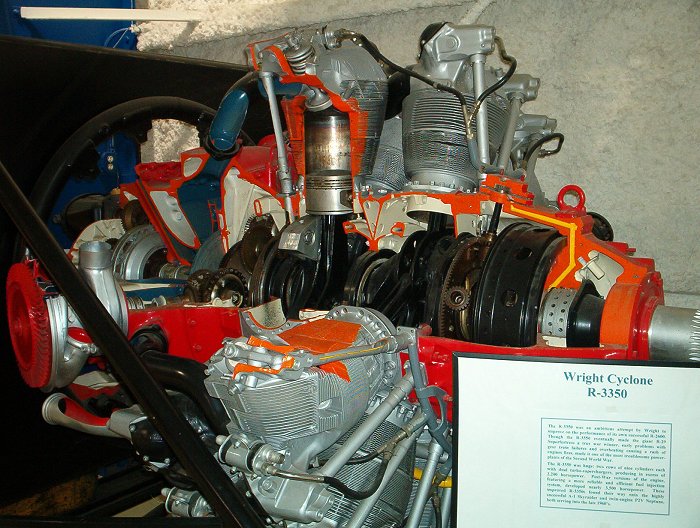
All the 3350s had this turbo/super setup. You can see it in some of
these images:

http://www.enginehistory.org/G&jJBrossett/RAFCosford/Wright%20Cyclone%20R-3350%20cutaway.JPG
http://www.enginehistory.org/G&jJBrossett/RAFCosford/Wright%20Cyclone%20R-3350%20cutaway%20view.JPG
http://www.saunalahti.fi/sariri/Img/UKRAFC05/Eng/slides/P2060078.html
http://www.midwaysailor.com/eddiemiller/eddiemiller-761b.jpg

Josh

_______________________________________________
Flightgear-devel mailing list
[email protected]
http://mail.flightgear.org/mailman/listinfo/flightgear-devel
2f585eeea02e2c79d7b1d8c4963bae2d