Hi,

I'm trying the new gdal_viewshed and it is in fact really quick! But the
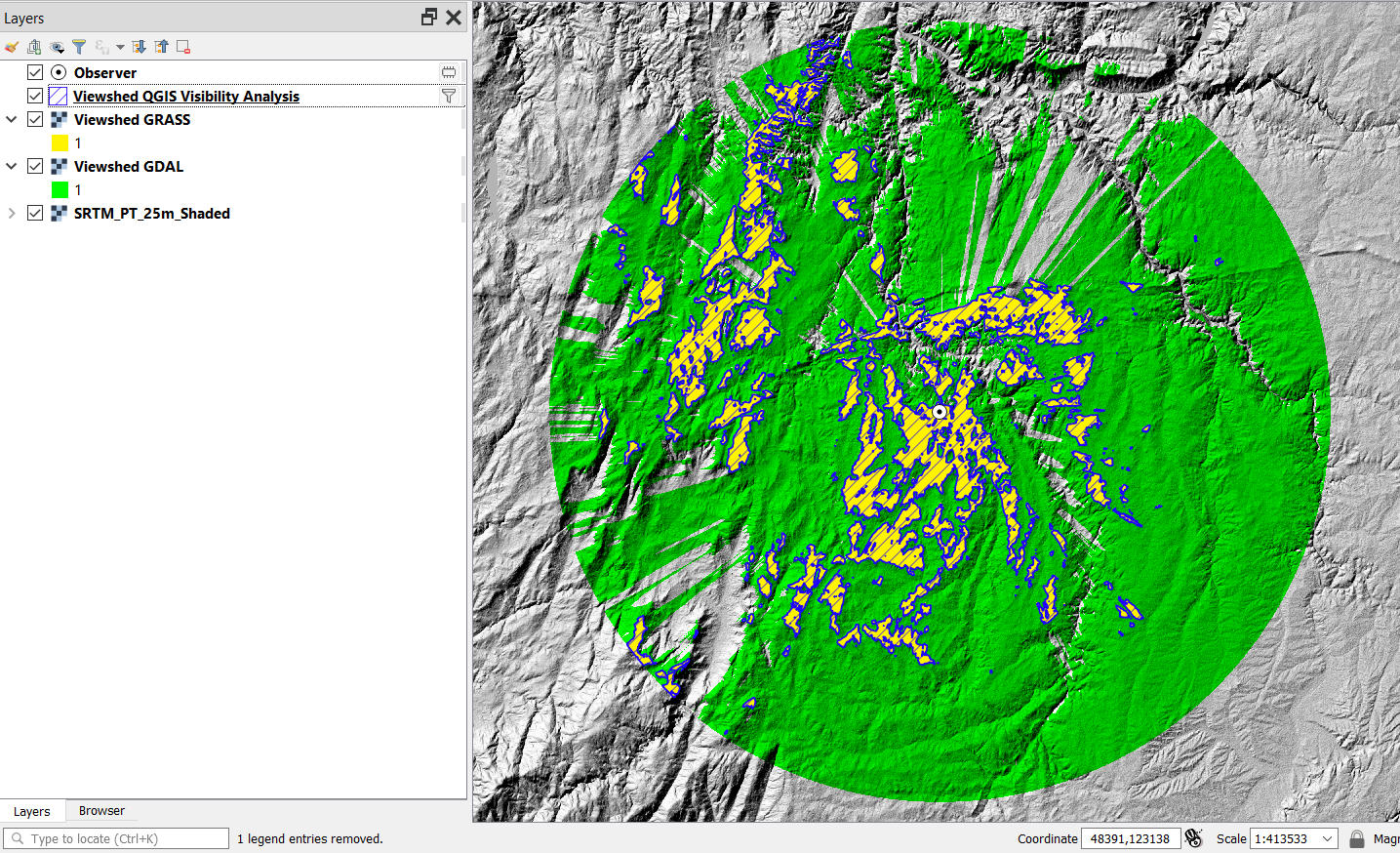
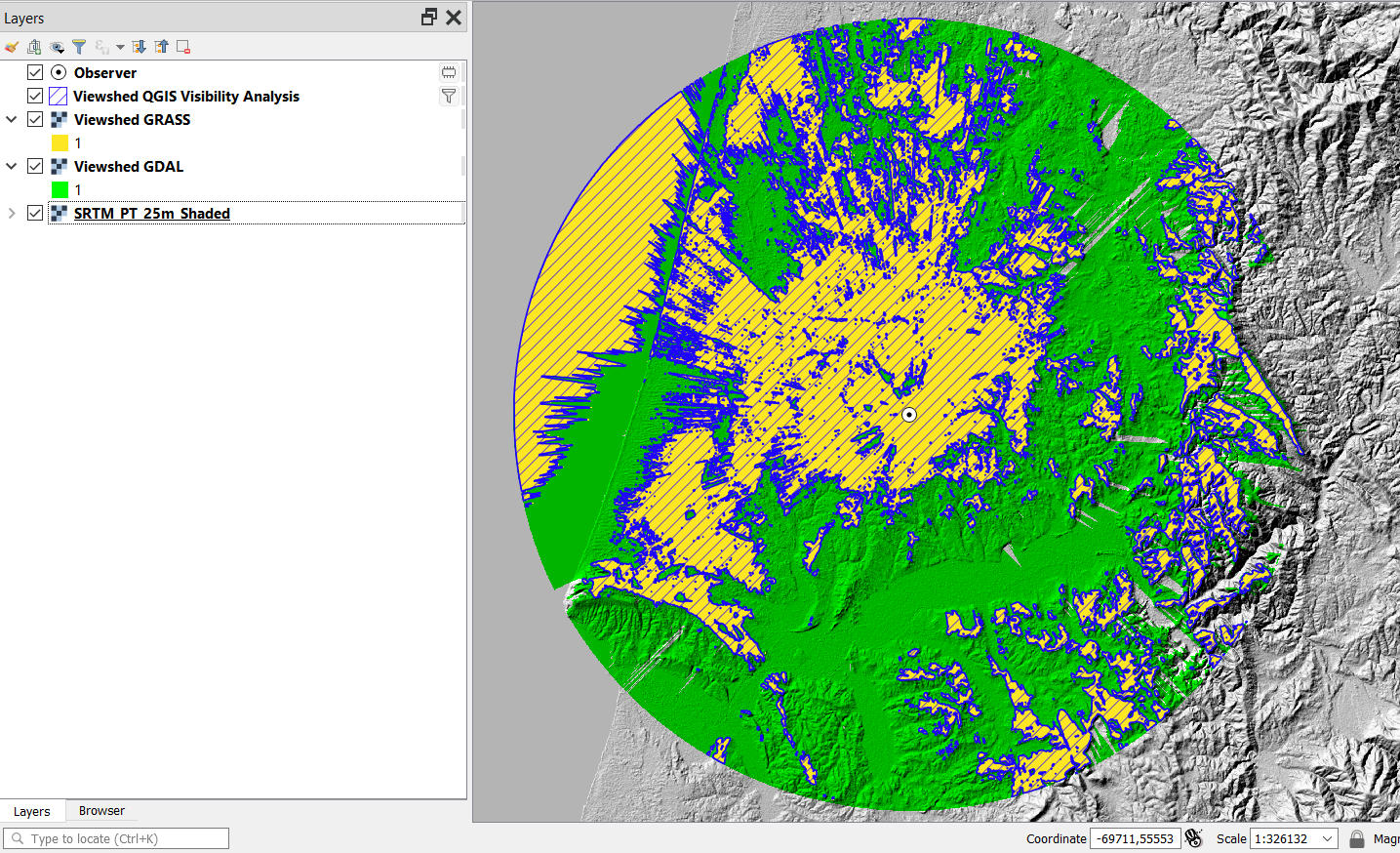
result is completely different than other viewshed analysis algorithms:
https://cld.pt/dl/download/e80216bb-d7eb-40b0-b6da-8e45572e9eb3/viewshed.jpg

https://cld.pt/dl/download/ee993a0b-cf86-462a-b831-307aecde7865/viewshed2.jpg

GRASS and Visibility Analysis plugin for QGIS have almost the same result.
The result from gdal_viewshed seems completely overrated. The options I'm
using are [almost] the same in both algorithms.

gdal_viewshed -b 1 -md 28000.0 -ox -41597.922 -oy 71254.049 -oz 21.6 -tz
10.0 -vv 1 -cc 0.85714 -f GTiff path_to_mdt.tif path_to_output.tif

Has anyone else this experience?

Thanks! Best regards,
Pedro Venâncio


Howard Butler <[email protected]> escreveu no dia quinta, 7/05/2020 à(s) 17:41:

>
>
> > On May 7, 2020, at 11:05 AM, Eli Adam <[email protected]> wrote:
> >
> > The image with two dots makes me think that there can be multiple
> > observer inputs.  Is that the case?  Is the syntax for that just to
> > keep adding more -ox, -oy, (and oz)?  For instance, gdal_viewshed -md
> > 500 -ox -10147017 -oy 5108065 -ox -10147117 -oy 5108165+100 source.tif
> > destination.tif
>
> The picture is a poor example. You can't do multiple obvservers, but you
> can run a bunch of masks together and then merge to get a multipoint
> viewshed. I indeed made two masks with gdal_viewshed and then merged them
> together to make that picture.
>
> That picture or the docs should maybe be updated to reflect a more common
> scenario with better description. File a ticket and attach some language
> and pictures to it as you start playing with it and we can merge it.
>
> Thanks,
>
> Howard
> _______________________________________________
> gdal-dev mailing list
> [email protected]
> https://lists.osgeo.org/mailman/listinfo/gdal-dev
_______________________________________________
gdal-dev mailing list
[email protected]
https://lists.osgeo.org/mailman/listinfo/gdal-dev