https://asiapacificreport.nz/2019/08/30/timor-leste-turns-20-colonial-past-feeds-problems-of-neocolonial-present/
Timor-Leste turns 20: Colonial past feeds problems of neocolonial present

By *Pacific Media Watch*
<https://asiapacificreport.nz/author/pacific-media-watch/> -

August 30, 2019

<https://asiapacificreport.nz/wp-content/uploads/2019/08/Timor-Leste-Flag-20Years-APR-30082019-680wide.jpg>East
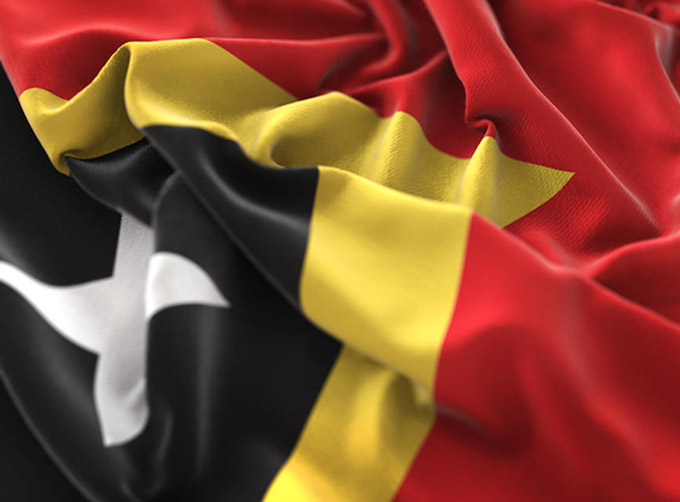
Timor Flag Ruffled Beautifully Waving Macro Close-Up Shot

*ANALYSIS:* *By Ivo Mateus Goncalves in Canberra*

Today, the people of Timor-Leste will commemorate the 20th anniversary of
the popular consultation, through which the nation restored the
independence it had prematurely declared in 1975.

An election was held, a new president elected, new legislative members put
in place and a new government sworn in as the Democratic Republic of East
Timor once again came into existence following the historic referendum of
1999.

Those ceremonial sequences marked an end to colonial rule (by Portugal for
450 years and Indonesia for 24 years) over East Timor.

*READ MORE:* US knew Indonesia intended to stop East Timorese independence
through ‘terror and violence’
<https://www.theguardian.com/world/2019/aug/29/us-knew-indonesia-intended-to-stop-east-timorese-independence-through-terror-and-violence>

A common historic feature of postcolonial countries in Africa, Asia and
Latin America is that independence does not necessarily mean that a former
colony is free from its former master. Timor-Leste is still heavily
dependent on Indonesia in many ways, including trade.

However, an independent Timor-Leste has also become “a heaven” for
Indonesian construction and banking industry players. State-owned lenders
Bank Rakyat Indonesia and Bank Mandiri are operating in Timor-Leste.


In his courtesy visit to Jakarta in 2015, then-prime minister Rui Maria
Araujo told Indonesian media that Indonesia had “contributed positively to
East Timor’s economic development,” citing 400 private Indonesian companies
that were present in the small country.

The looming large of the Indonesian corporations, however, has sparked
allegations of collusive practices between Indonesian businessmen and local
*compradors*, who include veterans of the war, government officials as well
as members of Parliament.

*Fuelled by incentives*
“Flight tickets to Bali, luxury hotels and deals behind the bar,” a
researcher named the incentives fueling the alleged hanky-panky.

Ahead of the celebration, East Timor independence leader Xanana Gusmao gave
the country another shock as he decided to name a new bridge at the heart
of Dili after Indonesia’s third president BJ Habibie.

The decision aroused criticism mainly from civil society organiSations and
survivors of Indonesia’s colonial rule. Worse, residents were evicted to
pave the way for the bridge’s construction.

Just recently, a member of Parliament from the Alliance for Change and
Progress (AMP) said the decision to name the bridge after the former
Indonesian leader was to honour his contribution to East Timor’s
independence.

Under Habibie, Indonesia signed an agreement with Portugal on May 5, 1999,
that led to the popular consultation.

By putting Habibie center stage of the celebration, while ignoring the
people’s resistance to colonial domination, the Timor-Leste freedom
fighters and government are attempting to suck the national history into a
black hole.

Jose Ramos-Horta, the diplomat, Nobel Peace Prize laureate and former
president of Timor-Leste, described Habibie as Indonesia’s Charles de
Gaulle for announcing the political options for East Timor in 1999.


*Two sides of coin*However, like two sides of the same coin, De Gaulle has
become *le mal aimé* (the unloved one). Speaking in front of a large crowd
in Algiers on June 4, 1958, a few days after his return to power, the
French president exclaimed the brief phrase *“Je vous ai compris!”* (I have
understood you).

Like De Gaulle, Habibie became the most unpopular figure in Indonesia after
his historic announcement.

In an interview, Habibie vehemently said he had come under pressure by
Australian Prime Minister John Howard to release the political options on
East Timor’s future.

Twenty years have passed. Infrastructure development has moved fast as
Timor-Leste tries to catch up with Southeast Asian neighbors and become a
middle-income country by 2030.

Nevertheless, the momentum is not really on Timor-Leste’s side, as it still
struggles to secure admission to ASEAN.

Unfortunately, in terms of human resources, about 46 percent of its
children aged under 5 years suffer from chronic malnutrition – considered
one of the highest rates in the world, and about 70 percent of the
country’s children are illiterate.

Fresh graduates enter the labour market in rapidly increasing numbers every
year, only to find government institutions and the public sector unable to
absorb their talent. Productive industries like agriculture and tourism
seem promising, but the government has allocated a large share of its
budget to other sectors.

*Urbanisation tensions*
Given that most of the government institutions are located in Dili,
urbanisation in the capital city is difficult to check and has exacerbated
social, political and economic tensions.

Basic infrastructure, such as highways and airports, built along the
southern coast has failed to lure foreign investment. Most foreign
investors only eye the “ambitious” plan to develop an oil processing plant,
which is being negotiated with an Australian company.

One way or another, Timor-Leste remains unable to unchain itself from the
colonial grip and its proxies. The country has a long history of
colonialism, fought it relentlessly and won, but unfortunately has to
encounter new forms of colonialism in the political and economic realms.

Apart from the historic moment, what achievement should the people of East
Timor celebrate after 20 years of independence?

*Ivo Mateus Goncalves* *is a historian and research student at the
Department of Political Affairs at the Australian National University,
Canberra. This article was first published in The Jakarta Post.*