Poster's note: commentary shared in lieu of paltry abstract

https://phys.org/news/2019-10-climate-international-reveals-tensions.html
Climate engineering: International meeting reveals tensions
Home <https://m.phys.org/>ShareFeedbackAdd to favoritesComments
<https://m.phys.org/news/2019-10-climate-international-reveals-tensions.html#comments>
Newsletter
<https://m.phys.org/news/2019-10-climate-international-reveals-tensions.html#>
------------------------------
Full version
<https://phys.org/news/2019-10-climate-international-reveals-tensions.html>Science
X profile <https://sciencex.com/>About
<https://m.phys.org/news/2019-10-climate-international-reveals-tensions.html#>
Climate engineering: International meeting reveals tensions
 October 28, 2019 by Jennifer McNulty, University of California - Santa Cruz
<http://www.ucsc.edu/public/>
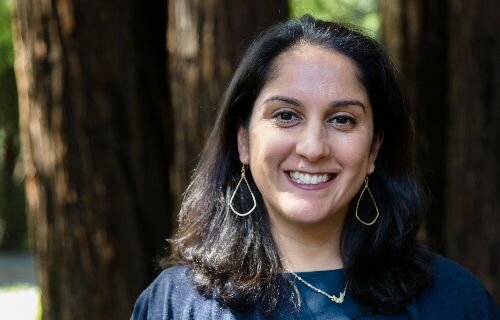
[image: Climate engineering: International meeting reveals tensions]
<https://scx2.b-cdn.net/gfx/news/2019/2-climateengin.jpg>
"Twenty years ago, climate engineering seemed far-fetched—if not crazy—but
these ideas are being taken more seriously today in the wake of widespread
governmental failure to adequately reduce greenhouse gas emissions," said
Sikina Jinnah. "The U.S is the biggest culprit in terms of shirking
responsibility, but everyone is falling short." . Credit: Carolyn Lagattuta

At this point, the greatest danger of climate engineering may be how little
is known about where countries stand on these potentially planet-altering
technologies. Who is moving forward? Who is funding research? And who is
being left out of the conversation?

The "hidden politics" of climate <https://phys.org/tags/climate/> engineering
were partially revealed earlier this year at the fourth United Nations
Environment Assembly (UNEA-4), when Switzerland proposed a resolution on
geoengineering governance. The ensuing debate offered a glimpse of the
first discussion in a public forum of this "third rail" of climate change,
according to Sikina Jinnah, an associate professor of environmental studies
at the University of California, Santa Cruz, and an expert on climate
engineering governance.

In a commentary that appears in the current issue of *Nature Geoscience*,
Jinnah and coauthor Simon Nicholson of American University describe the
politics and players who appear to be shaping the discussion. Their
analysis, "The Hidden Politics of Climate Engineering," concludes with a
call for transparency to help resolve questions of governance and "ensure
that the world has the tools to manage these potent technologies and
practices if and when decisions are ever taken to use them."

"Twenty years ago, climate engineering seemed far-fetched—if not crazy—but
these ideas are being taken more seriously today in the wake of widespread
governmental failure to adequately reduce greenhouse gas emissions," said
Jinnah. "The U.S is the biggest culprit in terms of shirking
responsibility, but everyone is falling short."

The Swiss proposal generated debate that revealed troubling schisms between
the United States and the European Union. It also underscored the challenge
of trying to establish governance for the two dominant geoengineering
strategies—solar radiation management (SRM) and carbon dioxide removal
<https://phys.org/tags/carbon+dioxide+removal/> (CDR)—at the same time,
because the technologies present very different potential risks.

Still a purely theoretical strategy, SRM would involve altering planetary
brightness to reflect a very small amount of sunlight away from the Earth
to create a cooling effect. One well-known proposal is to inject tiny
reflective particles into the upper atmosphere. "The idea is to mimic the
effect of a volcanic eruption," said Jinnah. "Many people are scared of its
planet-altering potential, and rightfully so." When a team at Harvard
University announced its intention to do a small-scale outdoor experiment,
the public backlash was swift; amid calls for a more inclusive process, the
project timeline was pushed back to include input from a newly established
advisory board.

By contrast, CDR has to this point been relatively less controversial.
Carbon removal strategies include existing options like enhancing forest
carbon sinks, and more technologically far-off options such as "direct air
capture" strategies that would suck carbon from the atmosphere. CDR is
baked into many climate-modeling scenarios, largely in the form of
bio-energy with carbon capture and storage (BECCS). BECCS involves the
burning of biomass for energy, followed by the capture and underground
storage of emissions.

"Climate engineering experts are not talking about this as a substitute for
greenhouse gas emission reductions," emphasized Jinnah. "The potential of
climate engineering is to lessen the impacts of climate change that we're
going to experience regardless of what we do now."

Debate reveals areas of concern

To piece together their account of what happened at the UNEA-4 meeting,
Jinnah and Nicholson interviewed attendees, reviewed documents, and scoured
online comments. Their analysis highlights several areas of concern,
including:

   - Disagreement among countries about the current state and strength of
   SRM governance
   - The domination of research by North American and European scientists
   - The need to "decouple" governance of SRM and CDR
   - A significant split between the United States and the European Union
   over the "precautionary approach"

The key functions of governance include building transparency, fostering
public participation, and shedding light on funding. Jinnah noted that
governance can also provide what she called a "braking" mechanism to avoid
what some call a "slippery slope" toward deployment.

Significantly, the Swiss proposal, which Jinnah and Nicholson describe as
"modest," suggested a preliminary governance framework that drew strong
opposition from the United States and Saudi Arabia. "The United States
wants to keep its options open, and it certainly doesn't want the United
Nations telling it what it can and cannot do," observed Jinnah.

The lack of transparency around climate engineering makes it difficult to
get a comprehensive picture of who's doing what, and where, said Jinnah,
but academic scientists in North America and Europe are leading the effort
to explore SRM technology; CDR is already attracting private investment.
Little is known about the extent of China's activity in climate engineering.

"Very little is happening in the developing world, which is problematic
because they will experience the most dramatic impacts of climate change
<https://phys.org/tags/climate+change/> and have the least institutional
capacity to cope with it," said Jinnah. "Some countries are facing an
existential crisis and could potentially—potentially—want to see climate
engineering. Or they could oppose it, because they want the focus to be on
emissions reduction. But we don't know, because governments haven't
articulated their positions."

Jinnah bemoaned the lack of collaboration with developing countries and
expressed a desire to see them build their capacity to engage with the
policy and politics of climate engineering
<https://phys.org/tags/climate+engineering/>.

The debate also underscored some of the differences between SRM and CDR in
terms of potential viability and deployment, prompting Jinnah to observe
that "decoupling" them might break the logjam and foster greater progress
on parallel tracks.

The United States favored a far less "precautionary" stance than the
European Union, which has historically opted to protect the environment in
the absence of scientific certainty, as it did on the issue of genetically
modified foods. As one of the few countries with an active SRM research
program, the United States appeared eager to preserve the status quo and
"leave its decision space unchallenged," Jinnah and Nicholson wrote.

An important step forward

Despite the breadth and depth of disagreement that surfaced at the meeting,
Jinnah sees the debate as a necessary first step. "As a researcher, I think
this debate was an incredibly important step forward, because you can't
study the politics of this issue without data, which in this case is
countries articulating their positions on this controversial issue," she
said.

"Research is needed so we can better understand our options," she
emphasized, then added: "I'd rather not live in a world that thinks about
solar radiation management, but unfortunately that's not our reality."

More information: Sikina Jinnah et al, The hidden politics of climate
engineering, *Nature Geoscience* (2019). DOI: 10.1038/s41561-019-0483-7
<http://dx.doi.org/10.1038/s41561-019-0483-7>

Journal information: Nature Geoscience
<https://m.phys.org/journals/nature-geoscience/>

--
You received this message because you are subscribed to the Google Groups
"geoengineering" group.
To unsubscribe from this group and stop receiving emails from it, send an email
to [email protected].
To view this discussion on the web visit
https://groups.google.com/d/msgid/geoengineering/CAJ3C-07Fxkpz-GePVuWdOTEJGm7JR9HM7WO0njrVa--4RcBojg%40mail.gmail.com.