*SOLAR GEOENGINEERING WEEKLY SUMMARY (13 MAY - 19 MAY 2024)*

Subscribe to our newsletter to receive monthly updates on Solar
Geoengineering:
Solar Geoengineering Updates
<https://solargeoengineeringupdates.substack.com?utm_source=substack&utm_campaign=publication_embed&utm_medium=email>
Monthly news summaries about solar geoengineering. Links to scientific
papers, news articles, jobs, podcasts, and videos.
<https://solargeoengineeringupdates.substack.com?utm_source=substack&utm_campaign=publication_embed&utm_medium=email>
By Andrew Lockley
<https://solargeoengineeringupdates.substack.com?utm_source=substack&utm_campaign=publication_embed&utm_medium=email>
------------------------------
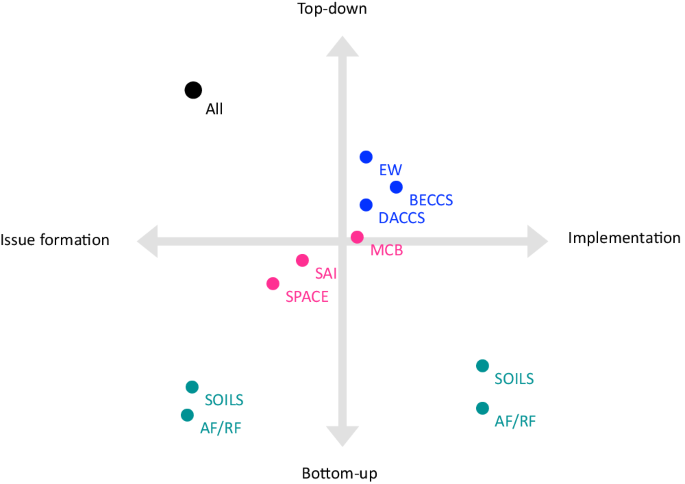
RESEARCH PAPERSPublic engagement for inclusive and sustainable governance
of climate interventions
<https://www.nature.com/articles/s41467-024-48510-y>
Fritz, L., Baum, C. M., Low, S., & Sovacool, B. K. (2024). Public
engagement for inclusive and sustainable governance of climate
interventions. *Nature Communications*, *15*(1), 4168.

*Abstract*

The need for public engagement is increasingly evident as discussions
intensify around emerging methods for carbon dioxide removal and
controversial proposals around solar geoengineering. Based on 44 focus
groups in 22 countries across the Global North and Global South (N = 323
participants), this article traces public preferences for a variety of
bottom-up and top-down engagement practices ranging from information
recipient to broad decision authority. Here, we show that engagement
practices need to be responsive to local political cultures and
socio-technical environments, while attending to the global dimensions and
interconnectedness of the issues at stake. Establishing public engagement
as a cornerstone of inclusive and sustainable governance of
climate-intervention technologies requires (i) recognizing the diversity of
forms and intensities of engaging, (ii) considering national contexts and
modes of engagement, (iii) tailoring to technological idiosyncrasies, (iv)
adopting power-sensitive practices, (v) accounting for publics’ prior
experience, (vi) establishing trust and procedural legitimacy and (vii)
engaging with tensions and value disagreements.

Deciphering public attention to geoengineering and climate issues using
machine learning and dynamic analysis <https://arxiv.org/abs/2405.07010>

Debnath, R., Zhang, P., Qin, T., Alvarez, R. M., & Fitzgerald, S. D.
(2024). Deciphering public attention to geoengineering and climate issues
using machine learning and dynamic analysis. *arXiv preprint
arXiv:2405.07010*.

*Abstract*

As the conversation around using geoengineering to combat climate change
intensifies, it is imperative to engage the public and deeply understand
their perspectives on geoengineering research, development, and potential
deployment. Through a comprehensive data-driven investigation, this paper
explores the types of news that captivate public interest in
geoengineering. We delved into 30,773 English-language news articles from
the BBC and the New York Times, combined with Google Trends data spanning
2018 to 2022, to explore how public interest in geoengineering fluctuates
in response to news coverage of broader climate issues. Using BERT-based
topic modeling, sentiment analysis, and time-series regression models, we
found that positive sentiment in energy-related news serves as a good
predictor of heightened public interest in geoengineering, a trend that
persists over time. Our findings suggest that public engagement with
geoengineering and climate action is not uniform, with some topics being
more potent in shaping interest over time, such as climate news related to
energy, disasters, and politics. Understanding these patterns is crucial
for scientists, policymakers, and educators aiming to craft effective
strategies for engaging with the public and fostering dialogue around
emerging climate technologies.

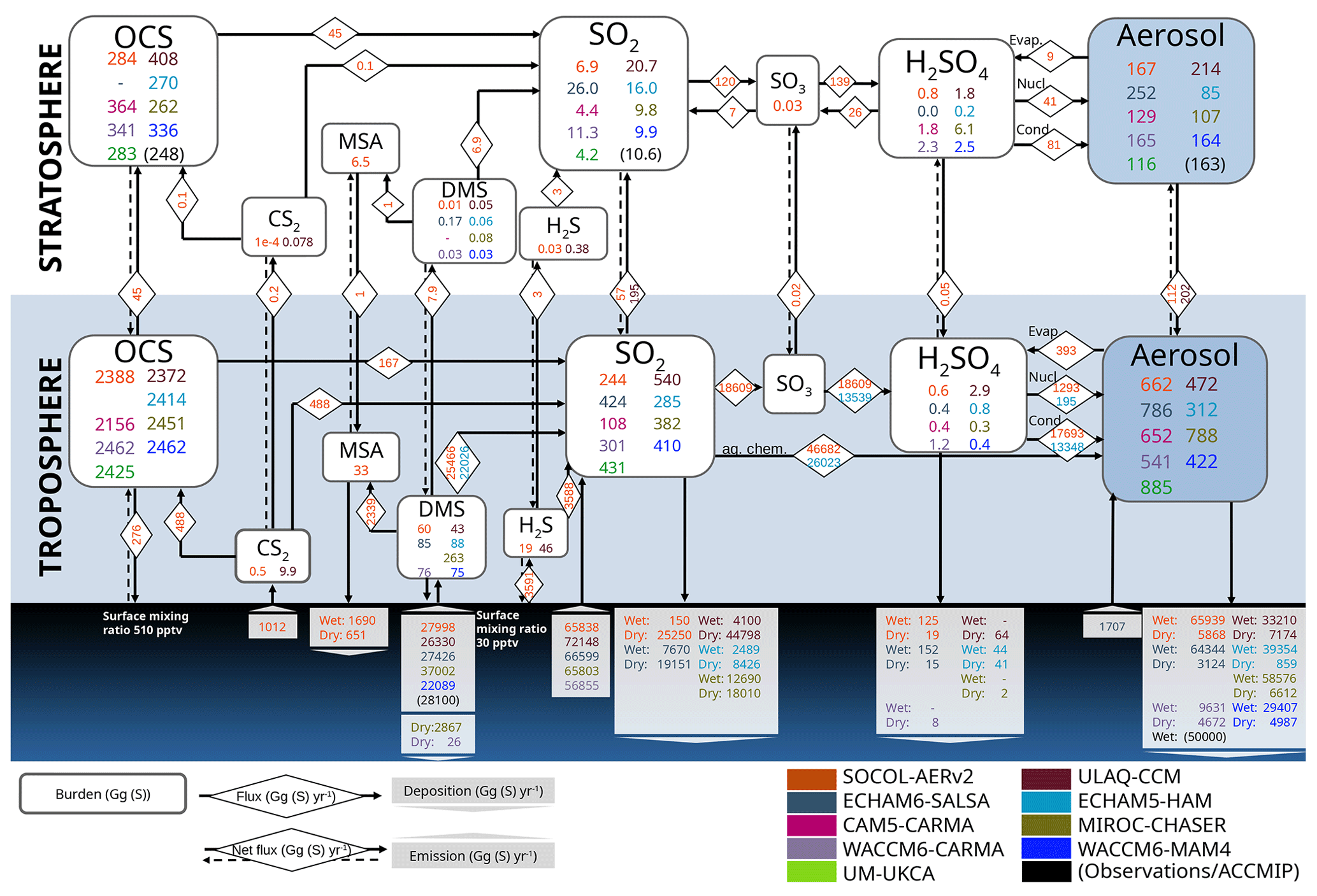
Analysis of the global atmospheric background sulfur budget in a
multi-model framework <https://acp.copernicus.org/articles/24/5513/2024/>

Brodowsky, C. V., Sukhodolov, T., Chiodo, G., Aquila, V., Bekki, S.,
Dhomse, S. S., ... & Peter, T. (2024). Analysis of the global atmospheric
background sulfur budget in a multi-model framework. *Atmospheric Chemistry
and Physics*, *24*(9), 5513-5548.

*Abstract*

A growing number of general circulation models are adapting interactive
sulfur and aerosol schemes to improve the representation of relevant
physical and chemical processes and associated feedbacks. They are
motivated by investigations of climate response to major volcanic eruptions
and potential solar geoengineering scenarios. However, uncertainties in
these schemes are not well constrained. Stratospheric sulfate is modulated
by emissions of sulfur-containing species of anthropogenic and natural
origin, including volcanic activity. While the effects of volcanic
eruptions have been studied in the framework of global model
intercomparisons, the background conditions of the sulfur cycle have not
been addressed in such a way. Here, we fill this gap by analyzing the
distribution of the main sulfur species in nine global atmospheric aerosol
models for a volcanically quiescent period. We use observational data to
evaluate model results. Overall, models agree that the three dominant
sulfur species in terms of burdens (sulfate aerosol, OCS, and SO2) make up
about 98 % stratospheric sulfur and 95 % tropospheric sulfur. However,
models vary considerably in the partitioning between these species. Models
agree that anthropogenic emission of SO2 strongly affects the sulfate
aerosol burden in the northern hemispheric troposphere, while its
importance is very uncertain in other regions, where emissions are much
lower. Sulfate aerosol is the main deposited species in all models, but the
values deviate by a factor of 2. Additionally, the partitioning between wet
and dry deposition fluxes is highly model dependent. Inter-model
variability in the sulfur species is low in the tropics and increases
towards the poles. Differences are largest in the dynamically active
northern hemispheric extratropical region and could be attributed to the
representation of the stratospheric circulation. The differences in the
atmospheric sulfur budget among the models arise from the representation of
both chemical and dynamical processes, whose interplay complicates the bias
attribution. Several problematic points identified for individual models
are related to the specifics of the chemistry schemes, model resolution,
and representation of cross-tropopause transport in the extratropics.
Further model intercomparison research is needed with a focus on the
clarification of the reasons for biases, given the importance of this topic
for the stratospheric aerosol injection studies.

The Evolving International Climate Change Regime: Mitigation, Adaptation,
Reflection <https://scholarship.law.tamu.edu/lawreview/vol11/iss2/6/>

Wiener, J. B., & Felgenhauer, T. (2024). The Evolving International Climate
Change Regime: Mitigation, Adaptation, Reflection. *Texas A&M Law Review*,
*11*(2), 451-485.

*Abstract*

The complex international regime for climate change has evolved over the
past three decades, from the Framework Convention on Climate Change and the
Kyoto Protocol through the Paris Agreement and beyond. We assess this
evolution from the 1990s to the 2020s, and its potential future evolution
from the 2020s to the 2050s, across three main policy strategies:
mitigation, adaptation, and reflection. In its first three decades, the
regime has focused predominantly on the mitigation of net emissions and on
engaging all major emitting countries in that effort. More recently, as
progress on mitigation has been slow and as the impacts of climate change
have risen around the world, the regime has begun to address adaptation.
The next three decades may see the rise of a third strategy, reflection, if
actors (collectively or unilaterally) perceive an urgent need to alleviate
peak climate damages through fast-acting but controversial and risky
climate interventions known as sunlight reflection methods or solar
radiation modification (SRM). Several major international groups have
recently issued reports on SRM, yet the international climate change regime
has not yet constructed a governance regime for assessment or management of
SRM. We recommend and outline comprehensive risk-risk tradeoff analyses of
SRM to help avoid harmful countervailing risks. We suggest the development
of an adaptive governance regime, starting early and embracing iterative
and inclusive learning and updating over time. We urge that among the first
key steps should be the development of a transparent international
monitoring system for SRM. Such a monitoring system could provide early
warning and help deter any unilateral SRM, assess the intended and
unintended global and regional impacts of any research or eventual
deployment of SRM, foster collective deliberation and reduce the risk of
international conflict over SRM, help attribute adverse side effects of SRM
to assist those adversely affected, and aid learning to improve the system
adaptively over time. Thus, any reflection (of sunlight) should involve
ongoing reflection (analysis and revision). Such an SRM monitoring regime
is needed before SRM might be deployed, and can be developed at the same
time that the focus of current efforts remains on mitigation and adaptation.

[image: figure 3]
<https://substackcdn.com/image/fetch/f_auto,q_auto:good,fl_progressive:steep/https%3A%2F%2Fsubstack-post-media.s3.amazonaws.com%2Fpublic%2Fimages%2F7b51bbf8-5570-43a7-9bc4-f9f8b1d2344d_685x484.png>
Fritz,
L., Baum, C. M., Low, S., & Sovacool, B. K. (2024). Public engagement for
inclusive and sustainable governance of climate interventions.
<https://www.nature.com/articles/s41467-024-48510-y>*Nature Communications
<https://www.nature.com/articles/s41467-024-48510-y>*,
<https://www.nature.com/articles/s41467-024-48510-y>*15
<https://www.nature.com/articles/s41467-024-48510-y>*(1), 4168.
<https://www.nature.com/articles/s41467-024-48510-y>
<https://substackcdn.com/image/fetch/f_auto,q_auto:good,fl_progressive:steep/https%3A%2F%2Fsubstack-post-media.s3.amazonaws.com%2Fpublic%2Fimages%2Fe37dabb4-eee8-4a72-a7de-6217fc0e6f74_2067x1407.png>
Brodowsky,
C. V., Sukhodolov, T., Chiodo, G., Aquila, V., Bekki, S., Dhomse, S. S.,
... & Peter, T. (2024). Analysis of the global atmospheric background
sulfur budget in a multi-model framework.
<https://acp.copernicus.org/articles/24/5513/2024/>*Atmospheric Chemistry
and Physics <https://acp.copernicus.org/articles/24/5513/2024/>*,
<https://acp.copernicus.org/articles/24/5513/2024/>*24
<https://acp.copernicus.org/articles/24/5513/2024/>*(9), 5513-5548.
<https://acp.copernicus.org/articles/24/5513/2024/>
------------------------------
WEB POSTSWashU researchers will explore stratospheric aerosol injection
with a $1.5 million grant from the Simons Foundation
<https://www.newswise.com/articles/washu-researchers-will-explore-stratospheric-aerosol-injection-with-a-1-5-million-grant-from-the-simons-foundation-international>
(Newswise)Blue-sky thinkers block the sun to fight climate change
<https://www.afr.com/policy/energy-and-climate/blue-sky-thinkers-block-the-sun-to-fight-climate-change-20240510-p5jcpn>
(Financial Review)Facing the Ruptures: A Youth Perspective on Hope and the
Geoengineering Debate
<https://www.uarctic.org/about-us/shared-voices-magazine/shared-voices-2024/facing-the-ruptures-a-youth-perspective-on-hope-and-the-geoengineering-debate/>
(UArctic)
------------------------------
THESISUnpacking Solar Geoengineering Governance Challenges: A critical
interpretative review of the state-of-the-art and implications for the
design of anticipatory governance <https://edepot.wur.nl/654185>
<https://edepot.wur.nl/654185>
<https://edepot.wur.nl/654185>
------------------------------
*UPCOMING EVENTS*(NEW) Solar Geoengineering by Alistair Duffey
<https://hlsi.net/whats-on/solar-geo-engineering/?fbclid=IwZXh0bgNhZW0CMTAAAR2yp89fbMIzfpRXA4uONvv3eDgTPKMsOSFnm9tUhni2jIU1ByOmrG2mQOw_aem_AU-e9cg_ZKGuVC7tmxKjxomD5h1_USs14a_5jCIlVX94dCUD6vnyO6eCH47XIg05umdv1XYj7xfhI-rS393ZKhgS>
| 23 May 2024 | Victoria Hall London / Online*Great Decisions: Risky
Science Across Borders by Reston Regional Library Staff
<https://librarycalendar.fairfaxcounty.gov/event/11359322> | 24 May 2024 |
Virginia *(NEW) Collaborative Futures of Climate Repair in the Arctic by
The Alliance for Just Deliberation on Solar Geoengineering
<https://docs.google.com/forms/d/e/1FAIpQLSfBrU9gN-sOz2FGSAzuk8jJGJO-Jcx6yaL11HhdFLfI31v77A/viewform>
| 31 May 2024 | Norway*RFF 2024 SRM Social Science Workshop: Cooperative
vs. Non-Cooperative Interventions
<https://docs.google.com/forms/d/1zE6Eo625cpEKZVbKwzDQSL4gxmnArmPsxtePJM-1SY0/viewform?edit_requested=true&gxid=-8203366>
| 19-20 September 2024 | Washington, DC.*

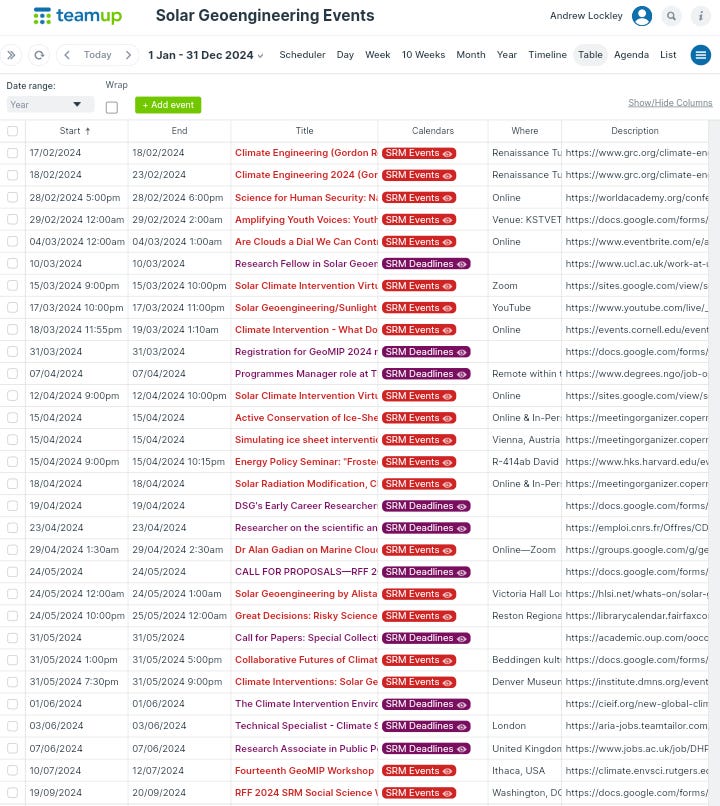
Solar Geoengineering Events Calendar <https://teamup.com/ks64mmvtit583eitxx>

*GUIDELINES:**Sync selected events to your default calendar in these simple
steps:**1) Click on the event you want to sync.**2) Tap the menu icon
(three vertical lines) at the top left.**3) Choose 'Share.'**4) Pick your
default calendar.**5) Save the event.*

*Sync the entire Teamup Calendar to your default calendar with these simple
steps:**1) Tap the menu icon (three vertical lines) at the top right.**2)
Choose 'Preferences.'**3) Click 'iCalendar Feeds.'**4) Copy the URL shown
for 'Solar Geoengineering Events / SRM Deadlines.'’**5) Paste the URL into
your default calendar settings (Open Google Calendar in your web browser if
you are using Gcal).**6) Click 'Subscribe' or 'Add Calendar.'*

*For more detailed instructions,
visit: https://calendar.teamup.com/kb/subscribe-to-teamup-icalendar-feeds/
<https://calendar.teamup.com/kb/subscribe-to-teamup-icalendar-feeds/>*

*You can directly sync all Solar Geoengineering events to your default
calendars by pressing the link below:*

Sync SG Events to your Default Calendar
<https://ics.teamup.com/feed/ks64mmvtit583eitxx/0.ics>
<https://substackcdn.com/image/fetch/f_auto,q_auto:good,fl_progressive:steep/https%3A%2F%2Fsubstack-post-media.s3.amazonaws.com%2Fpublic%2Fimages%2Fbc2f528a-cc78-4b6f-8e07-a03edd1694bd_720x806.png>
Solar
Geoengineering Events Calendar <https://teamup.com/ks64mmvtit583eitxx>
------------------------------
*PODCASTS*Blocking out the Sun | Tech Zero

Blocking out the Sun

Tech Zero

32:06
<https://podcasts.apple.com/au/podcast/blocking-out-the-sun/id1626215592?i=1000655273399&uo=4>

"It might sound like science fiction, but a mix of scientists and venture
capitalists are working on plans to block the sun to slow global warming."

------------------------------
YOUTUBE VIDEOSImitating Volcanoes | ToSaveTheWorld
<https://www.youtube.com/watch?v=LnBjAbtwoRo>

"John Nissen, Robert Tulip, Doug Grandt, and Robin Collins belong to
webinar groups studying Stratospheric Aerosol Injection (SAI) as a way of
cooling the planet by the same means as volcanoes do. Greg Evans is an
expert on aerosols at U of Toronto. We discuss the pros and cons of
attempting such a project at full scale."

SAI | ToSaveTheWorld <https://www.youtube.com/watch?v=psxHS92IiJw>Fire from
Ice | Daniel Kieve <https://www.youtube.com/watch?v=AyjMMDFdAIM>

"This song by Daniel Kieve is about the need for direct cooling technology
to help achieve climate repair (including a reference to brightening the
clouds to turn the tide on our otherwise grim future."

Cooling Earth: Can Iron Filings Reflect Our Way Out? | Daniel Izzo
<https://www.youtube.com/watch?v=AzkjugPyQmk>

"Your concern about global warming and the urgency to find solutions is
very valid. The idea of creating a cloud to reflect sunlight and cool the
planet, known as solar geoengineering, is an interesting and complex topic.
Let's break down the key points of your proposal and explore its
feasibility."

Critical Youth Talks on Solar Geoengineering | MindOurFuture!
<https://www.youtube.com/watch?v=He9cCGm07Y4>

"In the first event hosted by Mind Our Future!, youth and scholars gathered
to discuss critical approaches to the topic of solar geoengineering, its
governance, and the surrounding debate. The event featured Dr. Rak Kim, who
shared insights on solar geoengineering as a case of problem shifting where
focus is diverted away from addressing the root causes of climate change.
The event also featured Dr. Rolando Vázquez Melken who approached solar
geoengineering from a decolonial perspective, critiquing the fundamental
thought that we could think to change the atmosphere before we change
ourselves."

I Asked The UK Government About Geoengineering Projects | Lewis Brackpool
<https://www.youtube.com/watch?v=-qPM50ZlQgE>

"Last month, I submitted seven comprehensive Freedom of Information
requests to various governmental departments, seeking details about any
geoengineering projects in the UK. This included inquiries about research
initiatives, publications, funding sources, public awareness and consent,
involvement of airliners, stakeholder engagement, and more.

In this video, I’ll share the responses I’ve received from two departments.
All information will be made available in the video description for you,
the viewer, to review. This investigation is far from over, with ongoing
requests pending and more revelations to come."

------------------------------
*DEADLINES**Call for Papers: Towards a Risk-Risk-Assessment of Solar
Radiation Modification: Effectiveness, Feasibility, Side effects,
Governance
<https://substack.com/redirect/8984e2ab-dd2f-4b65-ad88-be835e6efe5f?j=eyJ1IjoiMjJrMHl3In0.wQQsFypG52typ8FI2nhnJ8eUoUIIkdCkuhmzxNYKtgE>
|
Deadline for manuscript submissions: 31 May 2024**(NEW) Climate
Intervention Environmental Impact Fund
<https://substack.com/redirect/8cd6566c-1d02-4bf1-9a81-04fc425e074f?j=eyJ1IjoiMjJrMHl3In0.wQQsFypG52typ8FI2nhnJ8eUoUIIkdCkuhmzxNYKtgE>
| Deadline
for applying: 01 June 2024*

--
You received this message because you are subscribed to the Google Groups
"geoengineering" group.
To unsubscribe from this group and stop receiving emails from it, send an email
to [email protected].
To view this discussion on the web visit
https://groups.google.com/d/msgid/geoengineering/CAHJsh9-pbfqWDekORZyirr%2B5t5MFq%2B_VPKJzScJRfjamvQMqqg%40mail.gmail.com.