SOLAR GEOENGINEERING WEEKLY SUMMARY (29 JULY - 04 AUGUST 2024)
<https://substack.com/app-link/publications/1346479/drafts/4838138d-395f-4da2-afa0-836e65f078df?publication_id=1346479&post_id=147380909&utm_source=post-email-title&utm_campaign=email-post-title&isFreemail=false>
*Subscribe to our newsletter to receive monthly updates on Solar
Geoengineering:*
Solar Geoengineering Updates
<https://solargeoengineeringupdates.substack.com?utm_source=substack&utm_campaign=publication_embed&utm_medium=email>
Monthly news summaries about solar geoengineering. Links to scientific
papers, news articles, jobs, podcasts, and videos.
<https://solargeoengineeringupdates.substack.com?utm_source=substack&utm_campaign=publication_embed&utm_medium=email>
By Andrew Lockley
<https://solargeoengineeringupdates.substack.com?utm_source=substack&utm_campaign=publication_embed&utm_medium=email>
------------------------------
RESEARCH PAPERSFirst simulations of feedback algorithm-regulated marine
cloud brightening
<https://essopenarchive.org/doi/full/10.22541/essoar.172107989.92419868>

Lee, W. R., Chen, C. C., Richter, J. H., MacMartin, D. G., & Kravitz, B.
(2024). First simulations of feedback algorithm-regulated marine cloud
brightening. *Authorea Preprints*.

*Abstract*

Feedback control algorithms, an important tool in climate intervention
strategy design, are widely used in stratospheric aerosol injection (SAI)
simulations but have never been implemented for marine cloud brightening
(MCB). Using the Community Earth System Model (CESM2), we present the first
simulations of feedback control-regulated MCB. Our controller, which
regulates global mean temperature (T0) by varying the area of MCB coverage
over time, successfully maintains the desired T0 of 1.5°C above the
preindustrial in the SSP2-4.5 global warming scenario comparably to a
contemporary SAI controller. After 35 years of intervention, the surface
temperature response when MCB has been gradually ramped up over time in
this way is similar to a constant intervention with similar global mean
temperature (including strong regional heterogeneity), but system memory
may cause differences in Arctic sea ice and the Atlantic Meridional
Overturning Circulation (AMOC).

Shading responses are species-specific in thermally stressed corals
<https://www.frontiersin.org/journals/marine-science/articles/10.3389/fmars.2024.1333806/abstract>

Ellis, S. L., Butcherine, P., Tagliafico, A., Hendrickson, C. A., Kelaher,
B. P., Schulz, K. G., & Harrison, D. P. Shading responses are
species-specific in thermally stressed corals. *Frontiers in Marine Science*,
*11*, 1333806.

*Authors*

Light is critical to coral growth through endosymbiont photosynthesis but
can also act with elevated temperatures to cause coral bleaching. When more
light is absorbed than can be used for photosynthesis, elevated irradiance
can damage symbiont photosynthetic machinery.Hence, solar-radiation
management through shading has been suggested to alleviate coral bleaching
during marine heatwaves. Acropora divaricata and Acropora kenti were tested
at two temperatures with 30% shading and an unshaded control to determine
the relative impacts of light and temperature on coral bleaching severity.
The coral bleaching response was assessed by photochemical (pulse amplitude
modulated fluorometry), physiological (symbiont density, chlorophyll a
concentration, catalase activity, and lipid peroxidation), and physical
(mean intensity of grey or 'percentage whiteness') markers. Shading
significantly reduced the bleaching response in A. divaricata, whilst for
some parameters A. kenti responded negatively to shade. In A. divaricata,
shading prevented photochemical collapse up to the experiment's maximum 4.4
degree-heating weeks (DHW). Biomarkers of coral bleaching stress responded
to shade and water temperature at 4.4 DHW; catalase activity was greatest
in the shaded and ambient temperature treatment. Shading did not reduce the
effects of bleaching in A. kenti; the mean intensity of grey and light
saturation coefficient was greatest in the shaded treatment. Shading did,
however, reduce lipid peroxidation at 3 DHW.Our results suggest shading
during thermal stress may only protect some coral species, highlighting the
need to consider species-specific responses when evaluating the potential
efficacy of coral bleaching interventions.

Projected Thermally Driven Elderly Mortality for Beijing Under Greenhouse
Gas and Stratospheric Aerosol Geoengineering Scenarios
<https://agupubs.onlinelibrary.wiley.com/doi/full/10.1029/2024EF004422>

Wang, J., Zhao, L., & Moore, J. C. (2024). Projected thermally driven
elderly mortality for Beijing under greenhouse gas and stratospheric
aerosol geoengineering scenarios. *Earth's Future*, *12*(7), e2024EF004422.

*Abstract*

Beijing is undergoing multiple challenges including urbanization, warming
and aging. The Beijing megalopolis of 20 million people now suffers more
cold-related than heat-related deaths. Stratospheric aerosol injection
(SAI) geoengineering is designed to lower surface temperatures, so if SAI
were ever done, it may reduce future heat-related mortality, while also
increasing cold-related mortality. Here we use four Earth System Models
(ESM) downscaled to 10 km resolution with the Weather Research and
Forecasting (WRF) system to capture urban temperature, humidity and wind
speeds. Temperature-related mortality risk were calculated using a
distributed lag nonlinear model (DLNM) of the elderly (over 65s) under the
dynamically downscaled moderate (RCP4.5) and extreme (RCP8.5) greenhouse
gas, and the G4 SAI scenarios. We used population demographics for all five
shared socioeconomic pathways (SSP) and various adaptation measures.
Heat-related excess deaths under G4 are 630∼3,160 per year fewer than
RCP4.5, while cold-related deaths are 370∼1,990 more than RCP4.5 during
2060–2069, with a marginally significant net reduction. G4 significantly
reduces the excess deaths relative to RCP8.5. Both heat-related and
cold-related mortality will increase by 240∼490% when the aging population
is accounted for, and decrease by 11%, 23% and 44% under low, medium and
high adaptation relative to a no adaptation scenario. Dynamical downscaling
produces better quality climate simulations than commonly used statistical
approaches, and in the case of Beijing, significantly fewer heat-related
deaths. The marginal health benefits of modest future SAI in Beijing may be
representative of the population impacts in the extra-tropics where deaths
due to cold are more than those caused by heat.

Strategic dimensions of solar geoengineering: Economic theory and
experiments
<https://www.sciencedirect.com/science/article/abs/pii/S2214804324001083>

Heyen, D., & Tavoni, A. (2024). Strategic dimensions of solar
geoengineering: economic theory and experiments. *Journal of Behavioral and
Experimental Economics*, 102271.

*Abstract*

Solar geoengineering denotes a set of technologies that would enable a fast
and relatively cheap global temperature reduction. Besides potential
physical side-effects, a major concern is the strategic dimension: Who is
going to use solar geoengineering and how would it affect others? How does
the presence of solar geoengineering change the strategic incentives
surrounding other climate policy instruments such as mitigation? We review
the existing theoretical and experimental contributions to those questions
and outline promising lines of future economic research.

------------------------------
WEB POSTSThe Solar Geoengineering Updates Newsletter (July'2024) — Monthly
Updates
Solar Geoengineering Updates
The Solar Geoengineering Updates Newsletter (July'2024)
<https://solargeoengineeringupdates.substack.com/p/the-solar-geoengineering-updates-59a?utm_source=substack&utm_campaign=post_embed&utm_medium=email>
Unlock exclusive insights on solar geoengineering! While all content on
Solar Geoengineering Updates is free for everyone, I invite those who can
to become paid subscribers. Your support empowers this important work and
helps us spread the message far and wide…
Read more
<https://solargeoengineeringupdates.substack.com/p/the-solar-geoengineering-updates-59a?utm_source=substack&utm_campaign=post_embed&utm_medium=email>
3 days ago · 3 likes · Andrew Lockley
Degrees announces nine new teams to research the socio-political dimensions
of SRM
<https://substack.com/redirect/27e6cd9a-8793-4c70-ba55-ea6d4f3e8651?j=eyJ1IjoiMjJrMHl3In0.wQQsFypG52typ8FI2nhnJ8eUoUIIkdCkuhmzxNYKtgE>
(The
Degrees Initiative)

List of Research Topics Selected by Teams:Argentina—Title: Exploring the
ethical implications of SRM for health justice in the Global South
<https://substack.com/redirect/94302c07-8ef6-441b-9523-e6f184bbcd1d?j=eyJ1IjoiMjJrMHl3In0.wQQsFypG52typ8FI2nhnJ8eUoUIIkdCkuhmzxNYKtgE>
Bangladesh—Title: Public perceptions of SRM in a climate-vulnerable South
Asian country
<https://substack.com/redirect/d03c6051-5143-41b9-8dab-7eca4cd0cd77?j=eyJ1IjoiMjJrMHl3In0.wQQsFypG52typ8FI2nhnJ8eUoUIIkdCkuhmzxNYKtgE>
 *Brazil—*Title: Challenges on solar radiation management: perspectives
from Brazil
<https://substack.com/redirect/9d86846e-74c4-477e-99ae-6366ba69191e?j=eyJ1IjoiMjJrMHl3In0.wQQsFypG52typ8FI2nhnJ8eUoUIIkdCkuhmzxNYKtgE>
Brazil—Title: Developing an integrated climate-economy stakeholder-based
model for assessing the future implications of SRM in Brazil, India and
South Africa
<https://substack.com/redirect/01ab3fb0-e6d6-433d-954e-5c477062c669?j=eyJ1IjoiMjJrMHl3In0.wQQsFypG52typ8FI2nhnJ8eUoUIIkdCkuhmzxNYKtgE>
   Ghana—Title: Assessing knowledge, governance and social implications of
SRM across Africa
<https://substack.com/redirect/92a981af-2c5d-41ef-8ac3-55292a41d8ca?j=eyJ1IjoiMjJrMHl3In0.wQQsFypG52typ8FI2nhnJ8eUoUIIkdCkuhmzxNYKtgE>
  India—Title: Exploring Asian perspectives on the governance of solar
radiation modification
<https://substack.com/redirect/a19745aa-2015-41ee-8a88-bbc14c894bf4?j=eyJ1IjoiMjJrMHl3In0.wQQsFypG52typ8FI2nhnJ8eUoUIIkdCkuhmzxNYKtgE>
 Mexico—Title: Assessing the economic risks and benefits of SRM for Latin
America
<https://substack.com/redirect/5fa7bb6a-dc7a-44bf-a3f3-0438a2df3dec?j=eyJ1IjoiMjJrMHl3In0.wQQsFypG52typ8FI2nhnJ8eUoUIIkdCkuhmzxNYKtgE>
Pakistan—Title: Understanding the Socio-Political Dimensions of Climate
Change and Solar Radiation Modification in the Health Sector: A Pilot
Demonstration in Pakistan
<https://substack.com/redirect/1ddeccab-3577-4bf3-8ae2-b7ff8ece0f9c?j=eyJ1IjoiMjJrMHl3In0.wQQsFypG52typ8FI2nhnJ8eUoUIIkdCkuhmzxNYKtgE>
Philippines—Title: ECLIPSE (Exploring Cultural, Legal, and
Intergenerational Perspectives on Solar Radiation Modification Ethics) – a
study on vulnerable ridge-to-reef communities and national-level context in
the Philippines, in collaboration with Ghana
<https://substack.com/redirect/bbc405a6-f9c3-4a1e-9ba6-8fa17a9ca63d?j=eyJ1IjoiMjJrMHl3In0.wQQsFypG52typ8FI2nhnJ8eUoUIIkdCkuhmzxNYKtgE>

>From Meta CTO to climate tech investor: Mike Schroepfer on his big
pivot—‘Schrep’ talks geoengineering, glaciers, and where he draws the line
between climate philanthropy and investment
<https://www.technologyreview.com/2024/07/29/1095357/from-meta-cto-to-climate-tech-investor-mike-schroepfer-on-his-big-pivot/>
(MIT Technology Review)The Promises and Perils of Being an Honest Broker
<https://sgdeliberation.org/the-promises-and-perils-of-being-an-honest-broker/>
(DSG)Climate tech’s biggest trouble-maker: an interview with Andrew Song of
Make Sunsets (Plan B Post)
Plan B Post
Climate tech’s biggest trouble-maker: an interview with Andrew Song of Make
Sunsets
<https://www.planbpost.com/p/climate-techs-biggest-trouble-maker?utm_source=substack&utm_campaign=post_embed&utm_medium=email>
This week, an exclusive Plan B Post interview with a man Time magazine
calls climate tech’s biggest troublemaker: Andrew Song, Co-founder of Make
Sunsets…
Read more
<https://www.planbpost.com/p/climate-techs-biggest-trouble-maker?utm_source=substack&utm_campaign=post_embed&utm_medium=email>
5 days ago · 1 like · 2 comments · Dave Platter
This Scientist Has a Risky Plan to Cool Earth. There’s Growing Interest
<https://www.nytimes.com/2024/08/01/climate/david-keith-solar-geoengineering.html?unlocked_article_code=1._k0.yLu-.cNXlfBXRq3Z3&smid=url-share>
(The New York Times)Geoengineering gains momentum, but governance is
lacking, critics say
<https://news.mongabay.com/2024/08/geoengineering-gains-momentum-but-governance-is-lacking-critics-say/>
(Mongabay)
------------------------------
*UPCOMING EVENTS**Virtual Workshop I: Science Basics of Climate Change and
SRM by DSG
<https://substack.com/redirect/5b8daa51-da48-48e6-9b35-bcca50cb9045?j=eyJ1IjoiMjJrMHl3In0.wQQsFypG52typ8FI2nhnJ8eUoUIIkdCkuhmzxNYKtgE>
|
06 August 2024 | Online**Virtual Workshop II: State of SRM Governance and
Future Frameworks by DSG
<https://substack.com/redirect/428d3066-094c-4e7c-b140-4442a8d17a82?j=eyJ1IjoiMjJrMHl3In0.wQQsFypG52typ8FI2nhnJ8eUoUIIkdCkuhmzxNYKtgE>
|
28 August 2024 | Online**In-Person Workshop: Building South African
Perspectives on SRM by DSG
<https://substack.com/redirect/c20a5bb5-baab-4748-a2d1-e74db8cf3065?j=eyJ1IjoiMjJrMHl3In0.wQQsFypG52typ8FI2nhnJ8eUoUIIkdCkuhmzxNYKtgE>
|
30 August 2024 | Cape Town, South Africa**RFF 2024 SRM Social Science
Workshop: Cooperative vs. Non-Cooperative Interventions
<https://substack.com/redirect/0f59b1a3-dd46-45e7-b897-2f755c264754?j=eyJ1IjoiMjJrMHl3In0.wQQsFypG52typ8FI2nhnJ8eUoUIIkdCkuhmzxNYKtgE>
|
19-20 September 2024 | Washington, DC.*(NEW) Solar Geoengineering:
Perspectives on Risks, Governance Implications and Political Challenges at
New York Climate Action Week
<https://sciencesummitunga.vfairs.com/en/#agendamain> | 23 September 2024 |
New York*The 2025 Degrees Global Forum
<https://substack.com/redirect/8521c00b-652a-4d78-822f-7ae393c57068?j=eyJ1IjoiMjJrMHl3In0.wQQsFypG52typ8FI2nhnJ8eUoUIIkdCkuhmzxNYKtgE>
|
12-16 May 2025 | Cape Town, South Africa**Artic Repair Conference 2025 by
University of Cambridge & Center for Climate Repair
<https://substack.com/redirect/90f81f14-d09c-4418-8d97-c6621d753433?j=eyJ1IjoiMjJrMHl3In0.wQQsFypG52typ8FI2nhnJ8eUoUIIkdCkuhmzxNYKtgE>
|
26-28 June 2025 | Cambridge UK*

Solar Geoengineering Events Calendar <https://teamup.com/ks64mmvtit583eitxx>
------------------------------
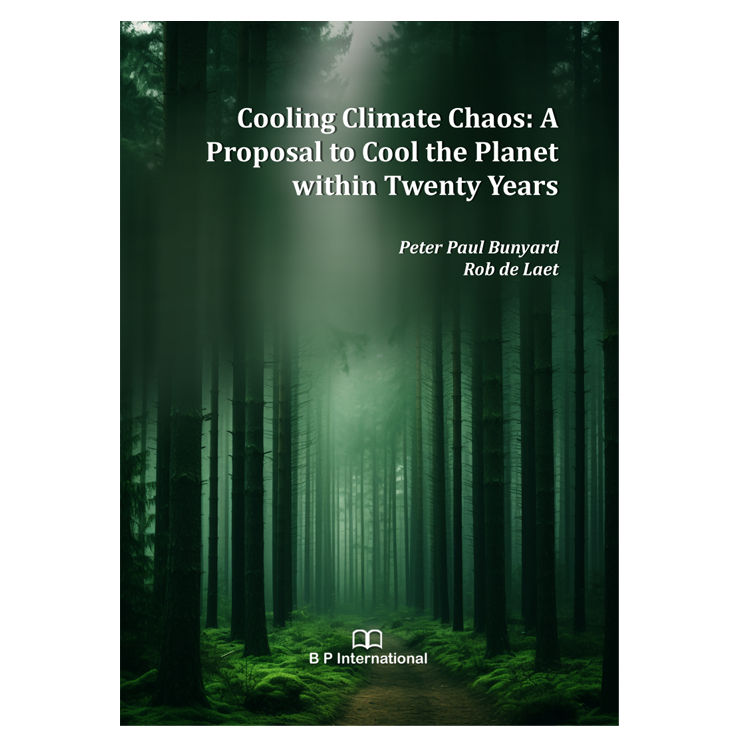
BOOKCooling Climate Chaos: A Proposal to Cool the Planet within Twenty
Years by Peter Paul Bunyard & Rob de Laet
<https://www.bookpi.org/bookstore/product/cooling-climate-chaos-a-proposal-to-cool-the-planet-within-twenty-years/>
<https://substackcdn.com/image/fetch/f_auto,q_auto:good,fl_progressive:steep/https%3A%2F%2Fsubstack-post-media.s3.amazonaws.com%2Fpublic%2Fimages%2F0f9e28fb-e607-4620-81af-9680582bb736_750x750.png>
------------------------------
PODCASTNavigating the Geopolitical Risks of Solar Geoengineering | Energy
Policy Now

Navigating the Geopolitical Risks of Solar Geoengineering

Energy Policy Now

43:03
<https://podcasts.apple.com/us/podcast/navigating-the-geopolitical-risks-of/id1191681161?i=1000663751582&uo=4>

"Two experts discuss the geopolitical risks of solar geoengineering and the
need for global governance frameworks to prevent conflict."

--
You received this message because you are subscribed to the Google Groups
"geoengineering" group.
To unsubscribe from this group and stop receiving emails from it, send an email
to [email protected].
To view this discussion on the web visit
https://groups.google.com/d/msgid/geoengineering/CAHJsh98b5Uiqet5QFpsvUdEca2nG7-T61XDRPbawTAgk2iHrTg%40mail.gmail.com.