SOLAR GEOENGINEERING WEEKLY SUMMARY (07 OCTOBER - 13 OCTOBER 2024
<https://substack.com/app-link/publications/1346479/drafts/802bec45-ff99-4aa3-b9a5-679a223fde8c?publication_id=1346479&post_id=149769470&utm_source=post-email-title&utm_campaign=email-post-title&isFreemail=false>
)
*Subscribe to our newsletter to receive monthly updates on Solar
Geoengineering:*
Solar Geoengineering Updates
<https://solargeoengineeringupdates.substack.com?utm_source=substack&utm_campaign=publication_embed&utm_medium=email>
Monthly news summaries about solar geoengineering. Links to scientific
papers, news articles, jobs, podcasts, and videos.
<https://solargeoengineeringupdates.substack.com?utm_source=substack&utm_campaign=publication_embed&utm_medium=email>
By Andrew Lockley
<https://solargeoengineeringupdates.substack.com?utm_source=substack&utm_campaign=publication_embed&utm_medium=email>
------------------------------
RESEARCH PAPERSGlobal perspectives on solar geoengineering: A novel
framework for analyzing research in pursuit of effective, inclusive, and
just governance
<https://www.sciencedirect.com/science/article/pii/S2214629624003700>
Dove, Z., Hernandez, A., Talati, S., & Jinnah, S. (2024). Global
perspectives on solar geoengineering: A novel framework for analyzing
research in pursuit of effective, inclusive, and just governance. *Energy
Research & Social Science*, *118*, 103779.

*Abstract*

We present a novel analytical framework to evaluate the ethical, political,
and justice implications of research on perceptions of emerging
technologies. Using the literature on perspectives on solar geoengineering
(SG) as an object of study, we develop a framework that interrogates the
research process itself. Our framework interrogates whose perceptions are
being studied, by whom, using what methods, following which lines of
inquiry, and crucially, for what purposes. We do this through the case of
SG, a controversial emerging climate intervention technology with potential
global social and environmental impacts. We find that SG perspectives
research raises important political and justice concerns related to whose
perspectives are being studied and for what purposes. We show that SG
perspectives research centers the perspectives from the Global North,
underrepresents youth perspectives, and that some research aims to increase
public support for SG. Ours is the first study to aggregate and quantify
this rich empirical data to enable us to visualize these inequities. We
also find that investigations of support for SG dominate the literature at
the neglect of other important lines of inquiry, such as how cross-cultural
perspectives on public engagement and capacity building can inform efforts
to institutionalize the inclusion of youth and the Global South in SG
discussions. We further find widespread motivation to inform
decision-making but without clear direction about how best to do so. We
chart a pathway for future perspectives research on SG and broader climate
interventions, centered around four recommendations that seek to ameliorate
some of these limitations and enhance the potential for perspectives
research to enable more effective, inclusive, and just solar geoengineering
governance.

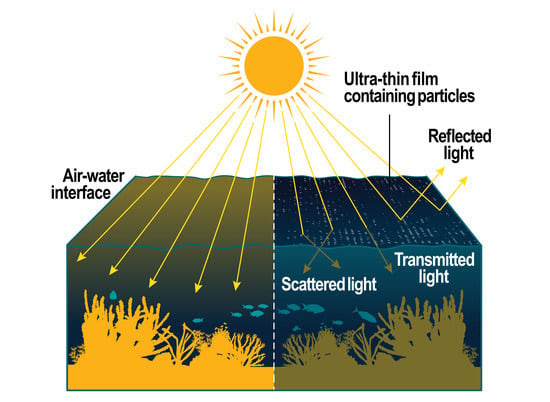
The Development of a Floating Mono-Particle “Sun Shield” to Protect Corals
from High Irradiance during Bleaching Conditions
<https://www.mdpi.com/2077-1312/12/10/1809>

Scofield, J. M., Prime, E. L., Flores, F., Severati, A., Mongin, M.,
Bougeot, E., ... & Qiao, G. G. (2024). The Development of a Floating
Mono-Particle “Sun Shield” to Protect Corals from High Irradiance during
Bleaching Conditions. *Journal of Marine Science and Engineering*, *12*(10),
1809.

*Abstract*

Coral bleaching is occurring more frequently as the climate changes, with
multiple mass mortality events recently recorded on the Great Barrier Reef.
Thermal stress coupled with high irradiance have previously been shown to
be primary causes for coral bleaching. Therefore, a reduction in either of
these pressures could reduce coral stress and eventual bleaching. Herein,
we report the early development of a novel technology capable of reducing
the amount of light entering a water body by ~20% in open ocean conditions.
This mono-particle “sun shield” consists of an ultra-thin monolayer
material and reflective calcium carbonate particles. The monolayer enables
spreading of the particles into a thin film across the water surface, with
only small amounts of material needed: 7.1 g/m2. A numerical modelling case
study of residence times and the build-up of reactive oxygen stress in
corals showed that the successful application of a stable film over the
Lizard Island reef flat could reduce the reactive oxygen stress to below
bleaching levels across approximately 1.5 km2 of reef area. With further
development, mono-particle films such as this have the potential to be
deployed over at-risk coral reefs at relatively small scales during
predicted heatwave conditions, potentially reducing the severity of
bleaching on coral reefs.

Microphysical Interactions Determine the Effectiveness of Solar Radiation
Modification via Stratospheric Solid Particle Injection
<https://agupubs.onlinelibrary.wiley.com/doi/10.1029/2024GL110575>

Vattioni, S., Käslin, S. K., Dykema, J. A., Beiping, L., Sukhodolov, T.,
Sedlacek, J., ... & Chiodo, G. (2024). Microphysical interactions determine
the effectiveness of solar radiation modification via stratospheric solid
particle injection. *Geophysical Research Letters*, *51*(19), e2024GL110575.

*Abstract*

Recent studies have suggested that stratospheric aerosol injection (SAI) of
solid particles for climate intervention could reduce stratospheric warming
compared to injection of SO2. However, interactions of microphysical
processes, such as settling and coagulation of solid particles, with
stratospheric dynamics have not been considered. Using a global
chemistry-climate model with interactive solid particle microphysics, we
show that agglomeration significantly reduces the backscatter efficiency
per unit of injected material compared to mono-disperse particles, partly
due to faster settling of the agglomerates, but mainly due to increased
forward- over backscattering with increasing agglomerate size. Despite
these effects, some materials substantially reduce required injection rates
as well as perturbation of stratospheric winds, age of air and
stratospheric warming compared to injection of SO2 with the most promising
results being shown by 150 nm diamond particles. Uncertainties remain as to
whether stratospheric dispersion of solid particles is feasible without
formation of agglomerates.

New submodel for emissions from Explosive Volcanic ERuptions (EVER v1.1)
within the Modular Earth Submodel System (MESSy, version 2.55.1)
<https://egusphere.copernicus.org/preprints/2024/egusphere-2024-2200/>

Kohl, M., Brühl, C., Schallock, J., Tost, H., Jöckel, P., Jost, A., ... &
Pozzer, A. (2024). New submodel for emissions from Explosive Volcanic
ERuptions (EVER v1. 1) within the Modular Earth Submodel System (MESSy,
version 2.55. 1). *EGUsphere*, *2024*, 1-35.

*Abstract*

We present a methodological study to document the operation of a new
submodel for tracer emissions from Explosive Volcanic ERuptions (EVER
v1.1), developed within the Modular Earth Submodel System (MESSy, version
2.55.1). EVER calculates additional tendencies of gaseous and aerosol
tracers based on volcanic emission source parameters, aligned to specific
sequences of volcanic eruptions. It allows for the mapping of size-resolved
volcanic ash to number and mass of different size modes, and the employment
of various vertical emission profiles. The new submodel is evaluated in
atmospheric simulations with the ECHAM/MESSy Atmospheric Model (EMAC)
coupling the general circulation model ECHAM5 to EVER and other MESSy
submodels, using satellite observations of SO2 column amounts and mixing
ratios as well as aerosol optical properties following the explosive
eruption of the Nabro volcano (Eritrea) in 2011. Sensitivity studies
explore perturbations of the emission source parameters, such as plume
location, emitted mass, plume altitude, vertical distribution, and timing
of the emission. We integrate information from a volcanic SO2 emission
inventory, additional satellite observations, and our findings from the
sensitivity studies to establish a historical standard setup for volcanic
eruptions impacting stratospheric SO2 from 1990 to 2023. We advocate for
this to be a standardized setup in all simulations within the MESSy
framework concentrating on the upper troposphere and stratosphere in this
period. Additionally, *we demonstrate the applicability of the new submodel
for the simulation of degassing volcanoes, with further potential
applications in studies on volcanic ash, wildfires, solar geoengineering,
and atmospheric transport processes.*

A new method for diagnosing effective radiative forcing from aerosol-cloud
interactions in climate models
<https://egusphere.copernicus.org/preprints/2024/egusphere-2024-3063/>

Duran, B. M., Wall, C. J., Lutsko, N. J., Michibata, T., Ma, P. L., Qin,
Y., ... & Debolskiy, M. (2024). A new method for diagnosing effective
radiative forcing from aerosol-cloud interactions in climate models.
*EGUsphere*, *2024*, 1-41.

*Abstract*

Aerosol-cloud interactions (ACI) are a leading source of uncertainty in
estimates of the historical effective radiative forcing (ERF). One reason
for this uncertainty is the difficulty of estimating the ERF from
aerosol-cloud interactions (ERFaci) in climate models, which typically
requires multiple calls to the radiation code and cannot disentangle the
contributions from different process to ERFaci. Here, we develop a new,
computationally efficient method for estimating the shortwave (SW) ERFaci
from liquid clouds using histograms of monthly-averaged cloud fraction
partitioned by cloud droplet effective radius (re) and liquid water path
(LWP). Multiplying the histograms with SW cloud radiative kernels gives the
total SW ERFaci from liquid clouds, which can be decomposed into
contributions from the Twomey effect, LWP adjustments, and cloud-fraction
(CF) adjustments. We test the method with data from five CMIP6-era models,
using the Moderate Resolution Imaging Spectroradiometer (MODIS) satellite
instrument simulator to generate the histograms. Our method gives similar
total SW ERFaci estimates to other established methods in regions of
prevalent liquid cloud, and indicates that the Twomey effect, LWP
adjustments, and CF adjustments have contributed −0.34 ± 0.23, −0.22 ±
0.13, and −0.09 ± 0.11 Wm−2, respectively, to the effective radiative
forcing of the climate since 1850 in the ensemble mean (95 % confidence).
These results demonstrate that widespread adoption of a MODIS re– LWP joint
histogram diagnostic would allow the SW ERFaci and its components to be
quickly and accurately diagnosed from climate model outputs, a crucial step
for reducing uncertainty in the historical ERF.

<https://substackcdn.com/image/fetch/f_auto,q_auto:good,fl_progressive:steep/https%3A%2F%2Fsubstack-post-media.s3.amazonaws.com%2Fpublic%2Fimages%2F281a519c-cd35-40e5-bb78-a5a36bd3585f_550x402.jpeg>
The
Development of a Floating Mono-Particle “Sun Shield” to Protect Corals from
High Irradiance during Bleaching Conditions
<https://www.mdpi.com/2077-1312/12/10/1809>
------------------------------
WEB POSTSStratospheric Plan <https://www.dawnaerospace.com/spacelaunch>
(Dawn Aerospace)Solar geoengineering research could get funding injection
<https://pubs.acs.org/doi/full/10.1021/cen-09912-polcon3> (Global
Enterprise)Non-intrusive geoengineering and other emerging energy
applications enabled by ultralight 4G planar optics
<https://www.spiedigitallibrary.org/conference-proceedings-of-spie/0/PC131210/Non-intrusive-geoengineering-and-other-emerging-energy-applications-enabled-by/10.1117/12.3028697.full>
(SPIE)Geoengineering Can Save the Planet — If We Demystify It
<https://www.bloomberg.com/opinion/articles/2024-10-09/geoengineering-s-success-at-removing-carbon-depends-on-building-trust?embedded-checkout=true>
(Bloomberg)Scientists have said that we can cool the planet back down. Now
they’re not sure it will be so easy
<https://www.washingtonpost.com/climate-environment/2024/10/09/overshoot-climate-targets-one-point-five/?pwapi_token=eyJ0eXAiOiJKV1QiLCJhbGciOiJIUzI1NiJ9.eyJyZWFzb24iOiJnaWZ0IiwibmJmIjoxNzI4NDQ2NDAwLCJpc3MiOiJzdWJzY3JpcHRpb25zIiwiZXhwIjoxNzI5ODI4Nzk5LCJpYXQiOjE3Mjg0NDY0MDAsImp0aSI6ImUwOTZiZDg1LTBkN2QtNDFkNi1iYzQ4LWVmMWRkMzFhMjc4MyIsInVybCI6Imh0dHBzOi8vd3d3Lndhc2hpbmd0b25wb3N0LmNvbS9jbGltYXRlLWVudmlyb25tZW50LzIwMjQvMTAvMDkvb3ZlcnNob290LWNsaW1hdGUtdGFyZ2V0cy1vbmUtcG9pbnQtZml2ZS8ifQ.wuREwXE3kBSNdKU5nJ68nyn62JgmXGTZsnnggf0uOEs>
(The Washington Post)Breaking Down Barriers at Climate Week NYC
<https://sgdeliberation.org/breaking-down-barriers-at-climate-week-nyc/>
(DSG)Arctic Futures: White Shield or Blue Economy—Multiplying proposals for
ice restoration face geopolitical obstacles
<https://legal-planet.org/2024/10/09/arctic-futures-white-shield-or-blue-economy/>
(Legal Planet)Scoping Note on Applicable Legal Frameworks for SRM
<https://co-create-project.eu/publication/scoping-note-on-applicable-legal-frameworks/>
(Co-Create Project)So You Want to Geo-Engineer the Earth (Jacob Rintamaki)
Jacob Rintamaki
So You Want to Geo-Engineer the Earth
<https://jacobrintamakiblog.substack.com/p/so-you-want-to-geo-engineer-the-earth?utm_source=substack&utm_campaign=post_embed&utm_medium=email>
My Background…
Read more
<https://jacobrintamakiblog.substack.com/p/so-you-want-to-geo-engineer-the-earth?utm_source=substack&utm_campaign=post_embed&utm_medium=email>
2 days ago · 1 like · Jacob Rintamaki
------------------------------
REPORTAccelerating Climate Intervention Research to Improve Climate Security
<https://www.silverlining.ngo/reports/ac-issue-brief> (SilverLining)
------------------------------
JOB OPPORTUNITYPost-Doc Reserchers Position—The Climate Sytems Engineering
Initiative at University of Chicago | Deadline to apply: 15 November 2024
<https://climateengineering.uchicago.edu/csei-postdoctoral-researchers-position/>

"The University of Chicago is building a substantial research cluster
(including an anticipated ten new faculty lines) on the science,
technology, and public policy of Climate Systems Engineering. Our goal is
to advance understanding of the benefits, risks, and governance of
technologies that might reduce the impacts of accumulated greenhouse gases,
and to educate students who will face the challenges of managing industrial
civilization on a fragile planet. CSEi’s topical scope includes open-system
carbon removal such as enhanced weathering, solar geoengineering, and
interventions to limit loss of glacial ice. CSEi welcomes research from
across fields including the sciences, humanities, social sciences, public
policy, and law.

The CSEi Postdoctoral Researchers program aims to develop the next
generation of research leaders who will shape the future of climate systems
engineering for the benefit of people and the planet. CSEi Postdoctoral
Researchers will work closely with UChicago faculty mentors, but their
research and funding are independent, and the program will help them
develop strong research networks by facilitating collaboration among the
postdoctoral cohort and by ensuring that they have ample opportunities to
interact with the full community of CSEi-affiliated faculty and research
leaders. Securing a faculty mentor in advance is strongly preferred, and
applicants are encouraged to reach out early to engage a mentor. UChicago
faculty members from any discipline may potentially serve as a mentor,
regardless of whether they have prior experience with climate systems
engineering."

------------------------------
UPCOMING EVENTS*Modifying Solar Radiation
<https://sosvclimatetech.com/agenda/> | 14 October 2024 | Online*

*Discovery workshop focussing on atmospheric science (SRM) | 18 October
2024 | Online**Integrative synthesis workshop focusing on identifying gaps
in current governance & ethics | 18 November 2024 | Online*

*Climate Repair Seminar Series - Autumn 2024
<https://www.tickettailor.com/events/centreforclimaterepair1/1253490>*

*1: On the bright side: new developments in Marine Cloud Brightening
technology | 16 October 2024**2: Field trials for a cooler planet: sea, sky
and ice | 23 October 2024**3: Ethics and Governance (title TBA) | 06
November 2024**4: Good COP, Bad COP: a post-COP29 assessment | 27 November
2024*

*2025 Solar Radiation Management Annual Meeting by Simons Foundation
<https://www.simonsfoundation.org/event/solar-radiation-management-annual-meeting-2025/>
| 24-25 April 2025 | New York **The 2025 Degrees Global Forum
<https://substack.com/redirect/8521c00b-652a-4d78-822f-7ae393c57068?j=eyJ1IjoiMjJrMHl3In0.wQQsFypG52typ8FI2nhnJ8eUoUIIkdCkuhmzxNYKtgE>
|
12-16 May 2025 | Cape Town, South Africa**Artic Repair Conference 2025 by
University of Cambridge & Center for Climate Repair
<https://substack.com/redirect/90f81f14-d09c-4418-8d97-c6621d753433?j=eyJ1IjoiMjJrMHl3In0.wQQsFypG52typ8FI2nhnJ8eUoUIIkdCkuhmzxNYKtgE>
|
26-28 June 2025 | Cambridge UK*

Solar Geoengineering Events Calendar <https://teamup.com/ks64mmvtit583eitxx>
------------------------------
YOUTUBE VIDEOSDIY Geoengineering @ Hope XV | Luke Iseman
<https://www.youtube.com/watch?v=1MbZl8g6NKM>DSG's intervention at the UN
High-Level Plenary Meeting on Sea Level Rise | DSG
<https://www.youtube.com/watch?v=LJo8kC9ydB0>

“DSG's Director of International Policy Alia Hassan spoke at the UN General
Assembly High-level plenary meeting on addressing existential threats posed
by sea level rise."

--
You received this message because you are subscribed to the Google Groups
"geoengineering" group.
To unsubscribe from this group and stop receiving emails from it, send an email
to [email protected].
To view this discussion on the web visit
https://groups.google.com/d/msgid/geoengineering/CAHJsh9_p-SqPzGZi%2BNnp_5z%2B-_%3DHc-S0MN5RQOkva2yHhZ50_w%40mail.gmail.com.