From: b sabha <[email protected]>
http://www.ndtv.com/opinion/a-letter-to-pm-modi-from-anti-national-sickular-presstitute-barkha-dutt-1279441
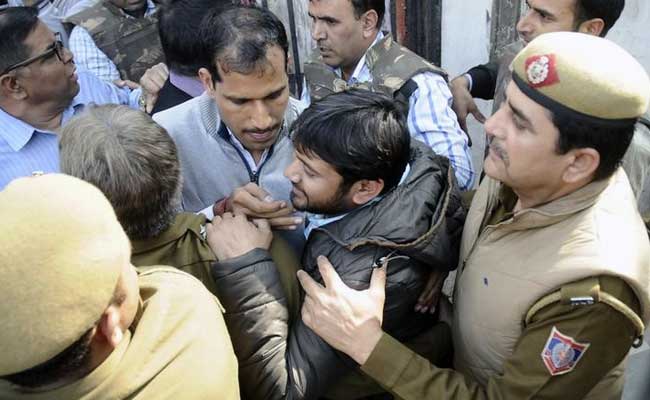
[http://i.ndtvimg.com/i/2016-02/kanhaiya-kumar-jnu-hearing-court-reuters_650x400_71455889773.jpg]<http://www.ndtv.com/opinion/a-letter-to-pm-modi-from-anti-national-sickular-presstitute-barkha-dutt-1279441>

A Letter To PM Modi From 'Anti-National Sickular
...<http://www.ndtv.com/opinion/a-letter-to-pm-modi-from-anti-national-sickular-presstitute-barkha-dutt-1279441>
www.ndtv.com
Dear Mr. Prime Minister: I write to you today because like so many of my fellow
citizens, I am both angry and anguished. I am aware that a missive from someone
like ...


Dear Mr. Prime Minister:

I write to you today because like so many of my fellow citizens, I am both
angry and anguished. I am aware that a missive from someone like me -
"presstitute", "bazaaru",  "sickular" and worst of all, "anti-national"- will
be most likely junked by your office as not worthy of your time.

In any case, ever since I reported on the 2002 riots in Gujarat, I am among the
journalists you have clearly shunned and disliked - that is, of course,
entirely your prerogative. But this week, I read that you told opposition
parties that you are the PM of "all of India, not just of the BJP", and I
thought I would hold you to that promise and ask for your attention as a
citizen's entitlement.

Modiji, I take you back to the years before you became Chief Minister and began
the "othering" of large sections of the English media whom you were convinced
were out to get you: when you were the approachable and friendly General
Secretary of the BJP, and I was a young reporter still learning the ropes. If
you remember those years - and I am told you never forget (or forgive) - you
would recall that I first cut my teeth as a journalist reporting a war from the
frontline in Kargil in 1999. I was still in my 20s, and the intimacy and
immediacy of that overwhelming exposure would make me a life-long admirer of
our military. My emphasis, even back then, was to humanize and personalize the
stories of soldiers in the trenches and ensure they would not remain faceless,
nameless statistics. Over the years, the bonds I forged with the Fauj only grew
deeper - my reporting has often taken me back to the border, to the Line of
Control and a variety of conflict zones to where they've been deployed. Over
the past two decades, I have done hundreds of news programs devoted to the
Soldier - the discrepancies in hardship allowances between jawans and
bureaucrats, the shameful mountain of government litigation against disabled
soldiers who are dragged to court for pensions, the pending promise of One Rank
One Pension, the bottlenecks in defense procurement, and the many sacrifices of
our men and women in uniform.

So I write this as a sentimental and proud Indian who has often been teased by
my more left-leaning friends and colleagues for my rather maudlin and
unintellectual patriotism. I would submit that the binaries that spokespersons
of your government have created (aided by the hyper-nationalist drum-beating of
channels like Times Now and News X) are absolutely false. It is entirely
possible to deeply respect the military and feel ashamed of the multiple
manipulations, doctored videos, police excesses, government heavy-handedness,
brazen hooliganism and ominous environment of intimidation that the crackdown
on JNU has revealed. In fact, for your party to use the death of ten Siachen
bravehearts to validate the gross over-reach we have seen in JNU is to, in my
view, cynically exploit the honour of the uniform. I wish there was half as
much outrage when your good friend Jayalalithaa's photograph was placed on the
coffin of one of the Siachen soldiers by her minister, who was then proudly
photographed with it.

Modi ji, I would also like to take you back to a man whose name you love
invoking - Atal Bihari Vajpayee. I remember the tingling excitement of hope and
optimism that ran through my veins as I stood among the crowds in Srinagar in
2003 and heard him discard the rigidities of legalism and offer "Insaniyat" as
the framework for reconciliation in the Kashmir Valley. Sadly, in its handling
of the JNU controversy, the government has subverted the Vajpayee legacy in one
fell swoop - I assume with your approval.

Where Vajpayee promised that Humanism would override the literal application of
the law as he stretched out a hand even to pro-Azaadi separatists, this week we
have seen a singular absence of generosity or empathy from the team you lead.
The Home Minister went so far as to link students to the dreaded Lashkar
terrorist Hafiz Saeed, based on a police endorsement of a fake Twitter account.
Not just have we not seen any evidence of terror links, but it now appears that
the video used to slap a sedition charge on Kanhaiya Kumar, the JNU student
leader, has been doctored, with the audio spliced onto images from a different
day.

In a country that took pride in giving even Ajmal Kasab, a 26/11 perpetrator, a
fair trial, a young man whose worst crime (and that's if you stretch it) is
that he could not stop a handful of other students from raising some admittedly
disturbing slogans - has been slapped and pushed around in court in the
presence of a police that failed or perhaps refused to protect him. The HRD
Minister Smriti Irani speaks of how the anti-India slogans were an insult to
"Mother India".  But aren't Mothers benign, forgiving, broad-minded and all
embracing? Stern, yes, when a child needs it, but surely never heartless.

Yet, heartlessness and hypocrisy combined with sneering aggression is what's
been on display this entire week. As goons in black robes rampaged through the
Delhi court house where Kanhaiya Kumar is being tried, they assaulted
journalists not just on day one, but then once again, a little over 24 hours
later, emboldened by the knowledge that no cop was going to come after them and
in open contempt of a Supreme Court directive. Euphoric from the taste of
blood, they congratulated each other on social media for being the "shers" who
did "what the government and military could not do". The Chief Goon, Vikram
Chauhan, photographed with a slew of BJP leaders - everyone from Rajnath Singh
to LK Advani - has been garlanded on the court premises; candles have been lit
in "solidarity" for him. The alacrity with which the police arrested Kanhaiya
Kumar is in cruel contrast to the inaction against these lumpen lawyers who
enjoy political patronage.

There are police raids across the country to find the sloganeering students who
have gone underground; friends who knew them are being identified from Facebook
and summoned by the police from towns outside the capital; there are reports of
hostels being searched, and landlords ousting JNU students to avoid "trouble".
But the rowdies in robes are free, though surely the brazen violence and
anti-constitutionalism by men meant to represent the law is a graver danger to
democracy than mere words - no matter how awful and offensive - could ever be.

Yet, after all this, it was students of JNU who marched peacefully in their
thousands carrying the tricolor and roses, using the gentleness of Gandhigiri
to respond to the Goondagardi of the thugs in court.

Through all this, they may have wondered - as we do - what our Prime Minister
thinks. Do you approve of the decision to send police onto a student campus?
Might it not have been wiser and more mature to let the university
administration tackle the issue, as the Jadavpur Vice-Chancellor has done? Now
that it's clear that the "Azaadi" Kanhaiya Kumar spoke of was not from India,
but from Hunger, Inequality, Communalism and Caste Bias, will the government
apologize to him? And in any case, do you really think the Indian State is so
fragile that it would come undone by a clutch of "Hum Kya Chahate - Azaadi"
cries?  Because if that's the new thinking, we may have to arrest an entire
generation of Kashmiri youth instead of politically engaging with them.

Do you not, Mr. Prime Minister, agree that if you can visit Lahore to greet
Nawaz Sharif on his birthday despite the specter of terrorism (and I thought it
was spectacularly bold of you), if you can negotiate with Naga secessionists
and proudly announce a peace accord (the details of which are still awaited),
if you can ally with the PDP whose leader Mehbooba Mufti believes not just that
Afzal Guru should not have been executed, but has, as part of her father's
"healing touch", often visited the families of dead militants because she does
not think their children should be punished - if you can take these decisions
and never have your patriotism questioned, do you not think it's a crazy
over-reaction of the government to arrest a young man for slogans that it now
turns out weren't even his own? Is battling young students - first at the Pune
Film Institute, then in Hyderabad, and now at JNU - really the war you want to
lead your troops into?

Do you agree that "cooking beef" and "worshipping demons" should be part of a
police report to explain the "anti-nationalism" of young men, doubly ironic
because the police reports to a Minister who is from the beef-eating state of
Arunachal Pradesh? Did your heart not break, just a little bit, when you saw
Kanhaiya Kumar being dragged and pulled, his eyes worn by physical fear? And
what was your thought when you opened the morning newspapers to see a
legislator of your party pounce on an opposition activist who lay flat on the
road with hands folded in fright, an image that made national and international
headlines for both the asymmetry and abuse of power it conveyed?

We do not know the answer to any of these questions because you have just not
spoken. You have become curiously Manmohan-esque in your silences after mocking
your predecessor for them. With one crucial difference - he hardly ever spoke
on anything, whereas you are voluble on a host of issues, except the festering
crises that are often self-creations of the government. With respect, Mr. Prime
Minister, given that you are a masterful orator and won the 2014 election at
least partly on the back of effective communication, these silences are
bewildering.

When you do break them, it's almost always far too late to contain the damage.
Think Dadri. More recently, think how a young man called Rohith Vemula was
driven to suicide in Hyderabad. By the time you did express your grief, party
spokespersons had defiled the debate with conspiracy theories about whether he
was a Dalit or not. Then, like now, they had forced their construct of
nationalism onto the debate with whispers about how slogans were raised by
Vemula against the execution of Yakub Memon.

Modiji, naturally, none of us like a slogan that calls for India's ruin.

But thought cannot be policed, and nationalism cannot be regimented; it's for
every Indian to define it for herself. I still get goose-bumps every single
time I hear our anthem, I leap to my feet to stand and sing it out loud in my
foghorn voice. But I would never support punishing or intimidating those who
sit through it in a movie hall, as we saw happen in Maharashtra recently.

We are all getting on in age, but let's for a moment think back to our years in
university. Being young and being rebellious is all about non-conformism and
anti-establishmentarianism, It's about questioning everything - marriage, love,
sexuality, caste, religion - and yes, for some, even the Nation-State. As long
as this sloganeering is not accompanied by an incitement to violence, surely we
need not use the sledgehammer of sedition against young people.

You wouldn't need me to remind you of the famous case Balwant Singh Vs State of
Punjab - the Supreme Court overturned the charge of sedition and acquitted
those who had shouted, "Khalistan Zindabad, Raj Karega Khalsa" a few hours
after Indira Gandhi's assassination. If the highest court of the land can show
that maturity in a much more volatile and sensitive case than the JNU
controversy, why can't the government? Do we even need a sedition law that was
given to us by the British in the 1860s? (Britain incidentally scrapped it in
2010.)

Whatever the BJP calculations were on converting the JNU crackdown into
political advantage have clearly dissipated. Given legal precedence, Kanhaiya
Kumar is sooner or later likely to be acquitted by a higher court, and will
walk out a hero. Given the writing on the wall, wouldn't you, Mr. Prime
Minister, think it's wiser, kinder and yes, politically smarter - apart from it
also being the only correct thing to do - to drop the charges against him,
order the police and the Home Ministry to concede its mistake and apologize,
drop the criminal charges against the other students, and hand back the case to
the JNU administration to handle it as a disciplinary issue from here on?

Gurudev Tagore, who gave us our stirring national anthem, also wrote,
"Patriotism cannot be our final spiritual shelter; my refuge is humanity. I
will not buy glass for the price of diamonds, and I will never allow patriotism
to triumph over humanity as long as I live".

Modi ji, India belongs to its young. The tricolor is in their hands. And so is
our future.
First Published:February 20, 2016 15:41 IST