When the train accident near Bolpur took place, the national press
under front-paged banner headlines asked for the scalp of the
(perennially truant?) Union Railway Minister. Now Suresh Kalmadi as
the head of the OC for the Commonwealth Games is constantly under
attack.
The Outlook carried the subject article of Roy wherein Maoists were
branded as "Gandhians with guns". (Never mind who supplied the tag.)
And these exchanges can go the way they are going on.
That's exactly what you don't expect, in fact even dream of, in North
Korea or even pots-Mao China.
And that makes India a very imperfect "democracy".

Sukla

On 09/08/2010, meher engineer <[email protected]> wrote:
> Jarius Banaji may be right about Arundhati Roy's "democratic pessimism" and
> when he says 'The most extreme expression of this is the idea that India has
> a “fake democracy,”.....', but not when he adds the flourish, "whatever that
> is supposed to mean" thereafter.
>
> An election in a representative democracy, where the press publishes "Paid
> News" is, surely, a fraud on the voters; doesn't that make the democracy a
> fake?
>
> The example isn't hypothetical, but deeply real in a very Indian way now
> that  P Sainath (The Hindu August 6, 2010) has explained what happened to
> the 71 page, 36, 000 word long report prepared by a two man sub committee
> that the Press Council of India set up to go into the details of the  "Paid
> news" disease in the Indian media: the Council "summarized" the sub
> committee's report in a meaningless 3600 words and published that in its
> final report.
>
> regards,
>
> meher engineer
>
> On Sun, Aug 8, 2010 at 10:03 PM, Sukla Sen <[email protected]> wrote:
>
>>
>>
>> [
>> An excellent one.
>> The only nagging point is that the central thesis of Roy - Operation Green
>> Hunt is a ploy to clear muneral rich lands for the exploitation by
>> corporates under the garb of fighting Maoist insurgents - has been sort of
>> conceded.
>> But *that's more a fairytale rather than a fact*.
>>
>> Of course the Operation pertains to Maoist strongholds. These are adivasi
>> areas, deeply forested and mountainous,in central and eastern India. These
>> are also areas rich with minerals. Evidently, there is a large overlap.
>>
>> But, on the flip side, Lalgarh is argubaly the most major hub of the
>> Operation. Here there is no land acquisition proposal. none for any
>> industrial project - mining or otherwise.
>> The major sites of struggles against mining/industrial projects today are
>> in Odisha - POSCO in Dhinkia and around, Tatas in Kalinganagar, Vedanta in
>> Niyamgiri. Maoists are hardly any part of the organised resistances.
>> In Dantewada in Chhattisgarh, prior to the Operation, Salwa Judm evacuated
>> 644 villages. It is not clear that a single contemplated project falls in
>> that area. Though there are large number of proposals pertaining to nearby
>> areas.
>>
>> The Maoists are, by their own declaration, engaged in capturing state
>> power
>> through Protracted People's (Guerrilla) War. The Operation is, in its very
>> essence, the state's armed response to such an armed threat to itself.
>> ]
>>
>>
>> http://platypus1917.org/2010/08/06/the-maoist-insurgency-in-india-end-of-the-road-for-indian-stalinism/
>>
>>
>> <http://platypus1917.org/2010/08/06/the-maoist-insurgency-in-india-end-of-the-road-for-indian-stalinism/>
>> The
>> Maoist insurgency in India: End of the road for Indian
>> Stalinism?<http://platypus1917.org/2010/08/06/the-maoist-insurgency-in-india-end-of-the-road-for-indian-stalinism/>
>> August 6th, 2010 •
>> Related<http://platypus1917.org/2010/08/06/the-maoist-insurgency-in-india-end-of-the-road-for-indian-stalinism/#>
>>  • Filed
>> Under<http://platypus1917.org/2010/08/06/the-maoist-insurgency-in-india-end-of-the-road-for-indian-stalinism/#>
>>  *An interview with Jairus Banaji*
>>
>> *
>> *
>> *Spencer A. Leonard and Sunit Singh*
>>
>> *
>> Given the considerable international interest in the progress of Naxalism
>> on the Indian subcontinent, particularly in the wake of the 2008 Maoist
>> revolution in Nepal, we are pleased to publish the following interview
>> with
>> Marxist and historian Jairus Banaji conducted on June 28, 2010.*
>>
>> *Spencer Leonard*: The immediate occasion for our interview on the
>> Naxalites or Indian Maoists is Arundhati Roy’s widely read and
>> controversial
>> essay, “Walking With the
>> Comrades,”<http://www.outlookindia.com/article.aspx?264738> published
>> in the Indian magazine*Outlook*. There Roy speaks of “the deadly war
>> unfolding in the jungles of central India between the Naxalite guerillas
>> and
>> the Government of India,” one that she expects “will have serious
>> consequences for us
>> all.”1<http://platypus1917.org/2010/08/06/the-maoist-insurgency-in-india-end-of-the-road-for-indian-stalinism/#sdendnote1sym>
>> Is
>> Roy’s depiction of the current situation accurate? If so, how have events
>> reached such a critical state? How, more generally, does Roy frame today’s
>> Naxalite struggle and do you agree with this framing? Does the “main
>> contradiction,” as a Maoist might say, consist in the struggle between the
>> Naxalite aborigines on the one side, and, on the other, what Roy refers to
>> as the combination of “Hindu fundamentalism and economic totalitarianism”?
>>
>> *Jairus Banaji*: There certainly is a Maoist insurgency raging in the
>> tribal heartlands of central and eastern India, much of which is densely
>> forested terrain. The tribal heartlands straddle different states in the
>> country, so at least three or four major states are implicated in the
>> insurgency, above all
>> Chhattisgarh<http://en.wikipedia.org/wiki/File:India_Chhattisgarh_locator_map.svg>,
>> which was hived off from Madhya Pradesh in 2000. To the extent that there
>> has been a drive to open up the vast mineral resources of states like
>> Chhattisgarh and Orissa to domestic and international capital, there *is*
>> the
>> connection Roy points to. As a definition of the “conjuncture” that has
>> dominated the conflict since the late 1990s, she is clearly right.
>>
>>  <http://platypus1917.org/wp-content/uploads/2010/08/naxalites4.jpg>
>>
>> A Naxalite guerilla army in central India
>>
>> But the Naxal *presence* in these parts of India has little to do with the
>> factors she talks about. Naxalism, or Indian Maoism, goes back to the late
>> 1960s. What distinguishes it as a political current from other communists
>> in
>> India is the commitment to armed struggle and the violent overthrow of the
>> state. It is not as if the perspectives of Naxalism flow from the
>> circumstances one finds in the forested parts of India. The question is
>> why,
>> after its virtual extinction in the early 1970s, the movement was able to
>> reassemble itself and reemerge as a less fragmented and more powerful
>> force
>> in the course of the 1990s. To account for that we have to look to
>> different
>> factors than those Roy identifies.
>>
>> The Naxalites have always seen the so-called “principal contradiction” as
>> that between the peasantry or the “broad mass of the people” on one side
>> and
>> “feudalism” or “semi-feudalism” on the other. They have never abandoned
>> this
>> position since it was evolved in the late 1960s. The revolution has always
>> been seen by them as primarily agrarian, except that now “agrarian” has
>> come
>> to mean “tribal,” since their base is on the whole confined to the tribal
>> or *adivasi* communities.**
>>
>> *Sunit Singh*: Please explain the confluence that led to the formation of
>> the Communist Party of India (Maoist) in September 2004, which united the
>> Naxalite splinters, the People’s War Group, and the Maoist Communist
>> Center?
>> What explains the dramatic revivification of Naxalism after its decimation
>> in the early 1970s and how do we understand the CPI (Maoist) as a
>> political
>> force today? To what extent has today’s Naxalism changed from its
>> predecessor, the original CPI (Marxist–Leninist) <http://cpim.org/> (CPI
>> (M–L))?
>>
>> *JB*: The key fact about the Naxals in the late 1990s and 2000s is that
>> they began to reverse decades of fragmentation through a series of
>> successful mergers. The most important of these was the merger in 2004
>> between People’s War, itself the result of the People’s War Group fusing
>> with Party Unity in 1998, and the Maoist Communist Centre of India (MCCI).
>> That 2004 merger, which resulted in the formation of the CPI (Maoist),
>> reflected a confluence of two major streams of Maoism in India, since
>> People’s War was largely Andhra-based and the MCCI had its base almost
>> entirely in Jharkhand—the southern part of
>> Bihar<http://en.wikipedia.org/wiki/File:India_Bihar_locator_map.svg> which
>> also became an independent state in 2000. To explain the successful
>> reemergence of Naxal politics in the 1990s, we have to see the People’s
>> War
>> Group (PWG) as the decisive element of continuity between the rapturous
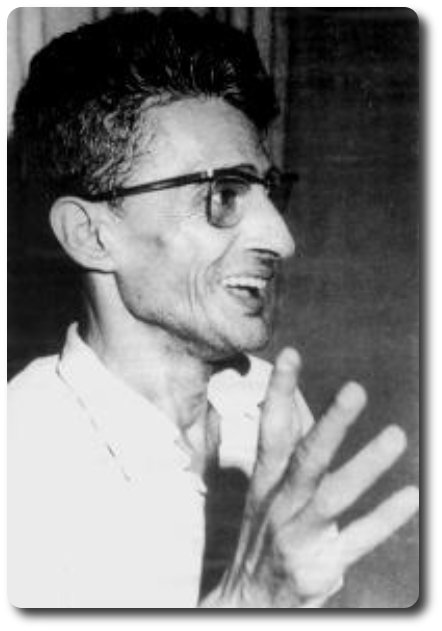
>> Maoism of the 1960s–70s, dominated by the charismatic figure of Charu
>> Mazumdar <http://www.marxists.org/reference/archive/mazumdar/index.htm>,
>> and the movement we see today. The PWG was formally established in 1980
>> after some crucial years of preparation that involved a unique emphasis on
>> mass work, the launching of mass organizations like the Ryotu Coolie
>> Sangham, which was like a union of agricultural workers, and a “Go to the
>> villages” campaign that sent middle-class youth into the Telangana
>> countryside. Kondapalli Seetharamaiah, its founder, was able to attract
>> the
>> younger elements because he was seen as more militant because, among other
>> things, he refused to have anything to do with elections. Following a
>> dramatic escalation of conflict in Andhra Pradesh from 1985, PWG was able
>> to
>> build a substantial military capability and a network of safe havens for
>> its
>> armed squads (*dalams*) across state borders, in Gadchiroli in
>> Maharashtra, directly north of the A.P. border, and in the undivided
>> region
>> of Bastar or southern Chhattisgarh to the north and east. Regis Debray in
>> his *Critique of Arms *points out that no guerrilla movement can survive
>> without rearguard bases, by which he means a swathe of territory which it
>> can fall back on with relative security in times of intensified
>> repression.
>> 2<http://platypus1917.org/2010/08/06/the-maoist-insurgency-in-india-end-of-the-road-for-indian-stalinism/#sdendnote2sym>
>> This
>> is exactly what happened with the squads that had been trained and built
>> up
>> in Andhra, or more precisely in Telangana, the northern part of the state,
>> in the 1970s and 1980s. The recent flare up of conflict in Chhattisgarh is
>> largely bound up with the intensified repression of 2005 that drove even
>> more fighters into the Bastar region.
>>
>> *SL*: In “Walking with the Comrades,” Roy sidesteps the question of
>> Naxalite politics in favor of siding with a marginalized group, in this
>> case
>> “the tribals.” Thus she states that “[some] believe that the war in the
>> forests is a war between the Government of India and the Maoists… [they]
>> forget that tribal people in Central India have a history of resistance
>> that
>> predates Mao by centuries.” But she also wants to have it the other way
>> around. For instance, this is what she says of the Naxalite leader and
>> theoretician who first founded the CPI (M-L): “Charu Mazumdar was a
>> visionary in much of what he wrote and said. The party he founded (and its
>> many splinter groups) has kept the dream of revolution real and present in
>> India.” What do you make of this curious political ambivalence respecting
>> the actual Maoism (and the Marxism) of the Maoists? How do you understand
>> Roy’s anti-Marxist, tribal revolutionary romance?
>>
>> *JB*: The idea that the tribals and the CPI (Maoist) share the same
>> objective is ludicrous! What the tribals have been fighting against is
>> decades of oppression by moneylenders, traders, contractors, and officials
>> of the forest department—in short, a long history of dispossession that
>> has
>> reduced them to a subhuman existence and exposed them to repeated
>> violence.
>> A large part of the blame for this lies with the unmitigated Malthusianism
>> of the Indian state. By this I mean that the *adivasis* have been
>> consigned to a slow death agony through decades of neglect and oppression
>> that have left them vulnerable to political predators across the spectrum,
>> including the Hindu Right. As Edward Duyker argued in *Tribal Guerrillas*,
>> the Santals whom the Naxal groups drew into their ranks in the late 1960s
>> “fought for specific concessions from the established rulers, while the
>> CPI
>> (Marxist–Leninist) fought for a new structure of rule
>> altogether.”3<http://platypus1917.org/2010/08/06/the-maoist-insurgency-in-india-end-of-the-road-for-indian-stalinism/#sdendnote3sym>
>> There
>> is a big difference between those perspectives! The tribal aim is not to
>> overthrow the Indian state but to succeed in securing unhindered access to
>> resources that *belong to them*, but which the state has been denying
>> them. The tribal struggle is for the right to life, to livelihood and
>> dignity, including freedom from violence and from the racism that much of
>> India exudes towards them. The massive alienation of tribal land that has
>> gone on even after Independence was something the government could have
>> stopped if it had the will to do so. Today the huge mineral resources of
>> the
>> tribal areas are up for grabs as state governments compete to attract
>> investment from mining and steel giants. But whatever the CPI (Maoist)
>> might
>> think, the vast majority of the tribals in India have no conception of
>> “capturing state power,” since the state itself is such an abstraction
>> except in terms of harassment by forest officials, neglect by state
>> governments, and violence from the police and paramilitary.
>>
>> *SL*: In online
>> comments<http://kafila.org/2010/03/22/response-to-arundhati-roy-jairus-banaji/>
>> on
>> Roy’s article posted on kafila.org, you responded to the preoccupation
>> with tribals and Naxalites with a series of rhetorical questions:
>>
>> Where does the rest of India fit in? What categories do we have for them?
>> Or are we seriously supposed to believe that the extraordinary tide of
>> insurrection will wash over the messy landscapes of urban India and over
>> the
>> millions of disorganized workers in our countryside without the emergence
>> of
>> a powerful social agency… that can contest the stranglehold of capitalism…
>> without *mass* organizations, battles for democracy, struggles for the
>> radicalization of culture, etc.?
>>
>> To this you add, “in [Roy’s] vision of politics, there is no history of
>> the
>> Left that diverges from the romantic hagiographies of Naxalbari and its
>> legacies.” Thus you contend that Roy’s thinking is impeded by a kind of
>> amnesia. How precisely does Roy’s lack of awareness of and confrontation
>> with the history of the Left compromise her ability to think through what
>> it
>> would mean to stage an emancipatory politics today? How does awareness of
>> the history of the Left in the sense you intend differ from simply knowing
>> the Left’s past? What are the consequences we face because of the Left’s
>> widespread failure to work through its own history, a failure of which Roy
>> is but a recent and prominent instance?
>>
>> *JB*: Roy lacks any grasp of the history of the Maoist movement in India,
>> which is why she can make that silly statement about Charu Mazumdar being
>> visionary, when the bulk of his own party leadership denounced his
>> “annihilation” line as pure adventurism and a whole series of splits
>> fragmented the movement within a year or two. Mazumdar also played a
>> disastrous role in splitting the movement in Andhra through a purely
>> factional intervention. Roy’s background is clearly not the Left or any
>> part
>> of it, including the Maoists. What she does reflect is the disquiet
>> generated, beginning in the 1990s, by the opening up of India to the world
>> economy and the drive to create a globally competitive capitalism
>> regardless
>> of the costs this would inflict on workers and the mass of the population.
>>
>> The Narmada Bachao Andolan (NBA), the campaign to halt the project to
>> build
>> a hydro-electric dam on the river Narmada, was the best example of the
>> kind
>> of “new social movements” that emerged in India in response to issues that
>> the party left simply failed to take up. It was not led by any party, was
>> related to a major single issue, and had roots very different from those
>> of
>> the organized left. It involved large-scale mobilization of the
>> communities
>> uprooted by the dam, but the NBA of course was eventually defeated in the
>> sense that it failed to stop the dam from being built despite massive
>> resistance. The defeat of the NBA generated a profound disillusionment
>> with
>> the state of Indian democracy, which is strongly reflected in Roy’s work—a
>> kind of “democratic pessimism.” The most extreme expression of this is the
>> idea that India has a “fake democracy,” whatever that is supposed to mean.
>>
>> But, let’s get back to Roy’s bizarre reference to Charu Mazumdar as a
>> “visionary” who “kept the dream of revolution real and present in India.”
>> The fact is that the “annihilation” line had led to such disastrous
>> results
>> by the end of 1971 that the majority of his own Central Committee
>> denounced
>> him as a “Trotskyite” and expelled him from the party! Indeed, the
>> majority
>> of a twenty-one member Central Committee had withdrawn support from him by
>> November 1970, and Satya Narayan Singh, who was elected the new general
>> secretary, described his line as “individual terrorism.” Even when the
>> AICCCR (All India Coordination Committee of Communist Revolutionaries)
>> transformed itself into a party in April 1969, leading figures of the
>> early
>> Maoist movement in India were unhappy with the decision and many stayed
>> out.
>>
>> *SS*: Elaborate, if you will, on the exact form of struggle that Charu
>> Mazumdar is associated with. What was the “annihilation line,” exactly?
>>
>> *JB*: Like all Maoists, Mazumdar believed that the key social force in the
>> revolutionary movement in India would be the peasantry. He adhered to the
>> strategy mapped out in the deliberations between the CPI leadership and
>> Stalin at the end of 1950, one product of which was a document known as
>> the
>> *Tactical Line*, which spoke of a two-stage revolution starting with a
>> People’s Democratic State that would be ushered in by an armed revolution.
>> Of course, by then Liu Shao-ch’i was already recommending the Chinese
>> revolution as a model for all colonial and “semi-colonial” countries in
>> their fight for national independence and people’s democracy. This would
>> have to be an armed revolution based on the peasantry and “led by” the
>> working class. The reference to the working class was purely rhetorical,
>> since the leading class force in the revolution was the peasantry and the
>> leadership of the working class existed in the more metaphysical shape of
>> the party. The distinctiveness of Mazumdar’s politics was that he
>> seriously
>> believed it would be possible to *arouse *revolutionary fervor among the
>> “masses” by annihilating “class enemies” such as the *jotedars* or larger
>> landowners of Bengal, by forming small underground squads that would
>> selectively target landlords, state officials, and other representatives
>> of
>> the exploiting class and state apparatus. Such shock attacks, he felt,
>> would
>> create a decisive breach and unleash a mass response. Mazumdar believed
>> that
>> the revolution in India could be completed in this manner by 1975! The
>> idea
>> was that the masses were simply bursting with revolutionary zeal and only
>> needed a catalyst. As I said, the line generated considerable dissent, not
>> least because it abandoned any notion of mass work.
>>
>>  <http://platypus1917.org/wp-content/uploads/2010/08/Majumdar1.jpg>
>>
>> Charu Mazumdar (1918–1972), first General Secretary of the CPI (M-L)
>>
>> *SS*: So, when the Mazumdar faction constituted itself as the CPI (M–L) in
>> April of 1969, what followed? Were other factions loyal to Peking folded
>> into the new party? What happened to Mazumdar’s Maoist critics, those who
>> argued that their M–L comrades had substituted terrorism for mass
>> organizations such as trade unions and kisan sabhas?
>>
>> *JB*: The Chinese Communist Party backed away from the Naxals pretty early
>> when they realized that they were talking about different things. There
>> was
>> a distinct loss of enthusiasm from Peking, and Mazumdar faced increasing
>> criticism. Parimal Dasgupta, a prominent union leader, advocated the
>> building of mass organizations among workers, and criticized the neglect
>> of
>> urban work by Mazumdar’s followers. He disapproved of the idea of a
>> clandestine party organization because it would mean abandoning any effort
>> to build broader class-based organizations. Another leading figure, Asit
>> Sen, split on similar grounds. T. Nagi Reddy, the leading communist in
>> Andhra Pradesh, disagreed with squad actions that were isolated from any
>> mass struggle and simply substituted for it. He wanted a period of
>> preparation and mass work before the armed struggle, but the group around
>> him was disaffiliated from the All India Coordination Committee of
>> Communist
>> Revolutionaries (AICCCR), the body that transformed itself into the CPI
>> (M–L) in April 1969. Even people who were otherwise close to Mazumdar like
>> Kanu Sanyal and [Vempatapu] Satyam, a leader of the Srikakulam Movement,
>> disapproved of individual assassinations based on conspiratorial methods
>> by
>> small underground squads. As Manoranjan Mohanty shows in his book
>> *Revolutionary
>> Violence *(1976), a unified M–L was already in decline by the middle of
>> 1970, roughly a year after the party was
>> proclaimed.4<http://platypus1917.org/2010/08/06/the-maoist-insurgency-in-india-end-of-the-road-for-indian-stalinism/#sdendnote4sym>
>>
>> *SS*: How should we view the embrace of revolutionary violence as a tactic
>> by the Naxalites, both in its moment of inception in the late 1960s and in
>> the present day by groups such as the People’s Liberation Guerrilla Army?
>> Does this zealousness signal radicalism, or helplessness? Can it be seen
>> as
>> the outcome of the defeat of the Left in previous decades, the consequence
>> of the abandonment of a politics seeking to abolish alienated labor or,
>> indeed, the abandonment of any explicitly labor-based politics?
>>
>> *JB*: When the CPI (M–L) was formed in 1969, its key function was seen as
>> “rousing” the peasant masses to wage guerrilla war. Mazumdar believed that
>> the killing of landlords would “awaken” the exploited masses. This,
>> classically, was what Debray calls a “politics of fervor,” a politics in
>> which revolutionary enthusiasm *substitutes*for ideas rooted in mass
>> struggle and for the class forces that conduct those
>> struggles.5<http://platypus1917.org/2010/08/06/the-maoist-insurgency-in-india-end-of-the-road-for-indian-stalinism/#sdendnote5sym>
>> But
>> there were tendencies in Andhra that rejected this line and even went so
>> far
>> as to argue that, if the armed struggle were waged as a vanguard war, the
>> people would become passive spectators. One writer quotes Nagi Reddy as
>> saying, “Their [the people’s] consciousness will never rise. Their
>> self-confidence will suffer.”
>>
>> Today we can see that this is a vanguard war trapped in an expanding
>> culture of counterinsurgency, and the most the CPI (Maoist) can do is flee
>> across state boundaries and regroup in adjacent districts. What they have
>> not been able to do and cannot do, given the nature of their politics, is
>> consolidate enduring mass support in their traditional strongholds. In
>> Andhra, where the fight against the Naxals has been most successful, from
>> the state’s point of view, the backlash has been ferocious and beyond all
>> legal bounds. The state there has institutionalized “encounter” killings,
>> India’s term for extra-judicial executions, on a very large scale, and
>> trained special counterinsurgency forces to hunt down the Maoists. In
>> Chhattisgarh the state has sponsored (armed and funded) a private lynch
>> mob
>> called the Salwa Judum, or “Purification Hunt” in Gondi, the local
>> language,
>> that has emptied hundreds of villages by forcing inhabitants into IDP
>> (internally displaced persons) camps where they can be easily controlled.
>> In
>> Chhattisgarh both sides have recruited minors. Both states have seen
>> staggering levels of violence, with a pall of fear hanging over entire
>> villages in Telangana, and the atomization of whole communities in
>> Dantewada. We should remember that it was successive waves of repression
>> in
>> Andhra Pradesh that drove the PWG squads into regions like Bastar and
>> southern Orissa in the first place.
>>
>> One consequence of the massive escalation of conflict from the late 1980s
>> was a substantial weapons upgrade, a major increase in lethality. The
>> Naxals
>> have used land mines on an extensive scale, using the wire-control method,
>> and inflicted heavy losses on the paramilitary. The crucial result of this
>> conflict dynamic is a wholesale militarization of the movement, a major
>> break with the pattern of the late 1970s when they built a considerable
>> base
>> through mass organizations, in Telangana especially. The civil liberties
>> activist K. Balagopal, who saw the movement at close quarters, became
>> progressively more disillusioned as the military perspective took over and
>> reshaped the nature of the People’s War Group. In 2006, a few years before
>> he died, he described the CPI (Maoist) as a “hit and run movement,”
>> underlining precisely these
>> features.6<http://platypus1917.org/2010/08/06/the-maoist-insurgency-in-india-end-of-the-road-for-indian-stalinism/#sdendnote6sym>
>>
>> *SS*: What kinds of affinities do the Naxalites share with other militant
>> New Left groups?
>>
>> *JB*: I would hardly call them “New Left.” I think the best comparison for
>> the CPI (Maoist) is Sendero Luminoso in Peru. Abimael Guzmán’s idea that
>> the
>> countryside would have to be thrown into chaos, churned up, to create a
>> power vacuum, is a mirror image of the CPI (Maoist) strategy. Guzmán
>> called
>> it *Batir el campo*—“hammer the countryside.” The idea was to generate
>> terror among the population and demonstrate the inability of the state to
>> guarantee the safety of its citizens. That is how Nelson Manrique has
>> described the
>> strategy.7<http://platypus1917.org/2010/08/06/the-maoist-insurgency-in-india-end-of-the-road-for-indian-stalinism/#sdendnote7sym>
>> In
>> the end it meant the assassination of village heads and increasing
>> violence
>> against the peasantry (from the Senderistas) that brought about their
>> rapid
>> downfall. A key element of the *Batir el campo* strategy was the
>> systematic destruction of infrastructure with the aim of isolating whole
>> areas of countryside from the reach of the state. The idea was that,
>> effectively, these would become “liberated zones.”
>>
>> The CPI (Maoist) have been pursuing a very similar strategy. The role they
>> played in sabotaging the movement in Lalgarh bears a striking resemblance
>> to
>> the Sendero’s interdictions against all forms of autonomous peasant
>> organization. The drive of the CPI (Maoist) to isolate the areas under
>> their
>> control from the rest of the country, to impose an enforced isolation on
>> the
>> tribal communities, is similar to the way the Senderistas worked in Peru.
>> This is the deeper meaning of forced election boycotts. During elections
>> the
>> threat of violence is palpable. Sabotaging high-tension wires, goods
>> trains,
>> railway stations, roads, and bridges is simply the physical analogue of
>> the
>> election boycott. Interlinked with this is the continual execution of
>> “informers,” a kind of exemplary punishment that is clearly designed to
>> bolster a culture of fear in the CPI (Maoist) “base,” which breeds the
>> kind
>> of resentment that creates more informers. Balagopal was a powerful critic
>> of these practices that, I suspect, were largely a product of the new
>> leadership that took over the PWG in the early 1990s, when*Kondapalli
>> Seetharamaiah* was driven out of the party.
>>
>> A movement like this will obviously tolerate no dissent. There have been
>> repeated instances of the different armed struggle groups murdering each
>> other’s cadre, sometimes over the course of years and on quite a large
>> scale. Indeed, at least one reason for the merger between the PWG and the
>> MCCI was the turf war between them in the years before 2004, when on one
>> estimate they killed literally hundreds of each other’s supporters. Left
>> parties like the CPI (Marxist) have also seen their party activists being
>> murdered, as if this is what the People’s Democratic Revolution needs and
>> calls for! I should add that the CPI (Marxist) is hardly blameless,
>> either,
>> since they have their own vigilante groups or terror squads called the
>> “harmads.”
>>
>> *SS*: It seems to me that the perspectives of the Maoists do not arise
>> from the circumstances of those they claim to represent, but are rather
>> static in and of themselves. Party documents and Maoist “theorists” seem
>> capable of little more than the recycling of desiccated fragments of
>> ideology.
>>
>> *JB*: Maoist theory has a timeless quality about it. It deals with
>> abstractions, not with any living, changing reality. The abstractions stem
>> from the debates and party documents of the late 1940s and early 1950s,
>> when
>> the agrarian line emerged as an orthodoxy for the Left in countries like
>> India. The Chinese Revolution was an incorrigible template and everything
>> about India had to be fitted to that. Within India itself this generated
>> what were called the “Andhra Theses.” As I said, the deliberations with
>> Stalin generated a series of documents that all factions of the undivided
>> Communist party accepted to one degree or another. The *Tactical Line*
>> mapped
>> out the outlines of a strategy that flowed straight into the Naxalism of
>> the
>> late 1960s. Some of the terminology was changed, such that “People’s
>> Democracy” became “New Democracy,” but these shifts in rhetoric marked no
>> crucial differences. So there is a sense whereby the Naxalite split from
>> the
>> CPI (Marxist) did *not* represent a total break with orthodoxy within the
>> Indian movement. It was the CPI (Marxist) that was poised ambiguously
>> between the USSR and China.
>>
>> *SL*: Embedded in this refusal of reality, this insistence upon rehashing
>> empty abstractions, there seems an unmistakable retreat from the very
>> project of Marxism. Am I wrong to see an elective affinity between Roy’s
>> insistence that the tribal people’s impetus to resist comes from outside
>> of
>> capitalism, on the one hand, and on the other, the rhetoric popularized by
>> Charu Mazumdar, which identifies the peasantry as the primary
>> revolutionary
>> class? Roy and Mazumdar seem to share the idea that the old anti-feudal
>> struggle was and remains viable. Both exhibit a lack of interest in the
>> question, What dynamics within capitalism point beyond themselves? While I
>> agree that Arundhati Roy lacks any grounding in the history of the Left,
>> there does seem to be common ground between the Naxals’ nihilism and her
>> romantic anti-capitalism.
>>
>> In earlier comments you argued that Roy’s “democratic pessimism,” as you
>> referred to it, has led her to argue that the ongoing Naxalite insurgency
>> “is the best you can hope for.” Similarly, with respect to Maoists, you
>> have
>> suggested that, at bottom, they view those whom they claim to represent as
>> “cannon fodder,” so that “it is not hope but false promises that will lie
>> at
>> the end of the revolutionary road, aside from the corpses of thousands.”
>> To
>> begin to understand what has brought together these two political streams
>> —the new social movements and late Stalinism—is it fair to say that both,
>> as
>> expressions of political defeat and despair, are equidistant from what you
>> have called “the vision of the *Communist
>> Manifesto*<http://marxists.org/archive/marx/works/1848/communist-manifesto/index.htm>,”
>> in which Marx argues that the task of the Communists is, as you put it,
>> “not
>> to prevent the expansion of capitalism but to fight it from the standpoint
>> of a more advanced mode of production, one grounded in the ability of
>> masses
>> of workers to recover control of their lives and shape the nature and
>> meaning of production”?
>>
>>  <http://platypus1917.org/wp-content/uploads/2010/08/naxalites_india.jpg>
>>
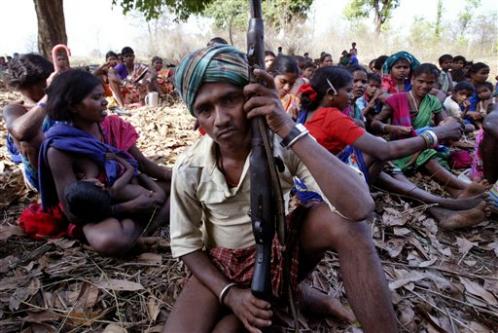
>> Adivasis and Naxalites
>>
>> *JB*: There are different strands here. One is Roy’s tendency to see
>> Maoism as the passive reflection of a tribal separatism that is rooted in
>> decades if not centuries of oppression of the *adivasis*. The trouble with
>> this is that it makes the Maoists purely epiphenomenal. It is a reading
>> that
>> has little to do with politics in any sense. More to the point, Maoism
>> simply *is not* a continuation or extension of tribal separatism. It is a
>> political tendency committed to the armed overthrow of a state that is
>> both
>> independent (not “semi-colonial”) and democratic in more than a formal
>> sense. Millions of ordinary people in the country have immense faith in
>> democracy, despite the devastation that capitalism has inflicted on their
>> lives—and when I say capitalism here I *include* the state as an integral
>> part of it. The other strand relates to the way the Left has reacted to
>> “globalization” and the isolationist stances that have flowed from that.
>> This is not peculiar to the M-L groups—it is the soft nationalism of the
>> whole Left and stems from the inability to imagine a politics that is both
>> anti-capitalist and internationalist in more than purely rhetorical ways.
>> The rhetoric of anti-globalization, which opposes the reintegration of
>> India
>> back into the world economy, forms the lowest common denominator of the
>> entire Left in this country. The Indian Left today cannot conceive
>> revolutionary politics apart from national isolationism. Everything is
>> reduced to defending national sovereignty against the forces of
>> international capitalism. But modern capitalism is not an aggregation of
>> national economies, however much the working class is divided by country
>> and
>> in numerous other ways. It is hard to see how the movement in any one
>> country, even one as big as India, can overthrow capitalism as long as it
>> survives in the rest of the world. Paradoxically, it is the smallest
>> countries, like Cuba and probably Nepal after the Communist Party of Nepal
>> (Maoist) takeover, that survive best in these conditions!
>>
>> *SS*: In its 1970 program, the CPI (M-L) claimed that “India is a
>> semi-colonial and semi-feudal country…. the Indian state is the state of
>> the
>> big landlords and comprador-bureaucrat capitalists…. and its government is
>> a
>> lackey of US imperialism and Soviet social-imperialism.” What are the
>> limitations of such a vision of anti-imperialism and of what might be
>> referred to as the “semi-feudal” thesis of capitalist development in
>> India?
>>
>> *JB*: The Naxalites haven’t substantially modified their positions except
>> to the extent that they realize that the forces they are up against today
>> have more to do with capitalism than feudalism. So, if you read any of the
>> interviews that they give to various publications like *Economic and
>> Political Weekly** * <http://epw.in/epw/user/userindex.jsp>, there are
>> more references to capitalism than there used to be back in the 1970s.
>> Back
>> then it mattered much more whether you defined the social formation as
>> mainly “capitalist” or mainly “feudal.” Today it doesn’t seem to matter as
>> much, since it is obvious to everyone that India is capitalist. Perhaps
>> this
>> wasn’t so obvious forty years ago.
>>
>> Most Naxalite groups still accept the four-class bloc, and the “national
>> bourgeoisie” is part of that alliance. This position derives from the
>> “semi-colonialism” line, and its only practical function today is that it
>> can help the Naxalites justify a whole nexus of relationships necessary
>> for
>> the party to fund itself, largely by means of the tax imposed on traders
>> and
>> contractors. For example, in Jharkhand it is said that the Naxalites
>> demand
>> (and are paid) 5 percent of all large, government-funded projects in the
>> rural areas. If “national bourgeoisie” is supposed to refer to the smaller
>> layers of capital, those are of course among the worst exploiters of
>> labor,
>> as the appalling conditions in small-scale industry and so much of the
>> caste
>> violence in the countryside show. As for “semi-feudalism,” the irony is
>> that
>> the Naxalites’ survival in the late 1970s and 1980s depended precisely on
>> creating a base of sorts among the *dalits* and *adivasis*, the vast
>> majority of whom have always been wage laborers. Indeed, the bulk of the
>> population in India comprises the wage laboring and salaried classes, and
>> a
>> political culture that does not start from there—that does not start from
>> the right to livelihood, the right to organize, and the aspiration to
>> control resources and production collectively—is not going to make the
>> least
>> bit of difference. To keep referring to the land-poor and landless as a
>> “peasantry” shows how much one’s political thinking is defined by dogma as
>> opposed to reason.
>>
>> *SL*: Earlier you spoke of how the Naxals, like the Sendero Luminoso,
>> created a kind of ghetto around themselves. Is this the endgame of the
>> politics launched in the 1960s and 1970s, which itself represented an
>> inadequate response to what had become an increasingly bureaucratic and
>> opportunistic Stalinism in India? How can the left politics that now
>> trails
>> this long legacy of failures reconstitute itself? But what about the
>> larger
>> question of intersecting the Naxalites, since many of these groups have
>> been
>> attracting some of the brightest young minds in India and, in this respect
>> as in others, they represent a major impediment to the reemergence of the
>> Indian Left? How do we break the appeal of political nihilism?
>>
>> *JB*: As I said, the vast mass of India’s population are wage laborers.
>> They work in very different sorts of conditions from each other. So it’s
>> not
>> as though we are dealing with a homogenous or unified class. One way
>> forward
>> as far as I can see is through the unions. Unions have been a stable
>> feature
>> of Indian capitalism and always survived despite repeated attacks. As a
>> small but significant example of the kind of left politics we should be
>> concentrating on, the New Trade Union Initiative
>> (NTUI)<http://ntui.org.in/>,
>> which was formed around 2005, is an attempt to organize a national
>> federation of all independent unions in the country, regardless of which
>> sector they belong to. This started as an initiative of the unions
>> themselves and it has seen slow but steady expansion all over the country
>> and includes, for example, the National Federation of Forest Workers and
>> Forest Peoples. There is also a great deal of rethinking on the Left, both
>> against the background of the public relations disasters of the CPI
>> (Marxist) in Singur and Nandigram and of course the violent internecine
>> conflicts within the party left. There is a whole layer of the Left in
>> India
>> that can be called “non-party,” which is for that reason both more
>> dispersed
>> and less visible perhaps. It includes numerous organizations active in
>> areas
>> like caste discrimination and atrocities, communal violence, civil
>> liberties, women’s liberation, child labor, homophobia, tribal rights
>> (e.g.,
>> the Campaign for Survival and
>> Dignity<http://www.forestrightsact.com/index.php?option=com_content&view=article&id=73&Itemid=400055>),
>> the Right to Food Campaign <http://www.righttofoodindia.org/>, campaigns
>> against nuclear weapons and nuclear power, and many others. Dozens of
>> Right
>> to Information activists have been murdered, and there are numerous
>> movements against displacement throughout the country. All of this
>> reflects
>> a different political culture from that of the left parties, more
>> specialized and professional, also more autonomous, and the true agents of
>> the churning of democracy that India is currently witnessing.
>>
>> *SL*: How do you imagine the potential political expression of that? Does
>> this take a party political form? How does it intersect parliamentary
>> politics?
>>
>> *JB*: If India *could* establish a workers’ party on the Latin American
>> model, then much of this non-party left would gravitate to that as its
>> national political expression. But the culture of such a workers’ party
>> would have to be radically different from the sterile orthodoxies of the
>> old
>> left parties. It would have to be a massive catalyst of democratization
>> both
>> within the Left itself and in society at large, encouraging cultures of
>> debate, dissent, and self-activity, and contesting capitalism in ways that
>> make the struggle accessible to the vast mass of the population. The fact
>> is
>> that the bulk of the labor force still remains unorganized into unions and
>> a
>> workers’ party could only emerge in some organic relation to the
>> organization of those workers.
>>
>> *SL*: What you are arguing then is that the Naxalites constitute a major
>> impediment to the reinvention of the Left?
>>
>> *JB*: Absolutely! That would be an understatement. The militarized Maoism
>> of the last two decades is a politics rooted in violence and fear. Those
>> in
>> positions of leadership refuse to do any “hard thinking” in Mao’s sense.
>> You
>> cannot build a radical democracy, a new culture of the Left, on such
>> foundations. The recent beheading of a CPI (Marxist) trade-union leader
>> who
>> refused to heed the *bandh* (strike) call of the CPI (Maoist) is a
>> spectacular example of how profoundly authoritarian the Naxal movement has
>> become under the pressure of its overwhelming militarism. When actions
>> like
>> that damage their credibility, they are explained away as “mistakes.” But
>> these continual “mistakes” fall into a disturbing pattern. As a friend of
>> mine wrote in *Economic & Political Weekly*, “the CPI (Maoist) is as
>> little concerned about the lives of non-combatants as is the
>> state.”8<http://platypus1917.org/2010/08/06/the-maoist-insurgency-in-india-end-of-the-road-for-indian-stalinism/#sdendnote8sym>
>>  | *P*
>>
>> 1<http://platypus1917.org/2010/08/06/the-maoist-insurgency-in-india-end-of-the-road-for-indian-stalinism/#sdendnote1anc>.
>> Arundhati Roy, “Walking With The Comrades,” *Outlook*, March 29, 2010, <
>> www.outlookindia.com/article.aspx?264738>.
>>
>> 2<http://platypus1917.org/2010/08/06/the-maoist-insurgency-in-india-end-of-the-road-for-indian-stalinism/#sdendnote2anc>.
>> Regis Debray, *Critique of Arms: Revolution on Trial, *Two Volumes, trans.
>> Rosemary Sheed (New York: Penguin Books, 1977-78).
>>
>> 3<http://platypus1917.org/2010/08/06/the-maoist-insurgency-in-india-end-of-the-road-for-indian-stalinism/#sdendnote3anc>.
>> Edward Duyker, *Tribal Guerrillas: The Santals of West Bengal and the
>> Naxalite Movement* (Oxford: Oxford University Press, 1987).
>>
>> 4<http://platypus1917.org/2010/08/06/the-maoist-insurgency-in-india-end-of-the-road-for-indian-stalinism/#sdendnote4anc>.
>> Manoranjan Mohanty, *Revolutionary Violence: A Study of the Maoist
>> Movement in India* (New Delhi: Sterling Publishers, 1977).
>>
>> 5<http://platypus1917.org/2010/08/06/the-maoist-insurgency-in-india-end-of-the-road-for-indian-stalinism/#sdendnote5anc>.
>> Debray, *Critique of Arms*.
>>
>> 6<http://platypus1917.org/2010/08/06/the-maoist-insurgency-in-india-end-of-the-road-for-indian-stalinism/#sdendnote6anc>.
>> K. Balagopal, “Public Intellectuals in the Chair 7: ‘All the News we get
>> is
>> Killing and Getting Killed,’” interview by Vijay Simtha, *Tehelka*,
>> January 21, 2006, <
>> www.tehelka.com/story_main16.asp?filename=hub012106inthechair_7.asp>.
>>
>> 7<http://platypus1917.org/2010/08/06/the-maoist-insurgency-in-india-end-of-the-road-for-indian-stalinism/#sdendnote7anc>.
>> Nelson Manrique, “The War for the Central Sierra,” in *Shining and Other
>> Paths: War and Society in Peru, 1980–1995*, ed. Steve J. Stern (Durham,
>> NC: Duke University Press, 1998), 193–223.
>>
>> 8<http://platypus1917.org/2010/08/06/the-maoist-insurgency-in-india-end-of-the-road-for-indian-stalinism/#sdendnote8anc>.
>> Nivedita Menon, “Radical Resistance and Political Violence Today,”
>> *Economic
>> & Political Weekly* 44, no. 50 (December 12, 2009), 16-20.
>>
>> --
>> Peace Is Doable
>>
>>
>
>
>
> --
> meher engineer
>


--
Peace Is Doable

--
You received this message because you are subscribed to the Google Groups
"Green Youth Movement" group.
To post to this group, send an email to [email protected].
To unsubscribe from this group, send email to
[email protected].
For more options, visit this group at
http://groups.google.com/group/greenyouth?hl=en-GB.