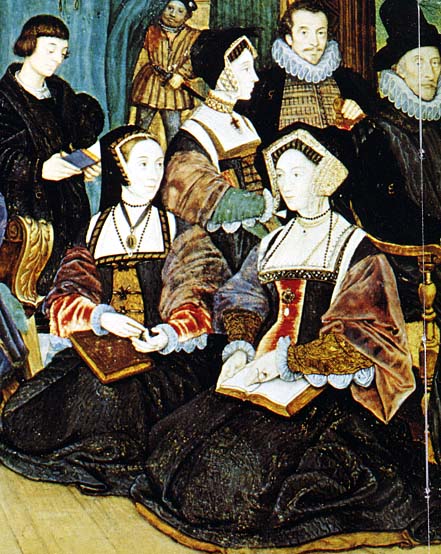
This isn't my period per se, but something jumped out
at me in this group of sources you have listed. I
don't know if you listed them together for the same
reason they caught my attention, however I thought I
would make the observation.
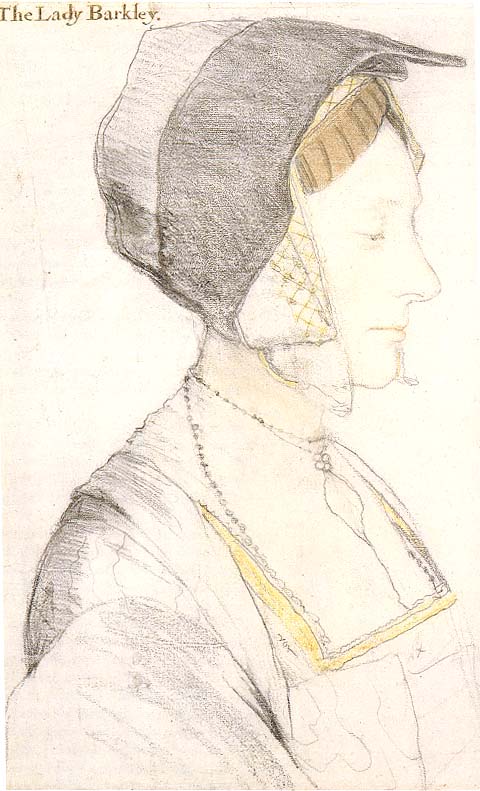
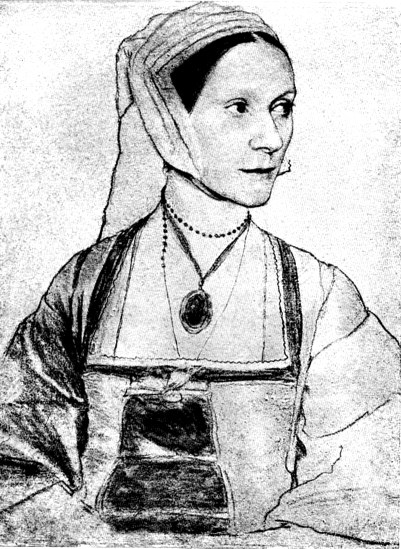
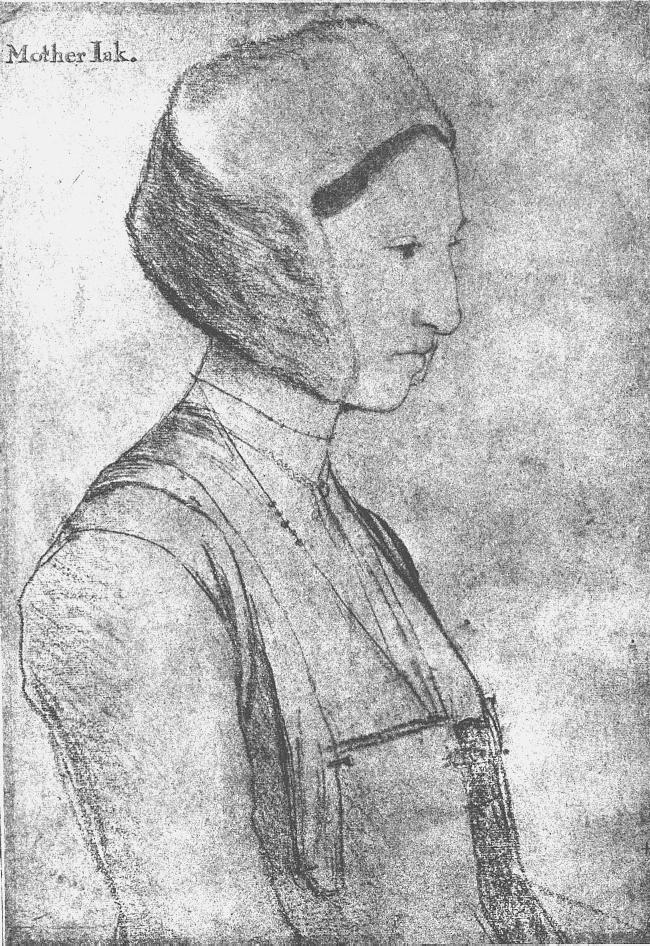
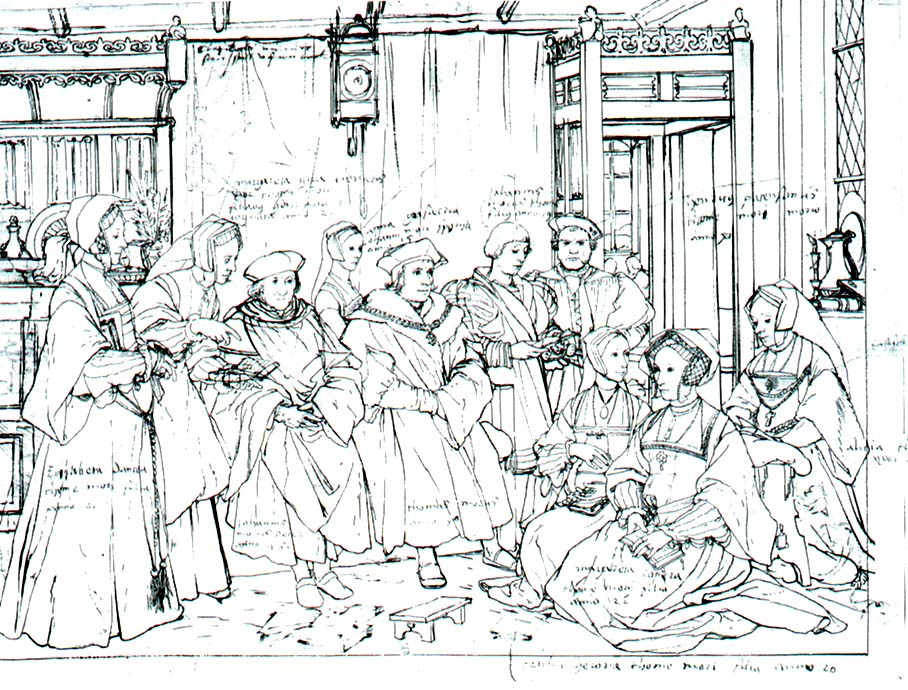
Most of these women are quite pregnant. That I suspect
explains the closure oddities.
Forgive me for jumping in part way into this thread, I
haven't been following it. I have Alcega, which "Fat
woman" pattern do you want - there are several.
Frankly, they look no different than the not-fat woman
patterns. I think its accounting for greater fabric
usage, nothing more. The major difference between a
large woman and a regular woman, for the most part
anyway, is the depth of the armscye. I think most plus
women have regular frames which makes their shoulders
narrow, but the larger girth (as much as I hate that
word in this context) makes it harder to get those
curves to meet up.
Often I will buy a shirt pattern that fits my
shoulders and add in the extra from bust to hip so
that the critical fitting is already done.
I could be completely off base from the intended topic, so I digress. Interestingly though, because they are pregnant, the lacing is quite wide and appears to be that ladder lacing well known amongst the later era Venetians. One has to wonder if this is the genesis for that style? Having a slightly opened bodice showing the lacing and chemise, suggesting fertility? That style of bodice closure appears in Venice not long after their first round with the plague, they employed any number of visual illusions to imply ample fecundity right about that time. Kathy That's why I was really interested to > see the Alcega layout > for a "fat woman". > > Here's what I've found so far for depictions of > fastening: > > Front of overgown tied shut, no depiction of > undergown fastening, but is > not front-fastened > Elizabeth Dauncey, 1526-8, > http://www.uvm.edu/~hag/sca/tudor/dauncey.jpg > Cecilia Heron, 1527, > http://www.uvm.edu/~hag/sca/tudor/cecilia.jpg > Margaret Grigg, 1527, > http://www.uvm.edu/~hag/sca/tudor/holb5.jpg > More Family, 1527, > http://www.uvm.edu/~hag/sca/tudor/morefamily.jpg > More Family, 1593 copy, > http://www.uvm.edu/~hag/sca/tudor/moregirls.jpg Its never too late to be who you might have been. -George Eliot For every beauty there is an eye somewhere to see it. For every truth there is an ear somewhere to hear it. For every love there is a heart somewhere to receive it. -Ivan Panin __________________________________________________________ Find your next car at http://autos.yahoo.ca _______________________________________________ h-costume mailing list [email protected] http://mail.indra.com/mailman/listinfo/h-costume