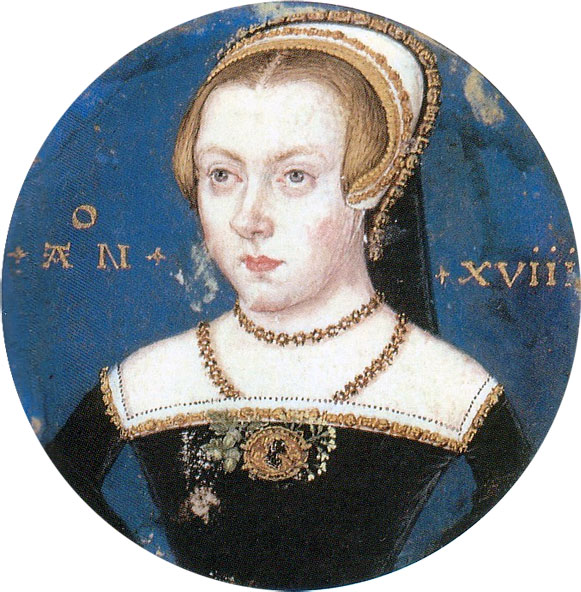
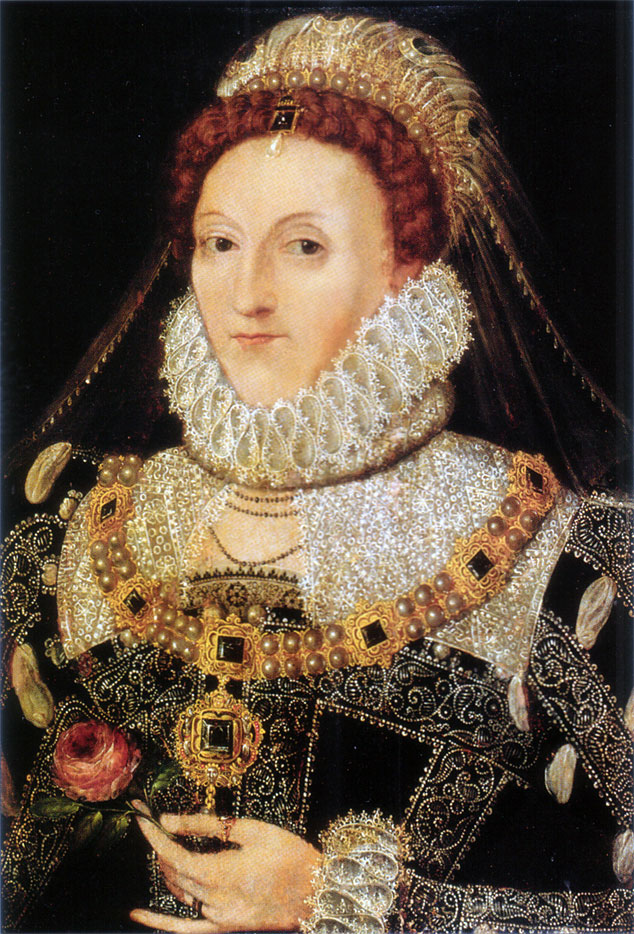
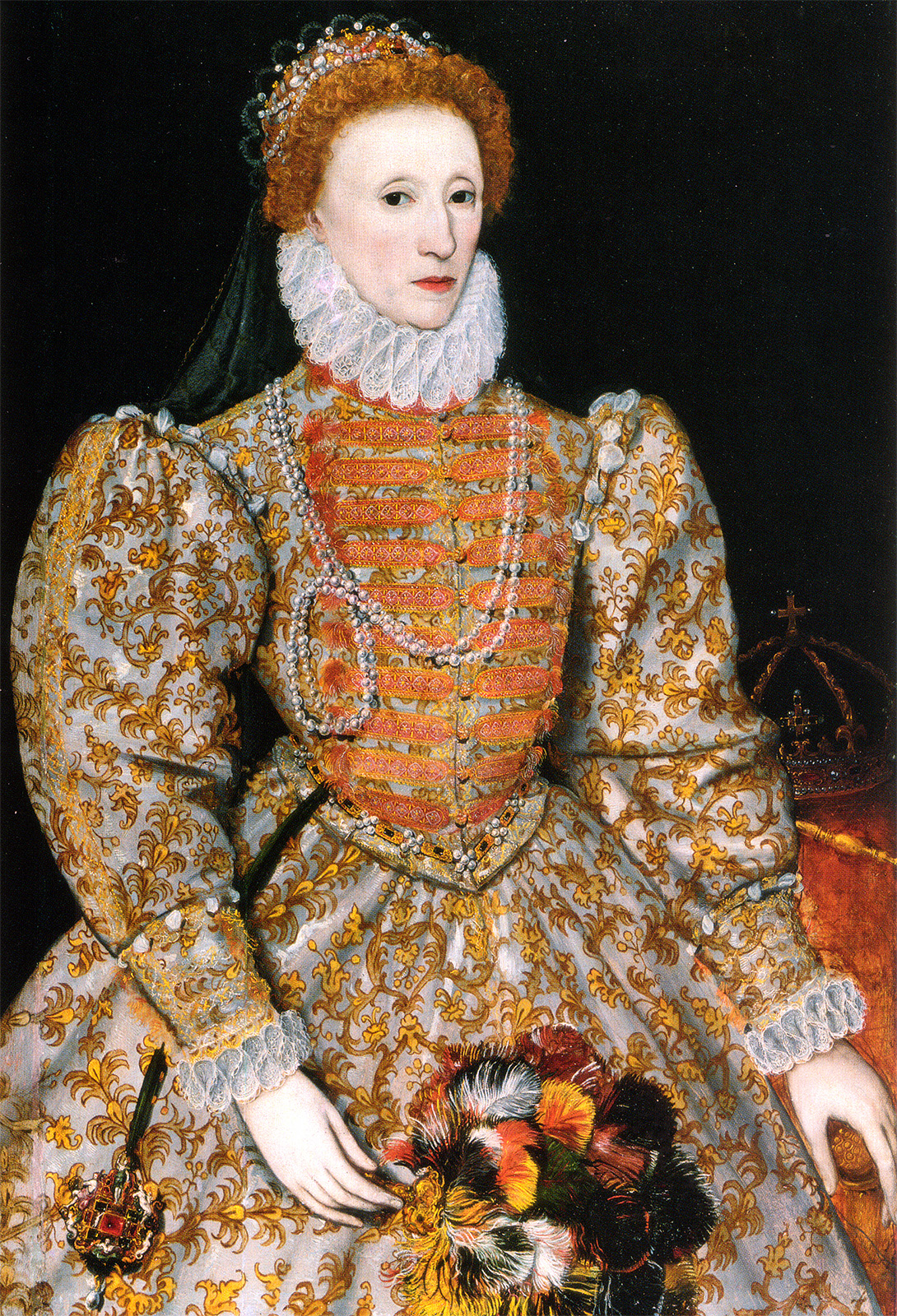
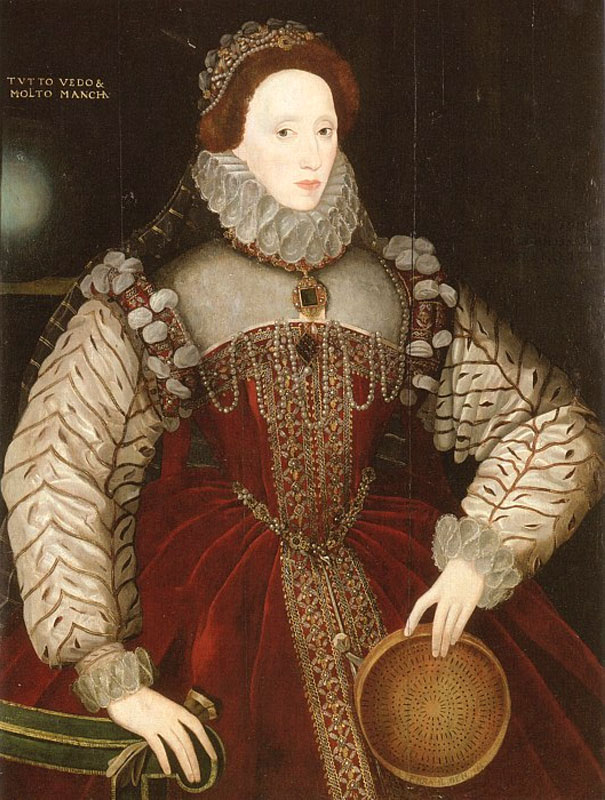
On Jun 27, 2009, at 1:36 AM, Sharon Collier wrote:
People have told me these are a type of French hood, but the effigy
photos
I've looked at all cover the ears, which these don't seem to do.
None of these are French hoods. They're not the right shape, and
French hoods have a narrow black velvet fall either hanging down the
back
http://www.shafe.co.uk/crystal/images/lshafe/Clouet-
Francois_Catherine_de_Medici_c1555.jpg
http://www.elizabethan-portraits.com/UnknownLady7.jpg
http://www.elizabethan-portraits.com/UnknownLady29.jpg
http://www.historicalportraits.com/Artworkimages/English%20School%
20Catherine%20Parr%20l.jpg
http://www.luminarium.org/renlit/elizteerlinc1.jpg
http://www.elizabethan-portraits.com/JeanGordon.jpg
http://www.elizabethan-portraits.com/UnknownLady33.jpg

or flipped up over the top
http://www.historicalportraits.com/Artworkimages/English%20School%
20Catherine%20Parr%20l.jpg
http://www.elizabethan-portraits.com/UnknownLady2.jpg
http://www.elizabethan-portraits.com/UnknownLady48.jpg
Of the portraits otsisto sent, these have large sheer veils pinned
onto the caul or cap, but that's a different matter entirely.
http://www.luminarium.org/renlit/elizanglesey.jpg
http://www.luminarium.org/renlit/eliza3b.jpg
http://www.luminarium.org/renlit/elizaredsieve.jpg
So, how are these constructed? Are they a roll, a brim set far back
on the head.
Since none survive, we can only speculate. Based on other types of
headwear that were worn at this time, it's likely that they are
closed in back/on top rather than open. The two best models in my
opinion are the caul and the cap.
Consider
http://www.elizabethan-portraits.com/TBElizabeth1a.jpg
http://www.elizabethan-portraits.com/Wentworth.jpg
in which there's a hat on top of a caul (caul used here to mean a
fairly unstructured bag on the back of the head--it should be noted
that sometimes the cap I'll describe next is also called a caul by
modern researchers). The caul, worn by itself, is one possibility.
To get the standing shape seen in the portraits you're trying to
emulate, it would either need to be padded or the hair would need to
be dressed to support it in that shape. If a caul were worn over
coiled braids as shown in this image, it would take the standing shape.
http://farm4.static.flickr.com/3289/2492974905_5baa3f7fe2_o.jpg
Another possibility is what I'll call a cap to avoid confusion.
Instead of being a bag like a caul, it's a band with a circular crown
sewn in. For a nice side view of two caps, see Queen Elizabeth's
Wardrobe Unlock'd, fig. 98. This is an image from the tomb of
Richard Alington in Rolls Chapel (can't find it online). The figure
on the left has a French hood with the fall flipped up, and the two
others have caps. For a lower-class version of the same construction,
see the central figure here:
http://www.residenzgalerie.at/uploads/tx_csimageexplorer/
L_Schoenb_Beuckelaer_A5.jpg
and the only figure here:
http://www.univie.ac.at/romania/Sprwst4/uebungen/tdh/tdh1/5lescourses/
beuckelaer.jpg
The modern pillbox is a similar construction to this cap, but with
the band enlarged and the crown shrunk and lots of stiffening added in.
For a teeny tiny image of a caul or cap worn by itself and seen from
the back, see the lady in the red dress center front:
http://www.elizabethan-portraits.com/Elizabeth42.jpg

When I reproduce this style, I use the cap construction:
http://www.faucet.net/costume/period/brown1.jpg
It seems to work both with and without stiffening.

Melanie Schuessler
_______________________________________________
h-costume mailing list
[email protected]
http://mail.indra.com/mailman/listinfo/h-costume