At last, some common sense - for half the equation,
that is. The other part being the rising of the Arab
masses and their own sense of ownership and democracy.
More, much more, as the epic movement of this age spreads
and develops. -Ed
From: Portside Moderator [mailto:[email protected]]

http://www.examiner.com/bronx-county-independent-in-new-york/in-libya-the-em
pire-awakens

In Libya, the Empire Awakens

" In North Africa, and elsewhere in the region, the US is
preparing for the great adaptation to Arab democracy."

by Billy Wharton

Throughout history, running an empire has always been
about more than just sheer economic dominance or the
exercise of overwhelming military force.  Even a modern
empire without colonies, like the one operated by the
US, requires more finesse than brawn.   It is the
skillful adaptations to changing conditions that make
empires last.  Or as the old saying goes, "don't swim
against the tide."  Finally, after months of
desperately attempting to appear on the right side of
history with words alone, the US may have some swimmers
in the water.  The military intervention in Libya is a
signal that the empire has awoken from its seeming
slumber.  The formula for arousal includes a
dictatorial gadfly, a perhaps ill-timed insurrection
and a generous supply of oil.

In North Africa, and elsewhere in the region, the US is
preparing for the great adaptation to Arab democracy.
No longer able to rely on a network of authoritarian
rulers in the region, the diplomatic machine that is
the US State Department is now focused on relating to
the new pro-democracy forces.  In truth, the US was
never solely tied to the Hosni Mubarak's of the world.
They enjoyed equally cozy relations with the military
establishment in each country.  And this establishment,
unlike their political counterparts, has certainly not
been overthrown.  The military in North Africa and the
Middle East is every bit the military and economic
actor it was before the pro-democracy protests.

We can see this in Libya where the Faustian bargain the
opposition cut with the US, has been extended to
relations with the Egyptian military.  Egyptian
weapons, certainly with the permission of the US, are
flowing across Tunisia into Eastern Libya.

Military-to-military links throughout the region
represent an important resource for the US adaptation
to this monumental process of change.  Thus far, the
military in several countries has managed to place real
limits on the extent of the transformation by keeping
it contained to questions of political representation
and the form of government.

The Libyan process has granted the US even greater
access, as Eastern rebels have now endorsed a largely
US-led bombing campaign aimed at weakening Libyan
forces loyal to General Muammar Gaddafi.  In doing so,
the Eastern rebels might be about to learn the hard
lesson that the revolution cannot be outsourced.  US
intervention comes with a price - and this bill will be
paid politically, economically and militarily.  There
was no way to cleave the military away from the regime
in Tripoli, so intervention from outside was sure to be
the primary strategy once the insurrection in the East
was underway.

Clearly the US is interested in enhancing its strategic
position in the region while also giving some substance
to its pro-democracy claims.  Other European nations
have also, somewhat more reluctantly, tailed along
mimicking the same platitudes as they go.  Yet, it is
the oil that has really accelerated US foreign policy,
moving it from general claims of democracy and freedom
to a costly military intervention.  The mere thought of
a militarily victorious Gaddafi regime peddling large
amounts of oil to US economic opponents pushed Obama to
don yet another war cap.  While the Arab streets may
have shifted the political debate in the region,
pushing the US in a particular direction rhetorically,
it is still their oil that attracts the unwelcome
attention of Empire.

The Eastern rebels in Libya may yet win the day.  A
perhaps premature and certainly ill-equipped
insurrection may be saved from annihilation.  The
awesome might of the US military can ensure things like
this.  However, if 20th century political
transformations serve as any kind of guide, how you win
may be just as important as if you win.  The closer
this movement in Eastern Libya slinks toward the US,
the less independence they will have once the political
transition begins.  And, later, when the oil begins to
flow again, a heavy bill will come due.  Will the
rebels be ready to pay it?  And at what cost to their
political dreams of democracy?

*** Billy Wharton is a writer, activist and the editor
of the Socialist WebZine. His articles have appeared in
the Washington Post, the NYC Indypendent, Spectrezine
and the Monthly Review Zine. He can be reached at
[email protected].

___________________________________________

Portside aims to provide material of interest to people
on the left that will help them to interpret the world
and to change it.

Submit via email: [email protected]
Sub/Unsub: http://portside.org/subscribe-and-unsubscribe
Search Portside archives: http://portside.org/archive
Contribute to Portside: https://portside.org/donate

***

From: Bill Totten
Sent: Wednesday, March 23, 2011 2:23 AM

Japan's wind farms save its ass while nuclear plants founder 50

by Christopher Mims
Grist (March 18 2011)

If Japan's wind turbines were to get a new theme song, it would be
Wagner's "Ride of the Valkyries", and it would ring out from the hills
upon which they stand triumphantly, unscathed by the the country's
earthquake/tsunami double whammy, lifting their skinny, still-turning
blades like antennas to heaven.

While Japan's water-dependent nuclear power plants suck and wheeze and
spew radioactive steam, "there has been no wind facility damage
reported by any [Japan Wind Energy Association] members, from either
the earthquake or the tsunami", says association head Yoshinori Ueda.

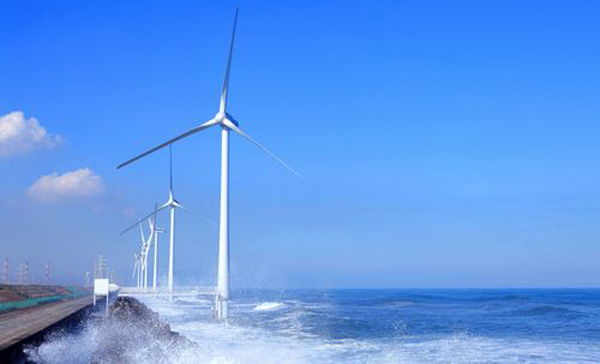
Even the country's totally badass Kamisu offshore wind farm, with its
giant two megawatt turbines with blades big as the wings on a jumbo
jet, and only 186 miles from the epicenter of the largest quake ever
recorded in Japan, survived without a hiccup thanks to its "battle
proof design". As a result, the nation's electric companies have asked
all of its wind farms to increase power production to maximum, in order
to make up for the shortfalls brought about by the failure of certain
other aging, non-resilient 20th-century technologies.

Unlike conventional power plants, wind turbines don't have to be
situated close to sources of water (always a liability), and their
simplicity means fewer potential points of failure.

Bonus: when they break down, no one has to give their life to keep them
from turning one of the world's most densely populated countries into a
radioactive hellscape!

Read more:

"Battle-proof Wind Farms Survive Japan's Trial by Fire," The Huffington
Post
http://www.huffingtonpost.com/kelly-rigg/battleproof-wind-farms-su_b_837172.
html

http://www.grist.org/article/2011-03-18-japans-wind-farms-save-its-ass-while
-nuclear-plants-flounder

_________________________

Battle-proof Wind Farms Survive Japan's Trial by Fire

by Kelly Rigg
huffingtonpost.com (March 17 2011)

As the world collectively holds its breath to see how the Fukushima
crisis plays out (the quote of the day {1} has got to be: "The
worst-case scenario doesn't bear mentioning and the best-case scenario
keeps getting worse ...") there's a positive story which is not yet
being reported.

Despite assertions by its detractors {2} that wind energy would not
survive an earthquake or tsunami the Japanese wind industry is still
functioning and helping to keep the lights on during the Fuksuhima
crisis.

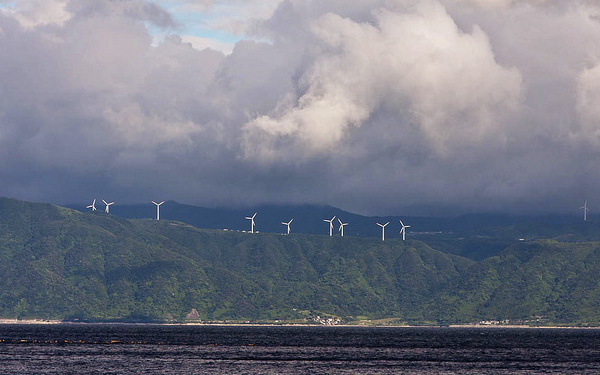
http://images.huffingtonpost.com/2011-03-17-japanwindfarm.jpg

Colleagues and I have been directly corresponding with Yoshinori Ueda
leader of the International Committee of the Japan Wind Power
Association & Japan Wind Energy Association, and according to Ueda
there has been no wind facility damage reported by any association
members, from either the earthquake or the tsunami. Even the Kamisu
semi-offshore wind farm, located about 300 kilometers from the
epicenter of the quake, survived. Its anti-earthquake "battle proof
design" came through with flying colors.

Mr Ueda confirms that most Japanese wind turbines are fully
operational. Indeed, he says that electric companies have asked wind
farm owners to step up operations as much as possible in order to make
up for shortages in the eastern part of the country:

Eurus Energy Japan says that 174.9 megawatts with eight wind farms (64%
of their total capacity with eleven wind farms in eastern part of
Japan) are in operation now. The residual three wind farms (Kamaishi
42.9 megawatts, Takinekoshirai 46 megawatts, Satomi 10.02 megawatts)
are stopped due to the grid failure caused by the earthquake and
Tsunami. Satomi is to re-start operations in a few days. Kamaishi is
notorious for tsunami disaster, but this wind farm is safe because it
is locate in the mountains about 900 meters high from sea level.

The largest wind farm operator in Japan, Eurus Energy with about 22% of
all wind turbines in Japan, is a subsidiary of Tokyo Electric Company
(TEPCO) which operates the Fukushima nuclear facility. Right now, it is
likely the company is very happy about its diversified portfolio:

While shares in the Tokyo stock market have fallen during the crisis,
the stock price of Japan Wind Development Company Ltd has risen from
31,500 yen on 11 March to 47,800 yen on 16 March.

http://images.huffingtonpost.com/2011-03-17-Kamisuwindfarm.jpg

The Little Engine That Could {3} has proven itself once again. What are
your thoughts on the Fukushima crisis and do you think it will impact
future energy policy around the world? Links:

{1}
http://producermatthew.com/post/3916572241/the-worst-case-scenario-doesnt-be
ar-mentioning

{2}
http://misunderstoodfinance.blogspot.com/2011/03/us-will-draw-wrong-conclusi
ons-about.html

{3}
http://www.huffingtonpost.com/kelly-rigg/renewable-energy-the-titt_b_826286.
html

_____

Kelly
Rigg is the Executive Director of the GCCA, a global alliance of 250
organizations cooperating under the banner of the  tcktcktck campaign.
She has been leading international campaigns for  nearly thirty years
on climate, energy, oceans, Antarctica and other issues.  She was a
senior campaign director for Greenpeace International during twenty
years with the organization. After leaving Greenpeace she went on to
found the Varda Group consultancy providing campaign and strategic
advice to a wide range of NGOs, and led the Deep Sea Conservation
Coalition's campaign to protect the high seas from destructive bottom
fishing.


http://www.huffingtonpost.com/kelly-rigg/battleproof-wind-farms-su_b_837172.
html


TO POST A COMMENT, OR TO READ COMMENTS POSTED BY OTHERS, please click
the appropriate link at the top or bottom of
http://billtotten.wordpress.com/2011/03/23/winds-up-nukes-down/
_______________________________________________
Rad-Green mailing list
[email protected]
To change your options or unsubscribe go to:
http://greenhouse.economics.utah.edu/mailman/listinfo/rad-green


-----
No virus found in this message.
Checked by AVG - www.avg.com
Version: 10.0.1204 / Virus Database: 1498/3527 - Release Date: 03/24/11


------------------------------------

---------------------------------------------------------------------------
LAAMN: Los Angeles Alternative Media Network
---------------------------------------------------------------------------
Unsubscribe: <mailto:[email protected]>
---------------------------------------------------------------------------
Subscribe: <mailto:[email protected]>
---------------------------------------------------------------------------
Digest: <mailto:[email protected]>
---------------------------------------------------------------------------
Help: <mailto:[email protected]?subject=laamn>
---------------------------------------------------------------------------
Post: <mailto:[email protected]>
---------------------------------------------------------------------------
Archive1: <http://www.egroups.com/messages/laamn>
---------------------------------------------------------------------------
Archive2: <http://www.mail-archive.com/[email protected]>
---------------------------------------------------------------------------
Yahoo! Groups Links

<*> To visit your group on the web, go to:
    http://groups.yahoo.com/group/laamn/

<*> Your email settings:
    Individual Email | Traditional

<*> To change settings online go to:
    http://groups.yahoo.com/group/laamn/join
    (Yahoo! ID required)

<*> To change settings via email:
    [email protected]
    [email protected]

<*> To unsubscribe from this group, send an email to:
    [email protected]

<*> Your use of Yahoo! Groups is subject to:
    http://docs.yahoo.com/info/terms/