*[Note: We have used the term Falkland Islands in this article as that is
how they are known in the English speaking world. In the Spanish speaking
world they are known as the Malvinas].*
*http://www.marxist.com/camerons-falkland-provocation.htm*
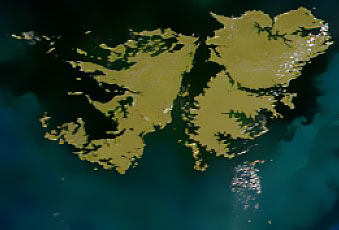
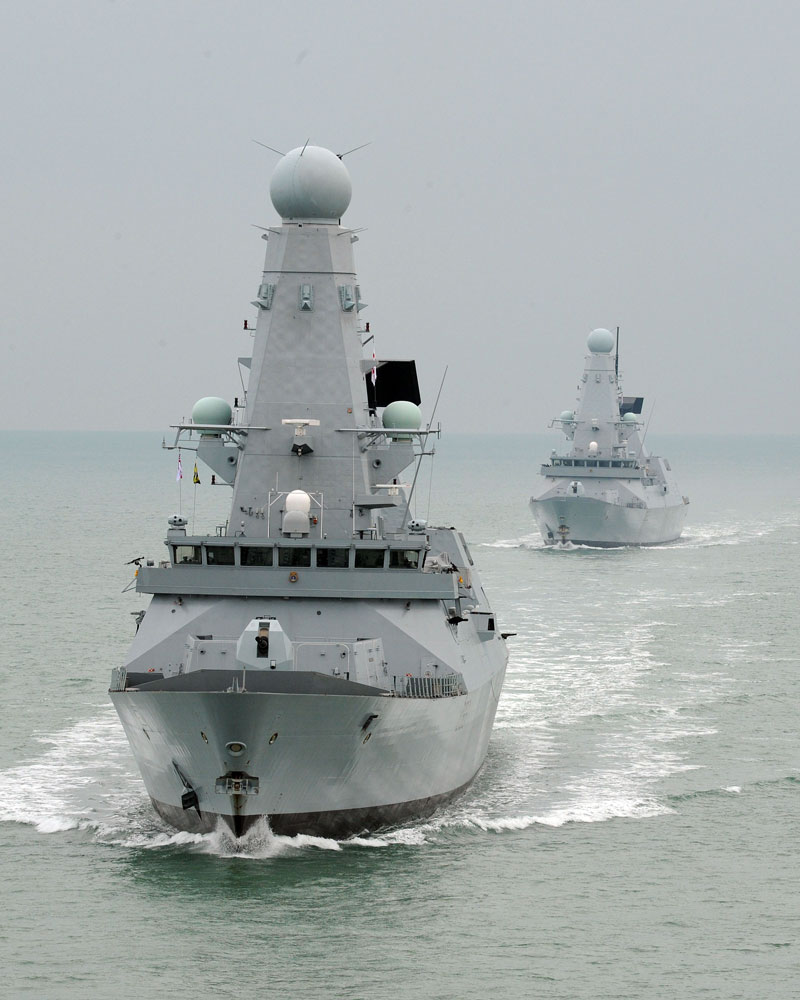
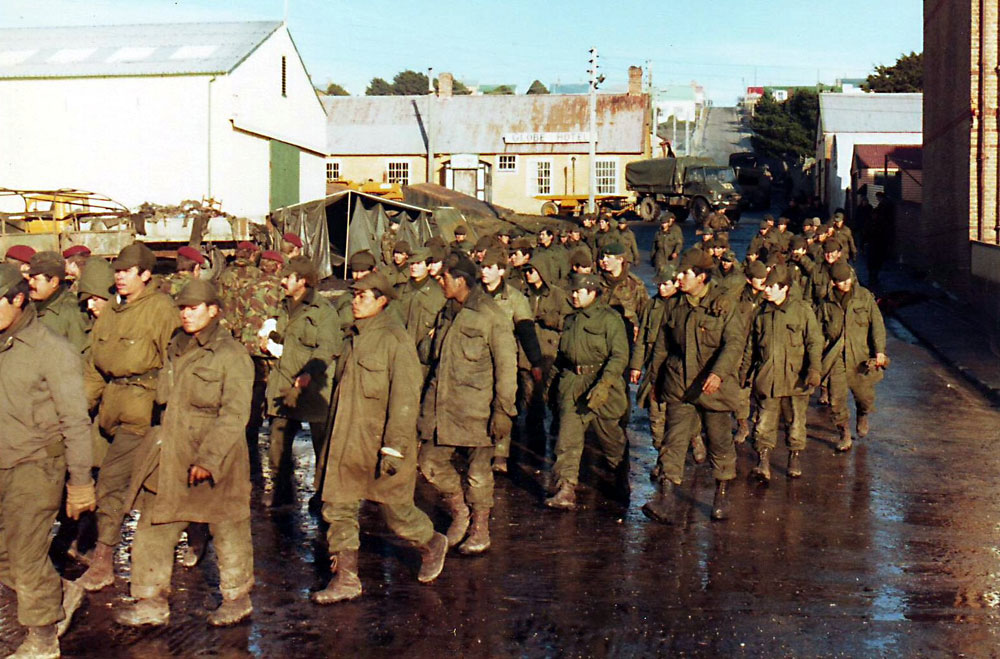
Camerons Falkland provocation<http://www.marxist.com/camerons-falkland-provocation.htm> Written by Alan Woods Wednesday, 29 February 2012 [image: Print]<http://www.marxist.com/camerons-falkland-provocation/print.htm#> *The decision of the Cameron government to deploy HMS Dauntless off the coast of the Falklands Islands in the South Atlantic represents a gratuitous provocation to the people of Argentina.* [image: The disputed Falkland Islands, off the coast of Argentina]<http://www.marxist.com/images/stories/britain/Falkland_Islands.jpg>The disputed Falkland Islands, off the coast of ArgentinaThe Ministry of Defence said it was a routine deployment. A MoD spokesman told the BBC that the deployment had nothing to do with increased tensions between the UK and Argentina about who owns the Falklands Islands. A Royal Navy spokesman said: The Royal Navy has had a continuous presence in the South Atlantic for many years. The deployment of HMS Dauntless to the South Atlantic has been long planned, is entirely routine and replaces another ship on patrol. But there is nothing routine about it. Nobody who is remotely aware of the situation in this area will believe this. Cameron and his crew know full well that this action amounts to poking a finger in the eye of Argentina. Argentine Foreign Minister Hector Timerman has pointed out that in deploying a type 45 destroyer, Britain has quadrupled its naval power in the South Atlantic, that no South American country possesses such a plane as the Typhoon 2, which was used for its wars in Afghanistan, Iraq and Libya. The Typhoon can fly over up to half of Argentine territory and shoot missiles Taurus over 500 kilometres. This gives Britain an offensive capability that also extends to all of Uruguay, Chile and much of southern Brazil. It is the deadliest weapon in the South Atlantic. Type 45 destroyers have nearly twice the range about 7,000 miles and are 45% more fuel efficient than the Type 42 destroyers they are replacing in the £6bn project. This will be the first of the navy's new Type 45 air defence destroyers to go to the area. So this is indeed a serious escalation and a stepping up of the process of militarization of the South Atlantic. Buenos Aires also claims that the UK has introduced nuclear weapons into the archipelago. Whether this is true or not, coming hard on the heels of British military intervention in Libya, these actions were bound to be seen as an aggressive act and a provocation to Argentina. To pretend otherwise is blatant diplomatic cynicism. The BBC correspondent, while attempting to provide justification for these actions, was forced to admit that they would "undoubtedly increase tensions". That is a gross understatement. To add an element of farce to the situation, we are informed that Prince William, grandson of Britain's Queen Elizabeth II and second in line to the throne, was also deployed to the islands in his role as an RAF search and rescue pilot. This is just as farcical as the earlier deployment of his brother Harry to Afghanistan, where he posed for a few camera shots and was quickly withdrawn to the safety of London and the good life, leaving the ordinary British soldiers to fight and die in an unwinnable war in Afghanistan. This kind of thing would simply be funny, if the potential consequences were not so serious. Taken together, these announcements, coinciding with the 30-year anniversary of the start of the war with Argentina over the islands, cannot be seen as anything else but a calculated insult and provocation to Argentina. Let us recall that the war in 1982 led to the deaths of 649 Argentine and 255 British servicemen. Now Cameron is pouring petrol on the flames again. Foreign policy is the continuation of domestic policy The working class must always approach foreign policy from a class point of view. We must learn to penetrate beyond the thick jungle of official lies, propaganda and diplomacy, and expose the real interests that lie behind it. [image: David Cameron. Photo: Charlie Pinder]<http://www.marxist.com/images/stories/britain/charlie_pinder_social_enterprise_coalition-david_cameron.jpg>David Cameron. Photo: Charlie PinderEvery worker knows that governments tell lies. They lie about the real state of the economy. They lie when they say that workers and bankers are all in the same boat and all must make an equal sacrifice. They lie when they say that there is no money for public services while handing out billions to the bankers in the City of London. They lie about their real intentions at home. And they lie even more about their real intentions abroad. Diplomacy is the art of telling lies skilfully in order to prove that black is white and present the blackest and most criminal acts as though they were as white as the driven snow. It is sufficient to recall the way in which they tried to prettify the rape of Iraq as a humanitarian mission and a war for democracy. In Afghanistan, ten years after the occupation, people are being killed every day, the Kabul government is corrupt, 30,000 children starve to death every year, and the end of the war is nowhere in sight. This government of Big Business can never defend any progressive cause anywhere on earth. Its only concern is to safeguard the interest of its wealthy backers. While paying lip service to democracy, it is supporting some of the most repressive and reactionary regimes on earth. It backed the dictatorships in Tunisia and Egypt before they were overthrown by the masses. It plays hypocritical lip service to democracy in Libya and Syria, while marinating a complicit silence over the bloody suppression of pro-democracy protests in Bahrain by mercenary Saudi forces. It maintains close ties with the dictatorial regimes of Arab sheikhs in the Persian Gulf. It maintains a lucrative arms trade with the vicious and corrupt regime in Saudi Arabia. Foreign policy is merely the continuation of home policy. It is impossible to carry out a reactionary, anti-working class policy at home, while upholding democracy and self-determination abroad. The Cameron government is attacking the living standards of the working class, increasing indirect taxation and cutting social spending. There is supposed to be no money, not only for schools and hospitals and pensions, but also for Britains armed forces. Many of the soldiers and airmen who were left behind by Prince Harry to fight and die in Afghanistan are now returning home to find they have been sacked because of cuts in defence spending. There is no money, they are always telling us. Yet there is plenty of money to send Prince William on a pleasant little jaunt to the South Atlantic, where he will pose for photos for the press fooling around in a helicopter in full combat gear, although there is not an enemy soldier in sight. This is a government of the bankers and capitalists and, while attacking the poor, it systematically defends the interests of the rich the bankers and capitalists at home and abroad. The British working class cannot support the foreign policy of the Tories, any more than we can support its anti-working policy at home. The reason why [image: HMS Dauntless. Photo: LA(Phot) Ian Simpson, Crown Copyright]<http://www.marxist.com/images/stories/britain/HMS_Dauntless-LA_Phot_Ian_Simpson.jpg>HMS Dauntless. Photo: LA(Phot) Ian Simpson, Royal Navy, Crown CopyrightThe obvious question is: why has Cameron decided to spend so much public money on an adventure in the South Atlantic when he is supposed to be tackling the huge deficit? The official explanation is that it is to defend the right of self-determination of the inhabitants of the Islands, who wish to remain British. That is nonsense. The very idea that Cameron and his crew would spend all that money to defend the right of less than three thousand individuals to herd sheep on a rock eight thousand miles away is laughable. Only a complete simpleton would believe it. The so-called self determination of the Falkland Islanders was never the motive force behind the policy of British imperialism. Throughout history the right of self determination has always been used by the imperialists as small change to disguise their cynical motives. The flint-faced individuals who decide British foreign policy in Whitehall are not noted for sentimentality. As for the Tories, if it was in the interests of British Big Business, they would sell their grandmother for two pence and sleep easily afterwards. The fate of a couple of thousand kelpers is a matter of complete indifference to them. Just look at the record. We leave aside the little detail of hundreds of years of colonial rule in Africa and the Indian Subcontinent. Their right to self determination was never mentioned. In more recent times, Britain never gave the Hong Kong islanders a say in whether they would be handed over to Beijing. And the same Tories who show such tender concern for the self determination of 2,500 people in the South Atlantic were adamantly opposed to allowing the Scots even to vote on whether or not to end their union with England. Why has the Cameron government taken such a step? It is partly dictated by strategic considerations by Britains world role. This has been in steep decline for over a hundred years. British imperialism was long ago displaced by the USA as the worlds policeman. Nevertheless, Britain still has a number of connections left over from the imperial past, which it wishes to retain. One important consideration is the arms business, which provides British arms manufacturers with highly lucrative deals with countries such as Saudi Arabia and Bahrain. That is why London maintains a discreet silence concerning the appalling human rights records of these states, with which Britain has defence agreements. This was one of the main reasons why Thatcher decided to send the fleet 8,000 miles to eject the Argentine army from the Falklands in 1982. They could not accept the humiliation caused by the defeat, publicly displayed in photos of British soldiers lying on the ground, which were shown all over the world. For the imperialists, prestige is a material question. The London government is trying to flex its military muscle in an attempt to prove to Britains allies and client states that we are still a serious military power, despite the deep cuts in defence spending that were recently ordered by the London government. The 1982 war [image: Argentine prisoners of war]<http://www.marxist.com/images/stories/britain/Falklands_Argentine_prisoners_of_war_-_Port_Stanley.jpg>Argentine prisoners of warThe 1982 war with Argentina was not fought to defend the right of self determination of anybody. It was a war to uphold the interests of British imperialism, whose world role was being undermined by the Argentine invasion of the Islands. The present manoeuvres are no different. Not concern for self determination but cynical calculation and sordid self-interest is the driving force for the actions of the British ruling class, as it always was. It is not generally remembered, either in Britain or in Argentina, that the Thatcher government in London had excellent relations with the bloody dictatorship of Galtieri in Buenos Aires. The British imperialists sold arms to the Junta. Only after the war broke out did they suddenly discover that it was a monstrous dictatorship. Only then did they start to object to its murders and tortures. Before 1982 the British foreign minister, Lord Carrington, was secretly negotiating the handover of the Islands to Argentina, over a period of time. Thatchers favourite minister, Nicholas Ridley, was seeking a negotiated compromise on the Falklands with Argentina at the UN. This was for a transfer of sovereignty over the islands to Buenos Aires with entrenched leaseback to Britain to administer them on behalf of the islanders, who would retain their right to remain British. But the Junta, faced with a growing wave of revolt, was in a hurry. If Galtieri had been prepared to wait, everything indicates that the British would have been prepared to hand over the Islands, which were of no real use to them. The problem is that Galtieri could not wait. By 1982 the dictatorship, which had waged a dirty war against left-wing activists which left at least 30,000 people dead, was in difficulties. There was a wave of social unrest. As a result of his dealings with Lord Carrington, Galtieri believed that this would be easy. Confident that their friends in London would not fight to retain control of the Islands, Galtieri ordered an invasion. That was a serious miscalculation. For reasons already explained, British imperialism could not accept the seizure of the Islands by military means and fought to retake them. The 1982 invasion of the Islands was a military adventure that led to a national catastrophe for Argentina. By raising the banner of the Falklands, the Junta successfully demobilized the revolutionary movement. If it had succeeded in taking the Islands, probably the Junta would have lasted longer. But the defeat, as so often happens, led to the collapse of the regime and opened a revolutionary period in Argentina. As far as the situation of the Islands is concerned, the defeat of Argentina left Britain in full possession. They took steps to fortify the Islands defences and turn them into an impregnable fortress. Today, the chances of Argentina regaining the Islands by military means are negligible. How were the interests of the working class of Britain and Argentina served by a war over some barren islands in the South Atlantic? They were not served at all. If the war had ended in defeat for Britain, it would have meant the immediate collapse of the Thatcher government, which was deeply unpopular as a result of high unemployment and falling living standards. The military victory changed everything. Thatcher was able to bask in the glory of a victorious war leader. As a result, the working class was saddled with a reactionary Tory government for several years more. The 1982 war did not contain an atom of progressive content. It solved nothing and merely sowed the seeds of new tensions and conflicts that are still with us today. Does Britain need the Islands? Until recently, possession of the Islands from the standpoint of British imperialism brought more problems than advantages. It cost much more money than it earned. This was true before the 1982 war. That war alone cost the British taxpayer £3bn. Britain now has almost as many troops on the islands, 1,200, as there were islanders at the time of the invasion. It costs many millions of pounds to supply the Islands by an air bridge from Britain and Ascension. It costs further millions to guarantee their security. And why should the British taxpayers pay in order to entitle them to the exploitation of oil on a disputed continental shelf in South America. The military presence in the area will cost the UK £61 million ($96 million) in 2012-13, which is expected to increase by £2 million ($3.14 million) each year after that. Thirty years have passed since the invasion and the situation has changed in one important respect. Whereas in the past the Islands were a financial burden for Britain, now things are changing. A British company, Desire Petroleum, began drilling for oil in the territorial waters of the Falkland Islands in 2010 (although initially it had little luck in actually finding any oil). The then UK defence secretary in the Labour government, Bill Rammell, said the British (Labour) government had a legitimate right to build an oil industry in its waters. Mr Rammell told the House of Commons his government would take whatever steps [were] necessary to protect the islands and that it had made Argentina aware of that. As usual, the right-wing Labour leaders were loyally pursuing the interests of the British capitalist class. Protection of the islands was not seen as a defence of the few inhabitants but as defence of the possible huge profits to be made from the extraction of oil. Liam Fox when he was (Tory) Shadow defence secretary (later to become defence secretary under Cameron) said no amount of intimidation from Buenos Aires could alter what was a fundamental issue of self-determination. More recently, towards the end of last year the Rockhopper Exploration company said it had made significant finds off the Islands. Rockhopper calculated that there may be up to 350m barrels of oil in the particular field it was exploring. This would be enough make the Falklands a profitable oil producer. This also provoked renewed anger on the part of the Argentine government. Two years ago Desire Petroleum spokesman David Willie said: Desire is an oil company and it is exploring for oil and not getting involved in what Argentina is saying about going to the UN. The rig is sitting firmly inside UK waters. This is disingenuous in the extreme. By sending warships to the Falklands, it is Britain that is intimidating Argentina. As for the fundamental issue of self-determination, we must ask the question: "self-determination", for who? For 2,500 sheep farmers or for the big oil companies? The oil barons and their Tory backers are well aware that strengthening Britains military presence in the region was bound to provoke a furious response from the Argentines, who do not accept that these are UK waters." Indeed, it is difficult to understand how there can be UK waters" that are separated from the British coastline by 8,000 miles of open sea. An added factor to the discovery of oil reserves in the waters around the Islands is their proximity to Antarctica which has vast reserves of mineral wealth beneath its surface. The possession of the Falklands are important to the interests of British imperialism because these islands are a continuation of the continental shelf of Antarctica, where Britain claims dominion over a part of the Antarctic continent (as have Argentina, Chile and other countries). To get things in proportion, oil exploration in the Falklands is at an early stage, and even if commercially viable amounts were found it would be several years before the oil would start to flow. However, the big oil companies and the bankers of the City of London that is, for the real rulers of Britain are patient people and are prepared to wait for their reward. Their interests, and nothing else, are what determines the policies of Britain on this question, and all others. This is the cause for which young British and Argentinean soldiers shed their blood in a pointless war. This is the reason why a Britain that is standing on the verge of bankruptcy is prepared to spend billions of pounds on a few barren islands in the South Atlantic. All the rest is so much hogwash. Argentina and the Falklands question [image: Cristina Fernandez. Photo: President of Argentina]<http://www.marxist.com/images/stories/argentina/Cristina_Kirchner_baston-Presidencia_de_la_Argentina.jpg>Cristina Fernandez. Photo: President of ArgentinaIn Argentina as well as in Britain, the central question is the class question: the real war is the war between rich and poor. But for many years the bourgeoisie has used this issue to cut across the class struggle. At regular intervals, especially when the class struggle becomes extremely polarised, they pull the question of the Falklands out of the hat in order to establish a national consensus. The bourgeoisie of Latin America has had 200 years to show what it is capable of. And what has it achieved? A mighty continent that is rich in human and material resources has been plunged into poverty, chaos, and humiliation. The Latin American bourgeoisie has shown its complete inability to wage a serious struggle against imperialism. The present conflict is yet further proof of that. The Argentine bourgeoisie itself would be interested in reaching an amicable settlement with Great Britain, in which it would serve as a junior partner in the Falklands oil exploration without having to make such a row. The current position of the Argentine government reflects the left variant of Peronism represented by Nestor Kirchner, and now by his widow, Cristina Fernández. The government of Cristina Fernández has come into conflict with the Argentine bourgeoisie, which regards the Argentine government's position as somewhat reckless. The global economic crisis is beginning to have a negative effect on the Argentinean economy. Inflation is rising much faster than what is claimed by the official statistics and is probably around 25%. Clearly, Cristina is trying to use this issue to expand her base of support and divert attention from domestic problems that will flow from this. As a result, tensions have increased, with the governments in London and Buenos Aires using strong language. David Cameron said Argentina had a colonialist attitude to the Falklands as if Britain did not. This was condemned by Argentina's Senate. But it consists mainly of speeches, words, words and yet more words. The government of Buenos Aires talks a lot about anti-imperialism. But what does the alleged fight against imperialism really consist of? If the anti-imperialist struggle could be won by words, it would have been long ago. Unfortunately, the imperialists do not fight with words alone, but with warships, bombs and rockets. The experience of 1982 is a sufficient proof of this. It is clear to everybody that Argentina, as at present constituted, lacks the military capability to take the Islands. What do they propose instead? They have taken the question to the United Nations! We will present a complaint to the UN Security Council and the UN General Assembly, as this militarisation poses a grave danger to international security, Ms Fernández said. Now every serious person knows what the support of the United Nations is worth. Everybody knows that it is merely a talking shop in which the smaller powers can blow off steam as much as they like, because in the end the big powers on the Security Council will decide what happens. And Britain, as a permanent member of the Security Council, can veto any resolution it does not like. Have we learned nothing from history? How many resolutions have been passed by the UN on the question of Palestine over the past half a century? We have lost count. And what have they achieved? They have achieved precisely nothing. In any case, the chances of Argentina even getting a motion passed in the Security Council on the Falklands issue are nil. Did the UN prevent the imperialists from attacking Iraq? It did not. In spite of the fact that the UN commissioners were still investigating the (false) claims that Iraq possessed weapons of mass destruction, the US-led coalition bombed Iraq and invade and occupied it. In fact, they even used UN resolutions as a cover for their blatant aggression. On those occasions when the UN has intervened, it has carried out a counterrevolutionary role, as in Korea, the Congo and Iraq, to mention just a few. Therefore, to appeal to this body in the name of the anti-imperialist struggle is worse than useless. It is like appealing to Satan against Mephistopheles. Hardly any better is to appeal to bourgeois organizations like Mercosur, the Latin American trade grouping, which includes Argentina, Uruguay, Brazil and Paraguay. It has announced that it would ban ships sailing under the Falkland Islands flag from docking at member nations' ports. If this threat is carried out, it will cause problems, but it will not seriously affect the policy of British imperialism, which will find ways of getting round such restrictions, or else they will continue to supply the Islands from Britain and Ascension. How to fight imperialism For years, the Falklands issue has complicated the class question in Argentina. In 1982 it even led the Left to join forces with the military dictatorship. As Argentinean sociologist Vicente Palermo says: The Falklands are seen as a national cause, regardless of whether there was a war over the islands sparked by an unpopular military government. This is where a false position on the national question leads: straight into the swamp of popular frontism and class collaboration. It is an old national cause, and the military took advantage of this popular feeling to try to maintain their grip on the country, says sociologist Atilio Boron. But he adds, significantly: The war only managed to delay the possible start of negotiations between Argentina and Britain. For a time the issue remained dormant, but with the election of Nestor Kirchner as president in 2003 there was an increase in Argentina's efforts to claim the islands, and the government has since actively sought support from other nations in the region and the UN. Now the actions of the LibDem-Con coalition in Britain have provoked a wave of outrage in Argentina that is reverberating throughout Latin America. It has inflamed anti-British feelings. The immediate effect has been to increase the nationalist agitation in Argentina and support for the government. Cristina Fernández has just been re-elected with strong support and her popularity is high. Argentine Pollster Ibarometro says support among Argentines for the country's claim to the islands is traditionally at about 65-70%, but that Cameron's comments boosted that to nearly 74%. There have been demonstrations with the Union flag burning outside the British embassy in Buenos Aires. In part, the issue is being raised because it is the 30th anniversary. But it also coincides with a change of tack by the Argentine government, which, behind the smokescreen of anti-imperialist rhetoric, is pushing for talks with the British government. The Argentine government is trying to gain support from other countries in the region to their claim to the islands in order to improve the prospects of Britain agreeing to open negotiations on the issue. So far, from the Foreign Office in London, there has been no indication of any change in the British stance. As in 1982, US imperialism has a different position to British imperialism on this issue. Washington has called on Britain and Argentina to negotiate but the UK government has said it is not prepared to discuss the sovereignty of the Falkland Islands against the wishes of the Falkland people. There has been speculation that Ms Fernández might signal an end to the important air link between Chile and the Falklands which must use Argentine air space a move that would have created significant practical difficulties for the islanders. Chile's foreign minister also recently declared his support for Argentine sovereignty over the islands. That she chose not to do this, illustrates that she is not planning to launch a serious fight, but is looking for some kind of diplomatic deal with British imperialism. She asked UK Prime Minister David Cameron to give peace a chance. In reply the UK Foreign Office later issued a statement that said: The people of the Falkland Islands are British out of choice. They are free to determine their own future and there will be no negotiations with Argentina over sovereignty unless the islanders wish it. But this official response may not reflect the real position. It was significant that the government rejected the attempt to pass a law declaring that the Islands would remain indefinitely under British control. Right-wing Tory MPs like Guy Opperman are demanding legislation to ensure the Islands right to remain British, arguing that this would show support for the unambiguous right to self-determination. Despite the war of words, there is little sign that the Argentine bourgeoisie intends to fight seriously against imperialism. What we see is only shadow boxing. Unlike the bourgeoisie, the workers of Argentina wish to fight imperialism. That is very good, and we support it. But we should ask ourselves how these fine words are to be translated into action. By passing resolutions? That will have no effect at all. By referring the issue to the UN? That is even worse than useless. If the Argentine government really wishes to fight imperialism, why does it not expropriate the property of British Big Business in Argentina? That would have a bigger effect than a hundred Exocet missiles. It would represent a serious blow against imperialism, which the British Marxists would support with every possible enthusiasm. Without such decisive action, all the talk about the anti-imperialist struggle is only empty chatter and a deception of the people. What is needed is to set in motion a real fight against imperialism, which is inseparable from the fight against capitalism in Argentina, in Britain and on a world scale. On that basis, we can form a worldwide workers united front. Everything else is only meaningless demagogy. London, February 29, 2012 *[Note: We have used the term Falkland Islands in this article as that is how they are known in the English speaking world. In the Spanish speaking world they are known as the Malvinas].* [Non-text portions of this message have been removed] ------------------------------------ --------------------------------------------------------------------------- LAAMN: Los Angeles Alternative Media Network --------------------------------------------------------------------------- Unsubscribe: <mailto:[email protected]> --------------------------------------------------------------------------- Subscribe: <mailto:[email protected]> --------------------------------------------------------------------------- Digest: <mailto:[email protected]> --------------------------------------------------------------------------- Help: <mailto:[email protected]?subject=laamn> --------------------------------------------------------------------------- Post: <mailto:[email protected]> --------------------------------------------------------------------------- Archive1: <http://www.egroups.com/messages/laamn> --------------------------------------------------------------------------- Archive2: <http://www.mail-archive.com/[email protected]> --------------------------------------------------------------------------- Yahoo! Groups Links <*> To visit your group on the web, go to: http://groups.yahoo.com/group/laamn/ <*> Your email settings: Individual Email | Traditional <*> To change settings online go to: http://groups.yahoo.com/group/laamn/join (Yahoo! ID required) <*> To change settings via email: [email protected] [email protected] <*> To unsubscribe from this group, send an email to: [email protected] <*> Your use of Yahoo! Groups is subject to: http://docs.yahoo.com/info/terms/