http://www.marxist.com/another-fine-mess-budget-crisis-united-states.htm
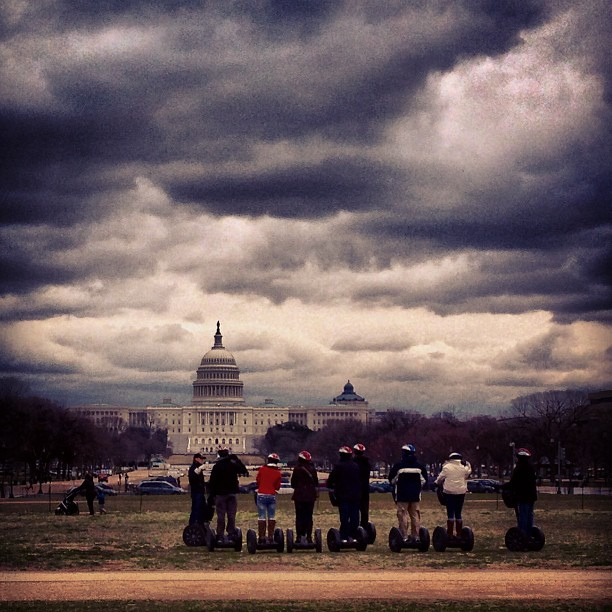
Another fine mess Budget Crisis in the United States<http://www.marxist.com/another-fine-mess-budget-crisis-united-states.htm> Written by Rob SewellMonday, 04 March 2013 [image: Print]<http://www.marxist.com/another-fine-mess-budget-crisis-united-states/print.htm>[image: E-mail]<http://www.marxist.com/component/option,com_mailto/link,16731075601acf7f1473c263ef49591f5e8734a6/tmpl,component/> Whom the gods wish to destroy, they first make mad, goes the saying. It is an apt description of the warring factions of the US political establishment, especially the Republicans, who are engaged in a ferocious battle over the government budget, and to hell with the consequences. [image: Sequester day. Photo; Ryan Lintelman]<http://www.marxist.com/images/stories/usa/Washington_sequester_day-Ryan_Lintelman.jpg>Sequester day. Photo: Ryan Lintelman<http://www.marxist.com/%5Ehttp:/www.flickr.com/photos/ryanlintelman/>Astonishingly, like a scene from a Laurel and Hardy slapstick movie, this fiscal war between the Establishment parties threatens near paralysis in the worlds largest economy. As a result of a last-minute compromise deal to avoid a fiscal cliff in the stand-off in August 2011, the latest failure to reach a deal has forced the White House as of 1st March to introduce sequestration, a term describing automatic across board cuts in public spending (half from discretionary programmes and half from defence) to the tune of $85bn by September of this year, but amounting to $1.2 trillion over the next decade. These cuts will, with massive attacks especially on Medicare and welfare, deliver roughly a $2.5tn deficit reduction over these ten years. Even then, the total US debt as a percentage of GDP will continue to rise. While both Republicans and Democrats are united in the need for cuts and attacks on the working class, they are deeply divided over tactics on how best to carry them out. This failure to compromise and agree on such tactics, death by hanging or death by a thousand cuts, has produced the latest fiscal mess. The sequester was written in a way that would ensure that Congress would never let it happen, stated Jay Carney, a White House spokesman. But it has. This sequestration now risks derailing the present weak recovery. If implemented it will be a massive blow to the US economy, which has been struggling for nearly four years to drag itself out of the deepest slump. But with US growth at l.5% last year, cuts on such a scale, as we can see in Europe, will throw any recovery into reverse. Even now, the Congressional Budget Office projects only 1.4% growth in 2013, leaving aside the effects of sequestration. Some have described the present situation as a slow-motion train wreck, which seems an accurate description. I dont anticipate a huge financial crisis, said President Obama, with little confidence as he looks over the abyss. But people are going to be hurt. The economy will not grow as quickly as it would have. Unemployment will not go down as quickly as it would have. While the economy has experienced a small recovery, with the fall in last quarters GDP revised upwards to a 0.1% growth, things are looking very fragile. Growth in other parts of the world is faltering, starting with China. In Europe, we have austerity, rising unemployment and deepening recession. US consumer spending increased in January, but this looks like a blip, as incomes rose by 2.6% in December as companies moved to beat the payroll tax. This was immediately followed in January by the biggest fall in incomes in 20 years since 1993, with a drop of 3.6%. People are living off their savings, but this cannot last. The sequestration cuts will certainly eat into demand, pulling money out of the economy of people who spend it. The sequestration will be a big blow to this, with more than one million civilian federal workers could be given unpaid leave starting in April. Some 800,000 civilian Pentagon workers will be sent home without pay. Each US state will face problems. In Virginia, 90,000 civilian defence staff will be put on unpaid leave. In Georgia, 4,180 children will not receive their routine vaccinations. In Texas, 930 teaching jobs will be cut. Fire fighters and police officers will be laid off as, in the words of Obama, the sequestration takes a meat cleaver to the US government. There will be a 9.4% cut in benefit cheques, especially hardest affecting the 3.8m Americans who have been unemployed for more than six months. There will be lay-offs of dairy inspectors which could paralyse the meat and dairy industry, creating scarcities and forcing up prices. The effects will be significant, and people will feel them, said John Hickenlooper, governor of Colorado. The sequestration cuts are across the board, affecting all government agency budgets, with few exceptions. This gives little room for manoeuvre. It was meant not to provide any flexibility, which some Republicans are worried about. We have intelligence operations that could get slowed down or stopped, said Mike Rogers, Republican chairman of the intelligence committee. Thats a problem. It will also affect defence spending. Federal workers will be the hardest hit. There is usually a 30-day notice period for unpaid leave, so those actions are likely to kick in in April, if the crisis is not resolved by then. A number of states are already on the brink of bankrupcy. The governor of Michigan has declared a fiscal emergency in Detroit, which could lead to municipal bankruptcy, the largest in US history. In November 2011, Jefferson County, Alabama, filed the largest bankruptcy to date, involving $3.14bn in bonds. Three Californian cities San Bernardino, Mammoth Lake and Stockton also filed for bankruptcy. Clearly more will follow suit. How did the American ruling class get itself into such a political deadlock? The Republican Party has almost changed beyond recognition over the last decade or more, with the rise of the Tea Party fundamentalists. These backwoods men and women are virulently opposed to any increase in spending and are demanding huge cuts, especially to health and welfare. They wield a large influence within the ranks of the Republican Party and have used their muscle to put pressure on the Republican Congress to systematically block any compromise over government spending. Obama and the Democrats are not innocent either. They agreed to the sequestration and added the threat of automatic cuts. They are in favour of making cuts, but want to increase taxes on the wealthiest, to which the Republicans are adamantly opposed. This has produced a series of crises and threatened shut-downs of government as agreement on the state budget has periodically broken down. In the past, the two parties of American big business have easily reached compromises. But as Sarah Binder of the Brookings Institution said: that was when moderates made up about 30 to 40 per cent of both chambers. That is not the case today. Many Republicans view Obama as a radical or socialist, which is clearly not the case. It shows how far Republican views have shifted, to the chagrin of the US ruling class, who want an end to this constant conflict. However, those involved see sequestration as the best place to pick a fight and stand on principles. In the past couple of years, instead of a comprehensive agreement, Congress and the White House have experienced a succession of rolling budget crises, forcing them to implement piecemeal deficit reduction steps. In January, they agreed on income tax increases for households earning more than $450,000 a year, the first time Republicans have voted for higher taxes in more than 20 years. At each crisis point, a last minute a compromise has been reached, but this is becoming more difficult with each new crisis. Republicans vowed that their January compromise would never be repeated. Relations have become embittered and there has been a real breakdown in relations between Obama and the Republican leadership in Congress. There seems to be no immediate solution. Even the President seems to think this could play out over weeks and months. It may take a couple of weeks. It may take a couple of months, he said. There appears to be an assumption that the deepening crisis and growing layoffs will knock heads together and produce a compromise as before. Once the pain of sequestration begins and constituents begin to complain, politicians tend to bend quickly, explained Chris Krueger, an analyst. This seems to be the most likely outcome, although they are playing a risky game, with Republican anti-taxation groups such as Americans for Prosperity and the Club for Growth barking at their heels. How long is this situation going to last? There is a new deadline on 27th March where Congress has to renew funding for the government, which, if left unresolved, would lead to a partial shutdown of federal agencies in addition to the sequestration cuts. They will want to avoid this at all costs, but both sides are into brinkmanship. They are in practise making it more difficult to strike a deal, but the alternative is too drastic to contemplate. Wall Street is clutching its head. The US Federal Reserve does not know which way to turn. One month they are proposing another round of quantitative easing, and the next they are fretting about the dangers of such a policy. In such uncertain and dangerous times as these, the ruling class cannot afford an on-going crisis. The most intelligent sections look with incredulity at the current position, but seem powerless to resolve it. The American bourgeoisie will need to take firm action to put an end to this mess and compel a grand bargain. While such action can temporarily resolve this or that crisis, they are presently stuck with their unstable political representatives, a sure recipe for dangerous disruption in the future. These days, the US governs by crisis, a reflection of the impasse of the system. This endemic crisis is not lost on the working class. Sooner or later they will see the need to break with the two-party system and create a political party of their own. Such a development would transform the situation in the United States. Socialism will inevitably find a rebirth on American soil and offer a real way out of this impending chaos. [Non-text portions of this message have been removed] ------------------------------------ --------------------------------------------------------------------------- LAAMN: Los Angeles Alternative Media Network --------------------------------------------------------------------------- Unsubscribe: <mailto:[email protected]> --------------------------------------------------------------------------- Subscribe: <mailto:[email protected]> --------------------------------------------------------------------------- Digest: <mailto:[email protected]> --------------------------------------------------------------------------- Help: <mailto:[email protected]?subject=laamn> --------------------------------------------------------------------------- Post: <mailto:[email protected]> --------------------------------------------------------------------------- Archive1: <http://www.egroups.com/messages/laamn> --------------------------------------------------------------------------- Archive2: <http://www.mail-archive.com/[email protected]> --------------------------------------------------------------------------- Yahoo! Groups Links <*> To visit your group on the web, go to: http://groups.yahoo.com/group/laamn/ <*> Your email settings: Individual Email | Traditional <*> To change settings online go to: http://groups.yahoo.com/group/laamn/join (Yahoo! ID required) <*> To change settings via email: [email protected] [email protected] <*> To unsubscribe from this group, send an email to: [email protected] <*> Your use of Yahoo! Groups is subject to: http://docs.yahoo.com/info/terms/