http://colombiareports.com/who-in-colombia-is-striking-against-the-government-and-why/
Aug 20, 2013
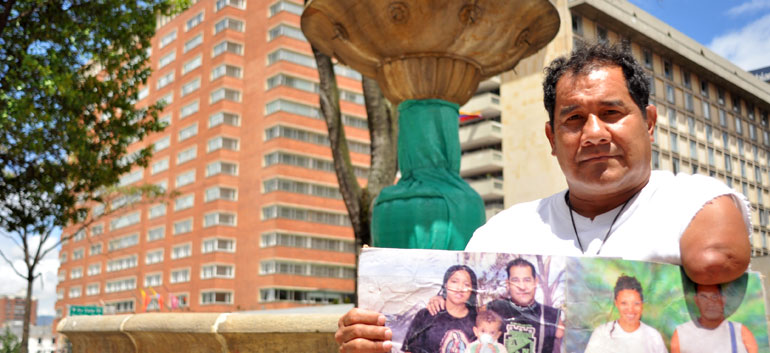
Who in Colombia is striking against the government and why?posted by Marcus
Sales
[image: Who in Colombia is striking against the government and
why?]<http://colombiareports.com/wp-content/uploads/2013/08/protest2.jpg>
(Photo: Wesley Tomaselli) [image: Share Button] <http://www.hupso.com/share/> <http://www.hupso.com/share/add.php?service=twitter&title=Who%20in%20Colombia%20is%20striking%20against%20the%20government%20and%20why%3F&url=http://colombiareports.com/who-in-colombia-is-striking-against-the-government-and-why/><http://www.hupso.com/share/add.php?service=facebook&title=Who%20in%20Colombia%20is%20striking%20against%20the%20government%20and%20why%3F&url=http://colombiareports.com/who-in-colombia-is-striking-against-the-government-and-why/><http://www.hupso.com/share/add.php?service=googleplus&title=Who%20in%20Colombia%20is%20striking%20against%20the%20government%20and%20why%3F&url=http://colombiareports.com/who-in-colombia-is-striking-against-the-government-and-why/><http://www.hupso.com/share/add.php?service=linkedin&title=Who%20in%20Colombia%20is%20striking%20against%20the%20government%20and%20why%3F&url=http://colombiareports.com/who-in-colombia-is-striking-against-the-government-and-why/><http://www.hupso.com/share/add.php?service=stumbleupon&title=Who%20in%20Colombia%20is%20striking%20against%20the%20government%20and%20why%3F&url=http://colombiareports.com/who-in-colombia-is-striking-against-the-government-and-why/><http://www.hupso.com/share/add.php?service=reddit&title=Who%20in%20Colombia%20is%20striking%20against%20the%20government%20and%20why%3F&url=http://colombiareports.com/who-in-colombia-is-striking-against-the-government-and-why/> Health workers, coffee farmers, truckers, university teachers, rice growers, sugar cane cutters, peasants in Putumayo and miners are currently involved in the largest public demonstration since 2008, and the largest anti-government demonstration in recent history. The first two days of strikes saw roadblocks, violence and arrests in numerous departments <http://colombiareports.com/colombia-departments/> across the country, but why are these sectors striking? What do they hope to gain? Health workers Health workers are striking against recent health sector reforms passed by Congress. We have exhausted the tracks of dialogue and therefore define the realization of a strike from August 19 to press the government to try and hear both our demands and aspirations, Hector Gaviria Alviz, President of the national trade union of workers and public health (ANTHOC) told Colombia Reports <http://colombiareports.com/>. *MORE:* Colombias health workers join farmers, miners and coffee growers in strike<http://colombiareports.com/health-workers-announce-national-strike/> According to the unionist, the health workers wish to remove the economic concept of health and ensure that the service be provided directly by public hospitals and municipal authorities instead of corruption-ridden health care providers that fail to pay hospitals on time. Alviz additionally claimed that current health workers at present have no economic stability as they are hired to work for two, three or maybe four months only. According to the unionist, recent legislation passed by congress only increases instability among health workers, added Alviz. *Coffee Farmers* Coffee farmers are striking because the sector claim that subsidies promised by the government to compensate for falling international coffee prices has never reached farmers. In march the government agreed to pay coffee farmers a subsidy known as the Grower Ingress Protection, which guarantees that they will not lose money with the fluctuation in grain prices. The production costs of coffee are between $335 and $365, while its market price is approximately $245. The subsidy of $85 promised by the government barely compensates for the loss. Vicor Correa, one of the coffee strikes organizers, told Colombia Reports however that such subsidies have not made it to the farmers yet. Truckers Truckers are striking against high gasoline prices. In February the government raised the price of fuel by 6%, resulting in a strike by the truckers. After no reduction in fuel costs, the truckers have decided to continue demonstrations. *MORE:* Colombia truckers go on strike<http://colombiareports.com/colombia-truckers-go-on-strike/> The president of Colfecar (Colombias road freighters union) Jaime Sorzano said that constant increases in fuel prices have become intolerable and unsustainable. The price per gallon of gasoline is now $4.82 in Bogota<http://colombiareports.com/category/colombia-travel/bogota/>. The share of an average wage to the price of gas puts Colombia in the top 10 of Bloombergs pain at the pump rankings. This hike has no purpose and is not in [step] with the quality of infrastructure [the] quality of roads, the expensive tolls and the price of diesel and biodiesel, said Sorzano. The union leader said that approximately 34 percent of truckers costs is fuel, so with each increase the business becomes less profitable. University teachers University teachers are striking over the governments alleged failure to honor agreements made after earlier strikes this year. In an interview with Colombia Reports <http://colombiareports.com/>, FECODE Secretary General Rafael Cuello Ramirez detailed the issues at stake. Last May 21, we signed an act of agreement with the Education Ministry; those terms, however, have been delayed by the national government, specifically the Minister of Education. We agreed on a text, and it was written, but the spirit of what was agreed to hasnt come to fruition, said Ramirez. The most blaring inconsistency has to do with the states allegedly continued delinquency on the sizable debts it owes its education employees. Today, the [Education] Ministrys debt to retired pension and benefits funds exceeds $49 million were asking the government to open up just $1.7 million in the budget it is supposed to pass October 31 to go toward the amortization of its debt, added Ramirez. One of the more pressing concerns for FECODE regarding the governments faulty debt payments is the financial welfare of education employees whose contracts have been terminated, in many cases because of cost-cutting measures. Right now we have been notified of 15,000 severances but do not have the money to pay any of the teachers [their severance packages]. Miners Miners have been striking since July 17 demanding the repeal of a decree that orders for the destruction of machinery used in the informal, and according to the law illegal mining industry. Stella Luz Ramirez, executive director of the Confederation of Colombian miners justified the strike, stating the national government has failed us twice. On July 25 last year we agreed not to strike because the government pledged to improve conditions in the sector, but they once again broke their word. This time, we will not yield. Miners are seeking the repeal of decree 2235 of 2012, which authorizes the destruction of machinery used in exploration of minerals without legal authorization. Ramirez argues however, that the decree violates due process and the right to self defense as it has led to the destruction of materials used in the informal mining industry. Miners have called for the government to create a law, clearly differentiating between informal, and illegal mining. Rice growers Rice growers are striking as the government has failed to respond to their letters, in which they have put forward a four point plan that they feel could bring the sector out of its current state of crisis. The rice farmers four main propositions are as follows: - Prices: The first point that the farmers are claiming is related to establishing new base prices per field, per year, which, according to producers, would allow them to judge how much each harvest would make and how much to sow. - Control of imports: Another demand is that the government shut off the importation of rice from the United States and Andean Community Nations (CAN) such as Peru and Ecuador due to the increase that they say internal demand has on prices. - Contraband: In addition to these imports, rice farmers point to contraband as a factor in the sectors troubles. More stringent border control from the government is called for to stem the entry of contraband rice into Colombia. - Modernization: Finally the farmers are asking for resources in order to modernize, in particular, machinery for the post-harvesting process. Sugar cane cutters Sugar cane cutters want to be directly hired for the companies that they work for. Prior to the reform of Colombian labor law in 1990, this was the case. The legislation however, allowed for the sub-contracting of work through labor intermediaries which severed the relationship between employee and employer. Jhonsson Torres, Vice President of Sinalcorteros (sugar cane union) explained the impact of the legislation. The law ended labor stability for workers. This was when the plantations took advantage and removed the cane cutters from collective bargaining agreements. We became contractors, said Torres. My father made good money. We lost all that. Putumayo peasants **Putumayo peasants are striking because they disapprove of the governments manual eradication of coca in the region. Many of Putumayos peasants grow coca as they say it is their only means of economic income. Without adequate alternative development plans in place, the destruction of coca crops in the region leaves the peasants with no viable source of income, they say. --------------------- ug 20, 2013 Rural protests causing delays on Colombias roads, air travel remains unaffectedposted by Marcus Sales [image: Rural protests causing delays on Colombias roads, air travel remains unaffected]<http://colombiareports.com/wp-content/uploads/2013/08/road.jpg> (Photo: Marcha Patriotica) [image: Share Button] <http://www.hupso.com/share/> <http://www.hupso.com/share/add.php?service=twitter&title=Rural%20protests%20causing%20delays%20on%20Colombia's%20roads%2C%20air%20travel%20remains%20unaffected&url=http://colombiareports.com/rural-protests-also-causing-delays-at-colombias-airports/><http://www.hupso.com/share/add.php?service=facebook&title=Rural%20protests%20causing%20delays%20on%20Colombia's%20roads%2C%20air%20travel%20remains%20unaffected&url=http://colombiareports.com/rural-protests-also-causing-delays-at-colombias-airports/><http://www.hupso.com/share/add.php?service=googleplus&title=Rural%20protests%20causing%20delays%20on%20Colombia's%20roads%2C%20air%20travel%20remains%20unaffected&url=http://colombiareports.com/rural-protests-also-causing-delays-at-colombias-airports/><http://www.hupso.com/share/add.php?service=linkedin&title=Rural%20protests%20causing%20delays%20on%20Colombia's%20roads%2C%20air%20travel%20remains%20unaffected&url=http://colombiareports.com/rural-protests-also-causing-delays-at-colombias-airports/><http://www.hupso.com/share/add.php?service=stumbleupon&title=Rural%20protests%20causing%20delays%20on%20Colombia's%20roads%2C%20air%20travel%20remains%20unaffected&url=http://colombiareports.com/rural-protests-also-causing-delays-at-colombias-airports/><http://www.hupso.com/share/add.php?service=reddit&title=Rural%20protests%20causing%20delays%20on%20Colombia's%20roads%2C%20air%20travel%20remains%20unaffected&url=http://colombiareports.com/rural-protests-also-causing-delays-at-colombias-airports/> The first day of anti government protests, in which hundreds of thousands took to the streets, are resulting in substantial traffic delays on the road. Aviation authorities said the situation on the countrys airports is normal. Transit police reported that approximately 1.365,000 vehicles were forced to use a different route to return home from their long weekend as Monday was a bank holiday in Colombia. According to Radio Santa Fe, the biggest delays were in the departments<http://colombiareports.com/colombia-departments/> of Boyaca, Arauca, Putumayo and Narino where protesters succeeded in entirely shutting down the main roads. *MORE: *Colombias Strike Wave Begins With Violence And Roadblocks<http://colombiareports.com/colombias-strike-wave-begins-with-violence-and-roadblocks/> In the capitals of these departments, travel companies refused to send buses to Bogota<http://colombiareports.com/category/colombia-travel/bogota/> and vice versa, due to the road blockages caused by the anti-government demonstrations. The route from the capital Bogota to Melgar, the capital of the southern Tolima department, and to Tunja, the capital of Boyaca, were the most affected by delays, as there was no restriction on traveling vehicles. According to Radio Santa Fe, Monday night saw clashes between protesters and police on the route between Tunja and Bogota. At the height of clashes, vehicles in Villapinzon, located in between Tunja and Bogota, did not move for ten hours as police had to remove trees that protesters had cut down and spread across the road. Furthermore, significant blockades occurred in southwest Colombia, as the Pan American Highway, a 30,000 mile road that connects Colombia with the rest of South America, was blocked in two locations. While the situation on the road may be complicated, air travel seems unaffected by the strikes, marches and roadblocks. Everything is perfectly normal, a spokesman of aviation authority Aercivil told Colombia Reports <http://colombiareports.com/> Tuesday morning, stressing that no flights were canceled due to the strikes and waiting periods are the same as on any other day. The situation on the road is likely to worsen throughout Tuesday as sectors who hadnt joined the strike yet on Monday are expected to join protests. *MORE: *Colombias Farmer Protests Not Of The Expected Magnitude: Santos<http://colombiareports.com/colombias-farmer-protests-not-of-the-expected-magnitude-santos/> Reported roadblocks Sources - Interview with Aerocivil - Sufrido Retorno De Viajeros En Puente Festivo Por Paro Agrario<http://www.radiosantafe.com/2013/08/20/sufrido-retorno-de-viajeros-en-puente-festivo-por-paro-agrario-muchos-siguen-varados-en-terminales-de-transportes/> (Radio Santa Fe) [Non-text portions of this message have been removed] ------------------------------------ --------------------------------------------------------------------------- LAAMN: Los Angeles Alternative Media Network --------------------------------------------------------------------------- Unsubscribe: <mailto:[email protected]> --------------------------------------------------------------------------- Subscribe: <mailto:[email protected]> --------------------------------------------------------------------------- Digest: <mailto:[email protected]> --------------------------------------------------------------------------- Help: <mailto:[email protected]?subject=laamn> --------------------------------------------------------------------------- Post: <mailto:[email protected]> --------------------------------------------------------------------------- Archive1: <http://www.egroups.com/messages/laamn> --------------------------------------------------------------------------- Archive2: <http://www.mail-archive.com/[email protected]> --------------------------------------------------------------------------- Yahoo! Groups Links <*> To visit your group on the web, go to: http://groups.yahoo.com/group/laamn/ <*> Your email settings: Individual Email | Traditional <*> To change settings online go to: http://groups.yahoo.com/group/laamn/join (Yahoo! ID required) <*> To change settings via email: [email protected] [email protected] <*> To unsubscribe from this group, send an email to: [email protected] <*> Your use of Yahoo! Groups is subject to: http://docs.yahoo.com/info/terms/