On Jan 19, 2014, at 12:31 AM, Clive D.W. Feather <[email protected]> wrote:
> Rob Seaman said:
>> Systems, software and civilization depend on both interval time and Earth
>> orientation time.
>
> In what way does civilization depend on Earth orientation time?

Thanks for acknowledging (through omission) the many dependencies of software
and systems on Earth orientation.  Let's see, how about?  The proceedings of
the two UTC meetings (http://www.univelt.com/Science.html) were published by
the American Astronautical Society because of requirements of spacecraft
operations and flight software on retaining the current definition of UTC:


http://www.cacr.caltech.edu/futureofutc/2011/preprints/28_AAS_11-673_Simpson.pdf

http://www.cacr.caltech.edu/futureofutc/2011/preprints/30_AAS_11-674_Storz.pdf

http://www.cacr.caltech.edu/futureofutc/2011/preprints/32_AAS_11-675_Malys.pdf

Need one point out the many ways that civilization now depends on spacecraft?
It's an interesting tell, however, that while my assertion was that
civilization and its complex mix of systems (many with software components)
depend on *both* Earth orientation time and interval timing (equivalently
frequency), that the response is an attempt to divide the argument.

Civil timekeeping - time kept by and for our civilization - depends on both the
synodic day and on the SI-second as derived from atomic frequency standards.
UTC as currently defined represents both of these.  The requirement is to
maintain the correct functional form; leap seconds are a means to an end.
Seeking to cheat the system requirements and eradicate them will inevitably
create more risks and greater expense.

> Given that existing locations have local time several *hours* away from solar
> time, this seems unlikely.

That said, another answer would be to point to innumerable messages on the
lists:

        http://six.pairlist.net/mailman/listinfo/leapsecs
        http://www.ucolick.org/~sla/navyls/

Search on words like "confuses periodic effects with introducing a secular
trend".  Static time zone offsets and periodic DST adjustments have nothing to
do with the Earth's underlying synodic day.  Apparent solar time is similarly
just a charming periodic variation imposed on top of the mean solar clock that
represents the unique functional form of the synodic day - on Earth and two
dozen other large terrestrial worlds in the solar system
(http://futureofutc.org/preprints/files/28_AAS_13-515_Seaman.pdf)

If you are instead making the broader claim that civilization is somehow
distinct from its engineering creations, perhaps review the contributions by
Paul Gabor and Kevin Birth to the Exton and Charlottesville Colloquia:

        http://futureofutc.org/2011/preprints/
        http://futureofutc.org/preprints/

As well as the resulting discussions and various passages in other
contributions.

But it is inherent in any issue of timekeeping precisely that our modern
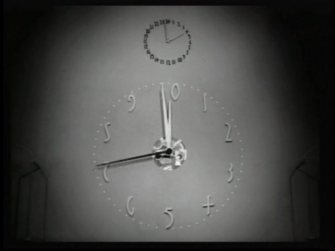
civilization is inextricably tied to its system engineering.  The film
Metropolis is in the background as I type this.  One of the first images is of
a clock (http://www.mostlypink.net/pics/ma/clocks.jpg).  That the clock face is
divided into ten hours suggests that Fritz Lang, at least, believed that
reformation of time standards was a possibility ;-)  Of course, the rest of the
movie is an argument that we should be careful what we wish for.

"Deep below the Earth's surface lay the workers' city."  Even the worker class,
banished to an underworld divorced from the sunlight, have an existence that is
dominated by the diurnal cadence of the Earth.  That cadence is the synodic
day.  Deviating by even one part in a million from the tempo set by the
rotation of the Earth would result in the accumulation of an intercalary leap
hour every century.  I suppose the notion is that Metropolis Central Time would
just be incremented to compensate - but then one expects that the prime
meridian passes through Fredersen's office.  Incremented to what? :-)

However, one suspects you aren't actually questioning the underlying diurnal
cadence of our lives.  Civilization depends in vast numbers of ways on the
alternation of night and day - to the extent that it is encoded in our
biochemistry:

        http://news.harvard.edu/gazette/1999/07.15/bioclock24.html

And the day is not only a unit of time, it was our first unit of measurement of
any sort:

        And God called the light Day, and the darkness he called Night.
        And the evening and the morning were the first day.

I'm grateful for the opportunity to pen a defense of the Copernican world view.
 The naive ITU proposal is precisely a challenge to something as fundamental as
the model of the heliocentric solar system.  This isn't a philosophical issue,
it's a question of bad engineering.  The Ptolemaic system would be a poor model
to use for navigating spacecraft.

Since 86,400 SI-seconds happen to be within a few milliseconds of the current
length of day, some special interests have been emboldened to not only
entertain alternate engineering strategies for reconciling interval timepieces
(frequency standards) with our synodic clocks - but beyond that to suggest that
we can simply forget the whole thing.  Copernicus says otherwise.

The cover of the Charlottesville proceedings is an illustration of a Foucault
pendulum with the caption:  "Pendulum motion demonstrates the rotation of the
Earth (à la Foucault) and the metering of time independent of Earth's rotation.
 UTC and Civil Timekeeping provide both, but will that continue?"  Science
reaching at least as far back as Galileo has depended on both kinds of
timekeeping - and as Galileo said, eppur si muove...an assertion which can be
applied equally to pendulum and Earth.  The SI-second derives from the former.
The days tracked by our calendars from the latter.

Coordinated Universal Time as inherited by the ITU-R expresses both Universal
Time (the fundamental synodic day) and Atomic Time (the fundamental cesium
frequency standard).  The mandate was to remain reliable stewards of both.

        Mittler zwischen Hirn und Hände muß das Herz sein.

Rob
_______________________________________________
LEAPSECS mailing list
[email protected]
http://six.pairlist.net/mailman/listinfo/leapsecs