I find it hard to believe many of the discussion points that come up;
Robert Lundberg (lute builder, who died of cancer in 2001--he was a
good friend--& deserved person of great respect about lute building)
talked a lot about the very same subjects that people still discuss
(as if they're unaware, or the topics had never been discussed
before). Where I live is in Oregon: yew grows here, as do many
evergreens--Bob used to talk about certain species becoming harder to
obtain, & foresaw times when certain species of wood would become very
difficult to get.
It strikes me that many of the points being discussed are beside the
point--(many, many are excellent & deserve attention)--or maybe I
misunderstand the purpose of the discussions. At any rate, they're
somewhat interesting to follow, although not of permanent interest!
But many of the subjects have come up again & again & yet again...

Timothy Swain

On Tue, Jan 20, 2015 at 1:14 PM, Braig, Eugene <[email protected]> wrote:
> -----Original Message-----
>
> On 17.01.2015 20:54, Herbert Ward wrote:
>>> Do lutes and guitars compete directly for tone wood supplies?
>>>
>>> In other words, do lute builders and guitar builders use the same
>>> criteria in selecting spruce lumber for soundboards?
>>>
>>>
>>>
>>>
>> From: [email protected] [mailto:[email protected]] On Behalf
>> Of Markus Johann Mühlbauer
>> Sent: Tuesday, January 20, 2015 3:08 PM
>> To: [email protected]
>> Subject: [LUTE] Re: Spruce for lute vs guitar.
>>
>> There seems to be a lot of confusion about what tonewood is supposed to
>> be. Some use the term only for wood that is especially suited to be used
>> as soundboard, others use it for any wood that can be used to build a
>> good instrument.
>>
>> I've looked up some properties of soundboard woods in a book and found
>> that there seems to be a difference in desired growth ring distance
>> depending on the type of instrument you want to build. I guess guitars
>> are not so much different from lutes, so there should be much difference
>> for the physical properties of the tonewood. This leads me to the
>> assumption that the desired growth ring spacing is the same for both
>> instruments.
>>
>> Another much more interesting aspect is the species of tree used. Usualy
>> Lute soundboards are made of Picea abies (Norway Spruce). Guitar
>> soundboards can be made far greater choice of softwoods (mostly new
>> world woods not available in Europe at the times lutes were played).
>> Some of those "substitutes" like Sitka spruce are as good or somtimes
>> even better than Norway spruce.
>>
>> So technically one could say they compete, but guitar builders have more
>> possible sources for tonewoods.
>>
>> Regards,
>> Markus
>
>
> I certainly agree with your bottom line, Markus, that "guitar builders have
> more possible sources for tonewoods."  However, Picea abies is still in very
> high demand as soundboards for modern classical guitars (marketed to US
> luthiers under many trade names, perhaps most commonly as "European" or
> "German spruce" (although I believe very little of the current supply comes
> from Germany).  Given the relative volume of guitar production, even
> considering "classical" guitars in comparison to steel-strung incarnations,
> I'd wager there is a pretty substantial competition with lute builders for
> quality timber.  That's only an assumption and I have no idea how what kind
> of influence that has on markets and production.
>
> Sitka (P. sitchensis) is really only prized in high-tension, steel-strung
> modern acoustic guitars.  I've only encountered a few classical builds in
> Sitka.  Of the North American spruces, Engelmann (P. engelmannii) is probably
> the most popular for classical instruments.  . . .  And of course, western
> red cedar (Thuja plicata) is also prized as classical guitar tonewood,
> although its favor seems to wax and wane a bit in comparison to spruce(s).
>
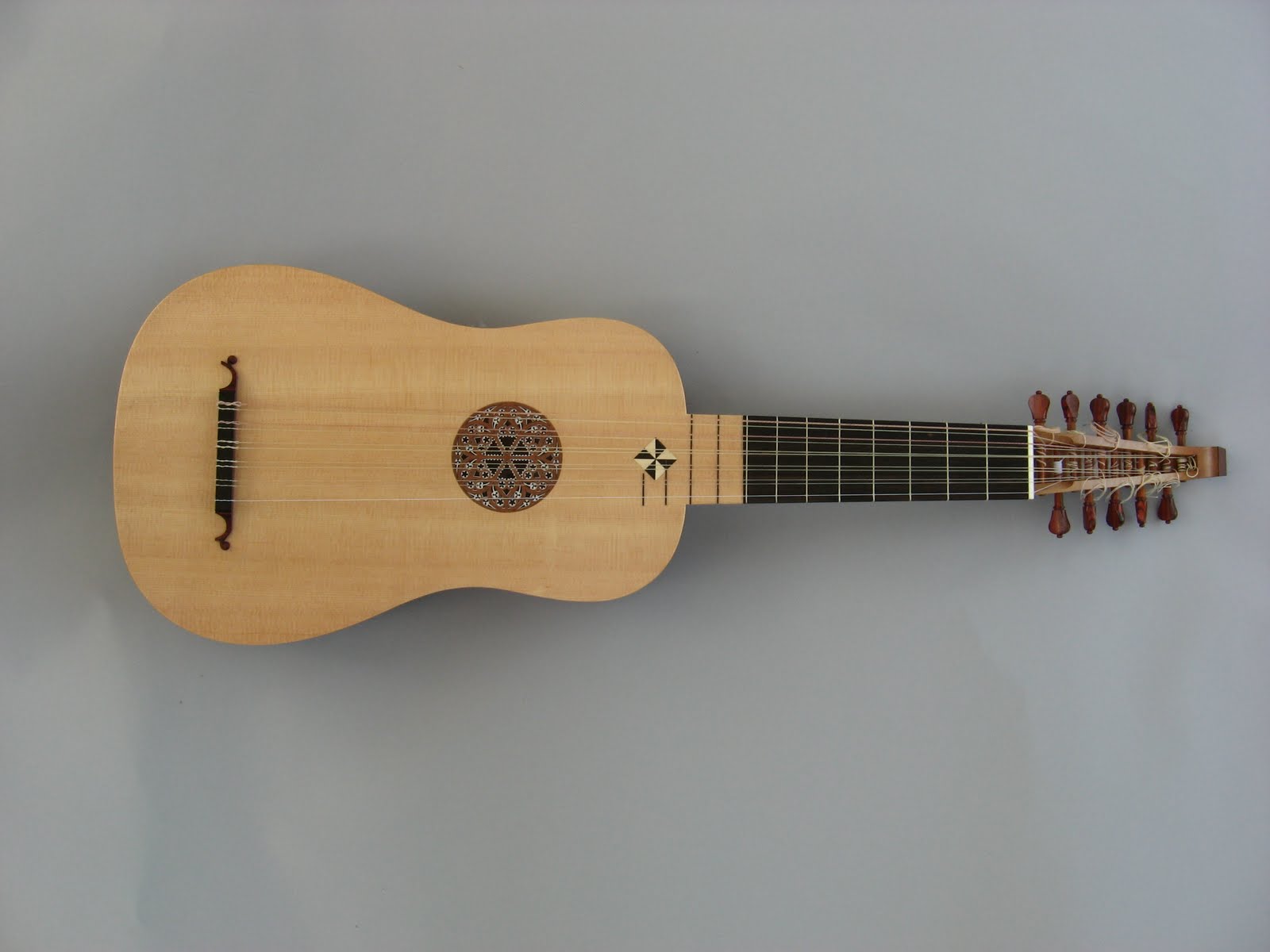
> I actually have a vihuela that Chad Neal, a local luthier friend, rebuilt
> using hybrid Lutz spruce (P. x lutzii) which is actually a white (P. glauca)
> x Engelmann spruce hybrid.  I think it works very well in context.
> http://4.bp.blogspot.com/__F-xZ4YNaFk/SsLPMHXvD_I/AAAAAAAAAAU/wFEGYRuLxOc/s1600/IMG_5096.JPG
>
> Very slow growth--closely spaced grain--seems the most highly prized feature
> of soundboards whatever the timber (assuming an absence of flaw/defect like
> runout, etc.).  However, the very few well-made (and sometimes very old)
> instruments I've encountered with widely spaced grain bring the rationale for
> that status quo into question.
>
> Best,
> Eugene
>
>
>
> To get on or off this list see list information at
> http://www.cs.dartmouth.edu/~wbc/lute-admin/index.html