> Which brings up a question for Ron: Does your antipathy to historical
   fiction extend to the Shakespeare history plays? You could, if you
   like, argue that Shakespeare was a better writer than Ms. Mantel and
   Mike Poulton (who did the RSC adaptation) but is there any fundamental
   difference in what they are doing?
   Good question, although I can't imagine that my personal taste in
   reading material is of interest to anyone.  Shakespeare, in the history
   plays, was writing for the stage more than for the reader, and was
   subject to a certain amount of censorship in theme and political
   content.  But I suppose the myth of the Virgin Queen (much o'er done by
   Spenser), and the theme that the nobility was always right in the end,
   was something akin to today's visual depictions of ubiquitous imagery
   that panders to consumerism through product placement, etc.
   I do find that historical fiction I have attempted to read is of
   variable quality.  The Captain Alatriste novels by Arturo Perez-Reverte
   are readable, but he seems to have found a formula and the later ones
   are a bit lacking in that page-turner vibe.  My favorite writer of fact
   and fiction is Umberto Eco, but I even found his Baudolino, a bit
   tiresome.  He redeemed himself with The Prague Cemetery though.
   The main problem I have with reading historical fiction is in the
   dialogue, which seldom rings true and nearly always reeks of modern
   idioms.  It's difficult to strike a balance between convincing voices
   and dialogue written in language that the typical reader will grasp to
   some extent.  Then, there is the representation of historical fact,
   which must be expunged of mundane realism and varnished for appeal and
   the publisher's bottom line.  Have I just described the Warren Report?
   As I said earlier, Donna read the books and found them diverting.  At
   the time, I was reading through the stacks of source material Ed
   Doughtie sent us before he passed away, and couldn't be bothered with
   new stuff.  In his retirement, Ed indulged in historical fiction
   himself, by the way[1]
   https://musicalmysteries.wordpress.com/
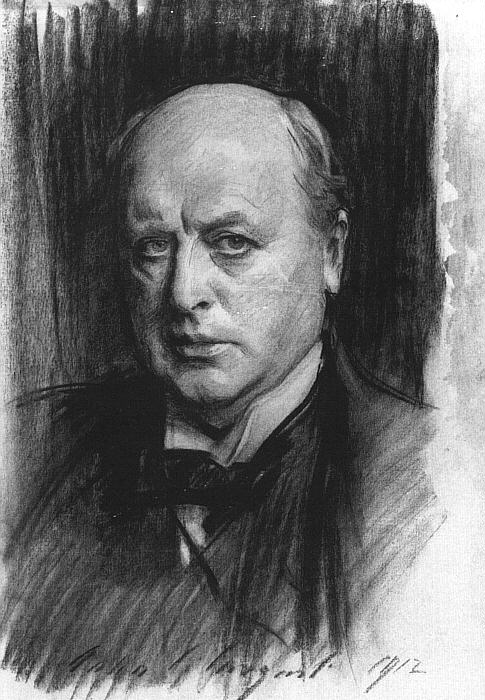
   In the end, I have to agree with Henry James on the subject:
     You may multiply the little facts that can be got from pictures &
     documents, relics & prints, as much as you like the real thing is
     almost impossible to do, & in its essence the whole effect is as
     nought. . . You have to think with your modern apparatus a man, a
     woman, or rather fifty whose own thinking was intensely-otherwise
     conditioned, you have to simplify back by an amazing tour de force &
     even then its all humbug.

   Henry James (1843 1916), from a letter to Sarah Orne Jewett, 1901.
   RA

   --

References

   Visible links
   1. https://musicalmysteries.wordpress.com/

   Hidden links:
   3.
https://upload.wikimedia.org/wikipedia/commons/e/ee/Portrait_of_Henry_James_1913.jpg


To get on or off this list see list information at
http://www.cs.dartmouth.edu/~wbc/lute-admin/index.html