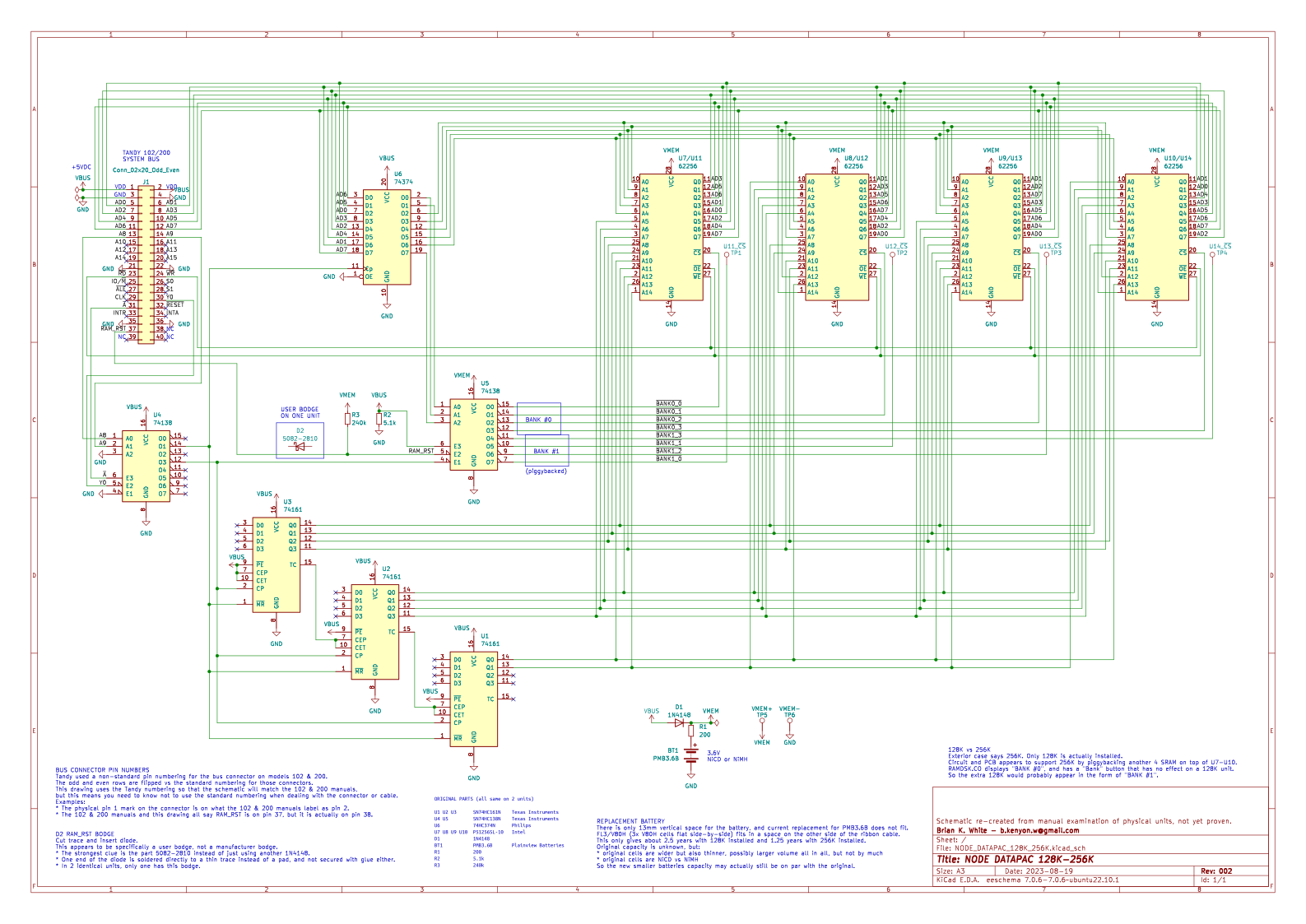
Don't ask me why, but I think I've replicated the NODE DATAPAC in KiCAD.

https://github.com/bkw777/NODE_DATAPAC
https://raw.githubusercontent.com/bkw777/NODE_DATAPAC/db347506f5eeb9908348710727fa3f3b53bfd047/PCB/NODE_DATAPAC_128K_256K.svg
This is from beeping out the connections of one with a meter and shining
a bright light through the pcb to try to see under the chips. The
schematic is not verified, I haven't actually built one, and I didn't
desolder anything to uncover the the board to see all the traces, so it
might not be complete.
I may actually build one just to verify if the schematic is really
complete, and also I'm dying to test my guess about just adding
piggyback chips to go from 128 to 256k without needing anything else,
but I don't want to hack on the original units except the unavoidable
removing the old battery and cleaning up the residue. No problem on a
new replica board.
But can someone explain the theory of operation from the parts &
connections? I can see that AD5,6,7 are used to select one of the 8
chips, but I don't understand what A8, A9, /A, & Y0 are actually doing
with those counters, nor why they all have all their data inputs NC and
not even grounded.
Also what is the likely purpose of that user bodge diode on RAM_RST?
Only one unit has that, and they both work the same, outwardly. I assume
it will have something to do with some weird issue that only happens in
some particular situation like you have a printer connected and the
computer turned off or something like that.
If I make an alternate updated pcb with a removable battery connector or
non-recharging coin cell or something, should I add that?
--
bkw