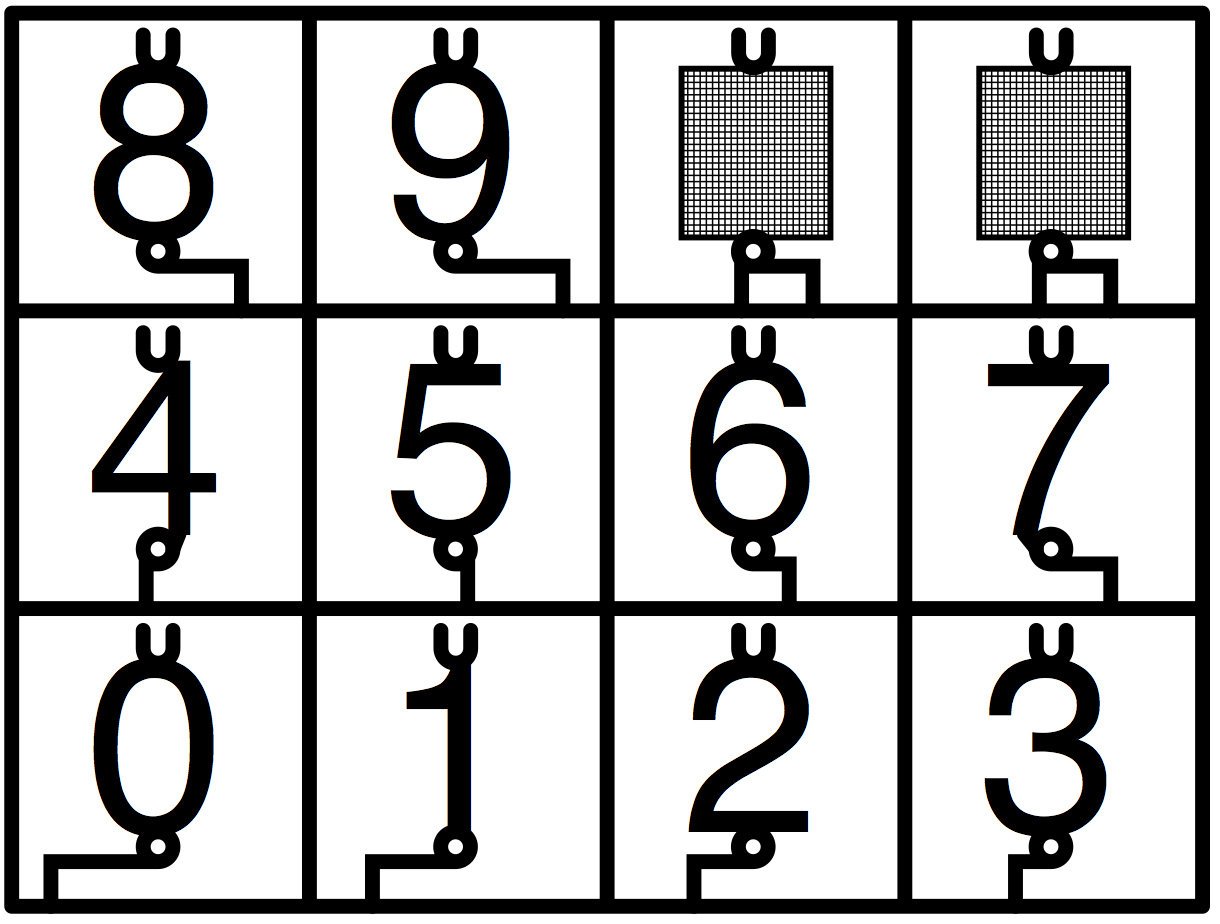
I don't know about 3d printing the cathodes.

As for chemically etching these plates, I am pretty sure you won't have to
put the pattern on both sides of the plate.
You could completely cover one side of the plate with a even coat of etch
resist.

Then, you'll be able to put your design on the other side.

This is etching through rather thin metal, so, this single side method
should work.

At least, it does for my work on copper.

The research that I did for stainless enchants all seem like they are
processes that would require a fume hood. Most of the processes containing
HCl and HNO3. I do not have a fume hood :(

Although, I did find a howto site where they just used a electrolyte. I
wonder if that process could be turbo charges to etch through...

Maybe if I have time this weekend.

Otherwise, if anybody would like to attempt etching, and would like a
enchant mask, and you live in the US, I'll be happy to whip one up on my
vinyl cutter and ship you one/several. It shouldn't take more than a few
min to make the stencil. I'll be around the machine Thursday.

-Michael

On Mon, Jan 28, 2013 at 11:03 PM, Michel van der Meij <[email protected]>wrote:

> That is really cool stuff!
>
> Maybe one day it is possible/affordable to use a 3D printer to print these
> cathodes and grids using a conductive plastic of some sort. As it is all
> low current, it may not need to have very low resistance. And then of
> course, if you had 2 types of material in your printer (1 conductive, the
> other isolating) you could just print the whole set of grids and cathodes!
> That would save a huge amount of effort!
>
> Michel
>
>
>
>
>
>
>
> on Jan 29, 2013, *Quixotic Nixotic* <[email protected]> wrote:
>
> On 29 Jan 2013, at 01:36, John Rehwinkel wrote:
>
> Yes, I think the original nixie tubes were made by photo etching.. There
> is so much work on the tubes (or just preparing the stuff for now) that I
> would be very glad to get rid of one problem - making the number for nixie
> tubes.. But I am afraid I will have to photo-etch the anode grid anyway, I
> cant imagine the laser cutter making it
>
>
> If you're photoetching the anodes anyway, may as well do 'em all at once:
>
> http://www.vitriol.com/images/tech/nixies/cathodes2.png
>
>
> I can shed a little light on the photo-etching process, having both had
> items made professionally and also silk-screened them with my own fair
> hands with about the same level of accuracy. Because the etching process
> undercuts the metal in a V shape it is normal to use a pinbar registration
> system and to have the acid resist on both sides of the metal, one image
> the reverse of the other. To do otherwise is to end up with a back somewhat
> skinnier than the front after etching.
>
> It is possible to get quite accurate registration on both sides of the
> metal, using a home-built silkscreen system and wooden silkscreen frames. In
> the case of the picture below, it was only a single-sided etch but I found
> it necessary to print the outline shape on the back too to maintain crisp
> edges equal on both sides. Hopefully you can see the edge ridge with slight
> but significant undercut. I don't have my silkscreen equipment any more
> otherwise I'd offer to do some trials for you.
>
> I think in the days of etched printing plates they used something called
> "bull's blood" which minimised the undercut somehow.
>
> There used to be companies who specialised in doing this work for
> modelmakers. Useful for suspension bridges, railings and other filigree
> work. I am not sure if any are around today.
> My guess is if you are going to image directly onto the metal using spray
> on light-sensitive emulsion, you'd still need to expose an image on both
> sides of the metal.
>
>
> John S
>
>
>
> --
>
> You received this message because you are subscribed to the Google Groups
> "neonixie-l" group.
>
> To unsubscribe from this group and stop receiving emails from it, send an
> email to [email protected].
>
> To post to this group, send an email to [email protected].
>
> For more options, visit https://groups.google.com/groups/opt_out.
>
>
>
>
>
>  --
> You received this message because you are subscribed to the Google Groups
> "neonixie-l" group.
> To unsubscribe from this group and stop receiving emails from it, send an
> email to [email protected].
> To post to this group, send an email to [email protected].
> For more options, visit https://groups.google.com/groups/opt_out.
>
>
>

--
You received this message because you are subscribed to the Google Groups
"neonixie-l" group.
To unsubscribe from this group and stop receiving emails from it, send an email
to [email protected].
To post to this group, send an email to [email protected].
For more options, visit https://groups.google.com/groups/opt_out.