But If I travers by V.in_root_for, V.out_root_for does not it mean that I
get all the vertices of the graph rather than subset? Because of this query
has no limitations all the vertices will be traversed.
понедельник, 14 июля 2014 г., 17:19:49 UTC+3 пользователь Andrey Kovalev
написал:
>
> I thought your starting point is 'New York islanders' vertex. And Linda
> is not connected with this Vertex.
> If your starting point is 'New York islanders' vertex then [
> id_of_New_York_islanders] is an id of this root Vertex, if your starting
> point is a list of some vertices then just put ids of those separated by
> comma.
>
> I typed my query without having console handy but I assume the idea is
> right.
>
> On Monday, 14 July 2014 15:10:38 UTC+1, Vladimir Ziankevich wrote:
>>
>> I included 'Linda', 'George' and 'child of' vertices (the last one is
>> mistaken, 'Kate' should be there) because these are starting points.
>> The original problem is to retrieve subgraph of parents and teams which
>> linked directly, to the set of childs, or transitively, to the parents
>> (also direct or not) of starting vertices, in my example childs = Linda +
>> Shaun + Jeff + Donald.
>>
>> So If we decide that you query is correct then instead of '
>> id_of_New_York_islanders'
>> should be '[id_of_Linda, id_of_Shaun, id_of_Jeff ,id_of_Donald]'
>> something like that.
>>
>> понедельник, 14 июля 2014 г., 16:52:21 UTC+3 пользователь Andrey Kovalev
>> написал:
>>>
>>> Hi, Vladimir. I also wonder whether it is possible. It would be nice if
>>> OrientDB team gives us a lot of examples of tricky sql queries on some real
>>> graph models.
>>> The query would probably look like:
>>> traverse V.in_root_for, V.out_root_for, V.out_child_of from [
>>> id_of_New_York_islanders]
>>>
>>>
>>> But I do not get why do you include 'Linda', 'George' and 'child of'
>>> vertices?
>>>
>>> On Monday, 14 July 2014 14:37:53 UTC+1, Vladimir Ziankevich wrote:
>>>>
>>>> At first I am sorry for my question, but I really can't understand how
>>>> to solve my problem.
>>>>
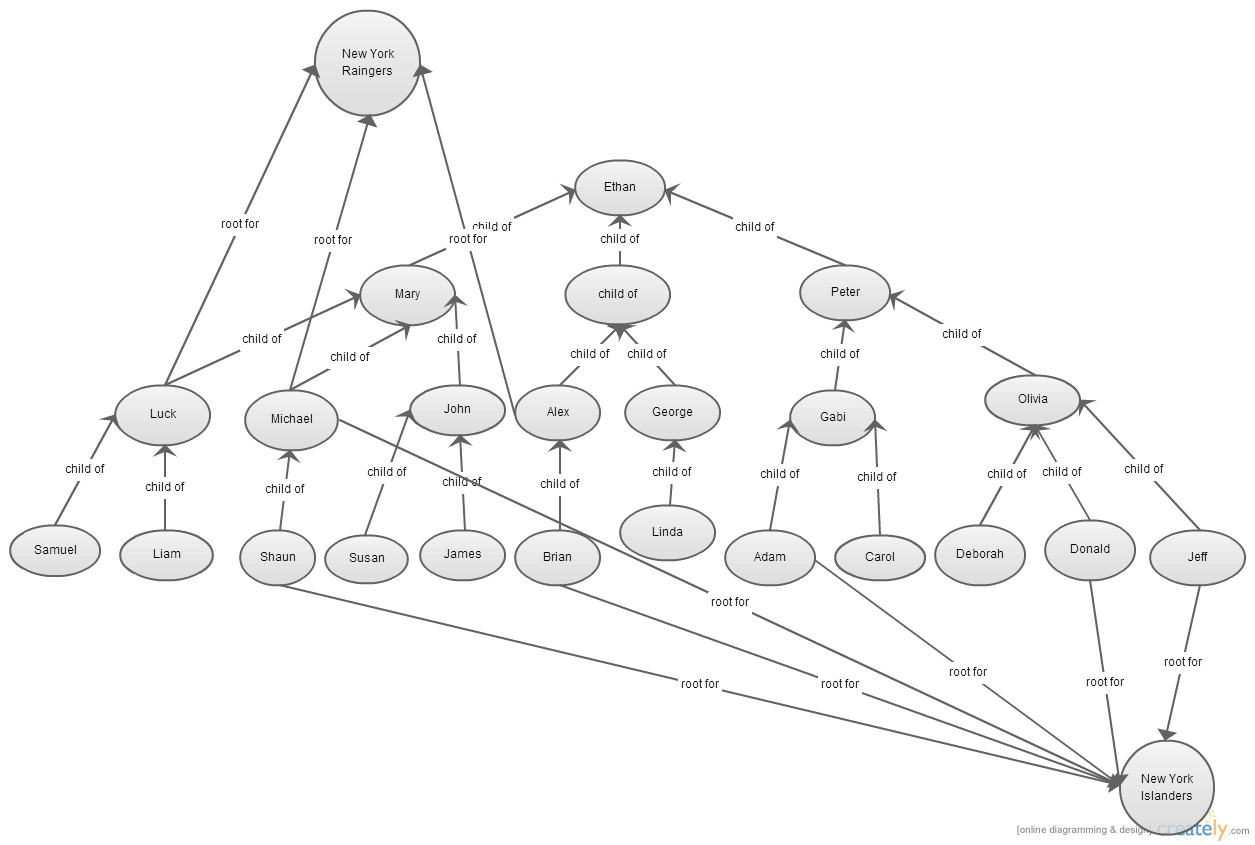
>>>> Imagine, I have a graph of relationships which consists of:
>>>> 1) family tree: one child can heve only one parent
>>>> 2) graph of interests (hockey teams root for...)
>>>>
>>>> Example of the graph:
>>>>
>>>>
>>>> <https://lh6.googleusercontent.com/-2gmc-apHGAw/U8PZ3T4Vc1I/AAAAAAAAABM/wwa19WQtMJ0/s1600/Graph1.png>
>>>>
>>>>
>>>>
>>>>
>>>>
>>>>
>>>>
>>>>
>>>>
>>>>
>>>>
>>>>
>>>>
>>>>
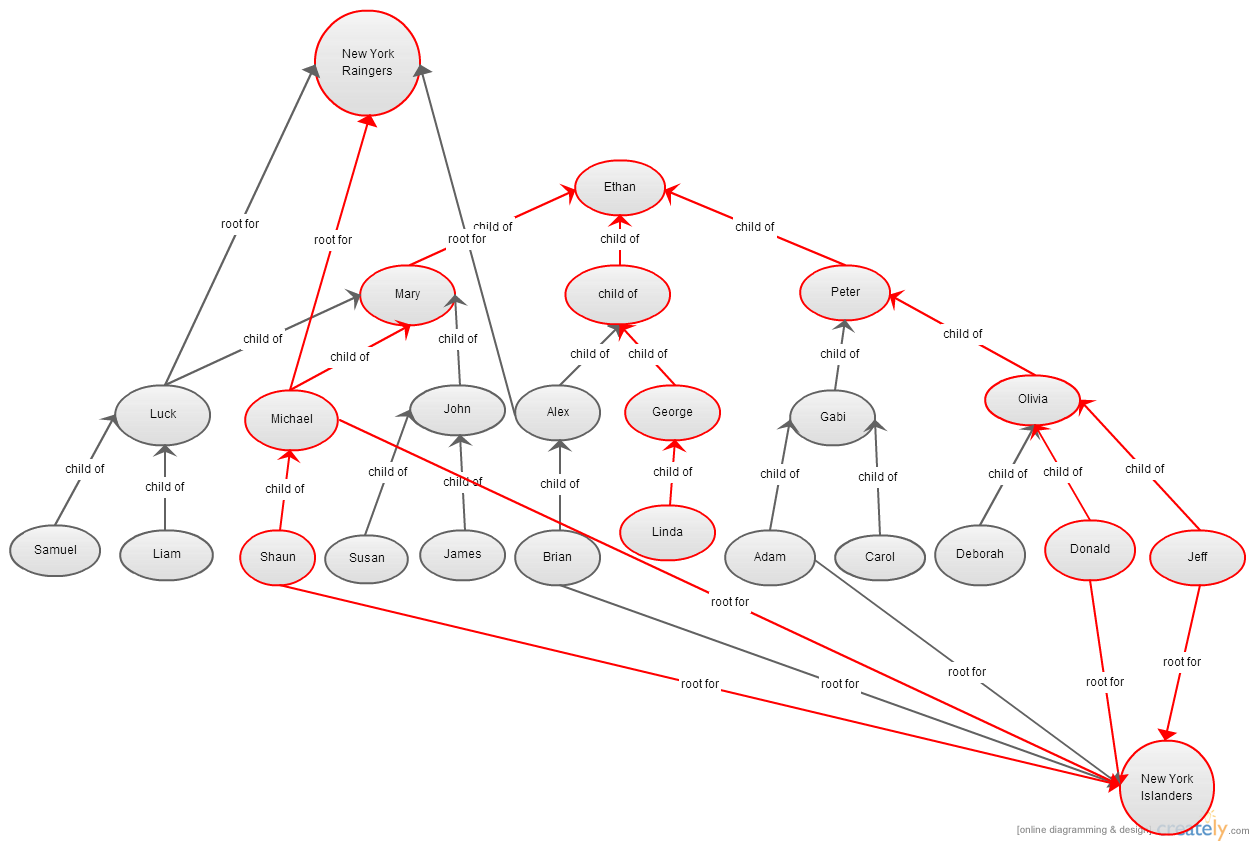
>>>> So, the problem is I need to retrieve the subgraph by the several
>>>> childs, f.e. subgraph for Shaun, John, Linda, Jeff - relationship subtree
>>>> and linked teams:
>>>>
>>>>
>>>>
>>>>
>>>> <https://lh4.googleusercontent.com/-gUIiUUxMbvU/U8Pb4JfciII/AAAAAAAAABY/ckGOzn0nHdc/s1600/Graph_highlighed1.png>
>>>>
>>>>
>>>>
>>>>
>>>>
>>>>
>>>>
>>>>
>>>>
>>>>
>>>>
>>>>
>>>>
>>>>
>>>> And the result subgraph:
>>>>
>>>> <https://lh6.googleusercontent.com/-f6mUnwyrkL0/U8PcJxGfWBI/AAAAAAAAABg/ozvKup6dWlU/s1600/Subgraph_highlighted1.png>
>>>>
>>>>
>>>>
>>>>
>>>>
>>>>
>>>>
>>>>
>>>>
>>>>
>>>>
>>>>
>>>>
>>>>
>>>>
>>>>
>>>>
>>>> I have already read topic abpot
>>>>
>>>

--

---
You received this message because you are subscribed to the Google Groups
"OrientDB" group.
To unsubscribe from this group and stop receiving emails from it, send an email
to [email protected].
For more options, visit https://groups.google.com/d/optout.