Arms stolen from SSP Armory in Chuhuahua

El Debate (Culiacan, Sinaloa) 9-27-10

Chihuahua, Chihuahua – Early this morning, a commando unit attacked an
installation belonging to the Chihuahua Public Security Police and took away
dozens of government firearms.

The agency confirmed the raid on its command center but cannot confirm the
number of rifles and pistols taken from the armory.

Unofficial reports are that at least 20 masked men surrounded the facility,
threatened the guards and ransacked the offices where State Police weapons are
stored.

It is unknown whether documents or computers containing official information
were taken.

The installation is guarded by Federal Police. All personnel found in the
building were deposed by the Attorney General’s Office.


Two unknowns decapitated in Mazatlan

Mazatlan, Sinaloa – Two unknown people were decapitated early Sunday morning in
different parts of the city.

The first was found in Colonia Independencia. The head was on the right side of
the body. No identification or other documents were present.

The second unidentified body was found in Colonia Benito Juarez. The body was
wrapped in black plastic and the head was nearby in a water container.

Both incidents are under investigation by the Public Ministry.


Four dead, two hurt in confrontation in Coahuayana

Morelia – At 10:39 this morning, forces connected to the VI Naval Zone
confirmed the deaths of four civilians and the wounding of two marines as a
result of a confrontation this morning in a Colonia known as “El Ranchito” in
the City of Coahuayana.

At least 500 members of the Mexican Armed Forces, who are stationed in this
district, searched all types of vehicles and private homes for the criminals
who fled and hid after engaging the forces in a fire fight.

First reports are that four civilians are dead and that two wounded marines
were transported to the State of Colima for medical attention.


Los Zetas Cell Leader Arrested in Cancun
<http://www.borderlandbeat.com/2010/09/juarez-car-bomber-arrested.html>


  <http://www.buggsphotography.com/pics/date.png> Monday, September 27, 2010 |
 <http://www.buggsphotography.com/pics/user.png> Borderland Beat Reporter Smurf

Mexican Army forces have detained José Ángel Fernández de Lara Díaz, alias El
Pelon, who was the leader of Los Zetas in the state of Quintana Roo, and whose
base of operations was Cancun. The office of the Secretary of National Defense
(SEDENA) released a statement that indicated the arrest of El Pelon occurred
this past Friday Sept 24th as part of an ongoing operation in the area against
drug trafficking.


Fernández de Lara confessed to being a member of Los Zetas and since July of
this year the leader the cartel, Heriberto Lazcano, alias El Lazca, named him
as the one responsible for drug trafficking, human smuggling, and kidnapping in
the southern state of Mexico.


El Pelon has admitted that his group also extorted all kinds of businesses such
as nightclubs, restaurants, casinos, spas, hotels and tour guides. The proceeds
of these activites were used to fund the war against the Gulf cartel in the
north part of the country.


Fernández de Lara also admitted to taking part the incendiary attack on the
Castillo del Mar bar on the 13th of August along with another sicario alias El
Humm, an order handed down from a regional Zeta chief Lucio Hernández Lechuga,
alias El Lucky for failure to pay protection money.


Along with EL Pelon, the army detained three members of his cell, among them
Jorge Alberto Contreras Hernández, alias El Gordo or Conta, who was in charge
of administrative duties and communications. Also found was $143,000 dollars,
communications equipment and four vehicles.


Reporters Suffer in Mexican Mayhem
<http://www.borderlandbeat.com/2010/09/reporters-suffer-in-mexican-mayhem.html>


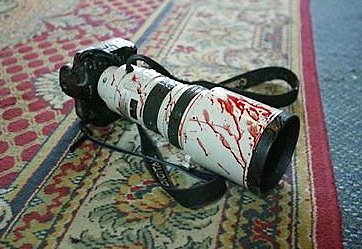
HE was 21, a photojournalist, shot several times at close range in broad
daylight. His colleague, an 18-year-old intern, was wounded.

By: Matthew Clayfield
 <http://www.theaustralian.com.au/> The Australian


<http://1.bp.blogspot.com/_uQt7YfFGA3U/TKAqqEJQUyI/AAAAAAAAHgY/JFCxjkoHtLs/s1600/journalists01.jpg>
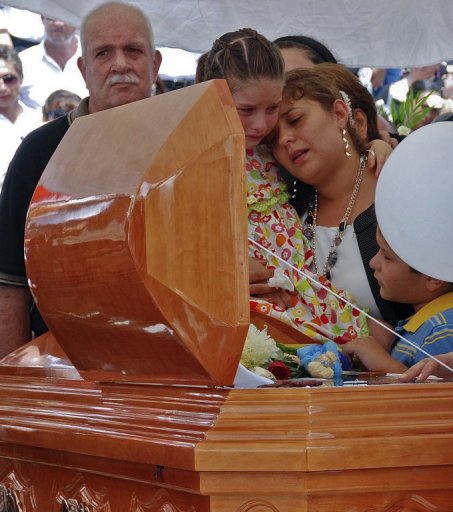
 Luis Carlos Santiago Orozco and Carlos Manuel Sanchez Colunga were parked in a
shopping centre carpark when the bullets hit them. Santiago, who had only been
working at the paper for two weeks, died soon after. It was September 16, and
Mexico had celebrated its Bicentenary of Independence the night before.


On Sunday, when Santiago was buried, the newspaper he worked for, El Diario de
Juarez, ran the usual image of the country's flag alongside its masthead. On
that day, however, the flag was dripping with blood.

"Que quieren de nosotros?" the headline asked. "What do they want from us?"

No suspects had been named in the case and no one had taken responsibility for
the shooting. A Chihuahua state attorney's office spokesman claimed the murder
was not related to Santiago's journalistic work, but rather to "a personal
problem", a line heard before in relation to such cases.

Start of sidebar. Skip to end of sidebar.
.End of sidebar. Return to start of sidebar.
But there was no question who it was the paper's headline referred to when it
said "they".

What followed was a passionate and highly unorthodox open letter from the
paper's editorial staff to Ciudad Juarez's rival drug cartels, which are
jostling, with bloody results, for control of the infamous border city's
coveted drug trafficking routes into the US. Juarez, Mexico's most dangerous
city, borders El Paso, one of the safest in the US.

"We don't want to see more dead," the open letter read. "We don't want to see
more wounded nor do we want to be intimidated. It is impossible for us to do
our job under these conditions."

It has been impossible for quite some time. That the most remarkable thing
about the murder of Santiago was not the brazen manner in which it took place,
but rather the paper's subsequent editorial, is telling.

In Juarez, where between eight and 12 killings are recorded every day -- this
is, for many people's money, the murder capital of the world -- and where the
bicentenary celebrations were cancelled in case the cartels tried anything, a
brazenly committed murder is unremarkable. For that matter, so is a dead
journalist.

Indeed, not only was Santiago not the first journalist to be killed in Juarez,
he wasn't even the first from El Diario. In 2008, the paper's crime reporter,
Armando Rodrguez, was gunned down in his driveway while preparing to take his
daughter to school. Two prosecutors investigating the case were later killed
within a month of each other. None of these murders has been solved.


<http://1.bp.blogspot.com/_uQt7YfFGA3U/TKArPrKd0JI/AAAAAAAAHgc/CWBY3JvVVpw/s1600/periodista_asesinado-ok_0.jpg>


The carnage is not limited to Juarez either. In July this year, Hugo Alfredo
Olivera Cartas, the editor of El Diem, a small paper in the western state of
Michoacan, was found sitting in his pick-up truck one summer morning with three
bullets in his head.


The death of Santiago brings the number of Mexican journalists killed this year
to nine. Chillingly, with over three months left of the year, last year's
deadly total of eight bodies has already been surpassed.

The US-based Committee to Protect Journalists released a report this month
dealing with the impact of the drug wars on the country's journalists and press
freedom. The conclusions reached were as negative as the journalistic death
toll was high.

"Twenty-two journalists have been murdered since President Felipe Calderon
Hinojosa took office in December 2006, at least eight in direct reprisal for
reporting on crime and corruption," says the report, Silence or Death in
Mexico's Press.

"Three media support workers have been slain and at least seven other
journalists have gone missing during this period. In addition, dozens of
journalists have been attacked, kidnapped or forced into exile."

The report also details the more subtle -- which is to say, less bloody --
effects of the drug wars on the country's press. Primary and most insidious
among these is the culture of self-censorship that has arisen, with numerous
newspapers, as well as radio and television stations, flatly refusing to cover
drug-related violence, either as a result of cartel bribes or else without any
prompting at all.

In February, The Dallas Morning News reported that more than 200 people had
been killed in the border city of Reynosa as Los Zetas, a northeastern cartel,
did battle with their former bosses, the Gulf Cartel, for control of the state
of Tamaulipas. Not a word of this was so much as mentioned in the local press,
which Los Zetas more or less controls. Forget bribes. The allure of not being
beheaded on videotape can often be currency enough in such matters.


*       Home <http://www.borderlandbeat.com/>
*       Forum <http://www.borderlandbeat.com/2009/04/forum.html>
*       Links <http://www.borderlandbeat.com/2009/04/links.html>
*       Narco Terms <http://www.borderlandbeat.com/2009/04/narco-terms.html>
*       Pictures <http://www.borderlandbeat.com/2009/04/pictures.html>

*       Map of Cartels
<http://www.borderlandbeat.com/2010/01/maps-of-mexico-cartels.html>
*       Info on Mexican Cartels
<http://www.borderlandbeat.com/2009/04/test.html>
*       Time Line <http://www.borderlandbeat.com/2009/04/timeline.html>
*       Events
<http://www.borderlandbeat.com/2009/04/events-of-organized-crime.html>
*       History <http://www.borderlandbeat.com/2010/02/mexican-drug-war.html>
*       Cartels Structure
<http://www.borderlandbeat.com/2009/04/mexican-drug-cartel-structure.html>

This Blog

Linked From Here

Other Blogs


This Blog


Linked From Here


Other Blogs


State Police Arsenal Raided in Chihuahua City
<http://www.borderlandbeat.com/2010/09/state-police-arsenal-raided-in.html>


  <http://www.buggsphotography.com/pics/date.png> Tuesday, September 28, 2010 |


<http://1.bp.blogspot.com/_gsNEfSLsA8A/TKDSya9FgwI/AAAAAAAAAHA/bxxRQvPO_ZU/s1600/c4+complejo.jpg>
 CHIHUAHUA, Chihuahua – Around 02:00 on the morning of Monday, September 27, at
least 6 men dressed in CIPOL state police uniforms with tactical gear & riding
in a white Dodge Ram entered the State Security Complex (CIPOL compound) &
raided the arsenal.

The group entered by the main (south) entrance. They first took control of the
radio room. In the process, they disarmed 5 guards & handcuffed their hands &
feet (one news source said it was 2 police & 3 security guards).

The commando then entered the arsenal after breaking 2 locks to get through the
steel doors. They took 43 H&K G36 assault rifles (.223 caliber), 26 9mm
pistols, bulletproof vests & grenades.

They left the way they came with no resistance. Official reports admitted there
was insufficient security for the complex.

It was also apparent from how the commando conducted their operation that they
knew how to enter the complex, how to access the radio room & where the arsenal
was located.

Authorities are reviewing security cam videos to learn more about the
perpetrators.

Agents from the State Attorney General's office (PGJE) arrested the officers
who were guarding the CIPOL facilities when the raid occurred. The main reason
for the arrests was to investigate why the the officers did not take any action
to repel the attack.


Several days ago unknown assailants entered a garage where several CIPOL
vehicles were located and destroyed them. No suspects have been arrested in
that incident.


[Sources: La Omnia, La Opcion, El Tiempo, El Pueblo]

Share it:


<http://www.blogger.com/share-post.g?blogID=5195137745759962560&postID=7866662584535093094&target=email>
 Email This
<http://www.blogger.com/share-post.g?blogID=5195137745759962560&postID=7866662584535093094&target=blog>
 BlogThis!
<http://www.blogger.com/share-post.g?blogID=5195137745759962560&postID=7866662584535093094&target=twitter>
 Share to Twitter
<http://www.blogger.com/share-post.g?blogID=5195137745759962560&postID=7866662584535093094&target=facebook>
 Share to Facebook
<http://www.blogger.com/share-post.g?blogID=5195137745759962560&postID=7866662584535093094&target=buzz>
 Share to Google Buzz

  <http://www.buggsphotography.com/pics/comments.png>
<http://www.borderlandbeat.com/2010/09/state-police-arsenal-raided-in.html#comments>
 14 Borderland Beat Comments
<http://www.buggsphotography.com/pics/folder.png> Labels:
<http://www.borderlandbeat.com/search/label/chihuahua> chihuahua,
<http://www.borderlandbeat.com/search/label/cipol> cipol
<http://www.blogger.com/email-post.g?blogID=5195137745759962560&postID=7866662584535093094>

<http://www.blogger.com/post-edit.g?blogID=5195137745759962560&postID=7866662584535093094>


Los Zetas Cell Leader Arrested in Cancun
<http://www.borderlandbeat.com/2010/09/juarez-car-bomber-arrested.html>


  <http://www.buggsphotography.com/pics/date.png> Monday, September 27, 2010 |
 <http://www.buggsphotography.com/pics/user.png> Borderland Beat Reporter Smurf

Mexican Army forces have detained José Ángel Fernández de Lara Díaz, alias El
Pelon, who was the leader of Los Zetas in the state of Quintana Roo, and whose
base of operations was Cancun. The office of the Secretary of National Defense
(SEDENA) released a statement that indicated the arrest of El Pelon occurred
this past Friday Sept 24th as part of an ongoing operation in the area against
drug trafficking.


Fernández de Lara confessed to being a member of Los Zetas and since July of
this year the leader the cartel, Heriberto Lazcano, alias El Lazca, named him
as the one responsible for drug trafficking, human smuggling, and kidnapping in
the southern state of Mexico.


El Pelon has admitted that his group also extorted all kinds of businesses such
as nightclubs, restaurants, casinos, spas, hotels and tour guides. The proceeds
of these activites were used to fund the war against the Gulf cartel in the
north part of the country.


Fernández de Lara also admitted to taking part the incendiary attack on the
Castillo del Mar bar on the 13th of August along with another sicario alias El
Humm, an order handed down from a regional Zeta chief Lucio Hernández Lechuga,
alias El Lucky for failure to pay protection money.


Along with EL Pelon, the army detained three members of his cell, among them
Jorge Alberto Contreras Hernández, alias El Gordo or Conta, who was in charge
of administrative duties and communications. Also found was $143,000 dollars,
communications equipment and four vehicles.


Source
<http://www.jornada.unam.mx/2010/09/27/index.php?section=politica&article=010n1pol>
 La Jornada,

Share it:


<http://www.blogger.com/share-post.g?blogID=5195137745759962560&postID=795665275309460745&target=email>
 Email This
<http://www.blogger.com/share-post.g?blogID=5195137745759962560&postID=795665275309460745&target=blog>
 BlogThis!
<http://www.blogger.com/share-post.g?blogID=5195137745759962560&postID=795665275309460745&target=twitter>
 Share to Twitter
<http://www.blogger.com/share-post.g?blogID=5195137745759962560&postID=795665275309460745&target=facebook>
 Share to Facebook
<http://www.blogger.com/share-post.g?blogID=5195137745759962560&postID=795665275309460745&target=buzz>
 Share to Google Buzz

  <http://www.buggsphotography.com/pics/comments.png>
<http://www.borderlandbeat.com/2010/09/juarez-car-bomber-arrested.html#comments>
 3 Borderland Beat Comments   <http://www.buggsphotography.com/pics/folder.png>

<http://www.blogger.com/email-post.g?blogID=5195137745759962560&postID=795665275309460745>

<http://www.blogger.com/post-edit.g?blogID=5195137745759962560&postID=795665275309460745>


Reporters Suffer in Mexican Mayhem
<http://www.borderlandbeat.com/2010/09/reporters-suffer-in-mexican-mayhem.html>


  <http://www.buggsphotography.com/pics/date.png> |
<http://www.buggsphotography.com/pics/user.png> Borderland Beat Reporter Buggs

HE was 21, a photojournalist, shot several times at close range in broad
daylight. His colleague, an 18-year-old intern, was wounded.

By: Matthew Clayfield
 <http://www.theaustralian.com.au/> The Australian


<http://1.bp.blogspot.com/_uQt7YfFGA3U/TKAqqEJQUyI/AAAAAAAAHgY/JFCxjkoHtLs/s1600/journalists01.jpg>
 Luis Carlos Santiago Orozco and Carlos Manuel Sanchez Colunga were parked in a
shopping centre carpark when the bullets hit them. Santiago, who had only been
working at the paper for two weeks, died soon after. It was September 16, and
Mexico had celebrated its Bicentenary of Independence the night before.


On Sunday, when Santiago was buried, the newspaper he worked for, El Diario de
Juarez, ran the usual image of the country's flag alongside its masthead. On
that day, however, the flag was dripping with blood.

"Que quieren de nosotros?" the headline asked. "What do they want from us?"

No suspects had been named in the case and no one had taken responsibility for
the shooting. A Chihuahua state attorney's office spokesman claimed the murder
was not related to Santiago's journalistic work, but rather to "a personal
problem", a line heard before in relation to such cases.

Start of sidebar. Skip to end of sidebar.
.End of sidebar. Return to start of sidebar.
But there was no question who it was the paper's headline referred to when it
said "they".

What followed was a passionate and highly unorthodox open letter from the
paper's editorial staff to Ciudad Juarez's rival drug cartels, which are
jostling, with bloody results, for control of the infamous border city's
coveted drug trafficking routes into the US. Juarez, Mexico's most dangerous
city, borders El Paso, one of the safest in the US.

"We don't want to see more dead," the open letter read. "We don't want to see
more wounded nor do we want to be intimidated. It is impossible for us to do
our job under these conditions."

It has been impossible for quite some time. That the most remarkable thing
about the murder of Santiago was not the brazen manner in which it took place,
but rather the paper's subsequent editorial, is telling.

In Juarez, where between eight and 12 killings are recorded every day -- this
is, for many people's money, the murder capital of the world -- and where the
bicentenary celebrations were cancelled in case the cartels tried anything, a
brazenly committed murder is unremarkable. For that matter, so is a dead
journalist.

Indeed, not only was Santiago not the first journalist to be killed in Juarez,
he wasn't even the first from El Diario. In 2008, the paper's crime reporter,
Armando Rodrguez, was gunned down in his driveway while preparing to take his
daughter to school. Two prosecutors investigating the case were later killed
within a month of each other. None of these murders has been solved.


<http://1.bp.blogspot.com/_uQt7YfFGA3U/TKArPrKd0JI/AAAAAAAAHgc/CWBY3JvVVpw/s1600/periodista_asesinado-ok_0.jpg>


The carnage is not limited to Juarez either. In July this year, Hugo Alfredo
Olivera Cartas, the editor of El Diem, a small paper in the western state of
Michoacan, was found sitting in his pick-up truck one summer morning with three
bullets in his head.


The death of Santiago brings the number of Mexican journalists killed this year
to nine. Chillingly, with over three months left of the year, last year's
deadly total of eight bodies has already been surpassed.

The US-based Committee to Protect Journalists released a report this month
dealing with the impact of the drug wars on the country's journalists and press
freedom. The conclusions reached were as negative as the journalistic death
toll was high.

"Twenty-two journalists have been murdered since President Felipe Calderon
Hinojosa took office in December 2006, at least eight in direct reprisal for
reporting on crime and corruption," says the report, Silence or Death in
Mexico's Press.

"Three media support workers have been slain and at least seven other
journalists have gone missing during this period. In addition, dozens of
journalists have been attacked, kidnapped or forced into exile."

The report also details the more subtle -- which is to say, less bloody --
effects of the drug wars on the country's press. Primary and most insidious
among these is the culture of self-censorship that has arisen, with numerous
newspapers, as well as radio and television stations, flatly refusing to cover
drug-related violence, either as a result of cartel bribes or else without any
prompting at all.

In February, The Dallas Morning News reported that more than 200 people had
been killed in the border city of Reynosa as Los Zetas, a northeastern cartel,
did battle with their former bosses, the Gulf Cartel, for control of the state
of Tamaulipas. Not a word of this was so much as mentioned in the local press,
which Los Zetas more or less controls. Forget bribes. The allure of not being
beheaded on videotape can often be currency enough in such matters.


<http://www.borderlandbeat.com/2010/09/reporters-suffer-in-mexican-mayhem.html#more>
 Read more »

Share it:


<http://www.blogger.com/share-post.g?blogID=5195137745759962560&postID=9157908884859247340&target=email>
 Email This
<http://www.blogger.com/share-post.g?blogID=5195137745759962560&postID=9157908884859247340&target=blog>
 BlogThis!
<http://www.blogger.com/share-post.g?blogID=5195137745759962560&postID=9157908884859247340&target=twitter>
 Share to Twitter
<http://www.blogger.com/share-post.g?blogID=5195137745759962560&postID=9157908884859247340&target=facebook>
 Share to Facebook
<http://www.blogger.com/share-post.g?blogID=5195137745759962560&postID=9157908884859247340&target=buzz>
 Share to Google Buzz

  <http://www.buggsphotography.com/pics/comments.png>
<http://www.borderlandbeat.com/2010/09/reporters-suffer-in-mexican-mayhem.html#comments>
 1 Borderland Beat Comments   <http://www.buggsphotography.com/pics/folder.png>

<http://www.blogger.com/email-post.g?blogID=5195137745759962560&postID=9157908884859247340>

<http://www.blogger.com/post-edit.g?blogID=5195137745759962560&postID=9157908884859247340>


Threats from Narcos Force Mexican Mayors to Live in U.S.
<http://www.borderlandbeat.com/2010/09/threats-from-narcos-force-mexican.html>


  <http://www.buggsphotography.com/pics/date.png> |
<http://www.buggsphotography.com/pics/user.png> Borderland Beat Reporter Buggs


<http://3.bp.blogspot.com/_uQt7YfFGA3U/TKAmixVPEAI/AAAAAAAAHgU/Y8W9zrcZrXs/s1600/mayors01.jpg>
 15 mayors have been killed since President Felipe Calderon declared war on
Mexico’s drug cartels shortly after taking office in December 2006 including
the murder of the mayor of Santiago, Nuevo Leon, Edelmiro Cavazos.


Several Mexican mayors have been forced to move to the United States for
reasons of personal and family safety in the face of threats from drug
traffickers and the killings of 10 mayors this year in Mexico.

Mayors from the northern border states of Tamaulipas, Chihuahua and Nuevo Leon
have moved to the United States, with some taking up residence in that country
permanently and others splitting their time between U.S. and Mexican
residences, municipal officials said.

The mayors of at least six border cities in the northeastern state of
Tamaulipas have been forced to move to neighboring Texas.

“The advantage for them is that they cross the Rio Bravo (Rio Grande) and they
are in their city hall or their home,” an official of the ruling National
Action Party, or PAN, said on condition of anonymity.

Most of the mayors use nondescript vehicles to avoid drawing attention to
themselves and do not drive long distances, the official said.

Another large group of mayors from Tamaulipas decided to abandon their cities
in the last year of their terms and hide out in other places in Mexico, where
drug-related violence has surged since the start of this year.

Two of them left their communities and govern “with the telephone in their
hand,” the PAN official said.

“The case of the mayors is not restricted to the PAN. Mayors from the PRI
(Institutional Revolutionary Party) have also had to take measures to protect
their security,” the official said.

The PAN refused to run candidates in the last municipal elections in some
cities where organized crime groups have extensive control.

The threats are continuous in some cases, while the criminals go beyond threats
in other cases.

A mayor in Nuevo Leon state was murdered last week and another was seriously
wounded in Chihuahua state.

Five mayors have been murdered in the past six weeks, with a total of 10 killed
this year.

About 15 mayors have been killed since President Felipe Calderon declared war
on Mexico’s drug cartels shortly after taking office in December 2006.

Chihuahua, one of the country’s most dangerous states, is home to Ciudad
Juarez, Mexico’s murder capital.

Some mayors from Chihuahua have decided to live in El Paso, Texas, which is
just across the border from Juarez, crossing daily to work, municipal officials
said.

The situation has also worsened in Nuevo Leon, where Doctor Gonzalez Mayor
Prisciliano Rodriguez was murdered last Thursday, a month after Santiago Mayor
Edelmiro Cavazos was killed.

Crime has surged in some cities in Nuevo Leon and people are moving to other
parts of Mexico and the United States, a state legislator said on condition of
anonymity.

Drug cartels threaten officials to keep them from interfering with their
criminal activities.

Many of the cities have only between two and five patrol cars for the average
of 30 police officers on the payroll, and officers have few firearms to take on
criminals, officials said.

Some high-level officials and their families have also been forced to flee to
the United States.

Baja California state’s public safety secretary and the director of the Tijuana
police department, as well as some officers, were forced to send their families
away for their own safety.

Tijuana Mayor Jorge Ramos said the goal was to allow the officials to fight
criminals during their terms in office, which end in late November.


Why Mexico is not the new Colombia when it comes to Drug
<http://www.borderlandbeat.com/2010/09/why-mexico-is-not-new-colombia-when-it.html>
  Cartels


<http://4.bp.blogspot.com/_TUJriOsi8Xk/TJ_DkebtQxI/AAAAAAAAAF8/3vfhX6idhq4/s1600/56354376.jpg>
 A press member walks over signs depicting missing or dead journalists during a
protest against violence in Mexico City, Aug. 7. Photo by: Marco Ugarte,
Associated Press, Sept. 25, 2010.

by Ken Ellingwood,
 <http://www.latimes.com/> Los Angeles Times

Car bombs. Political assassinations. Battlefield-style skirmishes between
soldiers and heavily armed adversaries.

Across big stretches of Mexico, deepening drug-war mayhem is challenging the
authority of the state and the underpinnings of democracy. Powerful cartels in
effect hold entire regions under their thumb. They extort money from
businesses, meddle in politics and kill with an impunity that mocks the
government's ability to impose law and order.

The slaying of a gubernatorial candidate near the Texas border this year was
the most stunning example of how the narco-traffickers warp Mexican politics.
Mayors are elected, often with the backing of drug lords, and then killed when
they get in the way.

Journalists are targets too. After a young photographer was gunned down in
Ciudad Juarez Sept. 17, his newspaper, El Diario de Juarez, issued a plaintive
appeal to the cartels in a front-page editorial. "We ask you to explain what
you want from us," the newspaper said. "You are at this time the de facto
authorities in this city because the legal authorities have not been able to
stop our colleagues from falling."

As the death toll from drug-related violence nears 30,000 in four years, the
impression that Mexico is losing control over big chunks of territory — the
northern states of Tamaulipas, Chihuahua, Nuevo Leon and Durango at the top of
this list — is prompting comparisons with the Colombia of years past. Under the
combined onslaught of drug kingpins and leftist guerrillas, the South American
country appeared to be in danger of collapse.

The Colombia comparison, long fodder for parlor debates in Mexico, gained new
energy this month when Secretary of State Hillary Rodham Clinton said the
tactics of Mexican cartels looked increasingly like those of a Colombia-style
"insurgency," which the U.S. helped fight with a military and social assistance
program known as Plan Colombia that cost more than $7 billion.

But is Mexico the new Colombia? As the Obama administration debates what course
to take on Mexico, finding the right fix depends on getting the right
diagnosis.

Clinton cited the need for a regional "equivalent" of Plan Colombia. After 10
years, the rebels' grip in Colombia has been reduced from more than a third of
the country to less than a fifth. Violence is down and, with improved security,
the economy is booming. However, tons of cocaine are still being produced and
there have been widespread human rights abuses.

Clinton acknowledged that the program had "problems" — but said that it had
worked. Irked Mexican officials dismissed Clinton's Colombia comparison as
sloppy history and tartly offered that the only common thread was drug
consumption in the United States. And while the two cases share broad-brush
similarities, there also are important distinctions, including Mexico's
profound sensitivity to outside interference.

Here is a breakdown of the two experiences:

The Nature of the Foe
Colombia's main leftist rebels, the Revolutionary Armed Forces of Colombia,
known as the FARC, waged war in the name of Marxist ideology, calling for an
overthrow of the traditional ruling oligarchy. Separately, the country faced a
campaign of violence by drug cartels. To fund the insurgency, the rebels first
took a cut from coca producers and traffickers – and then starting running
their own drug labs and forming partnerships with the traffickers.

In contrast, the main aim of Mexican drug gangs is to move merchandise without
interference from authorities. In many places, traffickers manipulate governors
and mayors — and the police they control. Their ability to bully and extort has
given them a form of power that resembles parallel rule.

But the goal is cash, not sovereignty. Drug lords don't want to collect trash,
run schools or pave the streets. And very often, the violence the gangs unleash
is directed against each other, not the government.

Mexico also is a much bigger country. While its social inequities are glaring,
there is no sign of a broad-based rebel movement with which traffickers could
join hands.

"We've got a criminal problem, not a guerrilla problem," said Bruce Bagley, who
chairs the international studies department at the University of Miami in Coral
Gables. "The drug lords don't want to take over. They want to be left alone.
They want a state that's pliable and porous."

Territory
At the peak of Colombia's insurgency, the FARC controlled a large part of the
country, including a Switzerland-size chunk with defined borders ceded to it by
the government as a demilitarized zone known as the despeje, or clearing.

Mexico's drug gangs have relied on killing and intimidation tactics to
challenge government control over large swaths by erasing a sense of law and
order.

In the border state of Tamaulipas, a gubernatorial candidate who was heavily
favored to win a July election was gunned down less than a week before the
vote. Violence in neighboring Nuevo Leon state prompted the U.S. State
Department last month to direct employees to remove their children from the
city of Monterrey, a critically important and affluent industrial center.

In Clinton's words, U.S. officials worry about a "drug-trafficking threat that
is in some cases morphing into, or making common cause with, what we would
consider an insurgency."

But there are no borders defining any drug cartel's domain, making it
difficult, even within regions, to say how much of the country lies outside
effective government control on any given day. There is no force that appears
anywhere near capable of toppling the government and, so far, no zone the
Mexican army cannot reach when it wants.

Instead, cartel control is more fluid. It is measured in the extent to which
residents stay indoors at night to avoid roving gunmen; the degree to which
Mexican news media steer away from covering crime so they don't anger the
trafficking groups.

The sense of siege hopscotches across Mexico like windblown fire across a
landscape.


[Non-text portions of this message have been removed]


------------------------------------

--------------------------
Want to discuss this topic?  Head on over to our discussion list,
[email protected].
--------------------------
Brooks Isoldi, editor
[email protected]

http://www.intellnet.org

  Post message: [email protected]
  Subscribe:    [email protected]
  Unsubscribe:  [email protected]


*** FAIR USE NOTICE. This message contains copyrighted material whose use has
not been specifically authorized by the copyright owner. OSINT, as a part of
The Intelligence Network, is making it available without profit to OSINT
YahooGroups members who have expressed a prior interest in receiving the
included information in their efforts to advance the understanding of
intelligence and law enforcement organizations, their activities, methods,
techniques, human rights, civil liberties, social justice and other
intelligence related issues, for non-profit research and educational purposes
only. We believe that this constitutes a 'fair use' of the copyrighted material
as provided for in section 107 of the U.S. Copyright Law. If you wish to use
this copyrighted material for purposes of your own that go beyond 'fair use,'
you must obtain permission from the copyright owner.
For more information go to:
http://www.law.cornell.edu/uscode/17/107.shtmlYahoo! Groups Links

<*> To visit your group on the web, go to:
    http://groups.yahoo.com/group/osint/

<*> Your email settings:
    Individual Email | Traditional

<*> To change settings online go to:
    http://groups.yahoo.com/group/osint/join
    (Yahoo! ID required)

<*> To change settings via email:
    [email protected]
    [email protected]

<*> To unsubscribe from this group, send an email to:
    [email protected]

<*> Your use of Yahoo! Groups is subject to:
    http://docs.yahoo.com/info/terms/