Agreed.
Data change. Knowledge is gained. To be frozen in an I-will-never-flip-flop
position is dangerous, on multiple levels.


My current changing perspective, due to the morphing of a virus and our
collective knowledge-gain of the last couple of years, is that COVID is
something we need to learn to accept as part of the long-term future. Attempts
to banish it forever through draconian lockdowns are not going to work. I agree
with the earlier lockdown strategies, but now that we have vaccines and hopeful
antiviral drugs, I think that it is time to figure out how to live with the
virus as we have learned to live with the flu and colds.


From: [email protected] <[email protected]> On
Behalf Of Centroids
Sent: Wednesday, January 12, 2022 9:32 AM
To: Centroids Discussions <[email protected]>
Subject: [RC] The fun way to create a civil society


Fall in love with the thrill of accepting the better argument – in contrast to
mere social pressure – and you'll help pave the path to that better world. Not
through grand solutions, but through better trade offs.


The thrill of changing your mind
https://world.hey.com/dhh/the-thrill-of-changing-your-mind-88ff9063
(via Instapaper <http://www.instapaper.com/> )

  _____

I've changed my mind on a lot of topics over the last few years, and it's
frankly been exhilarating. Especially if the topic had been one left
unquestioned for a long time. To me, it feels similar to the rush of solving a
hard problem. When the pieces suddenly fit into place, and an elegant solution
emerges, you can't help but smile.

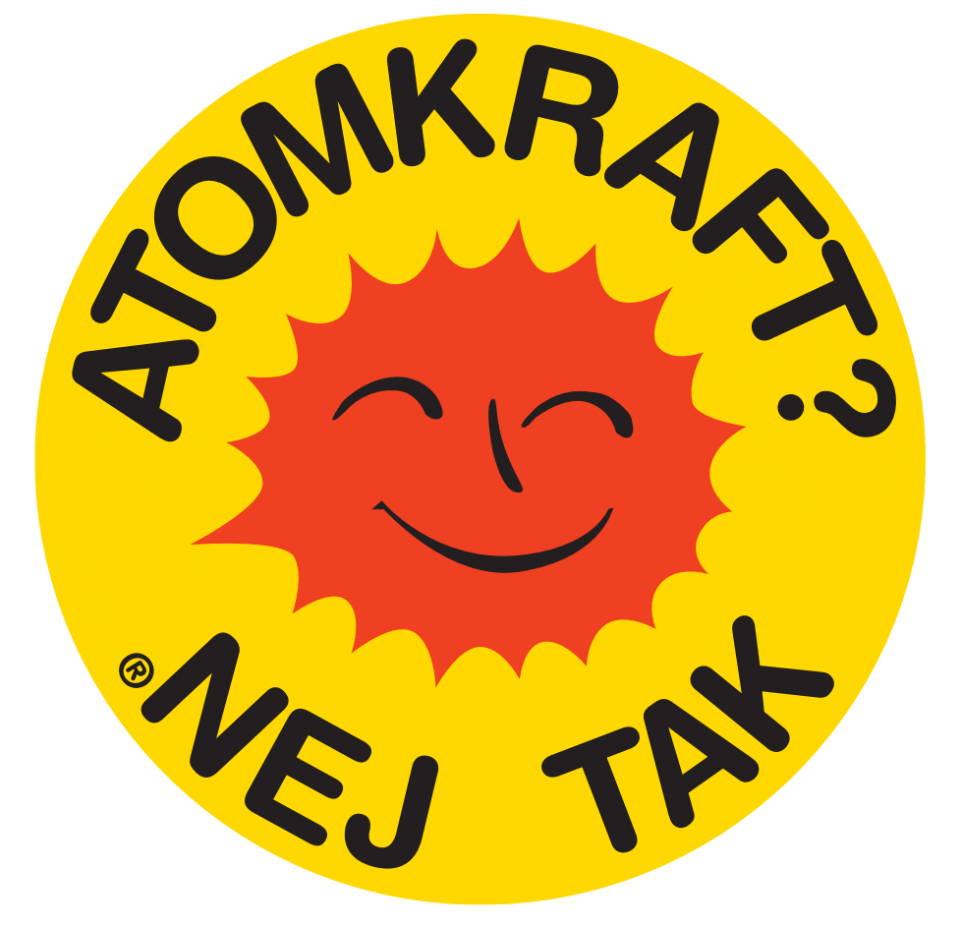
Take nuclear power. I vividly remember the stickers from the 80s opposing it.
Even looking them today, it brings warm and fuzzy memories. Together with that
era's activism, like the Greenpeace Rainbow Warrior
<https://www.greenpeace.org/international/explore/ships/rainbow-warrior/> . And
fundraising as a kid for the Brazilian rain forest.

Further more, it seemed like a settled question: The future of energy is wind
and solar! Of course it is. Renewables with no downsides, right? Wrong. Michael
Shellenberger's exposition of energy sources in Apocalypse Never
<https://www.amazon.com/Apocalypse-Never-Environmental-Alarmism-Hurts/dp/0063001691>
  was as argumentatively piercing as it was intellectually compelling. It goes
something like this:

1.      Wind and solar are unreliable sources of energy. The sun doesn't always
shine, the wind doesn't always blow. But electrical grids need dependable
sources of power to perform reliably and cheaply.
2.      Batteries can't solve the problem at scale. The sheer footprint needed
to bridge the gap in production from renewables is enormous and unrealistic
with present-day technology.
3.      When wind and solar fails to deliver the power needed, you need
on-demand backup sources. Most of these sources today are extra dirty emitters
like coal power plants.
4.      Thus, if you over-invest in wind and solar, you may end up with a power
grid that's simultaneously expensive, unreliable, dirty, and without
sovereignty. The case study is Germany, which is now at the mercy of Russian
natural gas, after spending billions over the years chasing wind and solar.
5.      Besides, wind in particular is not without its own ecological
drawbacks. Wind parks can wreck havoc on the migration paths of certain bird
species. They take up a lot of space. (And they're a blight for the people who
have to live right next to them.) Solar has a serious waste problem. Panels
recycle poorly, are full of toxic materials, and often end up in 3rd world
landfills.

That doesn't mean wind and solar can't be or shouldn't be part of the answer
for dealing with climate change. But it does mean that betting on them
exclusively is a bad idea. And that their use is not without its own problems.

Enter nuclear power. An energy source that also emits no earth-heating gasses,
provides an abundance of predictable power, and has done so for decades.
Countries like France already get 70% of their power from nuclear. The nuclear
waste generated can be stored on-site, and the waste needed for a single
person's lifetime energy consumption can fit in a coke can.

But what about Chernobyl? Three Mile Island? Fukushima? Shellenberger examines
all these well-known accidents in detail, and compellingly concludes that the
total number of deaths associated is but a pittance compared to all these other
energy sources we're using on the daily. Their impact has largely been drawn
from the spectacle of disaster. And as a result been massively overstated (even
if the consequences are very real).

It's that contrast I found particularly compelling. That when we weigh the
trade offs objectively, nuclear emerges as shining star. Not because there are
no risks, but because they are far less than the alternatives. Like comparing
flying and driving. Flying is much safer, but when a plane goes down, it's
world news, and it freaks some people out. Meanwhile, 35,000 died in car
accidents in the US last year. Few people fret about that.

It seems that Shellenberger isn't the only one coming to this conclusion. That
nuclear power appears to be one of our very best chances at countering climate
change, and the historical opposition from environmentalists now looks like a
catastrophic error in hindsight. The EU just announced
<https://www.reuters.com/markets/commodities/eu-drafts-plan-label-gas-nuclear-investments-green-2022-01-01/>
  that nuclear can be counted as a green energy source going forward, which
means its expanded use can be used to fulfill the international pledges for
transitioning off green-house gas emitting energy sources. Nice.

But this goes further than just nuclear. To make progress on a range of topics,
we have to be able to change our minds. To revisit our assumptions when the
data changes or when a new way of looking at it emerges. This is true whether
we talk about energy, vaccines, economics, or politics in general. Fall in love
with the thrill of accepting the better argument – in contrast to mere social
pressure – and you'll help pave the path to that better world. Not through
grand solutions, but through better trade offs.


<https://world.hey.com/dhh/88ff9063/blobs/eyJfcmFpbHMiOnsibWVzc2FnZSI6IkJBaHBCSVJERlNnPSIsImV4cCI6bnVsbCwicHVyIjoiYmxvYl9pZCJ9fQ==--ee97ee0e94105912f266583d42b5019585bfa299/danish%20no%20to%20nulear%20sticker.png?disposition=attachment>


  _____


Sent from my iPhone

--
--
Centroids: The Center of the Radical Centrist Community
<[email protected]>
Google Group: http://groups.google.com/group/RadicalCentrism
Radical Centrism website and blog: http://RadicalCentrism.org

---
You received this message because you are subscribed to the Google Groups
"Centroids: The Center of the Radical Centrist Community" group.
To unsubscribe from this group and stop receiving emails from it, send an email
to [email protected]
<mailto:[email protected]> .
To view this discussion on the web visit
https://groups.google.com/d/msgid/RadicalCentrism/66EF895C-642A-42BE-893F-4BD84F4A4C7B%40radicalcentrism.org

<https://groups.google.com/d/msgid/RadicalCentrism/66EF895C-642A-42BE-893F-4BD84F4A4C7B%40radicalcentrism.org?utm_medium=email&utm_source=footer>
 .

--
--
Centroids: The Center of the Radical Centrist Community
<[email protected]>
Google Group: http://groups.google.com/group/RadicalCentrism
Radical Centrism website and blog: http://RadicalCentrism.org

---
You received this message because you are subscribed to the Google Groups
"Centroids: The Center of the Radical Centrist Community" group.
To unsubscribe from this group and stop receiving emails from it, send an email
to [email protected].
To view this discussion on the web visit
https://groups.google.com/d/msgid/RadicalCentrism/000001d807d7%24ce65f0e0%246b31d2a0%24%402chahn.com.