Send sanskrit mailing list submissions to
        [EMAIL PROTECTED]

To subscribe or unsubscribe via the World Wide Web, visit
        http://mailman.cs.utah.edu/mailman/listinfo/sanskrit
or, via email, send a message with subject or body 'help' to
        [EMAIL PROTECTED]
You can reach the person managing the list at
        [EMAIL PROTECTED]

When replying, please edit your Subject line so it is more specific
than "Re: Contents of sanskrit digest..."


Today's Topics:

   1. Susudata ([EMAIL PROTECTED])
   2. Re: Susudata (Steven T. Hatton)


----------------------------------------------------------------------

Message: 1
Date: Sun, 08 Jun 2003 05:53:13 +0000
From: [EMAIL PROTECTED]
Subject: [Sanskrit] Susudata
To: [EMAIL PROTECTED],
Message-ID: <[EMAIL PROTECTED]>
Content-Type: text/plain

The capital of the Achaemenid Empire was
known as 'shustar', how particularly to
translate it to English I do not know, though I
am certain there is a cuneiform meaning.  The
city is also known as 'Susa' and appears in the
Bible, most notably in the Book of Daniel, but
see also various references in Herodotus,
Xenophon, et al.

I would be curious to know which river in
Germany the reference is made to.

namaste.


Today's Topics:

   1. Susudata - a river in Germany (Steven T.
Hatton)
   2. Re: Susudata - a river in Germany (Haresh
Bakshi)
   3. Re: Susudata - a river in Germany (Sai)
   4. Re: Susudata - a river in Germany (Sai)
   5. Re: Susudata - a river in Germany
(Srinivas Kommu)
   6. Re: Susudata - a river in Germany (Sai)


------------------------------------------------------------
----------

Message: 1
Date: Fri, 6 Jun 2003 17:07:39 -0400
From: "Steven T. Hatton"
<[EMAIL PROTECTED]>
Subject: [Sanskrit] Susudata - a river in
Germany
To: [EMAIL PROTECTED]
Message-ID:
<[EMAIL PROTECTED]
et>
Content-Type: text/plain;  charset="utf-8"

There is a river in Germany that was known in
ancient times as the Susudata.
I'm no linguist, but from my exposure to Indo-
Iranian names such as
Mithradata, Indradata, Somadata,
Shuwardata, Yashdata (See Pritchard, _The
Ancient Near East_, vol 1, pages 263-267,
especially the footnotes), as well
as my exposure to Germanic languages, I am
lead to believe this river name is
likely Indo-Iranian, rather than Celtic,
Germanic, or Latin.  If this is
true, the name would mean something similar
to "gift of Susu".

What I would like to know is whether there is
something in Indo-Iranian that
might shed some light on what "Susu" may
have meant. It isn't far fetched at
all to believe there may have been Indo-
Iranian speaking people in
prehistoric Germany.  Though few dialects of
Scythian languages have
survived, the convention is to place them in
the category of Iranian speaking
peoples.

My use of the term Indo-Iranian is meant to
denote the collection of
Indo-European languages spoken in India,
Ariana, and Iran in ancient times.
The best preserved of these, by far, is
Sanskrit.  It therefore seems
reasonable to expect that someone on this list
might be able to shed some
light on what Susudata could have meant.

STH

------------------------------

Message: 2
Date: Fri, 06 Jun 2003 17:57:32 -0400
From: "Haresh Bakshi"
<[EMAIL PROTECTED]>
Subject: Re: [Sanskrit] Susudata - a river in
Germany
To: [EMAIL PROTECTED],
[EMAIL PROTECTED]
Message-ID: <BAY2-
[EMAIL PROTECTED]>
Content-Type: text/plain; format=flowed

namaste, "sudatta" is a proper noun. It also
means "given well". The
additional prefix "su" would accentuate
the 'goodness', making it
"susudatta". This would become "susudattaa"
in feminine gender.

Haresh.


>From: "Steven T. Hatton"
<[EMAIL PROTECTED]>
>To: [EMAIL PROTECTED]
>Subject: [Sanskrit] Susudata - a river in
Germany
>Date: Fri, 6 Jun 2003 17:07:39 -0400
>
>There is a river in Germany that was known
in ancient times as the
>Susudata.
>I'm no linguist, but from my exposure to Indo-
Iranian names such as
>Mithradata, Indradata, Somadata,
Shuwardata, Yashdata (See Pritchard, _The
>Ancient Near East_, vol 1, pages 263-267,
especially the footnotes), as
>well
>as my exposure to Germanic languages, I am
lead to believe this river name
>is
>likely Indo-Iranian, rather than Celtic,
Germanic, or Latin.  If this is
>true, the name would mean something
similar to "gift of Susu".
>
>What I would like to know is whether there
is something in Indo-Iranian
>that
>might shed some light on what "Susu" may
have meant. It isn't far fetched
>at
>all to believe there may have been Indo-
Iranian speaking people in
>prehistoric Germany.  Though few dialects of
Scythian languages have
>survived, the convention is to place them in
the category of Iranian
>speaking
>peoples.
>
>My use of the term Indo-Iranian is meant to
denote the collection of
>Indo-European languages spoken in India,
Ariana, and Iran in ancient times.
>The best preserved of these, by far, is
Sanskrit.  It therefore seems
>reasonable to expect that someone on this
list might be able to shed some
>light on what Susudata could have meant.
>
>STH
>____________________________________
___________
>sanskrit mailing list
>[EMAIL PROTECTED]
>http://mailman.cs.utah.edu/mailman/listinfo/s
anskrit

_____________________________________
____________________________
Add photos to your e-mail with MSN 8. Get 2
months FREE*.
http://join.msn.com/?
page=features/featuredemail


------------------------------

Message: 3
Date: Fri, 6 Jun 2003 16:01:29 -0600
From: Sai <[EMAIL PROTECTED]>
Subject: Re: [Sanskrit] Susudata - a river in
Germany
To: [EMAIL PROTECTED]
Message-ID:
<[EMAIL PROTECTED]>
Content-Type: text/plain; charset=us-ascii

I am not sure if adding the same prefix twice is
a valid practice in
sanskrit. I never heard of such usage before.
I feel that it is more likely that susu is either a
distortion of some
other word or it is just sudatta.
- Sai.

Haresh Bakshi uvaacha:
> namaste, "sudatta" is a proper noun. It also
means "given well". The
> additional prefix "su" would accentuate
the 'goodness', making it
> "susudatta". This would
become "susudattaa" in feminine gender.
>
> Haresh.
>
>
>
>
>
>
>
>
>
>
>
>
>
> >From: "Steven T. Hatton"
<[EMAIL PROTECTED]>
> >To: [EMAIL PROTECTED]
> >Subject: [Sanskrit] Susudata - a river in
Germany
> >Date: Fri, 6 Jun 2003 17:07:39 -0400
> >
> >There is a river in Germany that was
known in ancient times as the
> >Susudata.
> >I'm no linguist, but from my exposure to
Indo-Iranian names such as
> >Mithradata, Indradata, Somadata,
Shuwardata, Yashdata (See Pritchard, _The
> >Ancient Near East_, vol 1, pages 263-267,
especially the footnotes), as
> >well
> >as my exposure to Germanic languages, I
am lead to believe this river name
> >is
> >likely Indo-Iranian, rather than Celtic,
Germanic, or Latin.  If this is
> >true, the name would mean something
similar to "gift of Susu".
> >
> >What I would like to know is whether there
is something in Indo-Iranian
> >that
> >might shed some light on what "Susu" may
have meant. It isn't far fetched
> >at
> >all to believe there may have been Indo-
Iranian speaking people in
> >prehistoric Germany.  Though few dialects
of Scythian languages have
> >survived, the convention is to place them in
the category of Iranian
> >speaking
> >peoples.
> >
> >My use of the term Indo-Iranian is meant
to denote the collection of
> >Indo-European languages spoken in India,
Ariana, and Iran in ancient times.
> >The best preserved of these, by far, is
Sanskrit.  It therefore seems
> >reasonable to expect that someone on this
list might be able to shed some
> >light on what Susudata could have meant.
> >
> >STH
>
>____________________________________
___________
> >sanskrit mailing list
> >[EMAIL PROTECTED]
>
>http://mailman.cs.utah.edu/mailman/listinfo/s
anskrit
>
>
_____________________________________
____________________________
> Add photos to your e-mail with MSN 8. Get 2
months FREE*.
> http://join.msn.com/?
page=features/featuredemail
>
>
_____________________________________
__________
> sanskrit mailing list
> [EMAIL PROTECTED]
>
http://mailman.cs.utah.edu/mailman/listinfo/sa
nskrit

------------------------------

Message: 4
Date: Fri, 6 Jun 2003 16:39:10 -0600
From: Sai <[EMAIL PROTECTED]>
Subject: Re: [Sanskrit] Susudata - a river in
Germany
To: [EMAIL PROTECTED]
Message-ID:
<[EMAIL PROTECTED]>
Content-Type: text/plain; charset=us-ascii

hareSa mahodaya,
sAdhu-uktam bhavatA |
athunaiva Monier nighanTu-madhye
pariSIlitavAn.

bhavatA uktAni sarve padAni santi eva |
ataH 'susudatta' padaM samyageva syAt | ko
vA jAnE ?
(Dear Haresh,
Well said! I just now examined the Monier-
Williams dictionary.
All the words you mentioned are there (except
susudatta)
So the word susudatta could very well exist.
Who knows?)

Summary:
sudatta = well given (could mean, in case of
river, well-fed, well-furnished)
susudatta = very well-fed (by water?).
- Sai.

Haresh Bakshi uvaacha:
> namaste sai mahodaya,
>
> what you have stated may have happened
in all likelihood. However, these are
> some words, actually used in literature,
with "susu-", emphasizing the
> associated good quality:
>
> susukha  susukhin
> susugandha  susugandhi
> susundara
> susubhiksha
>
> Regards,
> Haresh.
>
> --------  muulikaH saMdeshaH bhavataH
> ---------------------------------------------
> >From: Sai <[EMAIL PROTECTED]>
> >To: [EMAIL PROTECTED]
> >Subject: Re: [Sanskrit] Susudata - a river in
Germany
> >Date: Fri, 6 Jun 2003 16:01:29 -0600
> >
> >I am not sure if adding the same prefix
twice is a valid practice in
> >sanskrit. I never heard of such usage
before.
> >I feel that it is more likely that susu is
either a distortion of some
> >other word or it is just sudatta.
> >- Sai.
> >
> >Haresh Bakshi uvaacha:
> > > namaste, "sudatta" is a proper noun. It
also means "given well". The
> > > additional prefix "su" would accentuate
the 'goodness', making it
> > > "susudatta". This would
become "susudattaa" in feminine gender.
> > >
> > > Haresh.
> > >
> > >
> > >
> > >
> > >
> > >
> > >
> > >
> > >
> > >
> > >
> > >
> > >
> > > >From: "Steven T. Hatton"
<[EMAIL PROTECTED]>
> > > >To: [EMAIL PROTECTED]
> > > >Subject: [Sanskrit] Susudata - a river
in Germany
> > > >Date: Fri, 6 Jun 2003 17:07:39 -0400
> > > >
> > > >There is a river in Germany that was
known in ancient times as the
> > > >Susudata.
> > > >I'm no linguist, but from my exposure
to Indo-Iranian names such as
> > > >Mithradata, Indradata, Somadata,
Shuwardata, Yashdata (See Pritchard,
> >_The
> > > >Ancient Near East_, vol 1, pages 263-
267, especially the footnotes), as
> > > >well
> > > >as my exposure to Germanic
languages, I am lead to believe this river
> >name
> > > >is
> > > >likely Indo-Iranian, rather than Celtic,
Germanic, or Latin.  If this
> >is
> > > >true, the name would mean something
similar to "gift of Susu".
> > > >
> > > >What I would like to know is whether
there is something in Indo-Iranian
> > > >that
> > > >might shed some light on what "Susu"
may have meant. It isn't far
> >fetched
> > > >at
> > > >all to believe there may have been
Indo-Iranian speaking people in
> > > >prehistoric Germany.  Though few
dialects of Scythian languages have
> > > >survived, the convention is to place
them in the category of Iranian
> > > >speaking
> > > >peoples.
> > > >
> > > >My use of the term Indo-Iranian is
meant to denote the collection of
> > > >Indo-European languages spoken in
India, Ariana, and Iran in ancient
> >times.
> > > >The best preserved of these, by far, is
Sanskrit.  It therefore seems
> > > >reasonable to expect that someone on
this list might be able to shed
> >some
> > > >light on what Susudata could have
meant.
> > > >
> > > >STH
> > >
>____________________________________
___________
> > > >sanskrit mailing list
> > > >[EMAIL PROTECTED]
> > >
>http://mailman.cs.utah.edu/mailman/listinfo/s
anskrit
> > >
> > >
_____________________________________
____________________________
> > > Add photos to your e-mail with MSN 8.
Get 2 months FREE*.
> > > http://join.msn.com/?
page=features/featuredemail
> > >
> > >
_____________________________________
__________
> > > sanskrit mailing list
> > > [EMAIL PROTECTED]
> > >
http://mailman.cs.utah.edu/mailman/listinfo/sa
nskrit
>
>____________________________________
___________
> >sanskrit mailing list
> >[EMAIL PROTECTED]
>
>http://mailman.cs.utah.edu/mailman/listinfo/s
anskrit
>
>
_____________________________________
____________________________
> The new MSN 8: advanced junk mail
protection and 2 months FREE*
> http://join.msn.com/?page=features/junkmail
>

------------------------------

Message: 5
Date: Sat, 07 Jun 2003 02:27:32 -0700
From: "Srinivas Kommu"
<[EMAIL PROTECTED]>
Subject: Re: [Sanskrit] Susudata - a river in
Germany
To: [EMAIL PROTECTED], [EMAIL PROTECTED]
Message-ID: <BAY1-
[EMAIL PROTECTED]>
Content-Type: text/plain; format=flowed

Isn't there the popular word "susvAgatam"
that everybody knows?!

srinivas

>I am not sure if adding the same prefix twice
is a valid practice in
>sanskrit. I never heard of such usage before.
>I feel that it is more likely that susu is either
a distortion of some
>other word or it is just sudatta.
>- Sai.
>
>Haresh Bakshi uvaacha:
> > namaste, "sudatta" is a proper noun. It
also means "given well". The
> > additional prefix "su" would accentuate
the 'goodness', making it
> > "susudatta". This would
become "susudattaa" in feminine gender.
> >
> > Haresh.
> >
> >
> >
> >
> >
> >
> >
> >
> >
> >
> >
> >
> >
> > >From: "Steven T. Hatton"
<[EMAIL PROTECTED]>
> > >To: [EMAIL PROTECTED]
> > >Subject: [Sanskrit] Susudata - a river in
Germany
> > >Date: Fri, 6 Jun 2003 17:07:39 -0400
> > >
> > >There is a river in Germany that was
known in ancient times as the
> > >Susudata.
> > >I'm no linguist, but from my exposure to
Indo-Iranian names such as
> > >Mithradata, Indradata, Somadata,
Shuwardata, Yashdata (See Pritchard,
>_The
> > >Ancient Near East_, vol 1, pages 263-
267, especially the footnotes), as
> > >well
> > >as my exposure to Germanic languages,
I am lead to believe this river
>name
> > >is
> > >likely Indo-Iranian, rather than Celtic,
Germanic, or Latin.  If this
>is
> > >true, the name would mean something
similar to "gift of Susu".
> > >
> > >What I would like to know is whether
there is something in Indo-Iranian
> > >that
> > >might shed some light on what "Susu"
may have meant. It isn't far
>fetched
> > >at
> > >all to believe there may have been Indo-
Iranian speaking people in
> > >prehistoric Germany.  Though few
dialects of Scythian languages have
> > >survived, the convention is to place them
in the category of Iranian
> > >speaking
> > >peoples.
> > >
> > >My use of the term Indo-Iranian is meant
to denote the collection of
> > >Indo-European languages spoken in
India, Ariana, and Iran in ancient
>times.
> > >The best preserved of these, by far, is
Sanskrit.  It therefore seems
> > >reasonable to expect that someone on
this list might be able to shed
>some
> > >light on what Susudata could have
meant.
> > >
> > >STH
> >
>____________________________________
___________
> > >sanskrit mailing list
> > >[EMAIL PROTECTED]
> >
>http://mailman.cs.utah.edu/mailman/listinfo/s
anskrit
> >
> >
_____________________________________
____________________________
> > Add photos to your e-mail with MSN 8. Get
2 months FREE*.
> > http://join.msn.com/?
page=features/featuredemail
> >
> >
_____________________________________
__________
> > sanskrit mailing list
> > [EMAIL PROTECTED]
> >
http://mailman.cs.utah.edu/mailman/listinfo/sa
nskrit
>____________________________________
___________
>sanskrit mailing list
>[EMAIL PROTECTED]
>http://mailman.cs.utah.edu/mailman/listinfo/s
anskrit

_____________________________________
____________________________
Add photos to your e-mail with MSN 8. Get 2
months FREE*.
http://join.msn.com/?
page=features/featuredemail


------------------------------

Message: 6
Date: Sat, 7 Jun 2003 09:55:51 -0600
From: Sai <[EMAIL PROTECTED]>
Subject: Re: [Sanskrit] Susudata - a river in
Germany
To: [EMAIL PROTECTED]
Message-ID:
<[EMAIL PROTECTED]>
Content-Type: text/plain; charset=us-ascii

Good one!
su+su+aagatam = susvaagatam = su + came
well.
- Sai.

Srinivas Kommu uvaacha:
> Isn't there the popular word "susvAgatam"
that everybody knows?!
>
> srinivas
>
> >I am not sure if adding the same prefix
twice is a valid practice in
> >sanskrit. I never heard of such usage
before.
> >I feel that it is more likely that susu is
either a distortion of some
> >other word or it is just sudatta.
> >- Sai.
> >
> >Haresh Bakshi uvaacha:
> > > namaste, "sudatta" is a proper noun. It
also means "given well". The
> > > additional prefix "su" would accentuate
the 'goodness', making it
> > > "susudatta". This would
become "susudattaa" in feminine gender.
> > >
> > > Haresh.
> > >
> > >
> > >
> > >
> > >
> > >
> > >
> > >
> > >
> > >
> > >
> > >
> > >
> > > >From: "Steven T. Hatton"
<[EMAIL PROTECTED]>
> > > >To: [EMAIL PROTECTED]
> > > >Subject: [Sanskrit] Susudata - a river
in Germany
> > > >Date: Fri, 6 Jun 2003 17:07:39 -0400
> > > >
> > > >There is a river in Germany that was
known in ancient times as the
> > > >Susudata.
> > > >I'm no linguist, but from my exposure
to Indo-Iranian names such as
> > > >Mithradata, Indradata, Somadata,
Shuwardata, Yashdata (See Pritchard,
> >_The
> > > >Ancient Near East_, vol 1, pages 263-
267, especially the footnotes), as
> > > >well
> > > >as my exposure to Germanic
languages, I am lead to believe this river
> >name
> > > >is
> > > >likely Indo-Iranian, rather than Celtic,
Germanic, or Latin.  If this
> >is
> > > >true, the name would mean something
similar to "gift of Susu".
> > > >
> > > >What I would like to know is whether
there is something in Indo-Iranian
> > > >that
> > > >might shed some light on what "Susu"
may have meant. It isn't far
> >fetched
> > > >at
> > > >all to believe there may have been
Indo-Iranian speaking people in
> > > >prehistoric Germany.  Though few
dialects of Scythian languages have
> > > >survived, the convention is to place
them in the category of Iranian
> > > >speaking
> > > >peoples.
> > > >
> > > >My use of the term Indo-Iranian is
meant to denote the collection of
> > > >Indo-European languages spoken in
India, Ariana, and Iran in ancient
> >times.
> > > >The best preserved of these, by far, is
Sanskrit.  It therefore seems
> > > >reasonable to expect that someone on
this list might be able to shed
> >some
> > > >light on what Susudata could have
meant.
> > > >
> > > >STH
> > >
>____________________________________
___________
> > > >sanskrit mailing list
> > > >[EMAIL PROTECTED]
> > >
>http://mailman.cs.utah.edu/mailman/listinfo/s
anskrit
> > >
> > >
_____________________________________
____________________________
> > > Add photos to your e-mail with MSN 8.
Get 2 months FREE*.
> > > http://join.msn.com/?
page=features/featuredemail
> > >
> > >
_____________________________________
__________
> > > sanskrit mailing list
> > > [EMAIL PROTECTED]
> > >
http://mailman.cs.utah.edu/mailman/listinfo/sa
nskrit
>
>____________________________________
___________
> >sanskrit mailing list
> >[EMAIL PROTECTED]
>
>http://mailman.cs.utah.edu/mailman/listinfo/s
anskrit
>
>
_____________________________________
____________________________
> Add photos to your e-mail with MSN 8. Get 2
months FREE*.
> http://join.msn.com/?
page=features/featuredemail
>

------------------------------

_____________________________________
__________
sanskrit mailing list
[EMAIL PROTECTED]
http://mailman.cs.utah.edu/mailman/listinfo/sa
nskrit


End of sanskrit Digest, Vol 4, Issue 5
*************************************
*


------------------------------

Message: 2
Date: Sun, 8 Jun 2003 06:38:35 -0400
From: "Steven T. Hatton" <[EMAIL PROTECTED]>
Subject: Re: [Sanskrit] Susudata
To: [EMAIL PROTECTED]
Message-ID: <[EMAIL PROTECTED]>
Content-Type: text/plain;  charset="utf-8"

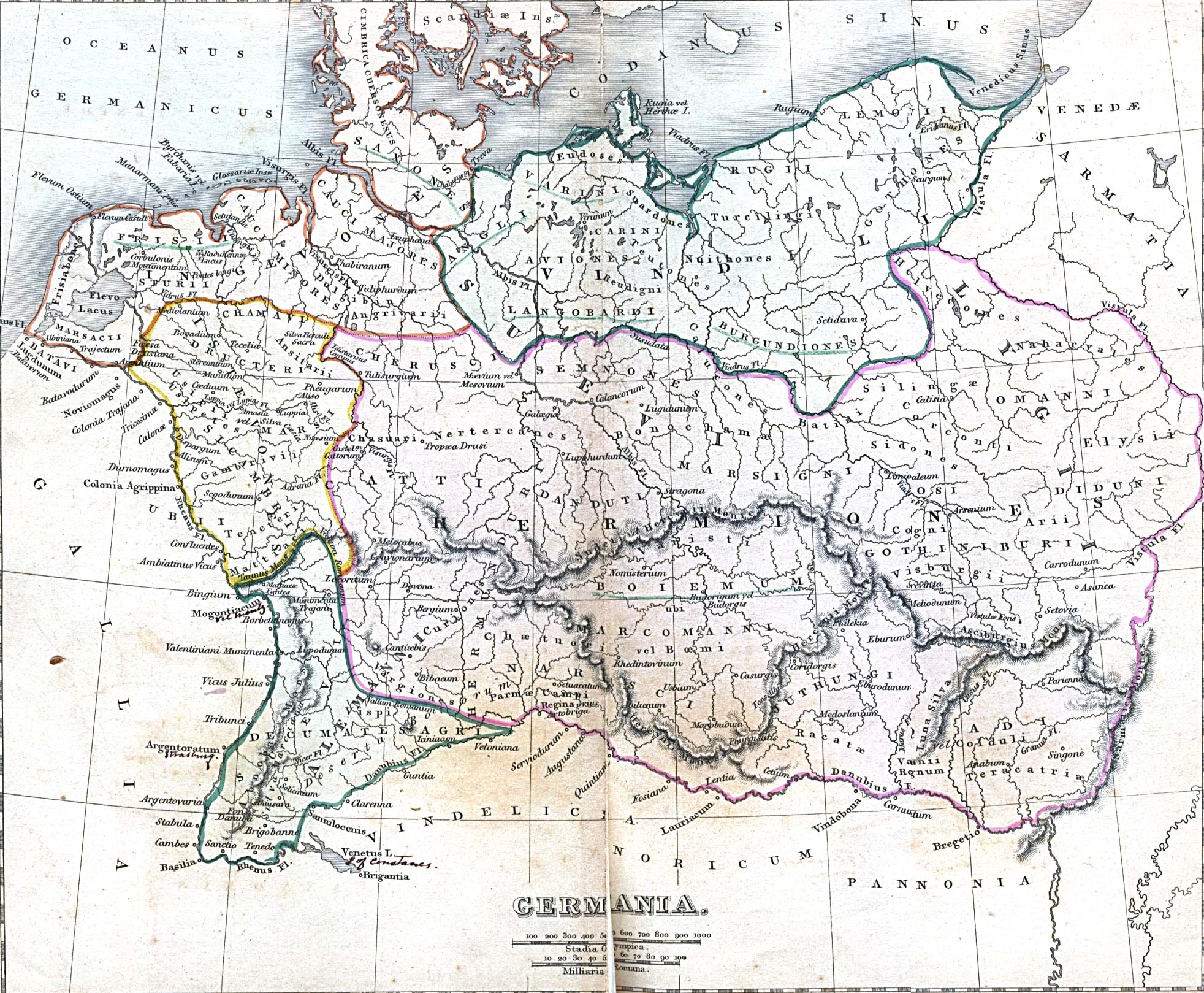
Unfortunately, this rather bad map is all I have:
http://www.lib.utexas.edu/maps/historical/ancient_germania.jpg

Look between the "Longobardi" and the "Semnones". I've been meaning to write
back and thank everybody for their suggestions. I am truly grateful for all
the help.

I suspect this may remain very speculative. There simply isn't enough context.
The comment about the Book of Daniel is actually somewhat suggestive.  I'm no
Biblical scholar, but I believe that would be around the time of Darius's
campaign against the Scythians, and the destruction of the Greco-Scythian
city of Gelonus.

Steven

On Sunday 08 June 2003 01:53 am, [EMAIL PROTECTED] wrote:
> The capital of the Achaemenid Empire was
> known as 'shustar', how particularly to
> translate it to English I do not know, though I
> am certain there is a cuneiform meaning.  The
> city is also known as 'Susa' and appears in the
> Bible, most notably in the Book of Daniel, but
> see also various references in Herodotus,
> Xenophon, et al.
>
> I would be curious to know which river in
> Germany the reference is made to.
>
> namaste.
>
>
> Today's Topics:
>
>    1. Susudata - a river in Germany (Steven T.
> Hatton)
>    2. Re: Susudata - a river in Germany (Haresh
> Bakshi)
>    3. Re: Susudata - a river in Germany (Sai)
>    4. Re: Susudata - a river in Germany (Sai)
>    5. Re: Susudata - a river in Germany
> (Srinivas Kommu)
>    6. Re: Susudata - a river in Germany (Sai)
>
>
> ------------------------------------------------------------
> ----------
>
> Message: 1
> Date: Fri, 6 Jun 2003 17:07:39 -0400
> From: "Steven T. Hatton"
> <[EMAIL PROTECTED]>
> Subject: [Sanskrit] Susudata - a river in
> Germany
> To: [EMAIL PROTECTED]
> Message-ID:
> <[EMAIL PROTECTED]
> et>
> Content-Type: text/plain;  charset="utf-8"
>
> There is a river in Germany that was known in
> ancient times as the Susudata.
> I'm no linguist, but from my exposure to Indo-
> Iranian names such as
> Mithradata, Indradata, Somadata,
> Shuwardata, Yashdata (See Pritchard, _The
> Ancient Near East_, vol 1, pages 263-267,
> especially the footnotes), as well
> as my exposure to Germanic languages, I am
> lead to believe this river name is
> likely Indo-Iranian, rather than Celtic,
> Germanic, or Latin.  If this is
> true, the name would mean something similar
> to "gift of Susu".
>
> What I would like to know is whether there is
> something in Indo-Iranian that
> might shed some light on what "Susu" may
> have meant. It isn't far fetched at
> all to believe there may have been Indo-
> Iranian speaking people in
> prehistoric Germany.  Though few dialects of
> Scythian languages have
> survived, the convention is to place them in
> the category of Iranian speaking
> peoples.
>
> My use of the term Indo-Iranian is meant to
> denote the collection of
> Indo-European languages spoken in India,
> Ariana, and Iran in ancient times.
> The best preserved of these, by far, is
> Sanskrit.  It therefore seems
> reasonable to expect that someone on this list
> might be able to shed some
> light on what Susudata could have meant.
>
> STH
>
> ------------------------------
>
> Message: 2
> Date: Fri, 06 Jun 2003 17:57:32 -0400
> From: "Haresh Bakshi"
> <[EMAIL PROTECTED]>
> Subject: Re: [Sanskrit] Susudata - a river in
> Germany
> To: [EMAIL PROTECTED],
> [EMAIL PROTECTED]
> Message-ID: <BAY2-
> [EMAIL PROTECTED]>
> Content-Type: text/plain; format=flowed
>
> namaste, "sudatta" is a proper noun. It also
> means "given well". The
> additional prefix "su" would accentuate
> the 'goodness', making it
> "susudatta". This would become "susudattaa"
> in feminine gender.
>
> Haresh.
>
>
>
>
>
>
>
>
>
>
>
>
>
> From: "Steven T. Hatton"
> <[EMAIL PROTECTED]>
>
> >To: [EMAIL PROTECTED]
> >Subject: [Sanskrit] Susudata - a river in
>
> Germany
>
> >Date: Fri, 6 Jun 2003 17:07:39 -0400
> >
> >There is a river in Germany that was known
>
> in ancient times as the
>
> >Susudata.
> >I'm no linguist, but from my exposure to Indo-
>
> Iranian names such as
>
> >Mithradata, Indradata, Somadata,
>
> Shuwardata, Yashdata (See Pritchard, _The
>
> >Ancient Near East_, vol 1, pages 263-267,
>
> especially the footnotes), as
>
> >well
> >as my exposure to Germanic languages, I am
>
> lead to believe this river name
>
> >is
> >likely Indo-Iranian, rather than Celtic,
>
> Germanic, or Latin.  If this is
>
> >true, the name would mean something
>
> similar to "gift of Susu".
>
> >What I would like to know is whether there
>
> is something in Indo-Iranian
>
> >that
> >might shed some light on what "Susu" may
>
> have meant. It isn't far fetched
>
> >at
> >all to believe there may have been Indo-
>
> Iranian speaking people in
>
> >prehistoric Germany.  Though few dialects of
>
> Scythian languages have
>
> >survived, the convention is to place them in
>
> the category of Iranian
>
> >speaking
> >peoples.
> >
> >My use of the term Indo-Iranian is meant to
>
> denote the collection of
>
> >Indo-European languages spoken in India,
>
> Ariana, and Iran in ancient times.
>
> >The best preserved of these, by far, is
>
> Sanskrit.  It therefore seems
>
> >reasonable to expect that someone on this
>
> list might be able to shed some
>
> >light on what Susudata could have meant.
> >
> >STH
> >____________________________________
>
> ___________
>
> >sanskrit mailing list
> >[EMAIL PROTECTED]
> >http://mailman.cs.utah.edu/mailman/listinfo/s
>
> anskrit
>
> _____________________________________
> ____________________________
> Add photos to your e-mail with MSN 8. Get 2
> months FREE*.
> http://join.msn.com/?
> page=features/featuredemail
>
>
> ------------------------------
>
> Message: 3
> Date: Fri, 6 Jun 2003 16:01:29 -0600
> From: Sai <[EMAIL PROTECTED]>
> Subject: Re: [Sanskrit] Susudata - a river in
> Germany
> To: [EMAIL PROTECTED]
> Message-ID:
> <[EMAIL PROTECTED]>
> Content-Type: text/plain; charset=us-ascii
>
> I am not sure if adding the same prefix twice is
> a valid practice in
> sanskrit. I never heard of such usage before.
> I feel that it is more likely that susu is either a
> distortion of some
> other word or it is just sudatta.
> - Sai.
>
> Haresh Bakshi uvaacha:
> > namaste, "sudatta" is a proper noun. It also
>
> means "given well". The
>
> > additional prefix "su" would accentuate
>
> the 'goodness', making it
>
> > "susudatta". This would
>
> become "susudattaa" in feminine gender.
>
> > Haresh.
> >
> > >From: "Steven T. Hatton"
>
> <[EMAIL PROTECTED]>
>
> > >To: [EMAIL PROTECTED]
> > >Subject: [Sanskrit] Susudata - a river in
>
> Germany
>
> > >Date: Fri, 6 Jun 2003 17:07:39 -0400
> > >
> > >There is a river in Germany that was
>
> known in ancient times as the
>
> > >Susudata.
> > >I'm no linguist, but from my exposure to
>
> Indo-Iranian names such as
>
> > >Mithradata, Indradata, Somadata,
>
> Shuwardata, Yashdata (See Pritchard, _The
>
> > >Ancient Near East_, vol 1, pages 263-267,
>
> especially the footnotes), as
>
> > >well
> > >as my exposure to Germanic languages, I
>
> am lead to believe this river name
>
> > >is
> > >likely Indo-Iranian, rather than Celtic,
>
> Germanic, or Latin.  If this is
>
> > >true, the name would mean something
>
> similar to "gift of Susu".
>
> > >What I would like to know is whether there
>
> is something in Indo-Iranian
>
> > >that
> > >might shed some light on what "Susu" may
>
> have meant. It isn't far fetched
>
> > >at
> > >all to believe there may have been Indo-
>
> Iranian speaking people in
>
> > >prehistoric Germany.  Though few dialects
>
> of Scythian languages have
>
> > >survived, the convention is to place them in
>
> the category of Iranian
>
> > >speaking
> > >peoples.
> > >
> > >My use of the term Indo-Iranian is meant
>
> to denote the collection of
>
> > >Indo-European languages spoken in India,
>
> Ariana, and Iran in ancient times.
>
> > >The best preserved of these, by far, is
>
> Sanskrit.  It therefore seems
>
> > >reasonable to expect that someone on this
>
> list might be able to shed some
>
> > >light on what Susudata could have meant.
> > >
> > >STH
> >
> >____________________________________
>
> ___________
>
> > >sanskrit mailing list
> > >[EMAIL PROTECTED]
> >
> >http://mailman.cs.utah.edu/mailman/listinfo/s
>
> anskrit
>
>
> _____________________________________
> ____________________________
>
> > Add photos to your e-mail with MSN 8. Get 2
>
> months FREE*.
>
> > http://join.msn.com/?
>
> page=features/featuredemail
>
>
> _____________________________________
> __________
>
> > sanskrit mailing list
> > [EMAIL PROTECTED]
>
> http://mailman.cs.utah.edu/mailman/listinfo/sa
> nskrit
>
> ------------------------------
>
> Message: 4
> Date: Fri, 6 Jun 2003 16:39:10 -0600
> From: Sai <[EMAIL PROTECTED]>
> Subject: Re: [Sanskrit] Susudata - a river in
> Germany
> To: [EMAIL PROTECTED]
> Message-ID:
> <[EMAIL PROTECTED]>
> Content-Type: text/plain; charset=us-ascii
>
> hareSa mahodaya,
> sAdhu-uktam bhavatA |
> athunaiva Monier nighanTu-madhye
> pariSIlitavAn.
>
> bhavatA uktAni sarve padAni santi eva |
> ataH 'susudatta' padaM samyageva syAt | ko
> vA jAnE ?
> (Dear Haresh,
> Well said! I just now examined the Monier-
> Williams dictionary.
> All the words you mentioned are there (except
> susudatta)
> So the word susudatta could very well exist.
> Who knows?)
>
> Summary:
> sudatta = well given (could mean, in case of
> river, well-fed, well-furnished)
> susudatta = very well-fed (by water?).
> - Sai.
>
> Haresh Bakshi uvaacha:
> > namaste sai mahodaya,
> >
> > what you have stated may have happened
>
> in all likelihood. However, these are
>
> > some words, actually used in literature,
>
> with "susu-", emphasizing the
>
> > associated good quality:
> >
> > susukha  susukhin
> > susugandha  susugandhi
> > susundara
> > susubhiksha
> >
> > Regards,
> > Haresh.
> >
> > --------  muulikaH saMdeshaH bhavataH
> > ---------------------------------------------
> >
> > >From: Sai <[EMAIL PROTECTED]>
> > >To: [EMAIL PROTECTED]
> > >Subject: Re: [Sanskrit] Susudata - a river in
>
> Germany
>
> > >Date: Fri, 6 Jun 2003 16:01:29 -0600
> > >
> > >I am not sure if adding the same prefix
>
> twice is a valid practice in
>
> > >sanskrit. I never heard of such usage
>
> before.
>
> > >I feel that it is more likely that susu is
>
> either a distortion of some
>
> > >other word or it is just sudatta.
> > >- Sai.
> > >
> > >Haresh Bakshi uvaacha:
> > > > namaste, "sudatta" is a proper noun. It
>
> also means "given well". The
>
> > > > additional prefix "su" would accentuate
>
> the 'goodness', making it
>
> > > > "susudatta". This would
>
> become "susudattaa" in feminine gender.
>
> > > > Haresh.
> > > >
> > > > >From: "Steven T. Hatton"
>
> <[EMAIL PROTECTED]>
>
> > > > >To: [EMAIL PROTECTED]
> > > > >Subject: [Sanskrit] Susudata - a river
>
> in Germany
>
> > > > >Date: Fri, 6 Jun 2003 17:07:39 -0400
> > > > >
> > > > >There is a river in Germany that was
>
> known in ancient times as the
>
> > > > >Susudata.
> > > > >I'm no linguist, but from my exposure
>
> to Indo-Iranian names such as
>
> > > > >Mithradata, Indradata, Somadata,
>
> Shuwardata, Yashdata (See Pritchard,
>
> > >_The
> > >
> > > > >Ancient Near East_, vol 1, pages 263-
>
> 267, especially the footnotes), as
>
> > > > >well
> > > > >as my exposure to Germanic
>
> languages, I am lead to believe this river
>
> > >name
> > >
> > > > >is
> > > > >likely Indo-Iranian, rather than Celtic,
>
> Germanic, or Latin.  If this
>
> > >is
> > >
> > > > >true, the name would mean something
>
> similar to "gift of Susu".
>
> > > > >What I would like to know is whether
>
> there is something in Indo-Iranian
>
> > > > >that
> > > > >might shed some light on what "Susu"
>
> may have meant. It isn't far
>
> > >fetched
> > >
> > > > >at
> > > > >all to believe there may have been
>
> Indo-Iranian speaking people in
>
> > > > >prehistoric Germany.  Though few
>
> dialects of Scythian languages have
>
> > > > >survived, the convention is to place
>
> them in the category of Iranian
>
> > > > >speaking
> > > > >peoples.
> > > > >
> > > > >My use of the term Indo-Iranian is
>
> meant to denote the collection of
>
> > > > >Indo-European languages spoken in
>
> India, Ariana, and Iran in ancient
>
> > >times.
> > >
> > > > >The best preserved of these, by far, is
>
> Sanskrit.  It therefore seems
>
> > > > >reasonable to expect that someone on
>
> this list might be able to shed
>
> > >some
> > >
> > > > >light on what Susudata could have
>
> meant.
>
> > > > >STH
> >
> >____________________________________
>
> ___________
>
> > > > >sanskrit mailing list
> > > > >[EMAIL PROTECTED]
> >
> >http://mailman.cs.utah.edu/mailman/listinfo/s
>
> anskrit
>
>
> _____________________________________
> ____________________________
>
> > > > Add photos to your e-mail with MSN 8.
>
> Get 2 months FREE*.
>
> > > > http://join.msn.com/?
>
> page=features/featuredemail
>
>
> _____________________________________
> __________
>
> > > > sanskrit mailing list
> > > > [EMAIL PROTECTED]
>
> http://mailman.cs.utah.edu/mailman/listinfo/sa
> nskrit
>
> >____________________________________
>
> ___________
>
> > >sanskrit mailing list
> > >[EMAIL PROTECTED]
> >
> >http://mailman.cs.utah.edu/mailman/listinfo/s
>
> anskrit
>
>
> _____________________________________
> ____________________________
>
> > The new MSN 8: advanced junk mail
>
> protection and 2 months FREE*
>
> > http://join.msn.com/?page=features/junkmail
>
> ------------------------------
>
> Message: 5
> Date: Sat, 07 Jun 2003 02:27:32 -0700
> From: "Srinivas Kommu"
> <[EMAIL PROTECTED]>
> Subject: Re: [Sanskrit] Susudata - a river in
> Germany
> To: [EMAIL PROTECTED], [EMAIL PROTECTED]
> Message-ID: <BAY1-
> [EMAIL PROTECTED]>
> Content-Type: text/plain; format=flowed
>
> Isn't there the popular word "susvAgatam"
> that everybody knows?!
>
> srinivas
>
> >I am not sure if adding the same prefix twice
>
> is a valid practice in
>
> >sanskrit. I never heard of such usage before.
> >I feel that it is more likely that susu is either
>
> a distortion of some
>
> >other word or it is just sudatta.
> >- Sai.
> >
> >Haresh Bakshi uvaacha:
> > > namaste, "sudatta" is a proper noun. It
>
> also means "given well". The
>
> > > additional prefix "su" would accentuate
>
> the 'goodness', making it
>
> > > "susudatta". This would
>
> become "susudattaa" in feminine gender.
>
> > > Haresh.
> > >
> > > >From: "Steven T. Hatton"
>
> <[EMAIL PROTECTED]>
>
> > > >To: [EMAIL PROTECTED]
> > > >Subject: [Sanskrit] Susudata - a river in
>
> Germany
>
> > > >Date: Fri, 6 Jun 2003 17:07:39 -0400
> > > >
> > > >There is a river in Germany that was
>
> known in ancient times as the
>
> > > >Susudata.
> > > >I'm no linguist, but from my exposure to
>
> Indo-Iranian names such as
>
> > > >Mithradata, Indradata, Somadata,
>
> Shuwardata, Yashdata (See Pritchard,
>
> >_The
> >
> > > >Ancient Near East_, vol 1, pages 263-
>
> 267, especially the footnotes), as
>
> > > >well
> > > >as my exposure to Germanic languages,
>
> I am lead to believe this river
>
> >name
> >
> > > >is
> > > >likely Indo-Iranian, rather than Celtic,
>
> Germanic, or Latin.  If this
>
> >is
> >
> > > >true, the name would mean something
>
> similar to "gift of Susu".
>
> > > >What I would like to know is whether
>
> there is something in Indo-Iranian
>
> > > >that
> > > >might shed some light on what "Susu"
>
> may have meant. It isn't far
>
> >fetched
> >
> > > >at
> > > >all to believe there may have been Indo-
>
> Iranian speaking people in
>
> > > >prehistoric Germany.  Though few
>
> dialects of Scythian languages have
>
> > > >survived, the convention is to place them
>
> in the category of Iranian
>
> > > >speaking
> > > >peoples.
> > > >
> > > >My use of the term Indo-Iranian is meant
>
> to denote the collection of
>
> > > >Indo-European languages spoken in
>
> India, Ariana, and Iran in ancient
>
> >times.
> >
> > > >The best preserved of these, by far, is
>
> Sanskrit.  It therefore seems
>
> > > >reasonable to expect that someone on
>
> this list might be able to shed
>
> >some
> >
> > > >light on what Susudata could have
>
> meant.
>
> > > >STH
> >
> >____________________________________
>
> ___________
>
> > > >sanskrit mailing list
> > > >[EMAIL PROTECTED]
> >
> >http://mailman.cs.utah.edu/mailman/listinfo/s
>
> anskrit
>
>
> _____________________________________
> ____________________________
>
> > > Add photos to your e-mail with MSN 8. Get
>
> 2 months FREE*.
>
> > > http://join.msn.com/?
>
> page=features/featuredemail
>
>
> _____________________________________
> __________
>
> > > sanskrit mailing list
> > > [EMAIL PROTECTED]
>
> http://mailman.cs.utah.edu/mailman/listinfo/sa
> nskrit
>
> >____________________________________
>
> ___________
>
> >sanskrit mailing list
> >[EMAIL PROTECTED]
> >http://mailman.cs.utah.edu/mailman/listinfo/s
>
> anskrit
>
> _____________________________________
> ____________________________
> Add photos to your e-mail with MSN 8. Get 2
> months FREE*.
> http://join.msn.com/?
> page=features/featuredemail
>
>
> ------------------------------
>
> Message: 6
> Date: Sat, 7 Jun 2003 09:55:51 -0600
> From: Sai <[EMAIL PROTECTED]>
> Subject: Re: [Sanskrit] Susudata - a river in
> Germany
> To: [EMAIL PROTECTED]
> Message-ID:
> <[EMAIL PROTECTED]>
> Content-Type: text/plain; charset=us-ascii
>
> Good one!
> su+su+aagatam = susvaagatam = su + came
> well.
> - Sai.
>
> Srinivas Kommu uvaacha:
> > Isn't there the popular word "susvAgatam"
>
> that everybody knows?!
>
> > srinivas
> >
> > >I am not sure if adding the same prefix
>
> twice is a valid practice in
>
> > >sanskrit. I never heard of such usage
>
> before.
>
> > >I feel that it is more likely that susu is
>
> either a distortion of some
>
> > >other word or it is just sudatta.
> > >- Sai.
> > >
> > >Haresh Bakshi uvaacha:
> > > > namaste, "sudatta" is a proper noun. It
>
> also means "given well". The
>
> > > > additional prefix "su" would accentuate
>
> the 'goodness', making it
>
> > > > "susudatta". This would
>
> become "susudattaa" in feminine gender.
>
> > > > Haresh.
> > > >
> > > > >From: "Steven T. Hatton"
>
> <[EMAIL PROTECTED]>
>
> > > > >To: [EMAIL PROTECTED]
> > > > >Subject: [Sanskrit] Susudata - a river
>
> in Germany
>
> > > > >Date: Fri, 6 Jun 2003 17:07:39 -0400
> > > > >
> > > > >There is a river in Germany that was
>
> known in ancient times as the
>
> > > > >Susudata.
> > > > >I'm no linguist, but from my exposure
>
> to Indo-Iranian names such as
>
> > > > >Mithradata, Indradata, Somadata,
>
> Shuwardata, Yashdata (See Pritchard,
>
> > >_The
> > >
> > > > >Ancient Near East_, vol 1, pages 263-
>
> 267, especially the footnotes), as
>
> > > > >well
> > > > >as my exposure to Germanic
>
> languages, I am lead to believe this river
>
> > >name
> > >
> > > > >is
> > > > >likely Indo-Iranian, rather than Celtic,
>
> Germanic, or Latin.  If this
>
> > >is
> > >
> > > > >true, the name would mean something
>
> similar to "gift of Susu".
>
> > > > >What I would like to know is whether
>
> there is something in Indo-Iranian
>
> > > > >that
> > > > >might shed some light on what "Susu"
>
> may have meant. It isn't far
>
> > >fetched
> > >
> > > > >at
> > > > >all to believe there may have been
>
> Indo-Iranian speaking people in
>
> > > > >prehistoric Germany.  Though few
>
> dialects of Scythian languages have
>
> > > > >survived, the convention is to place
>
> them in the category of Iranian
>
> > > > >speaking
> > > > >peoples.
> > > > >
> > > > >My use of the term Indo-Iranian is
>
> meant to denote the collection of
>
> > > > >Indo-European languages spoken in
>
> India, Ariana, and Iran in ancient
>
> > >times.
> > >
> > > > >The best preserved of these, by far, is
>
> Sanskrit.  It therefore seems
>
> > > > >reasonable to expect that someone on
>
> this list might be able to shed
>
> > >some
> > >
> > > > >light on what Susudata could have
>
> meant.
>
> > > > >STH
> >
> >____________________________________
>
> ___________
>
> > > > >sanskrit mailing list
> > > > >[EMAIL PROTECTED]
> >
> >http://mailman.cs.utah.edu/mailman/listinfo/s
>
> anskrit
>
>
> _____________________________________
> ____________________________
>
> > > > Add photos to your e-mail with MSN 8.
>
> Get 2 months FREE*.
>
> > > > http://join.msn.com/?
>
> page=features/featuredemail
>
>
> _____________________________________
> __________
>
> > > > sanskrit mailing list
> > > > [EMAIL PROTECTED]
>
> http://mailman.cs.utah.edu/mailman/listinfo/sa
> nskrit
>
> >____________________________________
>
> ___________
>
> > >sanskrit mailing list
> > >[EMAIL PROTECTED]
> >
> >http://mailman.cs.utah.edu/mailman/listinfo/s
>
> anskrit
>
>
> _____________________________________
> ____________________________
>
> > Add photos to your e-mail with MSN 8. Get 2
>
> months FREE*.
>
> > http://join.msn.com/?
>
> page=features/featuredemail
>
>
> ------------------------------
>
> _____________________________________
> __________
> sanskrit mailing list
> [EMAIL PROTECTED]
> http://mailman.cs.utah.edu/mailman/listinfo/sa
> nskrit
>
>
> End of sanskrit Digest, Vol 4, Issue 5
> *************************************
> *
>
> _______________________________________________
> sanskrit mailing list
> [EMAIL PROTECTED]
> http://mailman.cs.utah.edu/mailman/listinfo/sanskrit


------------------------------

_______________________________________________
sanskrit mailing list
[EMAIL PROTECTED]
http://mailman.cs.utah.edu/mailman/listinfo/sanskrit


End of sanskrit Digest, Vol 4, Issue 6
**************************************