01/12/2013 How to stop the Antonovs?
<http://4.bp.blogspot.com/-FZ9VfyclxTo/UpuRAAj5giI/AAAAAAAAAT4/D9OmsyIbShc/s1600/IMG_0291.JPG>
 Another day, another
airstrike<http://allafrica.com/stories/201311200087.html>.
Not Syria. Not Afghanistan. Not north-west Pakistan. This is Sudan, whose
daisy-chain of low-intensity wars stretching from Darfur in the west to the
Nuba Mountains and finally Blue Nile in the east, so supremely economical
with column-inches in the international press, makes more high-profile wars
look like youngsters. The Syrian civil war may be more brutal day-to-day,
but it looks like an amateur at intractability in comparison to the
interlocking set of centre-periphery conflicts in Sudan that have been
running, on-off, for nearly thirty years. There are few heroes here - grave
abuses abound on all sides of Sudan’s conflicts, rebel and government
alike.

But one key unifying tactic since the 1990s has been ‘dumb’ aerial
bombardment. The Sudanese Air Force simply rolls unguided bombs – usually
basic HE bombs, occasionally napalm or cluster munitions, sometimes just
barrels filled with explosives and shrapnel –from the cargo ramps of the
Sudanese Air Force’s fleet of Soviet-made Antonov cargo aircraft on
high-altitude sorties over rebel-held areas. They are sometimes followed up
by direct-fire air-to-ground rocket attacks on both rebel forces and
civilian villages by attack helicopters and ground-attack jets. But not
always: SAF’s objective with its Antonov bombings seems not to be to
degrade the scattered rebel forces, against which such indiscriminate,
untargeted bombardment is wholly ineffective; but to cause just enough
death, injury and jeopardy to force civilian populations sustaining those
rebels to flee from their villages into caves, or swelling refugee or IDP
camps.

Best
estimates<http://www.internal-displacement.org/8025708F004BE3B1/%28httpInfoFiles%29/37E599F7703006B9C1257BA300576CA8/$file/sudan-overview-9jul2013.pdf>suggest
that this and other conflict tactics have displaced some 875,000
women, men and children across Sudan since January 2012 alone; including
275,000 in Darfur since the start of *this* year (nearly double the number
in 2011 and 2012 combined). These fresh displacements have added to a
burgeoning IDP population that may currently stand at some 2.5 million, and
has at times during Sudan’s conflicts risen to an estimated 6.1 million (if
we’re playing poker with human misery, Syria’s displaced population
currently
stands<http://www.internal-displacement.org/8025708F004CE90B/%28httpCountries%29/9F19CC00280C471C802570A7004CE12F?OpenDocument>at
an estimated 6.5 million). And one of the most common reasons for
their
displacement given by refugees flowing into South
Sudan<http://www.hrw.org/news/2011/08/30/sudan-southern-kordofan-civilians-tell-air-strike-horror>is
summed up in a single word: “Antonovs”.

Regardless of its intention, the indiscriminacy of this tactic is plainly
unlawful under international humanitarian law. And since 2005, “offensive
military flights” of any kind have also been specifically forbidden in one
region, Darfur, by a binding resolution of the UN Security
Council<http://www.un.org/ga/search/view_doc.asp?symbol=S/RES/1591%20%282005%29>,
which also prohibits the movement into Darfur of the military aircraft and
weapons used in such flights.

And yet almost every week since that resolution was passed, for eight
years, the Sudanese government has violated this double prohibition with
complete openness, and complete impunity. The Antonovs used for its
‘forbidden’ bombing sorties, week-in, week-out, are parked up openly beside
the aircraft of the UN/AU peacekeeping mission at Darfur’s main airports,
and loaded with bombs in front of UN personnel. (At El Fasher airport,
Sudanese army personnel on occasion wheel the bombs to the Antonovs on
superannuated Heathrow Airport baggage trolleys that are scattered about
the airport, and have somehow made their way from South London to Darfur).
Sanctions-violating Antonov bombing raids and helicopter airstrikes are as
readily documented throughout Darfur as they are in South Kordofan and Blue
Nile, and have been wearily reported to the Security Council by its own
Expert Panel on Darfur every year since 2006, alongside documented evidence
of regular new arrivals into Darfur of SAF Antonovs, Su-25 ground attack
aircraft and Mi-24 attack helicopters. There’s absolutely nothing
clandestine about this sanctions-busting.

The Security Council has been presented since 2006 with an annual barrage
of evidence that its Sudan resolutions are being openly violated almost
daily. Yet it has yet to strengthen the sanctions, save adding a modest and
essentially toothless requirement in 2010 for states exporting arms to
Sudan to get end-user assurances – of the kind that Sudan routinely
violates in any case. It’s never even been able to agree to add any
individual or body to its list of (sanctioned) Sudan sanctions violators
since 2006. Sudan is not Iran, or Eritrea: it's neither sufficiently
important for Council members to spend real political capital on unblocking
opposition within the Council to tougher measures, nor sufficiently
unimportant to avoid such opposition in the first place. So the Security
Council’s Sudan dossier remains in complete stasis. And the export
decisions of Sudan’s key circle of suppliers of military aircraft and their
weaponry – Belarus, Ukraine, China and the Russian Federation – remain
largely immune to international public censure.

So what *can* the international community do to undermine the capacity of
the Sudanese government to wage unlawful aerial war against its own
population? I think we probably need to stop pretending that embargoes or
geographically-bound conflict prohibitions really work very well, even
where they’re actually taken seriously by the international community. I’m
not convinced that it’s possible to build a semi-permeable membrane around
a state that catches arms and aircraft going in, human rights abusers
coming out, and lets everything else pass. Certainly not in Sudan. But what
we *can* do instead is look at the leverage the international community has
over the key things that *sustain* particular egregious military tactics
and technologies – their supply chains.

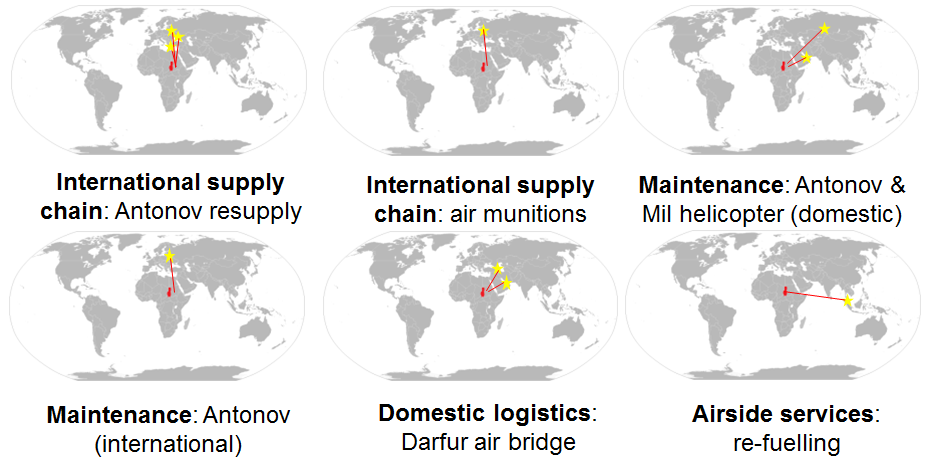
In the case of Sudan, there’s repeated condemnation of Antonov aerial
bombardment from human rights organisations, the UN, and governments; but
very little scrutiny of the commercial and legal leverage that the
international community has over:

   - The *international logistics* of the supply chain for technology
   itself: how Antonov transport aircraft, and aircraft munitions (bombs and
   rockets), are supplied to Sudan;
   - The *domestic logistics* of these supply chains within Sudan;
   - The skills and supplies needed for the *maintenance* of these aircraft;
   - The *airside services* that sustain these aircraft on the tarmac.

In fact all four actively involve commercial, non-Sudanese – and in some
cases European – actors, oeprating across international borders:


<http://4.bp.blogspot.com/-I1P9W3o5908/UpuLKQmjwEI/AAAAAAAAATo/8Wd_HJkp7UE/s1600/supply+chain+graphic.PNG>


These international actors are, in general, acting entirely within the law
(I'm making no allegation that the companies or organisations named below
are complicit in, or responsible for, embargo violations or international
crimes; and I’ll leave the question of morality to the theologians). But
European countries and intergovernmental organisations often have
jurisdiction and influence over their activities nonetheless. Here's what
they could do.

*(N.B. Much of what follows is based on research undertaken last year for
this
<http://www.smallarmssurvey.org/about-us/highlights/highlight-hsba-ib20.html>
Small Arms Survey paper. The Small Arms Survey is, of course, in no way
responsible for the opinions and analysis below.)*

 The international supply chain
The Sudanese Armed Forces (SAF) perennially have to acquire Antonovs to
replace those that – fairly frequently - die or
crash<https://www.radiodabanga.org/node/36723>.
The last acquisitions I’ve been able to identify were a pair of An-26s:
previously ageing Romanian Air Force planes which were brought out of
retirement near Bucharest, refurbished at an aircraft repair plant in
Zhulyany near Kiev during 2009, and then flew on to Khartoum in November
2009 and February 2010 respectively where they were re-designated with
Sudanese military registrations. Both have since been spotted in Darfur.
Significantly:


   - *Their last-known owner, prior to them ending up with SAF, was a
   European company:* while being repaired in Ukraine prior to delivery to
   Sudan, the two Antonovs were registered under the ownership of a
   Greek-registered aircraft broker, directed by Ukrainian nationals, called
   Asterias Commercial. The precise brokering chain of these aircraft remains
   unclear, but if it turns out that a Greek-registered company was involved
   in selling them to the Sudanese military, as well as being purchased from
   an EU member state, then arguably the EU embargo on Sudan - which unlike
   the UN embargo covers the whole of the country rather than Darfur alone,
   and enjoys substantive political consensus - could be applied to stop such
   sales. (Though it may require some tweaking of the embargo Common Position
   itself, or the EU Dual-Use Regulation, to ensure that transport platforms
   like Antonovs are covered when they’re sold to embargoed entities like the
   Sudanese military - a serious loophole that EU states have failed to close
   for years).
   - Because they were refurbished in Eastern Europe, typical for
   Soviet-origin cargo aircraft, * they had to be delivered to Sudan via
   European-surveilled airspace* - in this case from Ukraine via Turkey and
   Jordan. Could Eurocontrol member countries deny overflight rights to
   Antonovs headed to the Sudanese military? Perhaps not – it would probably
   be difficult for European air traffic controllers to spot and deny airspace
   to these ferry flights since they flew under a call-sign belonging to the
   Ukrainian civilian air company Meridian, which had registered their
   Ukrainian registrations during refurbishment; and didn’t receive military
   (numerical) registrations until after they’d arrived in Khartoum.
   - On the other hand, *regular resupplies of the aircraft munitions
   deployed against civilians in Darfur, and elsewhere in Sudan, also take
   place through Eurocontrol airspace,* and are easier to spot. Air warfare
   platforms themselves need resupply: for instance, the Sukhoi-25 ground
   attack jet aircraft whose attacks on civilian settlements are widely
   documented, were supplied between 2008 and 2010 by Belarus, which has to
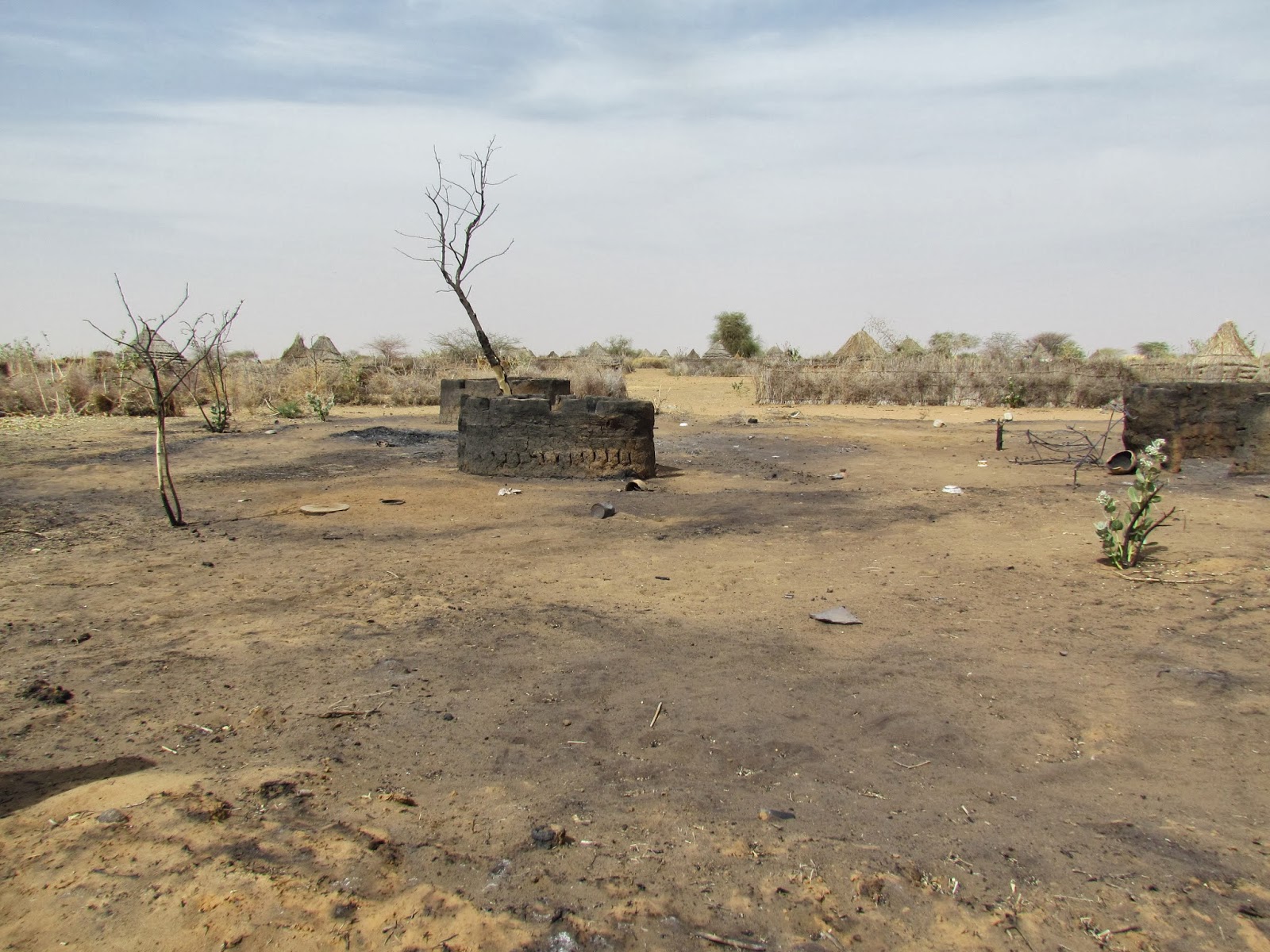
   regularly re-supply them with the S-8 air-to-ground rockets used in such
   attacks (see photo at top), and with spare parts for the jets themselves.
   These S-8 rockets have been delivered to Khartoum by a cargo airline close
   to the Belarussian government, in rotations which take its cargo planes
   across the Black Sea, through Turkish airspace and down through Egyptian
   airspace. These countries issue overflight permissions for such flights,
   and all
already<http://www.sipri.org/research/disarmament/eu-consortium/publications/nonproliferation-paper-26>have
the right to block their airspace to aircraft carrying “weapons of
   war” (under Article 35 of the Chicago Convention). Turkey has
reportedly<http://www.todayszaman.com/news-292885-report-turkey-blocks-iran-arms-shipment-to-syria-iraq-allows.html>closed
its airspace to Iranian cargo aircraft flying to Syria suspected of
   carrying arms – so why not persuade Turkey to require cargo flights flying
   between Belarus and Sudan to prove that they’re not carrying munitions or
   spare parts for air weapon platforms known to be being used in violation of
   international law, before they grant them overflight permission?


 Domestic logistics
A widening group of air cargo companies provide flights for the domestic
‘air bridge’ re-supplying SAF forces in Darfur. Previously solely reliant
on domestic Sudanese cargo airlines, *the Darfur air bridge has now begun
to involve foreign companies too, flying on contract for the Sudanese
military.* From April to June 2011 an Il-76 cargo aircraft being operated
by the Armenian air cargo company V-Berd Avia flew cargo into Darfur for
the Sudanese Ministry of Defence, reportedly including vehicles, from
Khartoum and El Obeid, flying under a Sudanese military call sign. Last
year the UN Panel reported a second foreign-operated Il-76 offloading SAF
cargo in Darfur in December 2011, though they didn’t identify its operator.
Its new report in early 2014 may bring further revelations.

If it’s shown that these and other foreign operators have carried
sanctions-violating cargo, then foreign aviation authorities and government
procurement bodies could blacklist them and circumscribe their operations
elsewhere. (The Emirati transport hub of Sharjah, the former operating base
of V-Berd Avia, has already denied landing
rights<https://reportingproject.net/the-turbulent-world-of-armenian-airlines>to
several Armenian airlines since early 2012 – not, it appears, on
embargo
violation grounds).

 Maintenance
SAF’s Antonovs keep flying thanks to two levels of maintenance provision.
First, *their original manufacturer, Ukraine’s Antonov Company, sends
engineers to Khartoum periodically* to carry out ‘extension of service
life’ work. In 2010-11 the company worked on five Sudanese Antonovs with
military registrations. Antonov Company
insists<http://www.smallarmssurveysudan.org/fileadmin/docs/issue-briefs/HSBA-IB-20-Arms-flows-to-Darfur-2009-12.pdf>this
was done on the basis of contracts with a private Sudanese company,
Sudan Master Technology Engineering Complex (well-known to be controlled by
the Sudanese government), and based on assurances that these aircraft would
not be used in Darfur or in contravention of UN Security Council
resolutions. There's no suggestion that Antonov Company has acted in any
way unlawfully. But in fact three of these Antonovs (numbers 7705, 7706 and
7777, in case you're interested) have been listed in public UN reports as
operating for SAF in Darfur – the military registrations alone should be
enough to ring alarm bells. The Chicago Convention, of course,
requires<http://www.dfld.de/Downloads/Annex_08.pdf>aircraft designers
and manufacturers to exchange information about
continuing airworthiness with countries where their aircraft are operated.
But such information-exchange obligations don’t extend to maintaining or
extending the service life of aircraft themselves – particularly not
aircraft being used in contravention of international law.

Pressure on the Antonov Company, and other prospective international
maintainers of SAF’s Antonovs, could come from the fact that the Antonov
Company also does millions of dollars of
work<https://www.un.org/depts/ptd/12_hq_po_awards.htm>every year for
the UN (they lease a large number of Antonov aircraft
requiring maintenance and certification, and also use the Antonov Company’s
in-house airline for freight services), other international organisations,
and many governments. Stopping such contracts would admittedly be a nuclear
option. Many UN logistics operations, for instance, are wholly reliant on
leased-in Antonov aircraft, already often poorly maintained. But there are
other maintenance providers for Antonovs; and other aircraft types and
providers also available, as the UN’s helicopter procurers are beginning to
realize<http://www.foreignpolicy.com/articles/2013/06/25/the_inside_story_of_russias_fight_to_keep_the_un_corrupt>.


Second, *the Sudanese government has enjoyed foreign assistance to
establish its own domestic aircraft overhaul and maintenance facilities
over the last five years.* Much routine maintenance of SAF’s Antonovs and
Mil-type attack and transport helicopters is now carried out at the Safat
Aircraft Plant near Khartoum. While it also overhauls civilian aircraft,
the Safat plant is described candidly by Sudan’s state Military Industry
Corporation (MIC) as “one of MIC strategic projects...to provide the Armed
Forces with the necessary warfare to enable them perform their
duties”.<http://web.archive.org/web/20081225074938/http://www.mic.sd/english/orgization.htm>

Safat was established with the participation of foreign companies including
Russia’s Novosibirsk Aircraft Repair Plant, which has been licensed to
maintain Mil-type helicopters in Khartoum (the Novosibirsk company is also
currently being paid by
NATO<http://www.nato.int/cps/en/SID-41426331-6494A785/natolive/news_86593.htm?selectedLocale=en>to
train Afghan helicopter engineers). Ironically, Safat itself also
appears to have enjoyed business as a result of the UN peacekeeping
missions in Sudan, whose helicopter sub-contractors have apparently used
Safat to maintain some of the missions’ Mil transport helicopters
<https://9d96067b-a-06c2df73-s-sites.googlegroups.com/a/vba.ae/vba/main/Home/27092008134.jpg?attachauth=ANoY7co3ja4M7XyeaNRDHBC92Tm3a8aY3rX_q3he0cfedfM2NUxoaHBF6T3MCALz4vRSiZErR7JPQdtGjUXfxVQNIPSGK_cW5ebTYEKTaCcpVLFBs2loI1b4yd1uwo1sxaz7s3dY4zznH2m6ueuK9WfLzDMvMxX4kFPKzsi-Xz_VfiIV2-fiKhwVoSDCS6NmpnZdWQ7DPjsLn-b-oqAlRG7E6DJeYVzcTQ%3D%3D&attredirects=0>,
alongside<http://www.safatavia.com/english/index.php?option=com_phocagallery&view=categories&Itemid=85>the
Sudanese military Antonovs and helicopters being used so
systematically
to break the peace. To encourage Safat not to maintain embargo-busting
aircraft, the UN could ensure that their missions' helicopters aren’t
maintained there either until Safat stopped doing so.

 Airside services
Finally, SAF’s Antonovs and other military aircraft rely on commercial
service providers at their operating stations in Darfur, and elsewhere in
Sudan. One stands out: the Malaysian oil company Petronas directly
refuels<http://www.theglobeandmail.com/news/world/malaysias-petronas-confirms-dispensing-of-fuel-for-sudanese-military-aid-flights/article15097567/>SAF’s
Antonovs and Su-25 ground attack aircraft on the tarmac at Darfur’s
major civil-military airports.

 Here the legal position is potentially more complex. The Security
Council’s Sudan embargo Panel has
argued<http://www.un.org/ga/search/view_doc.asp?symbol=S/2007/584>that
the provision of Jet-A1 fuel to military aircraft in Darfur is itself
a violation of the UN embargo.

In response to press criticism, Petronas
states<http://www.petronas.com.my/media-relations/media-releases/Pages/article/Press-Statement---PETRONAS%E2%80%99-fuel-supply-services-in-Sudan.aspx>that
*“Sudanese
government authorities, in particular the Civil Aviation Authority (CAA) of
Sudan, can and does take control of the operation of the services at Nyala
Airport [in Darfur] from time to time. In such instances, not only
[Petronas], but all other fuel suppliers present at Nyala Airport must
comply with local legal requirements, including directives issued by the
CAA. Such directives may include directing [Petronas] and other fuel
suppliers to refuel a Sudan Armed Forces (SAF) aircraft requiring such
services at the airport.”*

If keeping civilian-bombing aircraft in the air is indeed the price for
operating at Darfur’s airports, perhaps Petronas shouldn’t do business
there. The UN and humanitarian aircraft that also use Petronas’ services in
Darfur could refuse to do so until Petronas stops refuelling SAF’s Antonovs
and attack aircraft; in extremis the UN mission could presumably supply
itself in-house or via its own contractors instead (as it already does to
distribute fuel for the mission’s generators and vehicles). Meanwhile
governments around the world doing business with Petronas - and selling
their oil to them - likewise have huge commercial leverage.

***

So: a modest proposal. If European and other governments are concerned to
make it harder for the Sudanese government to violate UN sanctions and bomb
civilians, here’s a few things they might do:

 Part of the Supply ChainActors Leverage INTERNATIONAL SUPPLY CHAINAntonovs
obtained via EU suppliers/brokersEU member states could ensure EU embargo
on Sudan covers complete civil/military transport aircraft, enforce
embargo, and require licensing and due diligence on exports and brokering
of transport aircraft to embargoed destinations INTERNATIONAL SUPPLY
CHAINAir-to-ground
munitions (esp. S5/S8 rockets for Su-25s and Mi-24s) re-supplied by air via
Eurocontrol airspaceEurocontrol member states - especially Turkey – could
refuse overflight permission to likely resupply flights unless proof they
are not carrying munitions or parts for air warfare platforms [Lithuania
and Turkey already do so for suspected arms flights to Syria] DOMESTIC
LOGISTICSForeign air cargo operators have operated military ‘air bridge’
between Khartoum/El Obeid and Darfur to resupply SAF forces and assetsIf
shown that these have carried sanctions-violating cargo, foreign aviation
authorities and government procurement bodies could circumscribe these
airlines' operations e.g. refuse aviation permits and air operating
certificates MAINTENANCEForeign company provides service life extension
work for SAF Antonovs in KhartoumUN/other IOs/govts could decline or place
conditions on future contracts with such companies unless they stop working
on embargo-violating SAF Antonovs MAINTENANCEKhartoum’s Safat aviation
plant maintains SAF Antonovs and military helicopters, with foreign
assistanceUN could stop its contractors doing business with Safat/repairing
UN aircraft there AIRSIDE SERVICESPetronas (Malaysian state-owned oil
company) provides fuel services to SAF Antonovs and ground attack aircraft
in DarfurUN and others could decline future business with Petronas in
Darfur unless they stop refuelling SAF aircraft. UN/govts could likewise
place conditions on their business with Petronas unless they stop
refuelling SAF aircraft


None of these, alone, is guaranteed to scupper Sudan’s air warfare
capability: many of the actors involved in its supply chain are to some
degree substitutable. But such pressure could raise costs, disrupt military
capabilities, reduce the frequency of violations. And in any case, the aim
must surely be not to deprive a sovereign nation of its air force
altogether, but to put sufficient pressure on it to stop bombing civilians.

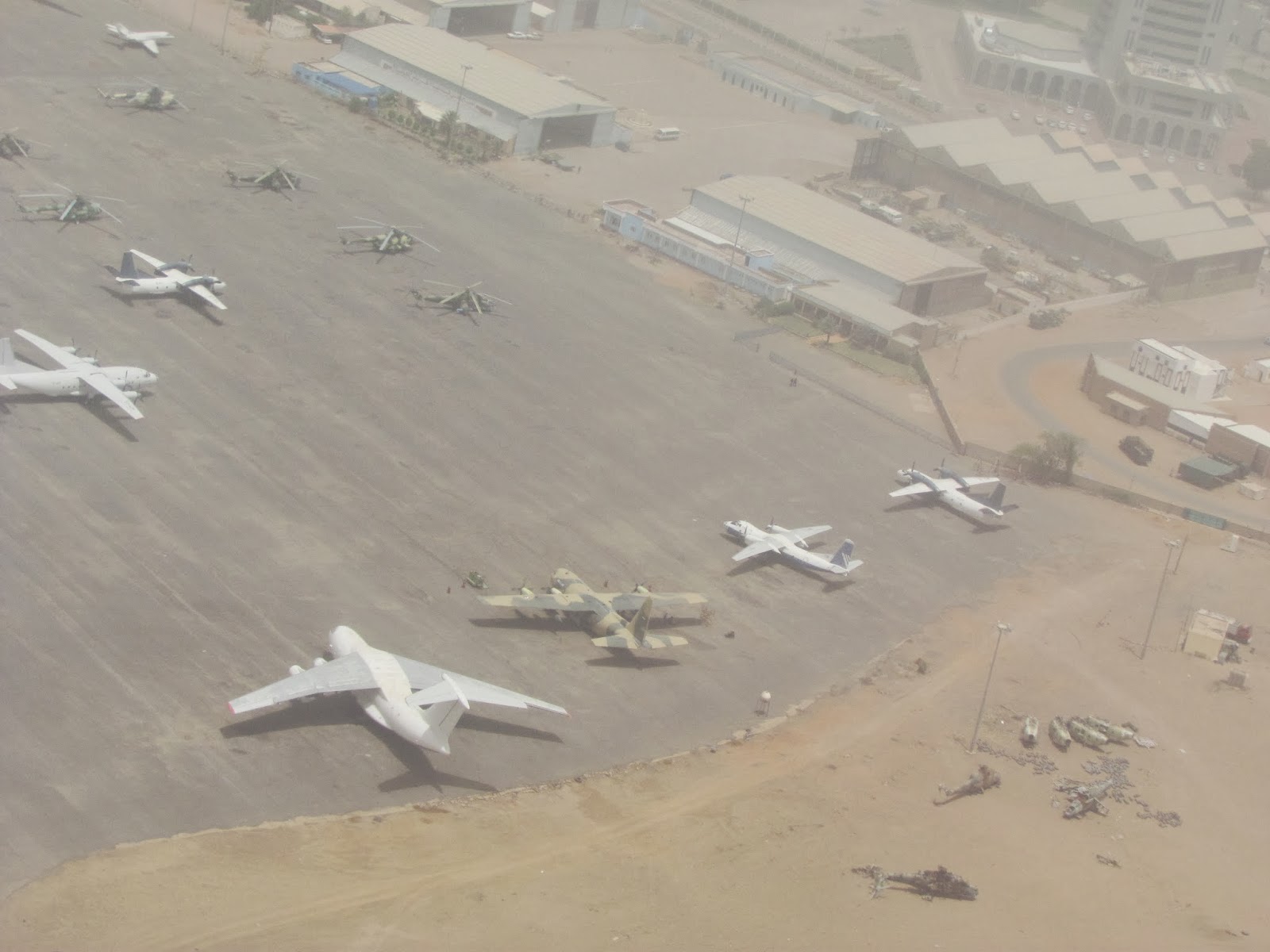
And if we doubt that supply-chain-pressure can make a difference, consider
this photograph:


<http://2.bp.blogspot.com/-i9U32mDGzSs/UpuSA475crI/AAAAAAAAAUE/0-n3lACRfbc/s1600/IMG_0123.JPG>

Second-from-left is one of the Sudan Air Force’s *other* transport
aircraft: one of six US-made C-130s that were supplied to Sudan under
Nimeri in the late 1970s. They sit, unused, on the military apron at
Khartoum airport. Their engines are occasionally turned over, but they’re
not airworthy, even by the suicidal safety standards of the Sudan Air
Force. Their redundancy, I’m told by Sudanese aviation professionals, is
due to the stringency of the blanket US trade sanctions on Sudan since the
1990s which prevent the acquisition of parts and maintenance for them. And
so the Air Force has to rely on ex-Soviet Antonovs instead. I’m absolutely
not advocating similar blanket trade sanctions. But *targeted* commercial
and governmental pressure on key parts of Sudan’s air warfare supply chain
could have a real effect in enforcing prohibitions that already exist in
international law.

*Photo at top: Umm Eshesh, eastern Darfur, Sudan, site of S-8 80mm
air-to-ground rocket attack, 2011 [N.B. likely by Mi-24 or Su-25 aircraft]*
     <http://treehugginghoolah.blogspot.co.uk/search/label/Sudan>

--
You received this message because you are subscribed to the Google Groups
"South Sudan Info - The Kob" group.
To unsubscribe from this group and stop receiving emails from it, send an email
to [email protected].
To post to this group, send email to [email protected].
To view this discussion on the web visit
https://groups.google.com/d/msgid/SouthSudanKob/CAJb14opnW5L0UyLnWzxmC56gr11_OHcsdu1nSDi8B3i1-wWqdg%40mail.gmail.com.
For more options, visit https://groups.google.com/groups/opt_out.