Nigeria’s Democratic Success: Time for Greater U.S. Engagement – By
Johnnie Carson
Posted on May 19, 2015
<http://africanarguments.org/2015/05/19/nigerias-democratic-success-time-for-greater-u-s-engagement-by-johnnie-carson/>
by AfricanArgumentsEditor
<http://africanarguments.org/author/africanargumentseditor/>
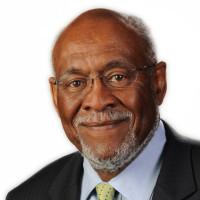
*[image: Johnnie-Carson]
<http://africanarguments.org/wp-content/uploads/2014/10/Johnnie-Carson-e1414680167254.jpg>*The
United States needs to act fast, wisely and comprehensively to shore up and
strengthen its relations with Nigeria following that country’s recent
successful national elections.  Nigeria’s presidential and gubernatorial
elections (held respectively March 28 and April 11) were a political
triumph for the people of that country as well as for the continued
positive trajectory of democracy across sub-Saharan Africa.

In the run up to Nigeria’s elections, there was widespread apprehension
that the elections would undermine Nigeria’s stability, that there would be
pre- and post-election violence, that the insurgent group Boko Haram would
disrupt voting, that thousands of citizens displaced by violence would not
be able to vote, and that introduction of new voting technology would lead
to chaos and confusion at the polls.  None of these things happened, and
Nigeria probably conducted the best elections in its fifty five years of
independence.

As Nigeria prepares for a democratic transition of presidential power on
May 29, the United States needs to focus again on Nigeria’s importance in
Africa and in the global community as well as the significance of its
latest democratic achievement.

Nigeria is by far the most important country in Africa.   Although weighted
down with a number of challenging problems, Nigeria is Africa’s leading
economic and commercial powerhouse.  Nigeria’s economy is twice the size of
South Africa’s industrial base and a third larger than Egypt’s.  Nigeria’s
economic importance is both regional and global.  With an output of over
2.2 million barrels of petroleum a day, Nigeria is Africa’s largest oil and
gas producer and the sixth largest global oil exporter.  In West Africa,
Nigerian companies dominate the banking, insurance, transportation,
telecommunications and manufacturing sectors.   Nigeria’s major seaports in
Lagos, Calabar and Port Harcourt serve large parts of West Africa.

The success of Nigeria’s recent elections has also raised its political
profile.  Nigeria has now held five successive multiparty democratic
elections and is enjoying the longest period of civilian rule since its
independence.  It has a vibrant civil society, which helped ensure the
success of the recent elections, a free and lively media and a rich blend
of Muslim and Christian cultures.   More importantly, with a population of
180 million people, it is Africa’s largest democracy — and the sixth
largest democracy in the world.

The United States needs to move quickly to strengthen its relationship with
Nigeria — as a fellow democracy – and to reach out to broaden and deepen
its relations with the new Nigerian government under President-elect
Muhammadu Buhari, a widely respected Muslim leader from the northern part
of the country. Relations between Abuja and Washington have frayed over the
past two years, largely over security issues and differences in approach of
Nigeria’s handling of the Boko Haram problem.  Nigerian officials were
deeply upset when Washington refused to permit the sale of
American-built Cobra helicopters from Israel to the Nigerian military.
Nigerian officials also complained about lack of information and
intelligence sharing and the reluctance of the United States to supply
other training and equipment.  Nigerian officials also felt snubbed by
President Obama’s decision not to visit Nigeria during his July 2013 swing
through Africa.

In Washington, officials at both the State Department and the Defense
Department were exasperated with President Goodluck Jonathan for his
reluctance to appoint competent military commanders, to deal with growing
levels of corruption in the army, and to adopt a more effective and
comprehensive security and economic revitalization strategy to deal with
the Boko Haram militancy in the northeastern part of the country.  American
officials were also concerned about growing levels of corruption across
government, especially in the oil sector, as well as the government’s
failure to move forward on the passage and implementation of a new
Petroleum Industries Bill  — long sought by American energy companies to
help jump start new international investment in Nigeria’s energy sector.

President-elect Buhari has already indicated that he wants to establish a
better relationship between Abuja and Washington, especially in the
security arena.  In an editorial page article in the New York Times on
April 14, Mr. Buhari said:  “My Administration would welcome the resumption
of a military training agreement with the United States, which was halted
during the previous (Jonathan) administration.”

The United States should move fast to reciprocate.  Over the next six
months, there are a number of ceremonial and substantive actions the United
States should take.

   1. *President Obama should stop in Nigeria on his forthcoming July 2015
   trip to Africa. * Strengthening democratic institutions has been the
   Administration’s number one priority in sub-Saharan Africa. President Obama
   made this point in his first presidential trip to Africa in a speech before
   the Ghanaian parliament in July 2009.  It is a theme repeatedly echoed
   since then and firmly reiterated in the president’s most important policy
   document on Africa, published in June 2012. President Obama is slated to
   visit Kenya (a longstanding economic, democratic and security partner) and
   Ethiopia (an important security partner whose democratic and human rights
   performance has been strongly criticized in the international community.)
   It would be deeply troubling for many Nigerians to see Africa’s largest
   democracy snubbed at this important moment in its history.
   2.  *President Obama should send a high level delegation to President
   Buhari’s inauguration *on May 29.  Ideally, this delegation should be
   led by Vice President Biden who engaged with both President
   Goodluck Jonathan and with president-elect Buhari in the run-up to
   Nigeria’s March 28 presidential contest.  If Vice President Biden is unable
   to go, Secretary John Kerry, National Security Advisor Susan Rice, Homeland
   Security Secretary Jeh Johnson or Agriculture Secretary Thomas Vilsack
   should lead the delegation. The delegation should also include senior level
   officials from several cabinet departments, including the Department of
   Defense.
   3. *President Obama should formally invite President-elect Buhari for an
   official visit* soon after the new president is sworn in.  If the White
   House does not send an appropriately high delegation to the inauguration in
   Abuja, an official visit takes on greater urgency.
   4. *The United States should reinvigorate, strengthen, and elevate the
   U.S.-Nigerian strategic dialogue* that was established seven years ago
   by former Secretary of State Hillary Clinton.  The U.S-Nigerian dialogue
   should be placed on the same plane as those with India, Brazil, and China.
   The next dialogue should be held at the foreign minister level, with
   Secretary Kerry leading the U.S. meeting in Washington and Deputy Secretary
   Antony Blinken leading the subsequent meetings.
   5. *The Administration should use this opportunity to deepen the
   commercial and trade relationship between Nigeria and the United States *and
   to build off of the successful U.S.-Africa business summit of 2014.
   Commerce Secretary Penny Pritzker, who has shown great interest in Africa,
   should be encouraged to travel to Nigeria with a delegation of American
   business leaders and investors and to work with the Nigerian government and
   with Nigeria’s leading companies to organize several high level trade and
   investment conferences in Nigeria to promote greater interest in Africa’s
   largest and most populous economy.
   6. *The Administration should re-establish and elevate the broken
   military to military relationship between Abuja and Washington*.  This
   will require some sensitive diplomacy and the White House should send the
   Chairman or the Vice Chairman of the Joint Chiefs of Staff to demonstrate a
   strong commitment by the U.S. to get this important relationship right.
   Once this is done, the AFRICOM commander can take the lead, but given the
   harsh feelings toward Nigeria at AFRICOM headquarters and by some in the
   Pentagon, the Chairman or the Vice Chairman should go out first.
   7. *The State Department should be strongly encouraged to revisit the
   establishment of a Consulate General in northern Nigeria, probably
in Kano,* *Nigeria’s
   second largest city. * Northern Nigeria is extremely important.  It is
   home to Africa’s largest Muslim population, a Muslim population that
   exceeds that of Egypt, and a population that has made Nigeria the fifth
   largest Muslim country in the world.  The U.S. has very little presence,
   access or influence in the north, and the U.S. should act rapidly to change
   this.  Secretary Clinton approved the opening of a consulate in the north
   in 2009.  The effort should be revisited as quickly as possible.
   8. *The United States should help Nigeria with its most serious
   impediment to advancing and taking its economy to the next level  — access
   to reliable, inexpensive and readily available power. * In a country of
   180 million people, Nigeria produces only 4,000 MW of power, less than New
   York City and its surrounding suburbs.  President Jonathan’s inability to
   improve the situation is one the reasons he was thrown out of office.
   Power Africa has been one of the Obama Administration’s most significant
   initiatives.  The Administration needs to double down on its efforts to
   assist Nigeria in addressing its energy needs by bringing together major
   American power producers to work with, partner and invest in Nigeria’s
   power sector.
   9. *The Administration should encourage an early trip to Nigeria by
   Agriculture Secretary Tom Vilsack,* accompanied by some of the
   leading American agro industry companies and the deans of some of America’s
   leading agricultural colleges – to help Nigeria revitalize and grow its
   agricultural sector.  Once self-sufficient in food and one of Africa’s
   largest exporters of groundnuts, cocoa, cotton and palm oil, Nigeria is now
   a major food importer, spending between four and five billion dollars
   annually to feed the nation.  U.S. support to strengthen Nigeria’s
   agricultural sector offers another opportunity for serious and sustained
   U.S. engagement in Nigeria whose population is expected to grow from 180 to
   over 400 million by 2035.
   10. *The Administration should also consider revamping MCC to help some
   of Nigeria’s progressive, honest and forward thinking state governors *with
   their sound economic development plans.  In the past MCC has only helped
   national governments.  Given the growing influence and important work that
   is being done at the state level, the Administration should seek changes in
   the MCC statute in order to directly assistance state governors and
   governments that are performing well, implementing sound development
   projects, and providing improved services to their people.

Nigeria is important.  We should not hold back.  And we should not miss
this opportunity to engage with Nigeria’s new government. Strong support
for Nigeria will help strengthen its democracy, support its economic grow
and enhance its security and stability. An economically vibrant and
democratically robust Nigeria is in the interest in Africa, the United
States and the broader global community.


*Ambassador Johnnie Carson. former Assistant Secretary of State for African
Affairs, and currently Senior Advisor, United States Institute of Peace and
Visiting Senior Fellow at Yale University. *
If you enjoyed this post, please consider leaving a comment
<http://africanarguments.org/2015/05/19/nigerias-democratic-success-time-for-greater-u-s-engagement-by-johnnie-carson/#comments>
or subscribing to the RSS feed <http://africanarguments.org/feed/> to have
future articles delivered to your feed reader.
 This entry was posted in The Nigeria Forum
<http://africanarguments.org/category/nigeria-political-forum/>. Bookmark
the permalink
<http://africanarguments.org/2015/05/19/nigerias-democratic-success-time-for-greater-u-s-engagement-by-johnnie-carson/>.
9 thoughts on “Nigeria’s Democratic Success: Time for Greater U.S.
Engagement – By Johnnie Carson”

   1.  Onaolapo Ajibade says:
    May 19, 2015 at 6:07 pm

<http://africanarguments.org/2015/05/19/nigerias-democratic-success-time-for-greater-u-s-engagement-by-johnnie-carson/#comment-67457>

   This is a sound piece of advice to President Obama. It will be very good
   if he heeds it. How else can his administration encourage the maturing
   process of democracy in Nigeria. President Obama should go to Nigeria and
   address the joint session of the Senate and House of Representatives. In
   his speech, he might want to commend President Jonathan for the way he
   conceded defeat and prevented a post-election blood bath and that all
   African leaders should follow his example.
     2.  Dave says:
    May 19, 2015 at 6:12 pm

<http://africanarguments.org/2015/05/19/nigerias-democratic-success-time-for-greater-u-s-engagement-by-johnnie-carson/#comment-67458>

   You said you all prof. but one of the main problem between white house
   and Abuja was the Gay right issue. That was the genesis of west snub to
   president Jonathan. If they continue with such policy of imposing gay right
   in Nigeria, i doubt the new relationship will hold water.
     3.  Anizizo says:
    May 19, 2015 at 7:26 pm

<http://africanarguments.org/2015/05/19/nigerias-democratic-success-time-for-greater-u-s-engagement-by-johnnie-carson/#comment-67460>

   In my view, it is obvious that the US Government is approaching the
   issue cautiously after the events in 2014 that contributed to the frosty
   relations between the US and Nigeria and with the more recent political
   events that occurred post-elections in Nigeria. Like Ambassador Carson
   stated, the newly elected government of General Muhammadu Buhari will need
   strong support from the United States to strengthen democracy and to
   enhance both security and stability within the country.
     4.  Victor Ahaiwe Dr. <http://idealbusinesscircuits.com> says:
    May 19, 2015 at 9:12 pm

<http://africanarguments.org/2015/05/19/nigerias-democratic-success-time-for-greater-u-s-engagement-by-johnnie-carson/#comment-67464>

   Very well said,
     5.  Ikechukwu Akpulue <https://emmanueludemba.wordpress.com> says:
    May 19, 2015 at 10:10 pm

<http://africanarguments.org/2015/05/19/nigerias-democratic-success-time-for-greater-u-s-engagement-by-johnnie-carson/#comment-67466>

   Great and Brilliant write-up from Ambassador Johnnie Carson, as always.
   Thank you so much for doing a good work for our world. I hope that you keep
   it up. Please Mr. Carson, kindly help in whatever way you can to intervene
   in the long-standing kidnap case of Mr. Emmanuel Chukwuemeka Udemba in
   Nigeria since March 21,2012(https://emmanueludemba. wordpress.com). This
   website will help to educate you on the details. The wife and children of
   Mr. Udemba have been suffering since 2012 after the kidnap and
   disappearance of their husband and father. Thank you very much.
   Best Regards,
   Ikechukwu Akpulue
   (Friend of the Udemba Family)
     6.  AKINSOTE ADETULA says:
    May 20, 2015 at 12:05 am

<http://africanarguments.org/2015/05/19/nigerias-democratic-success-time-for-greater-u-s-engagement-by-johnnie-carson/#comment-67470>

   Ambassador Johnnie Carson speaks the minds of most progressive Nigerians
   in this piece. I think the attention of Obama administration be drawn to
   this write up for policy thrust assistance and guidance. I mean this
   frankly and not rudely.
     7.  Leslie says:
    May 20, 2015 at 2:00 am

<http://africanarguments.org/2015/05/19/nigerias-democratic-success-time-for-greater-u-s-engagement-by-johnnie-carson/#comment-67472>

   Thank you Mr. Carson. Nigeria is currently the world’s best kept secret.
   Question is: Who knows it?
     8.  Kingsley Onyia says:
    May 20, 2015 at 3:11 am

<http://africanarguments.org/2015/05/19/nigerias-democratic-success-time-for-greater-u-s-engagement-by-johnnie-carson/#comment-67476>

   Dear Hon. Ambassador Carson,
   There is absolutely no doubt that you have Nigeria’s best interests at
   heart, and as a Nigerian, I sincerely commend you. Your points herein this
   brilliant article of yours are well-taken, but with one outstanding
   exception: “Nigeria the fifth largest Muslim country in the world”. This
   assertion/statement is absolutely offensive and humiliating, to say the
   least. My beloved country, Nigeria, is NOT, and will NEVER, be a Muslim
   country. The fact that you have a large Muslim population in the northern
   part of the country doesn’t make Nigeria a Muslim nation. Hell no. Never!
     9.  Jaja says:
    May 20, 2015 at 1:26 pm

<http://africanarguments.org/2015/05/19/nigerias-democratic-success-time-for-greater-u-s-engagement-by-johnnie-carson/#comment-67494>

   This is excellent. I especially agree with No. 7 “The State Department
   should be strongly encouraged to revisit the establishment of a Consulate
   General in northern Nigeria, probably in Kano, Nigeria’s second largest
   city.” Kano or Kaduna would do. Northern Nigeria needs greater engagement
   with the U.S. May northerners would like to study in the U.S., visit etc,
   but travelling down to Abuja or Lagos to obtain even basic information
   excludes vast swathes of the North from opportunities in the U.S. I hope
   this works.

--
To post to this group, send email to [email protected]
To unsubscribe from this group, send email to
[email protected]
Visit this group at https://groups.google.com/d/forum/southsudankob
View this message at
https://groups.google.com/d/msg/southsudankob/topic-id/message-id
For more options, visit https://groups.google.com/d/optout
---
You received this message because you are subscribed to the Google Groups
"South Sudan Info - The Kob" group.
To unsubscribe from this group and stop receiving emails from it, send an email
to [email protected].
To post to this group, send email to [email protected].
Visit this group at http://groups.google.com/group/SouthSudanKob.
To view this discussion on the web visit
https://groups.google.com/d/msgid/SouthSudanKob/CAJb14orJT0Phoe-VTDtjhpO9qrvJfRubOVvdrFNmZ5fffeQy3A%40mail.gmail.com.
For more options, visit https://groups.google.com/d/optout.