Sudan and the ‘Island of Stability’ myth – By Ahmed Kodouda
Posted on June 5, 2015
<http://africanarguments.org/2015/06/05/sudan-and-the-island-of-stability-myth-by-ahmed-kodouda/>
by AfricanArgumentsEditor
<http://africanarguments.org/author/africanargumentseditor/>
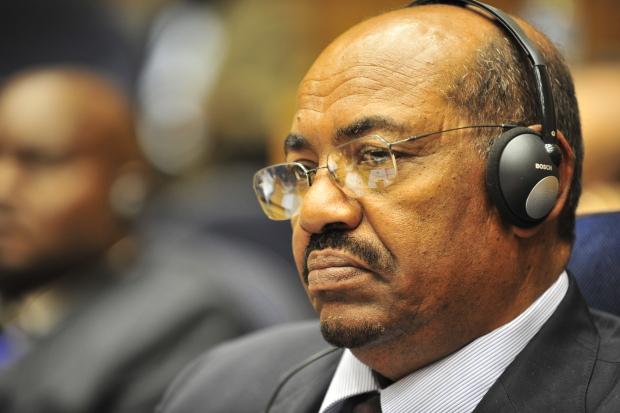
[image: Sudan's President Omar al Bashir]
<http://africanarguments.org/wp-content/uploads/2015/03/Omar_al-Bashir-e1425376855714.jpg>
Sudan’s President Omar al Bashir.

After a quarter of a century in power, Omar al Bashir’s regime has never
been more stable internationally. Despite domestic unrest, as armed
conflicts rage on three fronts and an economic malaise threatens the
country’s viability, the ruling National Congress Party (NCP) has been able
to survive one of the most volatile periods in the region’s history. The
regime – built on a shaky alliance between Bashir, the Islamic Movement and
influential business interests, protected by national security organs and
buttressed by the military – is stronger than ever.

Bashir has been able to overcome bigger obstacles than those that toppled
his predecessors in 1964 and 1985. The threats are both domestic and
international. They range from civil wars, economic stagnation and
challenges from within his own rank-and-file, to the political danger
brought by a young population yearning for change. Internationally, the
regime continues to experience tough sanctions resulting both from its
history as a regional sponsor of terrorism, and the mass atrocities
committed by government in Darfur, South Kordofan and Blue Nile.

For a regime to survive so long, long-term strategy must be subordinate to
short-term pragmatism. In order to neutralize any threat from outside, it
must, as this regime continues to, interfere with and destabilize its
neighbours. Moreover, the regime must, and continues to, navigate rough
international waters and sell its allegiance to the highest bidder,
irrespective of the country’s benefit or interests.

In October 2014, Bashir arrived in Cairo as an ally of the Islamists forces
in control of Tripoli (Libya’s western capital), and returned to Khartoum as
an ostensible supporter
<http://www.aljazeera.com/news/middleeast/2014/10/sisi-bashir-aid-libya-against-militias-20141019172944338369.html>
of the internationally-recognized government in Tobruk. In late March 2015,
Bashir arrived in Riyadh as Iran’s only Sunni ally and returned to Khartoum
as one of its many enemies
<http://globalvoicesonline.org/2015/03/26/sudan-turns-back-on-iran-joins-saudi-arabias-war-on-yemen/>,
participating in the Saudi-led “Decisive Storm” offensive in Yemen. It sold
out its long-time ally Iran when the Gulf States tightened the economic
noose, cutting vital economic aid and halting bank transfers into Sudan.

Regionally, Sudan is surrounded by conflicts and unrest. Civil wars are
being waged in nearby South Sudan, the Central African Republic, northern
Nigeria, Libya, Somalia, and as far away as Iraq, Syria and Yemen.

During a visit to Washington in February, Ibrahim Ghandour, Bashir’s top
adviser and emissary, was reported to have told the Obama administration
that Sudan is “an island of stability in an ocean of instability”, and that
Khartoum should be seen as an ally to bring calm to this chaotic part of
the world.

The reality is quite the opposite, as Khartoum – by necessity and for its
own survival – has a hand, in one way or another, in all of these
aforementioned conflicts – despite the distance between Sudan and some of
these wars. It is important to note the regional context, as none of
Sudan’s immediate neighbours have much experience of democratic governance
or institutions.

The region has a long history of neighbours interfering in each other’s
affairs, as was the case between Chad and Sudan in the 2000’s and Libya
under Gaddafi in Darfur, for example. Rather than “an island of stability,”
Khartoum is in fact interested in, and a major source of, instability in
its own neighbourhood. Khartoum’s involvement in regional affairs is a
litany of deleterious interference and meddling.

In South Sudan, Khartoum has been accused
<http://www.sudantribune.com/spip.php?article53948> of arming rebel forces
fighting the government and providing logistical support and intelligence
to proxies throughout the region. The best evidence of this comes from the
Small Arms Survey
<http://www.smallarmssurveysudan.org/fileadmin/docs/facts-figures/arms-ammunition-tracing-desk/HSBA-Tracing-Desk-Bentiu-July-2014.pdf>,
a research group, which has extensively documented the use of Sudanese-made
munitions in South Sudan.

Of course, the regime has a long and well-tested experience of perfecting
its divide-and-rule strategies during the civil war in the south, before
separation. Although Khartoum continues to position itself as a peacemaker
in South Sudan by hosting Chinese-facilitated talks
<http://news.yahoo.com/sudan-rivals-khartoum-china-led-peace-talks-190736160.html>
between the two warring sides in January 2015 and playing a role in the
IGAD mediation process, its interest is in the continuation of the war, as
long as the flow of South Sudanese oil – which amounted to a precious $880
million in 2014 <http://www.sudantribune.com/spip.php?article53545> – is
not threatened.

If South Sudan is too busy fighting itself, it won’t be able to support
armed groups in Sudan, especially the Sudan People’s Liberation Army-North
(SPLA-N), a vestige of the SPLA which now runs South Sudan. Sudan doesn’t
necessarily want South Sudan to implode, but many in Khartoum feel
vindication and glee as the war rages, seeing it as an opportunity to play
all sides of the conflict to their advantage.

In the Central African Republic, Sudan has been accused of arming and
supporting
<http://www.smallarmssurveysudan.org/fileadmin/docs/issue-briefs/HSBA-IB-05-CAR.pdf>
rebel groups since 2007 and has fueled the recent
<https://radiotamazuj.org/en/article/sudanese-weapons-used-central-africa-war>
– religiously-motivated – civil war by providing arms to the Muslim Seleka
rebels. According to Conflict Armament Research
<http://www.conflictarm.com/wp-content/uploads/2015/01/NONSTATE_ARMED_GROUPS_IN_CENTRAL_AFRICAN_REPUBLIC2.pdf>,
the Seleka have stockpiles of Sudanese small arms munitions manufactured as
recently as 2013 and have used Sudanese-made light tactical vehicles.

In Libya, Khartoum is alleged to be backing
<http://www.theguardian.com/world/2014/sep/07/libya-khartoum-weapons-islamist-rebels>
Islamist forces fighting the internationally recognized government, despite
promising to do the opposite after Bashir’s aforementioned October 2014
visit to Cairo. In 2011, Bashir boasted about his government’s central role
<http://www.bbc.co.uk/news/world-africa-15471734> in funneling arms to
rebels during the civil war that toppled Muamar Gaddafi, who played a
similarly negative role in destabilizing the region.

In Egypt, Sudan’s involvement was most brazen, when in the mid-1990s,
Khartoum’s
National Intelligence and Security services in cooperation with Egyptian
militants allegedly orchestrated an assassination attempt
<http://www.un.org/press/en/1996/19960426.sc6214.html> against former
President Hosni Mubarak in Addis Ababa. Today, it is accused of harboring
fugitive members of the outlawed Muslim Brotherhood. Khartoum also has a
long history of supporting the Lord’s Resistance Army
<http://www.aljazeera.com/programmes/peopleandpower/2011/01/20111585750480428.html>
operating in Northern Uganda, South Sudan, Democratic Republic of the Congo
and Central African Republic.

In Yemen, the regime is trying to shore up its “stabilizing” credentials by
participating in the Saudi-led ‘Decisive Storm’ coalition against the
Houthis. However, Port Sudan was a key base for Iranian warships that
funneled weapons to the Iran-backed rebels.

In Syria, Khartoum was accused of arming rebels fighting Bashar al Assad in
2013
<http://www.nytimes.com/2013/08/13/world/africa/arms-shipments-seen-from-sudan-to-syria-rebels.html?_r=1>,
while maintaining very close, friendly ties with the Syrian regime’s
closest ally, Iran. Moreover, on several different occasions, the country,
including Khartoum itself, was bombed by Israeli warplanes
<http://www.washingtonpost.com/blogs/worldviews/wp/2012/10/30/why-would-israel-bomb-sudan-theories-cite-iran-hamas-even-the-u-s/>
because the regime hosted Iranian weapons industries and established
corridors to smuggle weapons to Hamas in Gaza.

Some of the radical Islamist members of al Shabab in Somalia and Boko Haram
in Nigeria were educated in Khartoum’s International University of Africa
<http://www.thecable.ng/the-insider-is-this-the-sudanese-university-radicalising-nigerian-militants>,
a hotbed for Islamic radicalization. In fact, during a recent televised
interview, Bashir claimed that half of the individuals that made up the
various transitional governments in Somalia over the past quarter century
were educated and “raised” in Sudan.

Sudan was also accused of harboring Islamist militants
<http://www.sudantribune.com/spip.php?article45598> who fled Mali after the
French and African Union counter invasion in 2013, something that it has
strenuously denied by Khartoum. The regime certainly hosted international
terrorists such as Osama bin Laden and Carlos the Jackal during its early
years. Most alarmingly, Sudanese munitions were recently reportedly used by
the Islamic State in Iraq and Syria (ISIS)
<http://www.conflictarm.com/wp-content/uploads/2015/04/Islamic_State_Weapons_in_Kobane.pdf>,
which unlike other terrorist groups, has territorial ambitions and has
recently expanded into Libya.

Khartoum’s meddling beyond its borders is often times opportunistic, with
little long-term vision or strategy. However, central to its approach is
the regime’s primary tool for destabilizing the region: its robust Military
Industry Corporation, a government-owned producer of arms, munitions and
vehicles. Sudan is the third largest arms producer in Africa after Egypt
and South Africa, providing arms and munitions both state and non-state
actors.
<http://www.theguardian.com/world/2014/sep/07/libya-khartoum-weapons-islamist-rebels>

It is also the first transit point for Chinese and Iranian weapons destined
for other, often unstable or war-torn, African countries. Khartoum’s
military industry has a surprisingly long reach
<https://medium.com/war-is-boring/sudan-is-arming-africa-and-no-one-cares-3bf740d47304>,
as Sudanese-made munitions were found in Ivory Coast in 2009, when that
country witnessed civil unrest , even though Sudan does not seem to have
any strategic interests in that part of the world.

Despite international arms embargoes and sanctions, the regime has no
qualms about flaunting its arms industry, as in February 2015, when Sudan
had one of the largest delegations at the International Defense Exhibition
and Conference (IDEX) in the United Arab Emirates of any African or Middle
Eastern country. Bashir was the only head of state present
<http://www.bbc.co.uk/news/business-31658182> during the opening ceremony.
According to the Small Arms Survey
<http://www.smallarmssurveysudan.org/fileadmin/docs/facts-figures/sudan/HSBA-IDEX-2015.pdf>,
this large showing at IDEX is proof of Khartoum’s ambitions of attracting
global arms purchasers, not just from its own neighborhood.

Finally, the “island of stability” analogy falls short as soon as we look
domestically, as armed conflicts rage to various degrees in Darfur, South
Kordofan and Blue Nile, and the regime’s divide-and-rule tactics are
tearing the fabric of the society apart. According to the United Nations
<http://www.unocha.org/sudan>, 5.4 million people are in need of
humanitarian assistance in the country. In Darfur, the government has all
but lost control, as the conflict between various armed groups, tribal
militias, parastatal militias and the government’s own regular forces displaced
430,000 people in 2014
<http://www.crisisgroup.org/en/regions/africa/horn-of-africa/sudan/b110-the-chaos-in-darfur.aspx>
– more than any year since the conflict began in 2004 – and some 100,000
people were displaced in January 2015 alone.

As a result, the African Union, the United Nations and the entire
international community must take Khartoum’s rhetoric with a huge grain of
salt. Sudan is not an island of stability in a chaotic region, but rather a
nation slowly collapsing while serving as a hub for regional instability
and chaos.

*Ahmed Kodouda is regional program coordinator for Saferworld, an
independent international organisation working to prevent violent conflict.
He can be reached at [email protected] <[email protected]>.*
If you enjoyed this post, please consider leaving a comment
<http://africanarguments.org/2015/06/05/sudan-and-the-island-of-stability-myth-by-ahmed-kodouda/#comments>
or subscribing to the <http://africanarguments.org/feed/>

--
To post to this group, send email to [email protected]
To unsubscribe from this group, send email to
[email protected]
Visit this group at https://groups.google.com/d/forum/southsudankob
View this message at
https://groups.google.com/d/msg/southsudankob/topic-id/message-id
For more options, visit https://groups.google.com/d/optout
---
You received this message because you are subscribed to the Google Groups
"South Sudan Info - The Kob" group.
To unsubscribe from this group and stop receiving emails from it, send an email
to [email protected].
To post to this group, send email to [email protected].
Visit this group at http://groups.google.com/group/SouthSudanKob.
To view this discussion on the web visit
https://groups.google.com/d/msgid/SouthSudanKob/CAJb14opH%2B63CKZZx1EkiV65qRxK%2B99o39aLcDHX%3DQdohBzTNsw%40mail.gmail.com.
For more options, visit https://groups.google.com/d/optout.