Central African Republic: can a disarmament deal without the main actors
work in Bangui? – By Tendai Marima
Posted on June 2, 2015
<http://africanarguments.org/2015/06/02/central-african-republic-can-a-disarmament-deal-without-the-main-actors-work-in-bangui-by-tendai-marima/>
by AfricanArgumentsEditor
<http://africanarguments.org/author/africanargumentseditor/>
[image: SambaPanza]
<http://africanarguments.org/wp-content/uploads/2015/06/SambaPanza.jpeg>
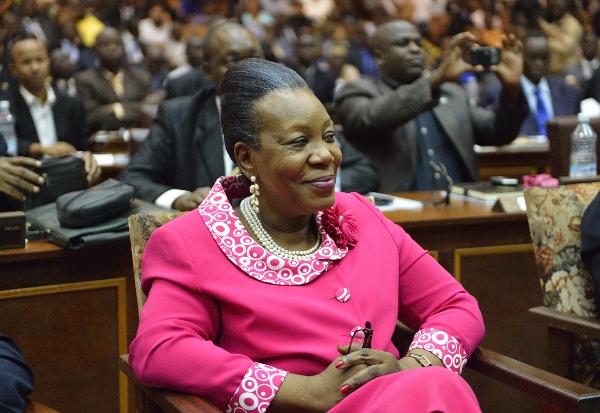
Catherine Samba Panza’s transitional government is likely to continue given
the inevitable postponement of elections.

Making an important step towards peace and stability in the Central African
Republic (CAR), the signing of a disarmament agreement and a consensual ban
on the use of child soldiers on 10 May shows some sign of progress as
a monitoring
committee
<http://www.rfi.fr/afrique/20150522-centrafrique-comite-suivi-elu-forum-bangui-mahamat-kamoun/>
was recently elected to ensure the implementation of the recommendations of
the Bangui Forum, a national reconciliation dialogue held in CAR’s capital.

Presided over by Abdoulaye Bathily, Special Representative of the UN
Secretary-General, the Forum focused on security, locally-centered peace
initiatives, judicial reform and economic recovery. Some of the resolutions
produced offer potential relief for the impoverished, conflict-torn nation.
But, despite some promise, CAR’s repetitive history
<http://www.rfi.fr/afrique/20150506-rca-forum-bangui-participants-soci%C3%A9t%C3%A9-civile-temoignages-reconciliation/>
of conflict, dialogue and more conflict since 1980 puts a damper on hopes
that the Forum’s demobilization accord (signed by at least ten rebel
groups) will yield better results. Already, initial reactions of
displeasure and resistance from some of CAR’s rebels is creating uncertainty
<http://www.dw.de/deal-by-car-rebels-brings-hope-concerns/a-18444794%20>
over the success of the disarmament, demobilization, repatriation and
reintegration
<http://www.jeuneafrique.com/Article/ARTJAWEB20150511172147/politique-d-fense-s-curit-crise-centrafricaine-crise-centrafricaine-centrafrique-ce-qu-il-faut-retenir-du-forum-de-bangui.html>
(DDRR) of roughly 8,000 rebel fighters.

A deal that could see eligible fighters of the northern-based ex-Seleka
rebel coalition and anti-balaka vigilantes disarming and being drafted into
the army, gendarmarie, police and as forest rangers offers some prospect of
legitimate employment, albeit low-paying, for militias who have resorted to
banditry as a source of income, but many remain unhappy. Contentiously, the
Forum had suggested that since the current political climate is not
conducive for the planned 2015 presidential and parliamentary elections and
the electoral commission remains underfunded and unprepared, President
Catherine Samba-Panza’s rule should continue. Though a necessary move,
given that the UN recently announced a further postponement
<http://www.shanghaidaily.com/article/article_xinhua.aspx?id=283131> of
polls, while Samba-Panza only just met the major election and DDRR funders
from the European Union in Belgium and France, the decision has not been
welcomed by all of CAR’s militias.

Non-signatories to the DDRR accord have threatened not to disarm or accept
the caretaker government’s recommended prolongation. On the last day of the
Forum, sworn rivals, the ex-Seleka, a previously united militia of the
north-east and the anti-balaka vigilantes, banded together in protest
demanding the unconditional release of their imprisoned rebel comrades and
an end to the transitional government. How far the disaffection and threats
could go is unclear, but against the current rebels record of broken peace
pacts and CAR’s scarred past of unending battles, the proposed DDRR might
not be such a smooth process.

In the restive east, where the cities of N’dele, Bambari and the
diamond-rich Bria serve as ex-Séléka bases, ex-President Michel Djotodia’s
former special adviser and rebel leader Abakar Sabone
<http://www.rfi.fr/afrique/20150302-rca-ex-seleka-fustige-retards-dialogue-forum-bangui-reconciliation-abakar-sabone/>
turned down an invitation to the Forum and has refused to disarm. Posturing
to mask his own power moves, Sabone claims the dialogue was not aimed at
national reconciliation, but rather forming political alliances between
power-hungry groups. A key figure behind the north-east secessionist
movement, Sabone has threatened to march on Bangui if his demands for the
establishment of the Republic of North-East CAR
<http://thinkafricapress.com/central-african-republic/one-year-coup-djotodia-seleka-anti-balaka>
are not considered. While formal partition is an impractical dream, it’s
one that has long historical roots and, under the right circumstances,
could gather enough foot-soldiers to make trouble in future

Voices of discontent have also come from the north-west, with former Séléka
leader, François Ndjadder, who now leads the minor Revolutionary Forces for
Democracy (FDP), warning that he and his troops will march on the capital
if Samba-Panza does not step down. Another indignant, small
politico-militia movement, the pro-anti-balaka Democratic Front for the
Progress of the Central African People (FDPC) accuses the government of
playing politics to maintain its power. The FDPC may feel aggrieved, but
they too have maintained their grip on the north-western borderlands by
frequently using violence to extort, raid and displace villagers into
neighbouring Cameroon.

Uninvited warlords in exile and on the run from the International Criminal
Court (ICC), former rebel presidents, François Bozizé and Michel Djotodia –
the leader of a belligerent faction of the northern-based ex- Séléka
coalition – were looking to make a political comeback at the Bangui Forum,
but they were not allocated places. Although a representative of Djotodia’s
Popular Front for the Central African Renaissance (FPRC) signed the
disarmament agreement, the rebels-turned-political party has rejected the
signatory saying that it is invalid because the FPRC had suspended Abel
Balenguele on 10 May, the same date the agreement was signed. The movement
rejects the terms of the deal and has thus withdrawn its participation from
the proposed DDRR program.

Opposed to the transitional government’s continuation, the FPRC demand
presidential polls, accusing the President of trying to hold onto power.
Appointed in February 2014 Samba-Panza’s transitional administration has
helped bring limited order to a country overrun by the Séléka rebels after
the overthrow of President François Bozizé in March 2013. With significant
help from French and African peacekeepers, some level of normality has been
restored after a political conflict escalated into a horrifying sectarian
battle. Credited with overseeing the recovery of CAR, under the National
Transition Council (CNT), the fighting which flared up in 2013 has subsided
and humanitarian aid has generously flowed into the country to help
alleviate a severe crisis.

CAR is perhaps (very) slowly on the mend and the UN peacekeeping mission,
MINUSCA, is preparing to carry out a national community-based DDRR that
will repatriate eligible foreign fighters and offer ex-combatants a
work-skills program. However, it all crucially depends on funding and the
rebels’ willingness to participate. In past conflict settlements, DDRR
approaches <http://www.gsdrc.org/docs/open/car_gsdrc2013.pdf> have been
shaped by the government’s policy towards ex-fighters and the lack of
political will from the Bozizé administration, for example, was a crucial
reason disarmament failed after the 2003 coup and 2004-2011 Bush War
<http://www.bbc.com/news/world-africa-13150044>.

The 2008 Libreville Agreement aimed at ending the northern Bush War between
the army and Djotodia’s militias was later followed by a two week Inclusive
Political Dialogue that had little planning input from the rebels. The
resultant demobilization program provided support to over 7,500
ex-combatants, but the majority of the disarmed were in Bangui and
some scholars
doubt
<http://africanarguments.org/2011/08/26/central-african-republic-peacebuilding-without-peace/>
the actual implementation of many community reintegration projects.
Security sector reform proposed during the 2008 dialogue did not take place
and the lack of reintegration of northern rebels who formed the Séléka
remained a sore-point during 2013’s Libreville Agreement
<http://www.reuters.com/article/2013/01/11/us-car-rebels-idUSBRE90A0NR20130111>
discussions.

Thus far over 350 child soldiers
<http://www.theguardian.com/global-development/2015/feb/16/central-african-republic-elections-united-nations>
have been released from the camps of the anti-balaka and Séléka as agreed,
but controversy <http://www.jeuneafrique.com/Article/JA2832p014.xml0/> over
the Bangui Forum’s organization and the transition’s prolongation
inevitably stalk the DDRR agreement. In reiterating government’s rejection
of the controversial amnesty-awarding Nairobi Agreement
<http://www.rfi.fr/emission/20150312-michel-djotodia-accord-nairobi-est-accord-exceptionnel-rca-francois-bozize-seleka-catherine-samba-panza-kenya/>
signed in Kenya between Bozizé and Djotodia in February 2015, at the Forum,
Samba-Panza refused
<http://www.france24.com/fr/20150504-bangui-forum-derniere-chance-centrafrique-politique-reconciliation-anti-balaka-seleka>
to consider an amnesty, stating a desire to ensure justice for victims.
However, the belief that pardons could be granted was a motive for some
combatants signing the peace and disarmament commitments and the denial of
amnesty as well as the exclusion of those accused of war crimes as
ineligible for DDRR, is likely to impact negatively on the CNT’s future
negotiations with the armed movements.

With the prime perpetrators watching from the margins and others angered by
the transition’s prolongation, hopes for the successful demobilization of
CAR’s hotspots in the capital as well as the eastern and western frontiers,
are not blithely optimistic
<http://www.lemonde.fr/international/article/2015/05/24/centrafrique-une-crise-profonde-dont-paris-veut-s-extraire_4639608_3210.html#LsrtyKlVmL0V1Edx.99>.
However, the CNT should consider addressing some of the rebels’ grievances
or rumblings of discontent may later come to haunt Samba-Panza’s transition
and its elected successor.

*Tendai Marima is a freelance journalist and academic researcher in
Southern Africa. Follow her on Twitter @i_amten.*
If you enjoyed this post, please consider leaving a comment
<http://africanarguments.org/2015/06/02/central-african-republic-can-a-disarmament-deal-without-the-main-actors-work-in-bangui-by-tendai-marima/#comments>
or sub <http://africanarguments.org/feed/>

--
To post to this group, send email to [email protected]
To unsubscribe from this group, send email to
[email protected]
Visit this group at https://groups.google.com/d/forum/southsudankob
View this message at
https://groups.google.com/d/msg/southsudankob/topic-id/message-id
For more options, visit https://groups.google.com/d/optout
---
You received this message because you are subscribed to the Google Groups
"South Sudan Info - The Kob" group.
To unsubscribe from this group and stop receiving emails from it, send an email
to [email protected].
To post to this group, send email to [email protected].
Visit this group at http://groups.google.com/group/SouthSudanKob.
To view this discussion on the web visit
https://groups.google.com/d/msgid/SouthSudanKob/CAJb14opxdduAQdUtO7LzyhKxEtYgUHaXLo6UsFhgVCNtZjAOyA%40mail.gmail.com.
For more options, visit https://groups.google.com/d/optout.