The Neglected Niger Delta: How Politicians Can Help Themselves (and
Everyone Else) – By Chris Newsom
Posted on August 3, 2015
<http://africanarguments.org/2015/08/03/the-neglected-niger-delta-how-politicians-can-help-themselves-and-everyone-else-by-chris-newsom/>
by AfricanArgumentsEditor
<http://africanarguments.org/author/africanargumentseditor/>
[image: Chris Newsom pic]
<http://africanarguments.org/wp-content/uploads/2015/08/Chris-Newsom-pic.jpg>The
Niger Delta region of Nigeria has emerged from the 2015 election season
with a population feeling both politically and materially wounded. Goodluck
Jonathan’s electoral defeat produced an almost overnight change in
patronage channels, while the continuing slump in oil prices has
dramatically slowed the share of revenues to the states in the region.

These losses are keenly felt by those connected to the politically-fueled
patronage and contracting chains that reach across Nigeria. Yet for many
more, the sense is more of a loss of hope as aspirations tied to the
outgoing administration remain unfulfilled.

These “soft” measures of sentiment in the region matter because there is a
combination of communities and youth who are at the periphery of cartels
and militias that are exploiting the black market of Nigeria’s illegal oil
trade. They have choices about whether to join an entrenched illegal
industry, sway towards greater militancy, or steer clear of these hazardous
fields. Past experience suggests that what tips the balance in such
equations can depend on very subjective evaluations of what to expect from
government and how this might impact on local opportunities.

The list of key unaddressed issues in the Niger Delta has seen little
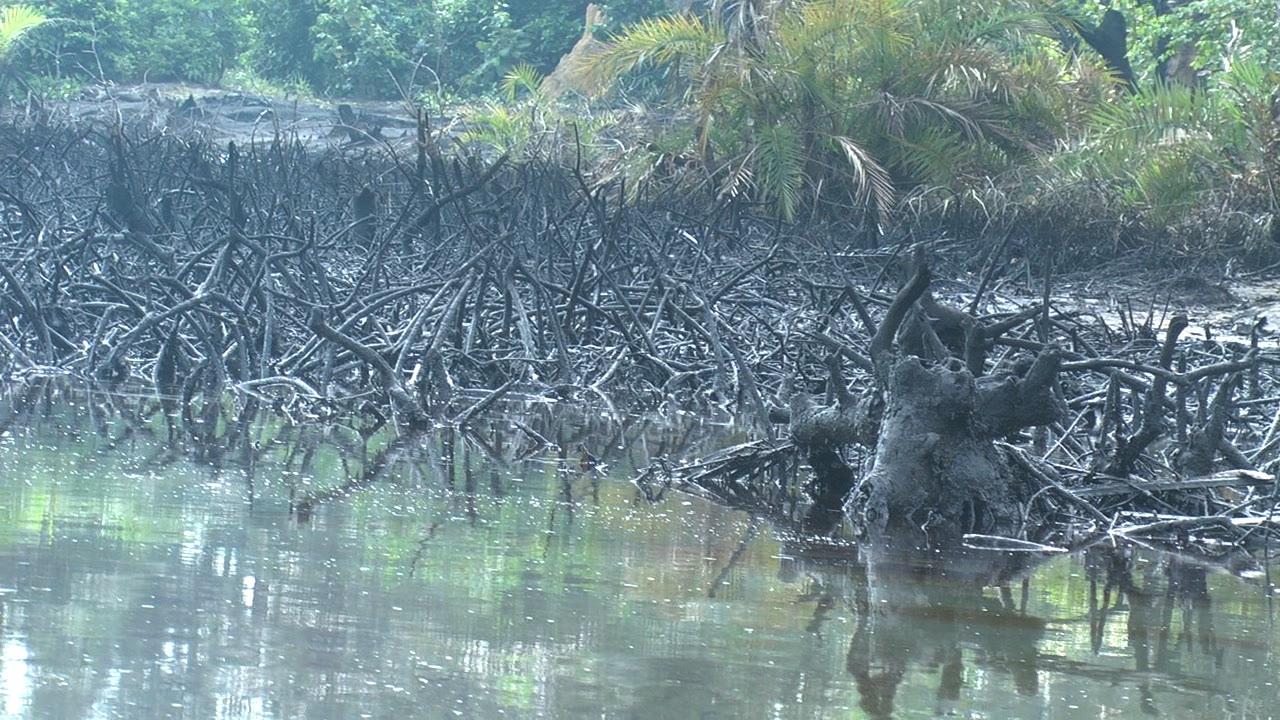
significant change since 2010. Routine oil pollution from both oil theft
and operational failure remains at levels that can only be matched by
failed states. Economic development is massively distorted by patronage and
corruption, while core services such as education, health, and
infrastructure are still hugely dysfunctional. Headline issues such as gas
flaring have made some progress but are still at levels that place Nigeria
in a rare class of failure globally.

In the last five years, some issues saw a start on work then a complete
stall – such as the HYPREP initiative to model response to oil pollution in
the region by starting with a clean-up in the controversial Ogoni region.
Other initiatives such as the Niger Delta Development Commission (NDDC)
were allowed to sink even deeper into a mire of dysfunction that now
includes debts measured in the billions of dollars. Some projects such as
the redevelopment of the cross regional ‘east-west’ road will see
completion but at a cost that will be a signpost warning on the perils of
patronage contracting.

*The Niger Delta and national priorities*

This depressing list of inaction underlines a key fear in the region. It
would be all too normal for the Niger Delta to slip down a list of
political priorities to a level which fueled protests against
marginalization in the 1990s. Presently this fear is held in the realm of
speculation only by a vacuum. The incoming administration has so little
publicly visible policy on the Niger Delta region and is sufficiently slow
moving that it is still being treated as an unknown quantity. This
suspension of judgement can only hold back popular and elite perceptions
for a matter of months.

The risk of the Niger Delta slipping to the margins of the present
administration’s priorities has more contributors than just the ethnic and
regional schisms at the heart of popular perceptions. Bombings that have
claimed more than 200 lives in the past month underline that Nigeria is
still in the midst of a vicious guerrilla war against Boko Haram.
Economically the fallout from profligate spending and an oil price slump
has budget shortfalls at a level where speculators are actively talking
Nigeria’s currency towards 250 to the US $ (around a 60% depreciation on a
year ago).

Possibly the worst threat of misplaced national priorities is the risk that
issues as serious as the Niger Delta could play second fiddle to an
obsession amongst political elites with the 2019 election season. Political
infighting that has broken out in the ruling APC is already being played
out as if the present administration is merely transitional.

[image: Picture 1bodo nnpc]
<http://africanarguments.org/wp-content/uploads/2015/08/Picture-1bodo-nnpc.jpg>It
is a problem that is all too familiar. Many of the more worthy initiatives
of the past administration were derailed between 2013 and 2015 by political
maneuvering that produced strings of perverse outcomes and massive
diversions of funds. Politics as a business investment with little concern
for broader outcomes accelerated in this period and seems set to worsen
unless a decisive change in thinking takes place.

Much of the political inertia on the Niger Delta has been driven by an
attitude that misreads risk and assumes that sufficient oil revenues will
always be in place for the needs of political elites. With the accumulated
history of activism, militancy, and criminal cartels there seems an
obvious possibility that tepid responses or no action will not contain
competing tensions in the region.

However the reading of the Niger Delta in Nigerian political circles has
often discounted this sort of risk, with policies that allowed protest in
the 1990s to morph into successive bouts of militancy in 2003 and 2007.
Conflict in the latter period demonstrated how it was all too easy to
cripple Nigeria’s onshore oil operations.

The band aid responses of the early 2000s have been followed by a larger
palliative where an Amnesty program and oil security contracts have frozen
insecurity in a box. Massive theft still occurs, but the oil industry is
able to stumble along. Even at higher oil prices it is an approach that,
combined with stalled regulatory reform, has choked off investment.

The costs of maintaining the status quo have jumped massively, while
falling oil prices have meant increased competition for a rapidly shrinking
federal pie. As a national revenue generator, the oil industry is in a slow
death spiral that is not amenable to half measures to bring back necessary
investment and commitment.

*What should be done? *

The first step in reformed thinking is to recognize that a turnaround in
the Niger Delta oil and gas industry is not possible without a matching
economic and security transformation in the region. The mafias running
illegal oil operations in the region almost certainly generate more rural
economic trickle down benefits than any intervention of government and
industry.

So dislodging such actors will be both challenging and require realistic
balancing of local impacts. Improved security and investment are
inextricably tied to opening legitimate channels of livelihood for a youth
population who are already close to believing that forcibly taking a share
of the industry is the norm. The additional step in thinking is to
recognize that progress in the region can unlock gains that have national
economic multipliers that will pay visible dividends by as soon as 2019.

The national aspirations in the power sector are tied to improved stability
along critical gas and oil pipelines. In key cases, gas for the power
sector is inextricably linked to oil pipelines that are both beyond their
operational life and under siege from oil theft. Around 2,000 MW of
critically needed power depends on improved oil infrastructure stability.
An improvement of 400,000 bpd drawn from stabilized oil production and
reduction in theft would bring between $6-$10 billion per annum in sorely
needed government revenues.

None of the interventions that would address environmental, economic and
security failures in the region come cheaply. However the combined revenue
of state governments and the NDDC at over $5 billion per annum underlines
the fact that there are spectacularly under-utilized resources in play.

If a significant fraction of these revenues were redirected towards a
credible economic stimulus for the region, then goodwill for other
initiatives could be dramatically broadened. A critical economic and
political multiplier is within reach if some of the economic expansion can
focus on improving domestic trade between the Niger Delta and other regions.

Why should Nigeria’s competing political actors who are collectively
notoriously self-interested and short-sighted consider such pathways?
Hopefully, an improved sense of self-preservation.

A failure to generate a turnaround in the Niger Delta will shrink national
revenues at a time of intense vulnerability. Few who are associated with
present administrations would be expected to emerge unscathed from
scenarios where they cannot even meet payroll for civil servants and face a
resumption of conflict in the south.

In contrast, a restoration in revenues and a relatively harmonious
relationship would leave incumbent administrations markedly better off than
the status quo when trying to extend their tenure in 2019.

*Chris Newsom is an analyst based in Nigeria and a programs advisor to
Stakeholder Democracy Network (SDN). *

--
To post to this group, send email to [email protected]
To unsubscribe from this group, send email to
[email protected]
Visit this group at https://groups.google.com/d/forum/southsudankob
View this message at
https://groups.google.com/d/msg/southsudankob/topic-id/message-id
For more options, visit https://groups.google.com/d/optout
---
You received this message because you are subscribed to the Google Groups
"South Sudan Info - The Kob" group.
To unsubscribe from this group and stop receiving emails from it, send an email
to [email protected].
To post to this group, send email to [email protected].
Visit this group at http://groups.google.com/group/SouthSudanKob.
To view this discussion on the web visit
https://groups.google.com/d/msgid/SouthSudanKob/CAJb14oqEmDs515dxV%3DAa6nvEs1gLi2W_HBCNYgdX%3De9D-yGaqg%40mail.gmail.com.
For more options, visit https://groups.google.com/d/optout.