---------- Forwarded message ----------
From: "Eric Reeves" <[email protected]>
Date: Aug 17, 2017 02:36
Subject: "Recalling Lincoln in the Wake of Charlottesville," The Huffington
Post, August 16, 2017
To: "Eric Reeves" <[email protected]>
Cc:
*"Recalling Lincoln in the Wake of Charlottesville," **The Huffington
Post, *August 16, 2017

http://www.huffingtonpost.com/entry/5994d062e4b00dd984e37c2c

By Eric Reeves

Most Americans are now struggling simply to make sense of the reality of a
president who has conspicuously given encouragement to men and women who
have in common an explicit racism and bigotry of the most extreme sort. The
disparagement and hatred of African Americans and Jews has come to us in
such brutal and unfiltered form in the wake of Charlottesville that our
sense of outrage is overwhelmed, our ability to express fully our
abhorrence is hobbled by the enormity of the hatred that has come into such
sharp focus.

I offer no words of suitable outrage here, no expression of adequate
abhorrence. But I would remind my fellow Americans lost in despair to
recall a president who in his magnanimous and almost unimaginably
courageous and tenacious determination to end slavery in our country
demonstrated how great the American spirit can be when blessed with
inspired leadership.

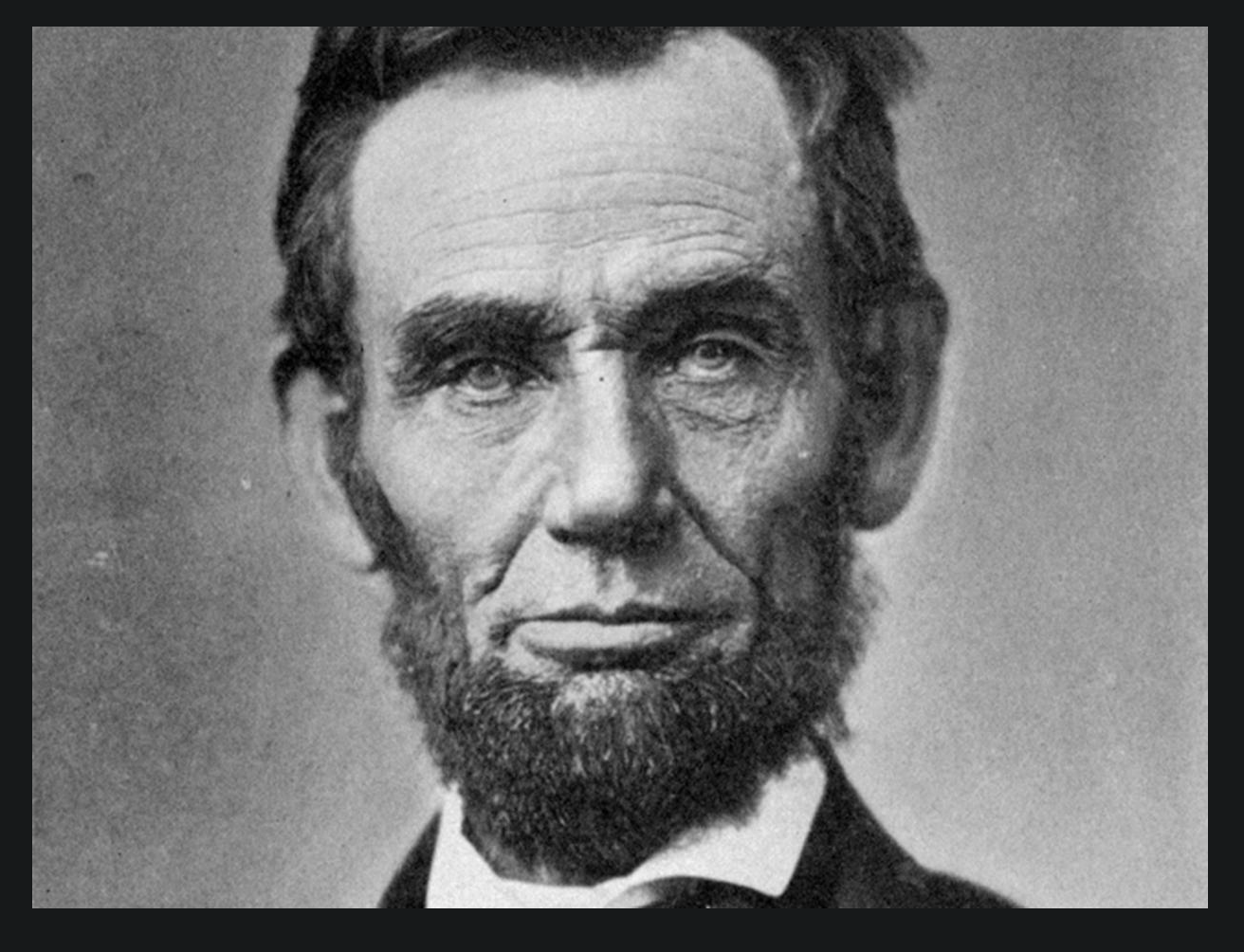
<http://sudanreeves.org/wp-content/uploads/2017/08/Screen-Shot-2017-08-16-at-7.22.28-PM.png>

Abraham Lincoln is at once the archetypal American icon and a source of
endless historical dispute. But I find no convincing argument that Lincoln
was anything but ferociously committed to ending slavery in our country.
Historians will debate endlessly the pragmatic and moral elements of his
four years as president; but his Second Inaugural Address seems to me to
have been precisely what Frederick Douglass described it as: a “sacred
effort.” And it is worth our recalling that despite the omnipresence of
contemptible and hateful words from our current president, his great
predecessor still speaks more profoundly to us, perhaps even more so in our
present grief and moral bewilderment.

In March 1865 the Civil War was largely over—and Lincoln himself would be
assassinated in April of that year. These facts give to his Second
Inaugural a valedictory quality that Lincoln himself could have only
vaguely intuited. But for later audiences, Lincoln’s words sound enduring
moral notes that make the thoughtlessness of white supremacy—and defenses
of the Confederacy—painfully clear. Although both sides in the war “invoked
[God’s] aid against the other,” Lincoln felt compelled to offer the most
essential truth, even as he deliberately skirted broader judgments of his
Southern foes: “It may seem strange that any men should dare to ask a just
God’s assistance in wringing their bread from the sweat of other men’s
faces…” Today, most Americans find a similar “strangeness” in the assertion
of racial superiority—especially when that superiority is violently
asserted, as it explicitly was by the Confederacy during the Civil War—and
as it has continued to inform so many attitudes towards what the
Confederacy represented.

We need look no further than these indisputable facts to understand the
repugnance felt by so many at the erecting, decades later, of monuments
celebrating this violent Confederate claim.

But it is Lincoln’s own assertion of perseverance that has, I believe, the
deepest resonance for modern readers of this great document. At the time of
the Second Inaugural some 600,000 men had lost their lives in the conflict;
countless more were injured, and nearly all American families were in some
way bereft or diminished by the war’s unimaginable violence. And yet
Lincoln would insist,

Fondly do we hope, fervently do we pray, that this mighty scourge of war
may speedily pass away*. Yet, if God will that it continue until all the
wealth piled by the bondsman’s two hundred and fifty hears of unrequited
toil shall be sunk, and until every drop of blood drawn with the lash shall
be paid by another drawn with the sword, as was said three thousands years
ago, so still it must be said “the judgments of the Lord are true and
righteous altogether.”*

What should we in the 21st century hear in this archaic biblical invocation
(Psalm 19) and the harsh commitment to military victory? I believe we
should be reminded that there are some who have not accepted the full
implications of the Union victory, and who are still willing to play the
role of “bondsman.” In turn, we must accept that those so willing are to be
confronted with the determination to expend all that is necessary of
national blood and treasure to ensure that slavery, in all its forms, shall
finally have been fully subdued in our country.

The greatest tragedy of the Trump presidency in the wake of Charlottesville
is that we have seen the prospect of the revived “bondsman”; and we have
heard the “bondsman” encouraged by equivocation and disingenuousness on the
part of the chief executive of the United States.

Many find the biblical fervor of Lincoln’s Second Inaugural strange. But
what cannot be strange to us is the lifelong, passionate moral response to
human suffering that animates every word of this great American document.
And should we need guidance in responding to the suffering that far too
many would again inflict on the descendants of slaves, we would do well to
recall how much Lincoln felt we as a nation must be prepared to sacrifice
to end the moral catastrophe of failing truly to believe that “all men are
created equal.”

*[Eric Reeves is Professor Emeritus of English Language and Literature at
Smith College]*

--
To post to this group, send email to [email protected]
To unsubscribe from this group, send email to
[email protected]
Visit this group at https://groups.google.com/d/forum/southsudankob
View this message at
https://groups.google.com/d/msg/southsudankob/topic-id/message-id
For more options, visit https://groups.google.com/d/optout
---
You received this message because you are subscribed to the Google Groups
"South Sudan Info - The Kob" group.
To unsubscribe from this group and stop receiving emails from it, send an email
to [email protected].
To post to this group, send email to [email protected].
Visit this group at https://groups.google.com/group/SouthSudanKob.
To view this discussion on the web visit
https://groups.google.com/d/msgid/SouthSudanKob/CAJb14oqG4uFJ%3DtBKri8opxZuzPpzii4v%3DKBL0JnaNZGzQG3csA%40mail.gmail.com.
For more options, visit https://groups.google.com/d/optout.