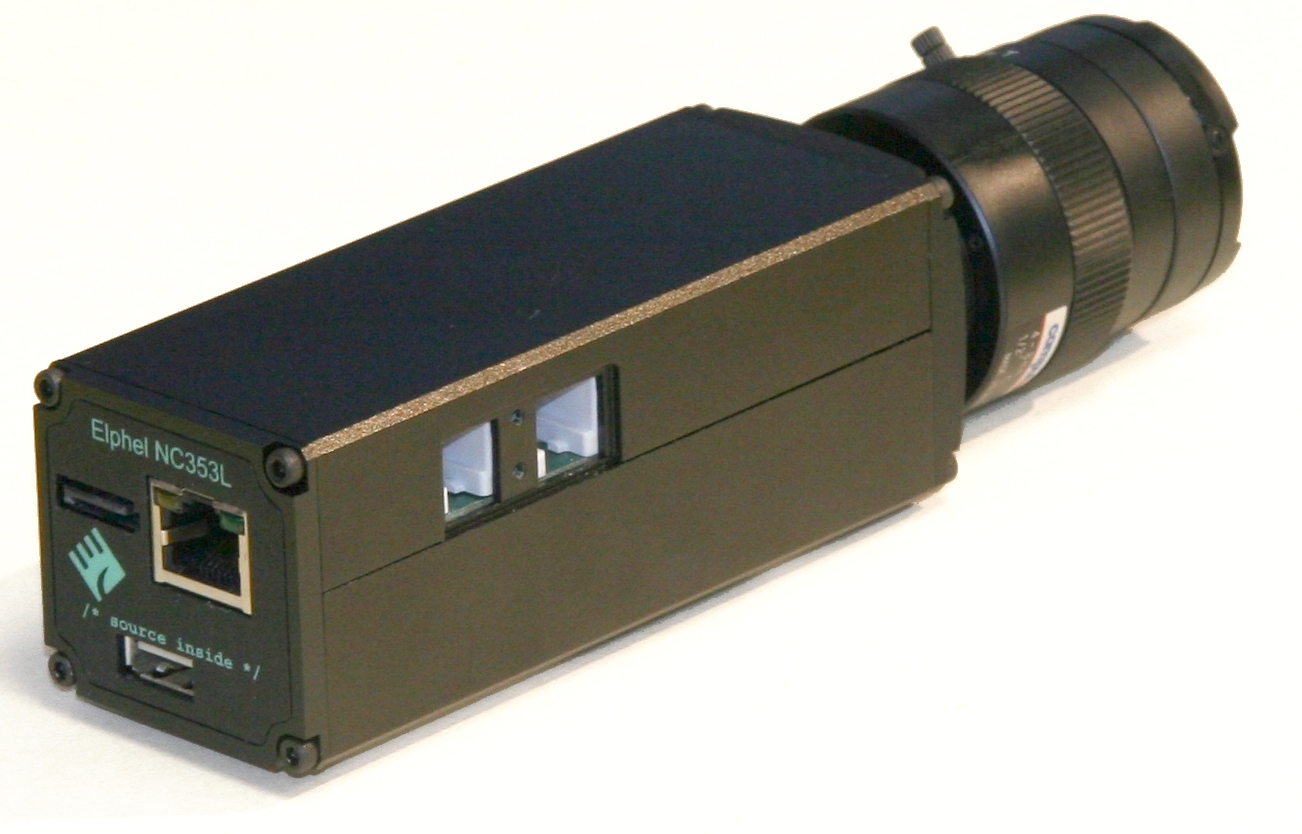
Hi again.

Viewing the cam from this position:
http://www3.elphel.com/sites/default/files/images/nc353-369.jpeg

is pin 1 the leftmost or the rightmost?

Thank you,

Ángel.

2010/2/3 Ángel <[email protected]>

> Thank you very much, Oleg. I missed the circuit schematics. Now I have only
> to make the cable and start with the experiments.
>
> Ángel.
>
> 2010/2/2 Oleg Dzhimiev <[email protected]>
>
> Ángel,
>>
>> J15
>> pin 1: GND
>> pin 2: camera input, GPIO[10], +5V
>> pin 3: camera input, to GND
>> pin 4: camera output, GPIO[11], +5V
>>
>> You can begin with connecting 1-3 & 2-4, setting correct parameters and
>> testing with oscilloscope how it works.
>>
>> The circuit diagram can be found on our wiki - the link is right under the
>> 10369 functional diagram.
>>
>> Oleg
>>
>>
>> On 2 February 2010 14:12, Ángel <[email protected]> wrote:
>>
>>> Thank you very much, Oleg & Andrey.
>>>
>>> I'm in the process of understanding the camera. Since I have access to a
>>> digital sampling oscilloscope I would like to play a little with triggering.
>>>
>>> So, what pins of J15 must I connect the signal and ground wires of the
>>> function generator output to?
>>>
>>> Thank you, again.
>>>
>>> Ángel.
>>>
>>> 2010/2/2 Andrey Filippov <[email protected]>
>>>
>>> Ángel,
>>>>
>>>> Couple more notes about external triggering.
>>>>
>>>>  This is a "Electronic Rolling Shutter" sensor, so there are some
>>>> natural limitations on what you can do with external triggering. If you
>>>> want
>>>> just to synchronize two cameras - it is easy, but you can not trigger the
>>>> camera that way from a flash (there are some other ways how to do that).
>>>> External trigger on the sensor level work in the following way:
>>>> 1 - sensor waits for the trigger to occur, to data and sync signals are
>>>> output
>>>> 2 - after the trigger sensor skips 8 scan lines (for some internal
>>>> reasons)
>>>> 3 - sensor _starts_ to erase scan line - one by one - the it will take
>>>> about 1/15 seconds to clear the full 5 MPix frame
>>>> 4 - after waiting specified exposure time from start of the erasing
>>>> process (sensor does not need to wait the full frame to be erased!) sensor
>>>> starts readout - line by line, at the same pace the erase process
>>>> (initiated
>>>> at step 3).
>>>> The process of readout (and so exposure of the last line in the frame)
>>>> will ens in 8*scan_line_time + exposure time + frame_readout_time.
>>>>
>>>> If you want to catch some instantaneous event (i.e. flash) you'll need
>>>> to set exposure time to > frame readout time and initiate that event after
>>>> the full frame is erased but before the first line is read out.
>>>>
>>>> Second note is related to the camera driver - because of pipeline
>>>> operation (described in
>>>> http://www.linuxfordevices.com/c/a/Linux-For-Devices-Articles/Elphel-camera-under-the-hood-from-Verilog-to-PHP/)
>>>>  it heavily depends on the frame sync pulses from the sensor. So if the
>>>> sensor is stopped so is the driver that among others handle all the
>>>> parameter changes. If the camera is set to external trigger mode and there
>>>> is no trigger coming - the driver will effectively get stuck.
>>>>
>>>> Andrey
>>>>
>>>
>>>
>>>
>>> --
>>> Elphel NC353L-369 (12-36 VDC) + Computar H2Z0414C-MP
>>>
>>
>>
>
>
> --
> Elphel NC353L-369 (12-36 VDC) + Computar H2Z0414C-MP
>


--
Elphel NC353L-369 (12-36 VDC) + Computar H2Z0414C-MP
_______________________________________________
Support-list mailing list
[email protected]
http://support.elphel.com/mailman/listinfo/support-list_support.elphel.com