Hi Dave,

On 04/21/2013 10:32 AM, David Kirkby wrote:
On 20 April 2013 20:52, Tom Van Baak<[email protected]> wrote:
For the rest of you:

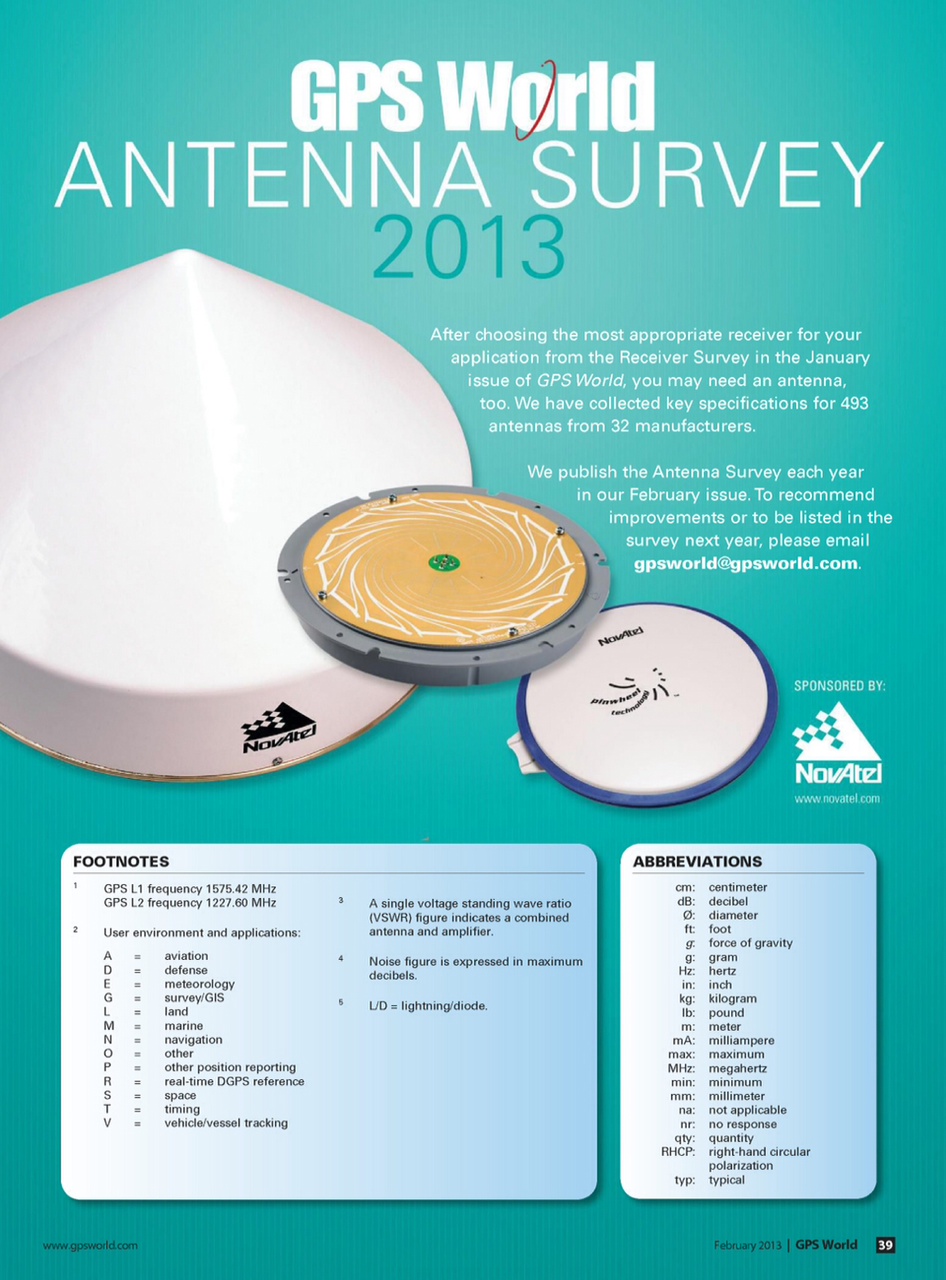
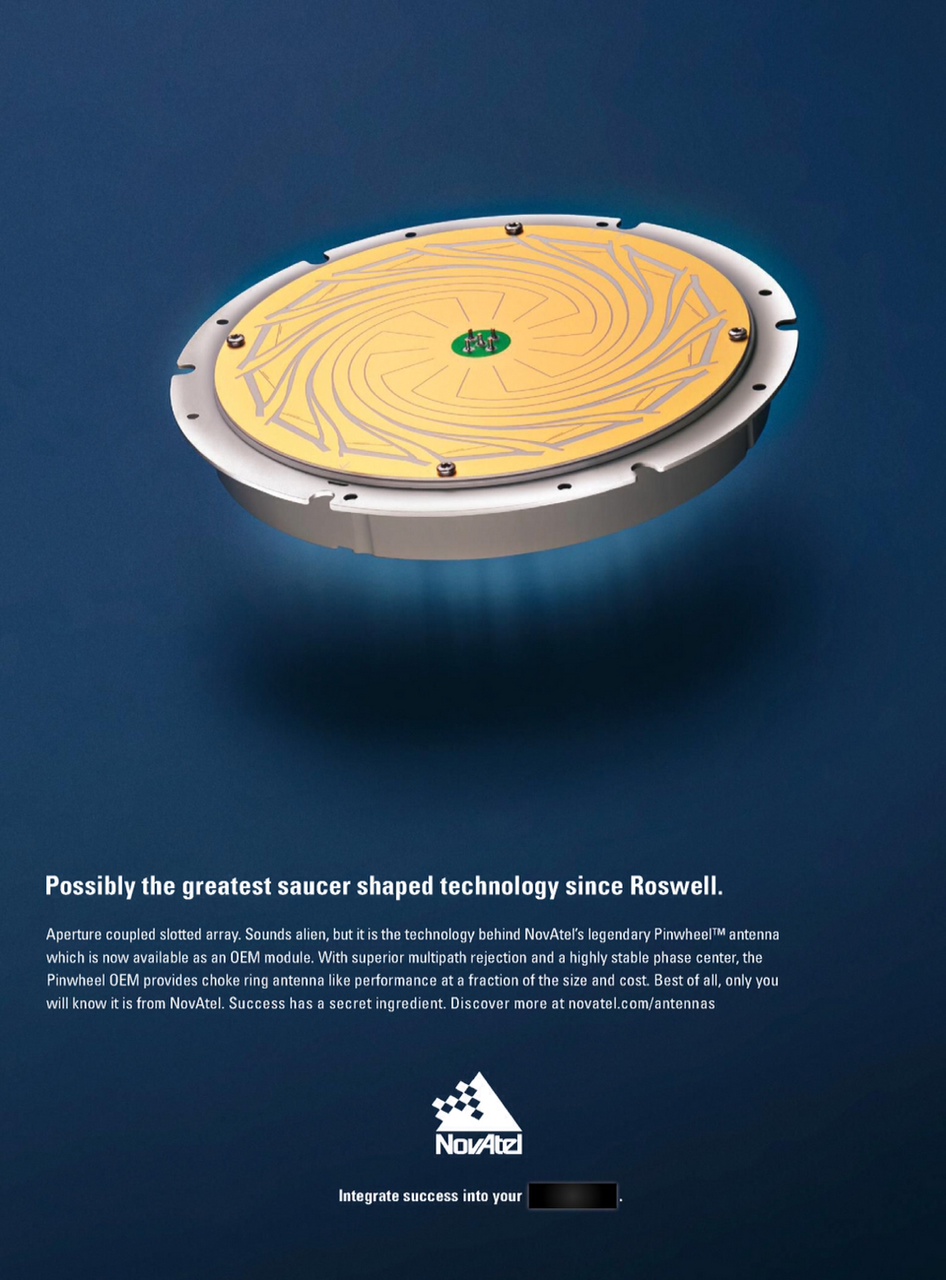
http://www.leapsecond.com/images/gps-pinwheel-1.jpg
http://www.leapsecond.com/images/gps-pinwheel-2.jpg

It's a thing of mysterious beauty. And the GPS World photo saves me from the
temptation to break open my own pinwheel antenna just to see what's hidden
inside.

/tvb
Does the antenna work better than other types?
You should get close to choke-ring antenna performance at a much smaller
size. For many purposes its good enough.
Check out:
http://www.novatel.com/products/gnss-antennas/high-performance-gnss-antennas/
http://www.novatel.com/assets/Documents/Papers/GPS-702L.pdf
As you look at this, realize that antenna gain does not really fit this
description as you need to receive signal from about the full upper
hemisphere of the antenna, the directivity comes in as the ability to
surpresss the other hemisphere where the majority of multipath is
expected to be.
In addtion, these antennas are by necessity active (you can get passive,
but you need to have your own LNA very close by).
As someone who used to
design antennas for a living, I'm well aware there are a lot of
antenna "designs" which are either badly understood by their
"designers" or are just put together to look impressive. One company I
used to work for based their specifications on that of their
competitors. This seems to be pretty common practise in the antennae
industry.
In the precission side of things, they regularly calibrate the antennas,
it would show for that market.
I once offered my boss at a company I worked for a bet. I would pay to
get one of our antennas tested at NPL, and if it met the specification
we claimed, then he owed me nothing. But if it failed, he had to pay
the cost of the testing. I could possibly not win any money with this
bet  - the best I could hope for was to break even, but I was
sufficiently convinced it did not meet the specification that I could
take that chance. Needless to say he would not accept the bet!!!

There are lies, damn lies, and antenna specifications.

This particular antenna design

http://www.rason.org/Projects/collant/collant.htm

has a claimed gain of 9 dB. We don't know if that is 9 dBi, dBd, or
dB_wet_string. Both myself and someone else have modelled this based
on the use of perfect conductors and we get a gain of about 7 dBi. I
used the dimensions given in that article, him a rescaled version for
2.4 GHz.

We used different software - me the exceedingly expensive HFSS 3D
electromagnetic simulator and him another very expensive EM simulator.
These both solve Maxwell's equations, although one uses  the integral
form and the other the differential form. I've contacted the author
and got no response.
How good is NEC2?
One obviously way to convince yourself that antenna can't work as
described, is what would happen if the coaxial cable had a very high
permittivity lossless dielectric - say Er=10^6. All dimensions would
scale down by 10^3 from free space, and you end up with a very high
gain antenna 1.4 mm long.

Hence I tend to take antenna specifications with a pinch of salt.
Well, I think any specification should be taken with a pinch of salt,
but I think you should look at this particular application and see if
they are really that insane. Your rant seems more relevant to Yagi and
similar directed antennas.
Cheers,
Magnus
_______________________________________________
time-nuts mailing list -- [email protected]
To unsubscribe, go to https://www.febo.com/cgi-bin/mailman/listinfo/time-nuts
and follow the instructions there.