> Dave B. (G0WBX)
>
> PS: I do like the idea of setting up a camera to take a photo of the
> 'scope every hour or so! Not practical for many I guess, but it
> illustrates the point well. But the aliasing opportunity I think would
> be perhaps too great, in essence being a sampled data system by then.
> Also, one then needs an accurate 1 hour timer! And so it goes on ;-)
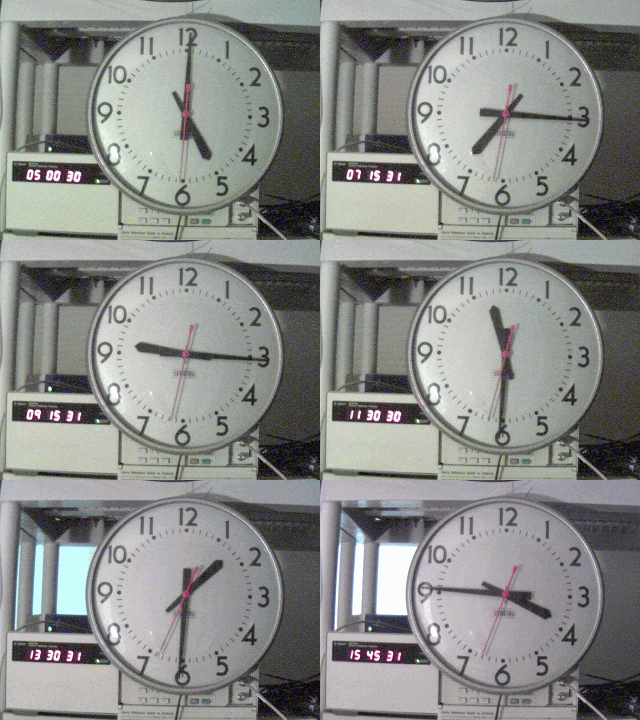
For hourly photos consider using a webcam or smart phone & time-lapse photo app.

Here's an example of measuring time drift in mains with a photo every 15
minutes. Watch how the red seconds hand drifts by up to 4 seconds during the
day: http://leapsecond.com/pages/tec/mains-clock-ani.gif

About the aliasing, yes, one must keep that in mind. If the drift between your
10 MHz signals is erratic or if you slip by more than half of 100 ns per hour
there could be ambiguity in your interpretation of the photos. That aliasing
must be avoided.

There are two easy solutions:
1) Take a photo more often than once per hour. For example, once a minute
improves the possibility of ambiguity by a factor of 60.
2) Divide the frequency from 10 MHz to 100 kHz. Now your cycles are 10 us
instead of 100 ns, which reduces the chance of undetected cycle slip by a
factor of 100.

Taking this to an extreme, imagine taking a photo every second, and imagine
dividing your 10 MHz down to 1 Hz. Now you've reduced the chances of aliasing
by tens of billions. And ... now you know why almost all timing measurements
are done with a TIC as the "camera" and 1PPS as the "cycle".

This is also why, since 1972, UTC does time jumps (aka leap seconds) in steps
of exactly 1 second instead of any smaller value -- it perfectly fools all the
TIC's in the world.

/tvb


_______________________________________________
time-nuts mailing list -- [email protected]
To unsubscribe, go to
http://lists.febo.com/mailman/listinfo/time-nuts_lists.febo.com
and follow the instructions there.